REVIEW · TOKYO
Ashikaga Flowers Park Pvt. One Day Tour with Pickup
Book on Viator →Operated by Sato · Bookable on Viator
Wisteria season plus Tokyo pickup is a winning combo. This private day trip bundles Ashikaga Flower Park with love-themed shrine stops, old school ruins, and time for night illuminations. I like that it feels organized for a small group, with a clear route and dedicated time at each place. One potential drawback: the car ride to Tochigi takes real time, so you’ll want to be comfy in the vehicle and ready for a long day.
I also like that the experience leans on a real driver-guide, not just a driver who drops you off. One named guide, Hana Rana Nadir, was described as attentive and courteous, and as a strong, careful driver—exactly what you want when the roads are busy. Plus, you get a hotspot on board, which is handy for timing your photos and navigating once you’re out.
Plan on a couple of extra ticket costs during the day: the Flower Park fee is $10 USD per person, and the Art Museum fee is $5 USD per person. And even in wisteria season, bloom timing can be unpredictable. If you’re traveling with kids, child seats are included, which is a big practical plus.
In This Review
- Key highlights worth your attention
- Tokyo Station to Ashikaga: The 10-hour reality check
- Private pickup and mobile tickets: How the logistics feel in practice
- Stop 1: Ashikaga Orihime Jinjya and the 200-step red torii climb
- Stop 2: The ruins of Ashikaga School (Ashikaga Gakko)
- Stop 3: Ashikaga Museum of Art for modern work with Japanese quiet
- Stop 4: Sano Premium Outlets for shopping plus a mountain-view break
- Stop 5: Ashikaga Flower Park with wisteria and night illuminations
- Price and value for a group of up to 5
- When this tour makes sense (and when it doesn’t)
- Driver-guide experience: why the person matters on a long day
- Should you book the Ashikaga Flowers Park one-day tour with pickup?
- FAQ
- How long is the Ashikaga day tour?
- What’s the pickup location in Tokyo?
- Is this a private tour or shared group?
- How many people can be in one group?
- What’s included in the tour price?
- Are tickets for Ashikaga Flower Park included?
- Is the Ashikaga Museum of Art ticket included?
- Is Sano Premium Outlets admission included?
- Do I need printed tickets?
- Can I cancel for a full refund?
Key highlights worth your attention
- Private pickup from Tokyo Station keeps the day simpler than juggling trains and taxis
- A timed mix of culture and fun: shrine, historic school ruins, art museum, outlets, then Flower Park
- Night illuminations at Ashikaga Flower Park add a second “wow” moment beyond daytime blossoms
- On-board hotspot + mobile tickets help you manage the schedule without stress
- Extra tickets are limited to the park and one museum, while several stops are free to enter
Tokyo Station to Ashikaga: The 10-hour reality check
This is a private one-day route from Tokyo, priced per group (up to 5). The schedule is built for a full day—about 10 hours—so you’re not just popping into one attraction. You’re stacking multiple sights in Tochigi, then heading back to the same Tokyo pickup point.
The trade-off is travel time. One of the practical things I’d plan for is that the ride can feel like a lot, and some days it’s easier if you treat it like a “sit back and zone out” kind of outing. The vehicle is air-conditioned, which matters more than it sounds on a long day, especially when you’ll be walking at the stops.
You’ll also want to be aware of how your guide handles the day. In one case, a group noted that the driver didn’t talk much on the way over and focused more on driving than conversation. In contrast, another guide named Hana Rana Nadir was praised for being attentive. Either way, the goal is the same: get you safely and on time.
You can also read our reviews of more tours and experiences in Tokyo



Private pickup and mobile tickets: How the logistics feel in practice
You start at Tokyo Station (1 Chome-9 Marunouchi, Chiyoda City), and the tour ends back at that same meeting point. That round-trip structure is the big win if you want a day that feels like “walk, view, shop,” not “commute, switch lines, hope you found the right exit.”
The tour uses mobile tickets, and you also get a hotspot on board. That’s useful for checking arrival times, looking up the next stop, and handling any last-minute planning if you want to adjust photo timing.
Because it’s private, the day is more flexible than group coach tours. The operator notes they have vehicles suited to customer numbers, and the tour includes child seats—so you’re not stuck improvising for family travel.
Stop 1: Ashikaga Orihime Jinjya and the 200-step red torii climb
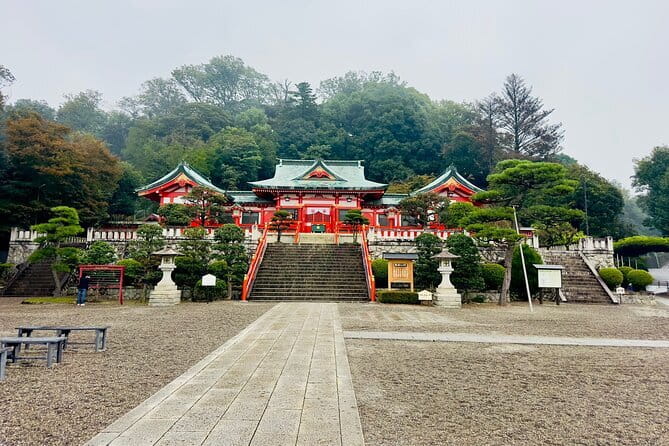
Ashikaga Orihime Jinja (Orihime Jinjya) is one of those places that makes sense even if you don’t know the legends. The shrine honors Orihime, associated with weaving and prosperity, and it draws on the story of Orihime and Hikoboshi, the lovers separated by the Milky Way. The shrine was established in 1879, so it’s not a new attraction.
What you’ll do here is climb. The route involves a path of around 200 steps, lined with red torii gates. That’s part of the charm—each turn down the steps changes your view, and you gradually get that hilltop perspective. The shrine sits on elevated ground, giving panoramic views over Ashikaga City, especially appealing in cherry blossom or autumn seasons.
This stop is listed as about 1 hour, and the admission is free. My practical advice: wear shoes you’re happy to walk in, and don’t treat the steps like a side quest. If you’re going with someone who enjoys religious sites or couples’ traditions, this is also where the “symbol of love and fortunes” theme comes through clearly.
Stop 2: The ruins of Ashikaga School (Ashikaga Gakko)
Next up is the ruins of Ashikaga School, known as Ashikaga Gakko. This is tied to the idea of Japan’s oldest academic institution, with origins believed to go back to the 9th century and prominence rising in the 15th century.
The historical focus here is very specific: it was a center for Confucian and classical Chinese studies. The subjects listed for students include Confucian philosophy, medicine, military strategy, astronomy, and Buddhism. There’s also a name-drop that makes it feel real: Oda Nobunaga praised the school as Japan’s leading learning center.
This stop is also about 1 hour, and admission is free. In a day like this—where the Flower Park is the headliner—this ruins stop is a nice “breather.” It’s not about shopping or taking selfies. It’s about slowing down and thinking about how people studied centuries ago, then comparing it with how you travel today.
If you want to get the most out of it, take a few minutes to read any on-site information. The physical ruins are the visible part, but the focus is really the study culture behind the site.
Stop 3: Ashikaga Museum of Art for modern work with Japanese quiet
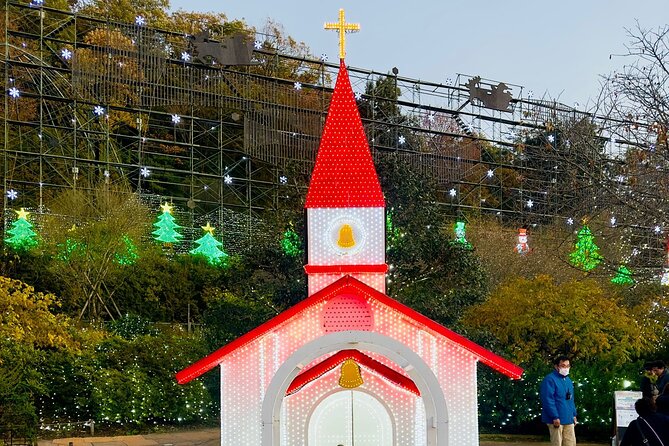
The Ashikaga Art Museum is set up for a different mood than the shrine or the flower park. Founded in 1994, it focuses on Japanese and international contemporary art, with a strong emphasis on modern Japanese artists and temporary exhibitions.
The museum’s architecture blends traditional Japanese elements with modern touches, which can make the space feel calm even when the artwork is contemporary. The museum also hosts events like lectures and workshops, based on the description provided for the site.
You’ll have about 1 hour here, and the admission is not included (listed as $5 USD per person). If you like contemporary art, this time block works well—you get a look without it turning into a second full day.
If contemporary art isn’t your thing, it’s still worth using the museum stop as a reset. Sit a bit, cool off, and let the day’s pace breathe before the big walking portion at the Flower Park.




Stop 4: Sano Premium Outlets for shopping plus a mountain-view break
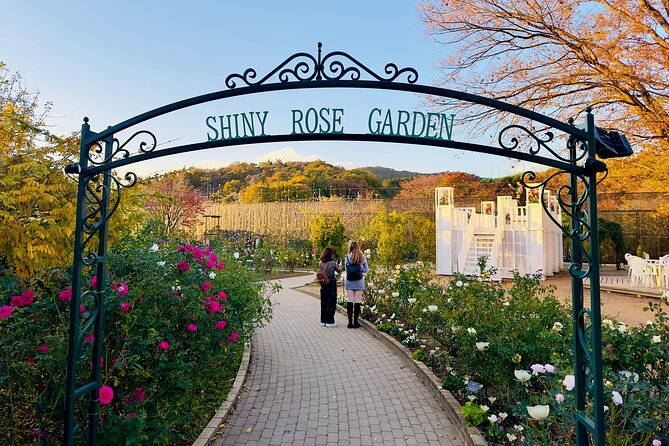
Sano Premium Outlets is your shopping window, listed as about 3 hours. It’s one of Japan’s popular outlet malls, with over 180 stores offering both Japanese and international brands, commonly at discounted prices.
The mall is designed in the style of an American open-air outlet—pedestrian-friendly and spread out—plus it sits with views of surrounding mountains, including Mount Mikamo. If you’re doing this day trip as a family or group, this part is often what makes the day feel “worth it,” because everyone can find something, even if they didn’t all come for flowers.
Admission here is free. My practical tip: decide in advance what you actually want. If you try to shop everything, 3 hours disappears quickly, especially when you stop for snacks and browse “just in case.”
Also, since alcohol isn’t included in the tour package, you’ll want to handle meals and drinks on your own. (Not included is listed as alcoholic beverages.)
Stop 5: Ashikaga Flower Park with wisteria and night illuminations
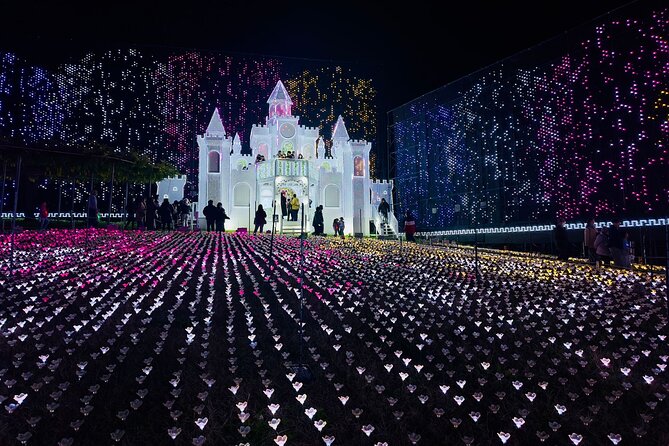
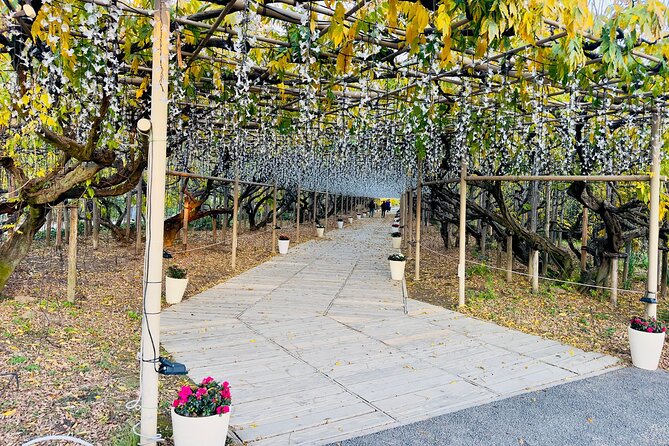
This is the headline. Ashikaga Flower Park is known for large-scale floral displays, with wisteria as the signature. The park covers about 94,000 square meters, and it cycles through seasonal flowers like wisteria, roses, tulips, and azaleas throughout the year.
The big draw is the Great Wisteria Festival held in spring, when wisteria trellises bloom in shades of purple, pink, white, and yellow. One of the star attractions is the Miracle Great Wisteria, listed as over 160 years old. In other words: this isn’t just pretty greenery. It’s a specific, famous living attraction.
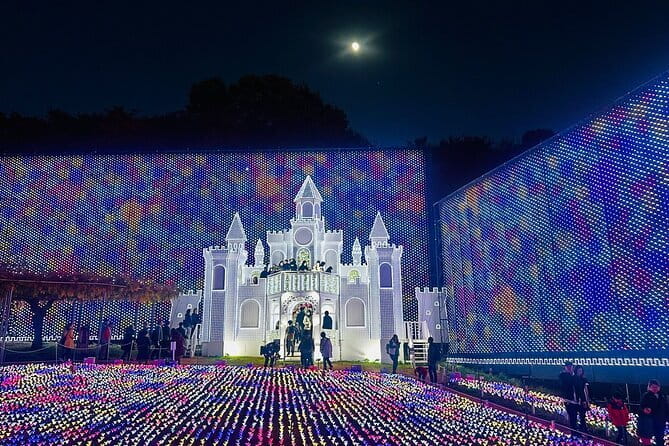
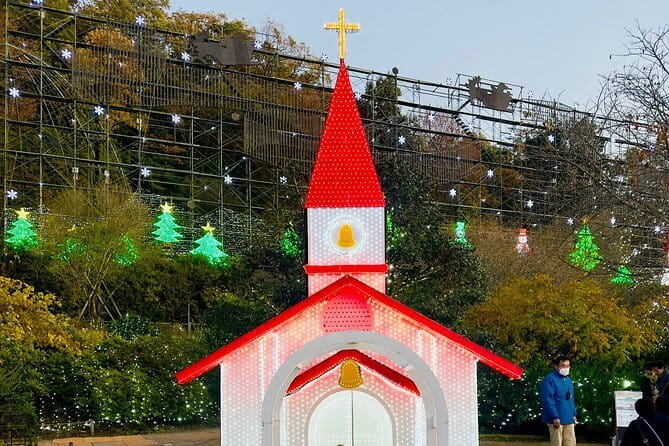
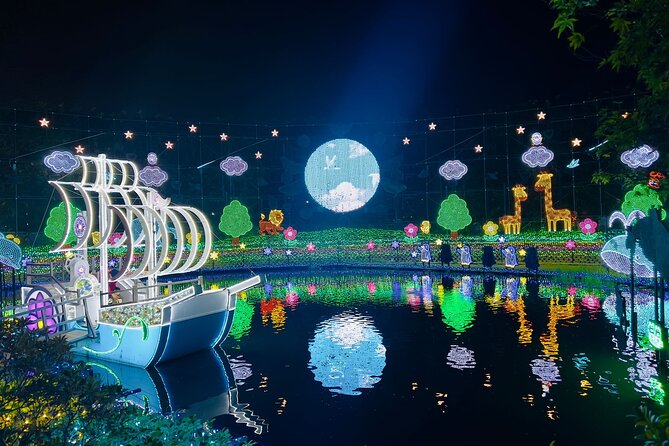
The day description also calls out night illuminations, which is exactly why this stop is timed well inside a long day. Daytime walking gives you structure. Night lights change the atmosphere and your photos. If you like night scenes, this is where the tour can feel like more than a day trip—it becomes a memory.
The park stop is about 3 hours, and the Flower Park admission is not included at $10 USD per person. There’s an important reality check: bloom timing isn’t guaranteed. A named guide, Hana Rana Nadir, was praised for her guiding, but a separate note highlighted that the wisteria weren’t yet in full bloom at the time of the visit. So even if you go during the right season, treat it as “wisteria hopes,” not a guaranteed peak-spring fireworks show.
Practical advice for the park:
- Wear shoes you can walk in for a while.
- If you care most about photos, you’ll want to spend time near the main wisteria areas rather than scattering quickly.
- Plan to enjoy the light show as a second act, not an afterthought.
Price and value for a group of up to 5
The price is $500 per group (up to 5 people). That’s where value math matters. If you fill all five seats, you’re effectively paying about $100 per person for the private car and the driver-guide for around 10 hours.
Now add the two ticket costs that aren’t included:
- Ashikaga Flower Park: $10 USD per person
- Ashikaga Art Museum: $5 USD per person
So with full participation, you’re looking at roughly $115 per person just for the major add-on admissions listed. Food and personal shopping are on you, but the core transport and most entry fees are handled.
For what you’re getting—multiple stops that would be a headache to stitch together on your own—the price can make a lot of sense, especially if you hate transit transfers or you’re traveling with kids and want one smooth plan.
One more planning note: the tour is often booked about 57 days in advance, so if your dates line up with flower season, it’s smart to book early rather than hoping it’s available last-minute.
When this tour makes sense (and when it doesn’t)
This tour fits best if you want:
- A private day with pick-up and drop-off handled for you.
- A strong mix: shrine/culture, a historic education stop, a museum reset, outlet shopping, then Flower Park.
- A low-effort way to cover Tochigi without mapping transit.
It might not be your best match if:
- You dislike long car rides. This is a 10-hour outing and much of that is road time.
- Your main goal is purely the Flower Park and you’re fine traveling independently. Then you might prefer a simpler “park-only” plan.
- You only want peak wisteria photos. Bloom timing can shift even when you book for the season.
Also, if you like making custom additions, note that there’s evidence of people requesting extra places. In one operator reply included in your info, an add-on to Nikko City was described as increasing expenses (travel costs changing because the route got longer). So if you’re thinking about customizing, be ready that extra time and distance can change the total.
Driver-guide experience: why the person matters on a long day
This is one of those tours where the driver-guide role can make the day smoother. You’re in transit for hours, and you also need someone who can keep the timing realistic so you don’t feel rushed at the park or miss the key light hours.
Two concrete signals from the information you provided:
- Hana Rana Nadir was praised for being attentive, courteous, and a great driver.
- Another account flagged minimal conversation and a more aggressive lane-changing style.
That doesn’t mean every ride is the same, but it does point to something you should do: be clear about your comfort. If you’re prone to motion sickness, sit where you feel best in the vehicle. If you prefer a quiet ride, that’s easy too—just know conversation levels can vary.
Should you book the Ashikaga Flowers Park one-day tour with pickup?
Yes, if you want a simple private day from Tokyo that includes real culture stops plus the big wisteria experience, and you don’t want to plan train connections. The value is strongest when your group fills the up-to-5 seats, since the $500 price spreads well.
Be cautious if you’re the kind of person who needs perfect-bloom wisteria. Even with night illuminations, the flowering timing can shift, and your enjoyment will depend on what’s flowering during your specific date. Also, if you hate long drives, this won’t feel short.
If you book, I’d do two things: plan your Flower Park priorities in your head (where you want photos), and embrace the shrine and school ruins as your “slow down” moments. That mix is what makes the day feel like more than just a flower outing.
FAQ
How long is the Ashikaga day tour?
It’s listed at about 10 hours.
What’s the pickup location in Tokyo?
Pickup starts at Tokyo Station, 1 Chome-9 Marunouchi, Chiyoda City, Tokyo 100-0005.
Is this a private tour or shared group?
This is private. Only your group participates.
How many people can be in one group?
The price is per group up to 5.
What’s included in the tour price?
Included items are an air-conditioned vehicle, private transportation, hotspot on board, all fees and taxes, child seats, and a driver guide.
Are tickets for Ashikaga Flower Park included?
No. The Flower Park fee is listed as $10 USD per person.
Is the Ashikaga Museum of Art ticket included?
No. The museum fee is listed as $5 USD per person.
Is Sano Premium Outlets admission included?
Yes. The outlet stop lists admission as free.
Do I need printed tickets?
No. A mobile ticket is offered.
Can I cancel for a full refund?
Yes. You can cancel up to 24 hours in advance for a full refund.