REVIEW · TOKYO
Tokyo Baseball Experience Tour with Expert English-Speaking Guide
Book on Viator →Operated by Japan Awaits · Bookable on Viator
Japanese baseball hits different when you know the rhythm. This small-group tour builds that context before you sit down, with an English-speaking guide helping you understand how fans turn a game into a full-on cultural event, including learning the chants and anthems. I like the practical setup here: you get audio headsets so the commentary stays clear, and you also get a real seat ticket (S, A, or B). The one drawback to consider is timing: the experience ends when the game starts, so if you’re hoping to arrive and soak up a long pregame window, you may find the lead-in shorter than you imagined.
You’ll meet at Meiji Jingu Baseball Stadium in Shinjuku, then spend about four hours total from guide briefing to first pitch. This is set up for people who want more than just watching—people who like sports, culture, and learning a few fan traditions that make the stands feel like the show. It’s also a good choice if you’re a Major League Baseball fan who wants to see what’s similar and what’s totally different.
In This Review
- Key Reasons This Tour Works
- Japanese Baseball at Meiji Jingu Stadium: What the Tour Actually Adds
- Stop 1: Meiji Jingu Baseball Stadium (The Whole Point)
- The main timeline you should expect
- What You Learn With a Guide (And Why It Matters)
- Audio headset: the unsung hero
- Learning the Chants and Anthems (Where the Fun Starts)
- Your Seat Choice: S, A, or B (Pick Based on How You Watch)
- One practical tip
- Timing, Weather, Food, and Getting There Without Stress
- Arrive early
- Plan for food on your own
- Rain reality check
- Price and Value: Is $98 a Smart Deal?
- Who This Tour Suits Best
- How to Get the Most Out of Your Game Day
- Should You Book This Tokyo Baseball Experience?
- FAQ
- What does the tour include?
- How long is the tour?
- Where do we meet?
- Is food provided?
- What seats will I get?
- What if it rains?
- What if I’m late to the meeting point?
- Is there an age requirement?
- What are the cancellation terms?
Key Reasons This Tour Works
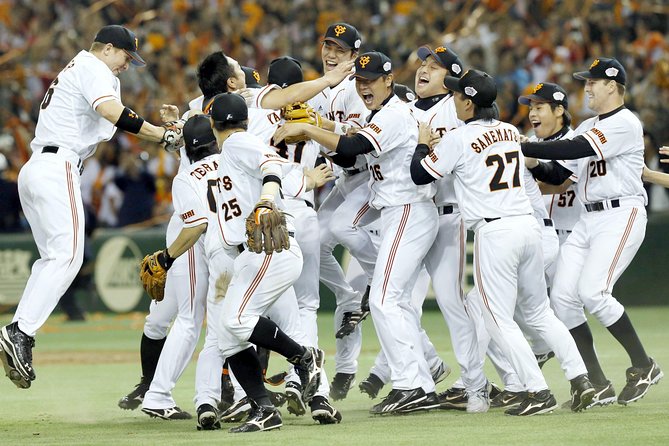
- Small group feel (up to 12) so the guide can explain without turning it into a lecture
- Included S, A, or B seats chosen for strong sightlines depending on what you like
- English-speaking guide + headsets so you don’t miss the story behind Japanese baseball
- Chants and anthems practice so you can actually join in, not just watch
- Admission to the game included so you’re not hunting tickets or figuring out where to sit alone
- Open-air stadium with weather rules that balance refunds and reality
Japanese Baseball at Meiji Jingu Stadium: What the Tour Actually Adds
A lot of stadium experiences in Tokyo are basically: find your seat, buy a snack, watch the game. This one adds a layer that makes the game easier to follow and far more fun to participate in.
The key value is the “before first pitch” part. Your guide sets the stage with how baseball is structured in Japan and why it’s treated with such seriousness and joy. You also learn the call-and-response energy that fans bring to the ballpark. Once you know what you’re hearing and why, the game stops being just baseball played in a different country. It becomes something you can feel as a spectator.
I especially like that the guide is also a real fan. That matters. When the explanation comes from someone who cares, you get the little details that turn into “oh, that’s why they do that” moments instead of generic history.
You can also read our reviews of more guided tours in Tokyo

Stop 1: Meiji Jingu Baseball Stadium (The Whole Point)
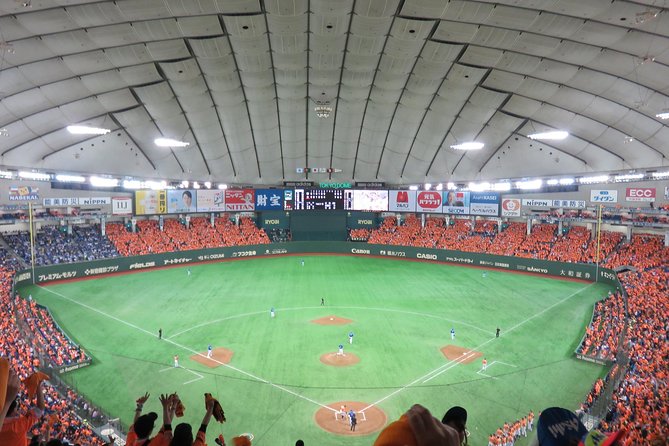
This tour centers on Meiji Jingu Baseball Stadium, and it’s a smart choice for a few reasons. First, it’s close enough to Shinjuku that you can fit it into a day without turning your plans into a marathon of transit. Second, it’s an open-air venue, which changes the atmosphere. There’s something about hearing the chants carry naturally through the stands and feeling the weather on your face that doesn’t happen in a closed arena.
You’ll start at the stadium address: 3-1 Kasumigaokamachi, Shinjuku City, Tokyo 160-0013, Japan. The tour ends back at the same meeting point, which keeps the logistics simple. Transportation to and from the stadium isn’t included, so you’ll want to plan your own route (public transit is nearby, which is helpful).
The main timeline you should expect
- The guide portion runs up until the game begins.
- The game itself can last around three hours.
- The overall tour time is listed at about four hours, and it’s designed so you land at the ballpark early enough to get the cultural setup.
If you’re the type who likes to arrive and wander the stadium for a full pregame block, keep this in mind. The experience focuses on learning and participation right up to first pitch, not on long, solo wandering time.
What You Learn With a Guide (And Why It Matters)
This tour isn’t only about getting you into the stadium. It’s about helping you read the game the way local fans do.
You’ll learn about what makes Japanese baseball interesting—especially the way it’s celebrated compared with Major League Baseball. That includes differences in fan culture, game flow, and how the crowd treats chants and anthems as part of the sport itself.
Then you practice those chants and anthems so you can join in when the moment comes. This is one of the highest-impact features on the list because it changes your role from observer to participant. Even if your Japanese isn’t strong, the rhythm and cues become clear once you’ve been taught what to look and listen for.
Audio headset: the unsung hero
The tour includes audio headsets. That means you’re not guessing what the guide is saying from a crowded spot in the stadium area. It also means you can follow the explanation even if the environment is loud or busy. For a short, time-sensitive experience, clear audio is everything.






Learning the Chants and Anthems (Where the Fun Starts)
Japanese baseball fans have a special talent: they turn the stadium into a coordinated soundtrack. On this tour, you don’t just hear it from far away. You’re taught the chants and anthems, then encouraged to join in with the crowd.
That matters because it’s easy to miss the point of fan traditions if you don’t know what they’re for. Are they tied to specific moments? Are they meant for momentum? Do they follow certain cues? Once you know the logic, the chanting feels like part of the game strategy—not random noise.
I also like that the tour sets expectations up front. When you’re prepared for the intensity of the stands, you don’t feel awkward jumping in. You’ll already know the basics by the time your section starts.
Your Seat Choice: S, A, or B (Pick Based on How You Watch)
Admission includes a seat ticket in one of three categories: S, A, or B seats. Which one you get depends on availability, but here’s what each category is designed for.
- S Seats: right behind the batter, in the heart of the action
Best for you if you want the pitch-to-batter feeling and want to watch the plate area closely.
- A Seats: behind first and third base, with a view of the whole field and bench area
Best for you if you like seeing the game layout and watching player interactions when the action shifts.
- B Seats: behind the foul pole, with a good view of outfielder play
Best for you if you care about defense and tracking balls off the bat toward the outfield.
One practical tip
If you’re a Major League Baseball fan, you might naturally focus on pitcher and batter matchups. In that case, S seats are the most aligned with how many MLB viewers mentally “map” the game. If you like the full-field experience—base runners, benches, and the way momentum changes A seats can be a strong fit.
Because the seat type depends on availability, you’ll want to decide what you value most: closeness to the batter, overall field awareness, or outfield tracking.
Timing, Weather, Food, and Getting There Without Stress
This tour runs in a clean, stadium-focused window. But a few real-world factors matter.
Arrive early
You should arrive at least 10 minutes before the designated meet-up time. This is a group experience, and late arrivals may not be waited for. If you’re delayed, you’ll have the guide’s phone number and can connect with the group at the next location.
Plan for food on your own
Food and drinks are not provided. The good news: snacks, drinks, and merchandise are available for purchase at the stands. So you can eat lightly before you go in, then grab what you want during breaks.
If you’re traveling on a tight schedule, I recommend having a plan for water. It’s not included, and open-air ballparks can surprise you with how quickly you get thirsty.
Rain reality check
The stadium is open-air, so weather matters.
- If there is heavy rain on your date, the match is canceled and you receive a full refund.
- If it’s light rain, the match proceeds as scheduled.
- If the match is ongoing and it starts raining unexpectedly, no refund is provided.
That last point is the kind of detail that’s easy to gloss over. If there’s a rain risk, bring a rain layer you can tolerate in a stadium seat.
Price and Value: Is $98 a Smart Deal?
At $98 for about four hours, this tour isn’t trying to be the cheapest option. It is priced like a real guided event with a ticket included.
What you’re paying for, in plain terms:
- An English-speaking guide who knows Japanese baseball fan culture
- Audio headsets
- A reserved seat ticket (S, A, or B categories)
- Service fee and tax
What you’re not paying for:
- Transportation to and from the stadium
- Food and drinks (snacks and drinks are available to buy)
So the value equation is simple. If you were going to buy a ticket anyway, and you also wanted someone to explain what you’re seeing and help you join the chants, then the cost feels reasonable. If your goal is only to watch the game with no extra context, you might find cheaper routes on your own.
Also, small-group size matters. Up to 12 people means the guide can actually manage learning and participation without turning it into a one-size lecture.
Who This Tour Suits Best
This is a strong match for:
- You if you like baseball and you want the fan side, not just the sport side
- You if you’re curious about how Japanese sports culture works
- You if you’re an MLB fan who wants to compare the vibe and traditions
- You if you want an organized experience without having to decode everything in advance
It may be less ideal if:
- You’re the type who needs a long, self-guided pregame arrival to settle in
- You hate rain uncertainty and want a full refund no matter what happens after kickoff
How to Get the Most Out of Your Game Day
A few practical moves will help you make the most of this tour.
- Wear layers. It’s open-air and Tokyo weather can shift fast.
- Go into the chants part like a workshop, not like a performance you have to be perfect at. You’re learning cues.
- If you care about seat position, decide what you want most (batter area, full field, or outfield tracking) since S/A/B each changes your angle.
- Bring a small bag for snacks or drinks if you want backup. You can buy at the stands, but having your essentials ready saves time.
And give yourself a little grace. Japanese baseball fan culture is lively, coordinated, and sometimes louder than you expect. Once you’ve learned the basics from your guide, you’ll feel more at home in the stands.
Should You Book This Tokyo Baseball Experience?
Book it if you want baseball that’s more than sports. The combination of English guide guidance, chant and anthem practice, and a reserved seat makes it easier to enjoy the game fully, even if Japanese sports traditions are new to you.
Skip it if you mainly want the lowest cost way to watch baseball and you plan to arrive early for your own pregame routine. This tour is timed to prioritize learning and first pitch, not a long stadium wander.
If you’re the kind of traveler who likes to understand the “why” behind what you see, this one fits well.
FAQ
What does the tour include?
You get an English-speaking tour guide, an audio headset, a baseball seat ticket in S, A, or B seat categories, and admission to the game. Service fee and tax are included as well.
How long is the tour?
The tour runs for about 4 hours (approximately).
Where do we meet?
The meeting point is Meiji Jingu Baseball Stadium, 3-1 Kasumigaokamachi, Shinjuku City, Tokyo 160-0013, Japan.
Is food provided?
No. Food and drinks are not provided, but snacks, drinks, and merchandise are available for purchase at the stadium stands.
What seats will I get?
Your seat will be one of these categories depending on availability: S Seats (right behind the batter), A Seats (behind first and third base), or B Seats (behind the foul pole).
What if it rains?
If there is heavy rain, the match is canceled and you receive a full refund. If it’s light rain, the match proceeds. If the match is ongoing and rain starts unexpectedly, no refund is provided.
What if I’m late to the meeting point?
Arrive at least 10 minutes early. The tour may begin without late guests. You’ll be provided with the tour guide’s phone number so you can coordinate meeting up with the group at the next location.
Is there an age requirement?
There is no age requirement, but a reservation must be made for all guests. Children must be accompanied by an adult.
What are the cancellation terms?
Cancellation fees apply depending on when you cancel (with the highest fee for cancellations close to the event). The experience is also described as non-refundable and cannot be changed for any reason, so read the confirmation details carefully.