REVIEW · TOKYO
Yanaka Historical Walking Tour in Tokyo’s Old Town
Book on Viator →Operated by MagicalTrip Inc. · Bookable on Viator
Tokyo’s old side is right here. This Yanaka Ginza small-group walk threads together Shinto sights, quiet residential streets, and food breaks so you get a real feel for daily life. I like that it moves at a leisurely pace while still feeling like a full afternoon. I also like that you end in Yanaka, where the mood stays slow and lived-in.
The two best parts for me are the guide storytelling—especially around Nezu Shrine and local culture—and the hands-on break at Cafe Neko-e-mon, where you paint a lucky cat in an old house-style setting. If you’re the type who loves Tokyo details you can’t Google, this tour hits that sweet spot.
One thing to plan for: it’s snack-and-dessert style, not a full lunch. Also, dietary needs can’t be guaranteed, so if you’re allergy-sensitive, you’ll want to be proactive.
In This Review
- Key highlights you’ll feel on this Yanaka walk
- Yanaka Ginza: Why this part of Tokyo feels calmer
- Price and value: What $81.26 really covers
- The logistics that matter: meeting point, ending, and tickets
- Stop 1: Nezu Shrine and the torii-gate feeling
- Stop 2: Yanaka District lanes where you notice real life
- Nezu Museum: a pass-by that sets context
- Stop 3: Cafe Neko-e-mon and the lucky cat craft break
- Stop 4: Yanaka Ginza shopping street and street-food sampling
- The guide makes the difference: stories, not lectures
- Who this tour is best for
- A balanced heads-up: what to watch out for
- Should you book the Yanaka Historical Walking Tour?
- FAQ
- How long is the Yanaka Historical Walking Tour?
- What’s included in the tour price?
- Is a full lunch included?
- Where does the tour start and end?
- How big is the group?
- Can the tour accommodate dietary restrictions or allergies?
- What happens if I’m late or the weather is bad?
Key highlights you’ll feel on this Yanaka walk
- Nezu Shrine torii gates: a classic red-arch entry with a distinctly Shinto vibe
- Yanaka residential streets: quieter Tokyo streets where you can actually picture everyday life
- Cafe Neko-e-mon cat doll painting: a relaxed craft stop with dessert and a drink
- Yanaka Ginza shopping street: nostalgia with easy browsing and street-food sampling
- Small group size: capped at 7 travelers, so questions don’t get lost in a crowd
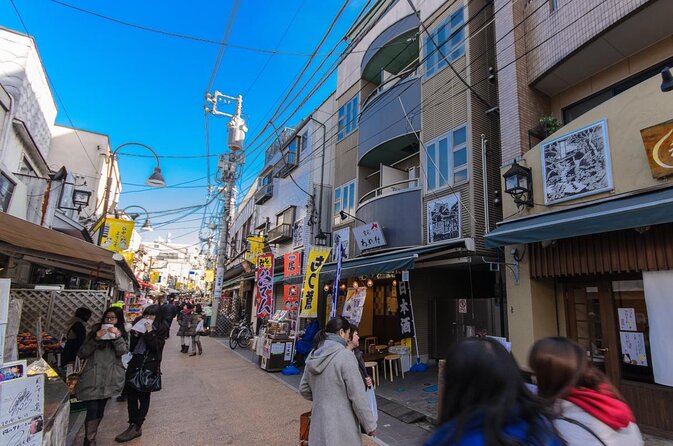
Yanaka Ginza: Why this part of Tokyo feels calmer
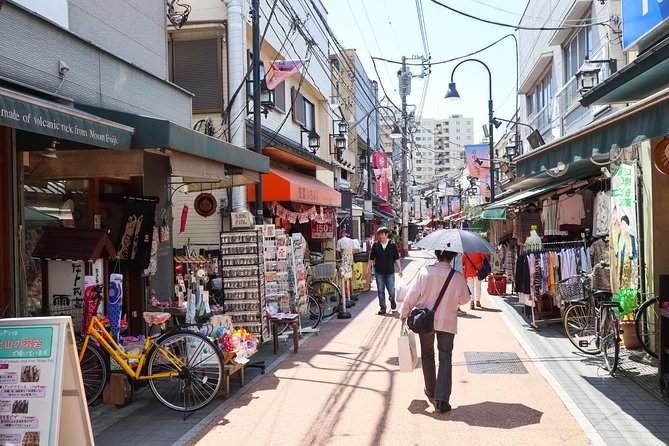
Yanaka sits in Tokyo like a hand-written note tucked inside a modern book. You still see older-style homes, neighborhood lanes that don’t feel designed for mass tourism, and everyday rhythms that don’t scream for your attention. That’s the core reason this tour works: it doesn’t just show sights. It shows how the neighborhood lives.
You’ll walk in the Yanaka Ginza area at a relaxed speed, which matters more than you’d think. Tokyo can be a lot on your legs. Here, the pace is built for most people with moderate fitness, so you can enjoy the small streets instead of just getting through them.
And it’s timed as an afternoon walk starting at 1:30 pm, which is great if you want a slower second act to your day. It also helps you see the change in light around shrine and shop-fronts without rushing your photos.
You can also read our reviews of more walking tours in Tokyo


Price and value: What $81.26 really covers
At $81.26 per person for about 3 hours 30 minutes, you’re paying for three things: a guided route through a specific old-town pocket, commentary that connects the religious and cultural dots, and food stops that keep the walk from turning into a pure sightseeing slog.
It’s also not a big group. The tour maxes out at 7 travelers, which usually means you’re more likely to get real answers and not just a stream of facts while everyone stares forward.
Food value is the sneaky part. You’ll get food tastings along the way, but the tour does not include a full lunch or dinner. So if you arrive hungry, you’ll feel it. If you arrive with at least a light meal already in your stomach, the tastings feel like bonuses instead of compensation.
The logistics that matter: meeting point, ending, and tickets
This is a straightforward walk, but two details can make or break your experience.
First, you meet at 1-chōme-3-7 Nezu, Bunkyo City, Tokyo 113-0031. It’s near public transportation, so you won’t be doing a long “where do I go now?” scramble. Second, the tour ends in Yanaka at 7-chōme-6-10 Yanaka, Taito City, Tokyo 110-0001. Your guide will point you to what’s next, but you should plan for the fact that your day will conclude in Yanaka rather than back at the shrine area.
You’ll also use a mobile ticket, which is convenient if you don’t want to juggle paper while walking.
Finally, start on time. If you’re late and miss the group, you can’t join later, and you won’t get a refund or reschedule. For Tokyo, that means give yourself a buffer—even if your subway is fine.
Stop 1: Nezu Shrine and the torii-gate feeling
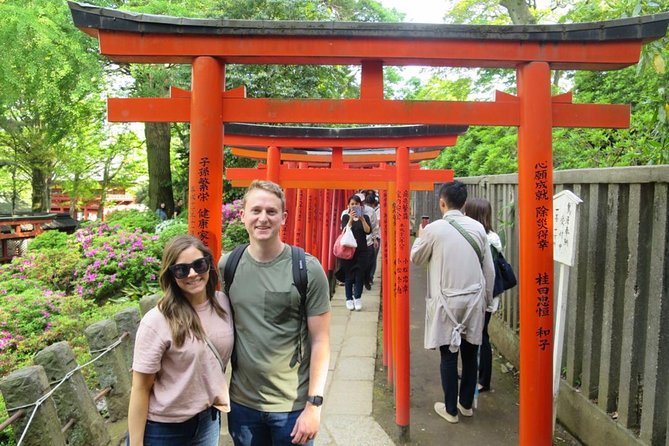
Nezu Shrine is the emotional opener. The big visual hook is the continuous torii gates, and the way you move through them creates that slow shift in mindset you only get at a place like this. Even if you’ve seen torii gates before, this one works because you’re not just looking—you’re walking through the sequence.
You’ll cross a red arch and feel the Shinto atmosphere take over the street. This is where the guide commentary matters. Instead of treating the shrine like a photo backdrop, you’ll learn the cultural framing behind what you’re seeing. One of the tour guides is known for weaving personal angles into the area, including family history tied to World War II—so the stories can run from religion to everyday life and back again.
Keep your eyes open for details along the path. Shrine spaces reward slow looking: small signs, the layout around entrances, and how the neighborhood changes as you approach and exit the grounds.
Stop 2: Yanaka District lanes where you notice real life
After the shrine, you’ll shift into the residential side of Yanaka. This is where the tour becomes more than temples-and-snaps.
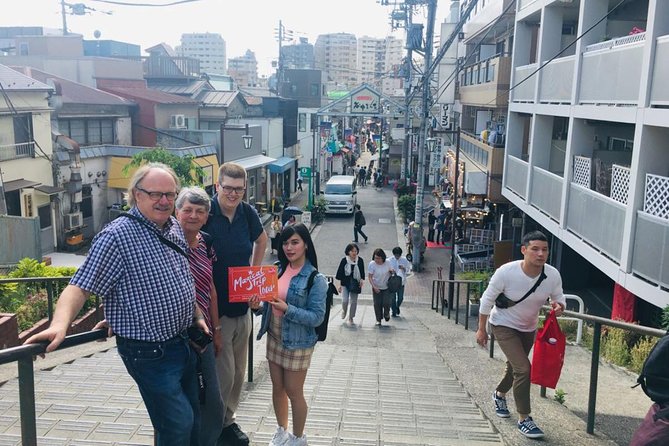
You’ll stroll through streets that feel local—less polished, more lived-in, and full of small storefronts and homes that most visitors never slow down to notice. The value here is contrast. Tokyo can feel uniform if you only stick to the big sights. Yanaka is different, and you’ll feel it in the street rhythm: how people move, how shops display items, and how quiet the lanes can be even in a major city.
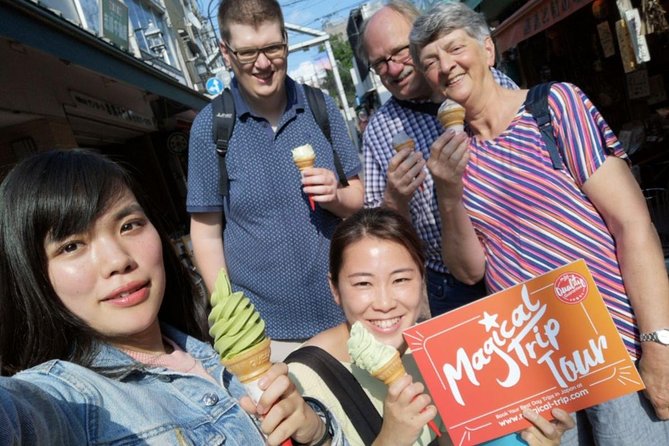
You’ll also have a traditional lunch-style stop as part of the experience—more like a cultural meal moment than a long sit-down. The tour includes food tastings, but it’s still not a full lunch guarantee, so I’d treat this as a guided sampling route rather than your main meal plan.
One practical thought: this segment includes more walking, so bring shoes you’re happy to break in. The tour is described as leisurely, but Tokyo distances add up fast when you’re actually going down side streets.
You can also read our reviews of more historical tours in Tokyo
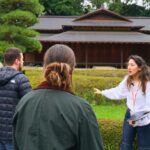





Nezu Museum: a pass-by that sets context
Along the way, you’ll pass by Nezu Museum. You won’t be stuck inside, but the stop works as a context marker. It helps connect the dots between the religious site, the arts world, and the way Yanaka preserves older cultural identity.
If you’re museum-minded, you might feel tempted to come back later on your own. But even if you’re not, the pass-by is useful because it reminds you this isn’t just a shrine area—it’s a neighborhood shaped by preservation and craft.
Stop 3: Cafe Neko-e-mon and the lucky cat craft break
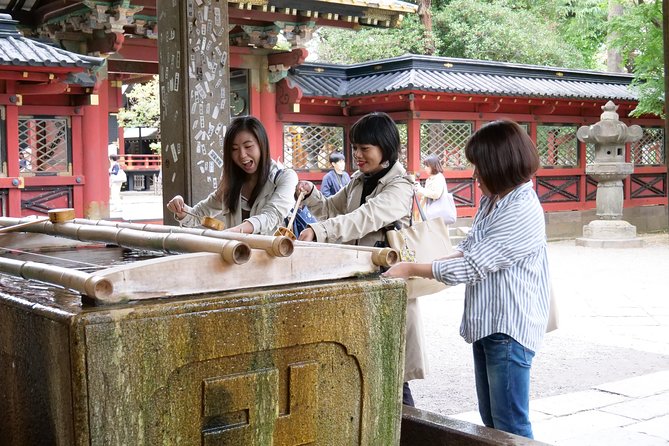
This is the most relaxing stop, and it’s a nice reset after shrine walking and residential streets.
At Cafe Neko-e-mon, you’ll do something hands-on: painting a lucky cat (maneki-neko) craft in a cozy old-house-style café setting. You’ll also enjoy dessert and a drink during the experience. The craft aspect matters because it gives you a calm, tactile moment when your brain would otherwise be overloaded with signs, streets, and new vocabulary.
One review highlight people talk about is how peaceful the cat painting feels—less like a scheduled activity and more like a break where you can actually slow down. I like that kind of pacing in a city tour. It keeps the afternoon from feeling like a checklist.
Practical tip: your hands may get a little messy depending on the craft setup. If you’re planning photos right after, wear sleeves you don’t mind protecting.
Stop 4: Yanaka Ginza shopping street and street-food sampling
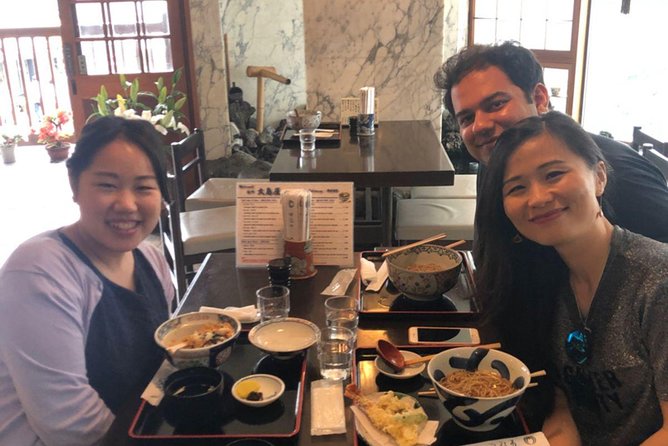
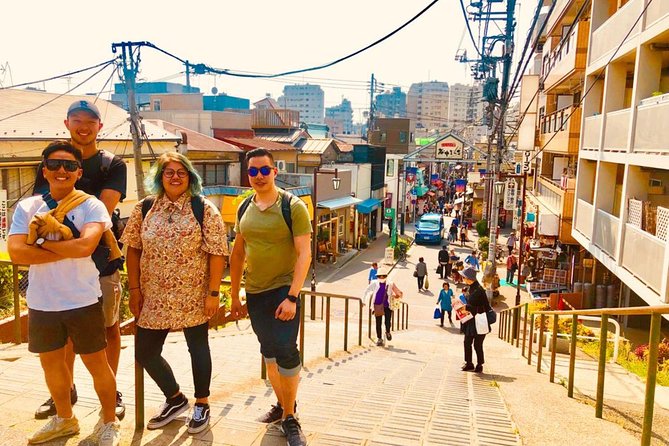
Yanaka Ginza shopping street is where the neighborhood energy shows up in an easy, human way. It has a nostalgic atmosphere, and it’s the kind of place where you can browse without feeling like you’re barging into someone’s business.
Here, you’ll sample street foods and small bites. The key word is sample. You’re not going to leave stuffed. You’ll leave curious—like you now know which shops you might return to later.
This is also a good spot for souvenirs, especially food-related ones. If you’re the type to buy small gifts for friends back home, this street format is more practical than a big department store because you can walk, compare, and pick what actually looks good.
If you’re sensitive to crowds, this part is a relief compared with Tokyo’s biggest tourist corridors. Yanaka isn’t silent, but it feels quieter—an escape from the constant “look here” pressure you can get elsewhere.
The guide makes the difference: stories, not lectures
This tour is built around commentary, and the guide style can make it feel personal rather than informational.
From the guides associated with this walk—people like Nao, Aoi, Hana, Hina, Chihero, and Kazu—there’s a consistent theme: they’re friendly, chatty in a natural way, and willing to answer questions as you walk. Several guides are noted for sharing deeper context, like Shinto basics, how shrines fit into daily life, and personal or family-linked perspectives (including WWII-related family history).
That matters because Yanaka’s magic is subtle. Without someone pointing out what you’re seeing and why it matters, you might only notice the aesthetics. With a good guide, you notice the structure: the meaning, the traditions, and the logic behind the neighborhood’s layout.
Who this tour is best for
This is a great match if you want:
- A small-group Tokyo walk (max 7) that feels more like a guided neighborhood stroll than a bus tour
- Shrine-and-culture sightseeing with time to rest
- Food tastings plus one hands-on craft stop
- An afternoon plan that won’t exhaust you like a full-day itinerary
It’s also a strong option if you’re tired of the usual big-name routes. Yanaka is a different Tokyo flavor. Nezu Shrine gives you the spiritual anchor, then the neighborhood takes over.
If you’re traveling with kids, the cat painting break can be a hit, as long as your group is okay with walking.
A balanced heads-up: what to watch out for
Two considerations can affect your experience.
First, meal expectations. The tour is described as including tastings and traditional lunch-style moments, but not a full lunch or dinner. Go in with at least a light meal beforehand so the afternoon doesn’t feel like you’re “waiting for food.”
Second, dietary requests. Dietary restrictions made on the day of the tour can’t be accommodated, and the tour notes that allergy-free support can’t be guaranteed because foods are prepared in kitchens not controlled by the tour provider. If you have allergies, plan carefully and inform the provider at least one day in advance.
Weather matters too. This experience requires good weather. If it’s canceled for poor weather, you’ll be offered another date or a full refund.
Should you book the Yanaka Historical Walking Tour?
If you want a Tokyo afternoon that’s calmer, more human, and actually different from the standard highlights route, I’d book this. The mix of Nezu Shrine, residential Yanaka streets, the Yanaka Ginza shopping street, plus the Cafe Neko-e-mon lucky cat painting is a strong formula: culture, daily life, food, and a pause to breathe.
I’d skip or reconsider only if you need a full meal experience included, have serious dietary/allergy needs you can’t plan around, or you’re very sensitive about being on time for group departures.
Overall, this is a good-value small-group way to get the Yanaka feel—without turning your day into a sprint.
FAQ
How long is the Yanaka Historical Walking Tour?
It’s listed as about 3 hours 30 minutes.
What’s included in the tour price?
You’ll get a guided walking experience with commentary, food tastings, and an included stop at Cafe Neko-e-mon where you’ll do lucky cat painting plus have dessert and a drink.
Is a full lunch included?
No. The tour doesn’t include a full lunch or dinner. It’s best to eat beforehand and think of the food as tastings.
Where does the tour start and end?
You start at 1-chōme-3-7 Nezu, Bunkyo City, Tokyo 113-0031, Japan, and the tour ends in Yanaka at 7-chōme-6-10 Yanaka, Taito City, Tokyo 110-0001, Japan.
How big is the group?
The tour has a maximum of 7 travelers.
Can the tour accommodate dietary restrictions or allergies?
Dietary requests made on the day of the tour cannot be accommodated. The tour also states it can’t guarantee allergy-free food, since food may be prepared in kitchens outside the tour provider’s control. If you have restrictions, you should inform the provider at least one day before.
What happens if I’m late or the weather is bad?
If you’re late and miss the group, you won’t be able to join later and you won’t be able to get a refund or reschedule. If the tour is canceled due to poor weather, you’ll be offered a different date or a full refund.
You Might Also Enjoy
 In 2026, 2-Day Mt. Fuji Climbing Tour with Mountain guide
 Private Tsukiji Market Visit and Cooking Class in Junko’s Home
 Experience all of Japanese culture and Japanese food experience classes “origami, udon, Japanese food, green tea, calligraphy” in 4 hours
 Tokyo: Sumo Morning Practice Viewing Tour at a Real Stable