REVIEW · TOKYO
Samurai Sword Experience (Family Friendly)at SAMURAI MUSEUM TOKYO
Book on Viator →Operated by Maikoya · Bookable on Viator
Sword practice in Tokyo is surprisingly kid-proof. This Samurai Sword Experience at Samurai Ninja Museum mixes costume, safe sword movements, and a guided visit to the museum—so it feels more like a lesson than a photo stop. I especially like the hands-on katana handling (not just posing), and the fact that you get both samurai and ninja culture in one trip. One thing to consider: timing can feel tight once you add dressing, photos, and group flow, so build in a little patience.
You’ll start at Samurai Ninja Museum in Asakusa, suit up in traditional clothes (including a hakama) and a samurai helmet, then learn a set of sword movements with instructors such as Kenny or Ryo (a multi-generation samurai-family instructor, depending on the day). The museum visit is a nice add-on, but the space can be crowded, so go in expecting a compact museum experience with hands-on highlights driving the day.
In This Review
- Key things to know before you go
- Entering Samurai Ninja Museum Asakusa: the moment it clicks
- Dressing like a samurai: hakama, helmet, and the photo setup
- Learning to wield a katana safely: what you actually practice
- Ninja weapons trial: throwing stars done the sensible way
- The museum tour: Samurai and Ninja Museum in a compact space
- Instructor names you might meet (and why it matters)
- Group size and pacing: the only real drawback to watch
- Price and value: is $65.41 a fair deal?
- Who should book this experience (and who might prefer something else)
- A simple booking checklist for a smooth afternoon
- Should you book the Samurai Sword Experience at Samurai Ninja Museum Tokyo?
- FAQ
- How long is the Samurai Sword Experience?
- Where does the tour start and end?
- What’s included in the experience?
- Are children allowed?
- Do you get to use a real sharp katana?
- How big are the groups?
- Is it refundable if my plans change?
Key things to know before you go
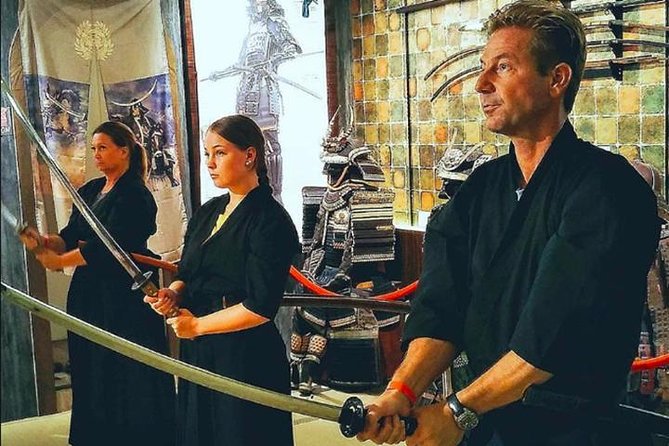
- Hands-on sword handling that focuses on safe technique, not just costume play
- Small-group setup with caps stated in the materials (check your confirmation for your exact session size)
- Samurai armor trial and photo moments, with posing in front of themed backdrops
- Ninja weapon practice, including a throwing star activity with foam or rubber practice gear
- English-speaking instructors you may hear names like Ryo, Kenny, Momo, or Jack (varies by day)
- A museum tour after the lesson, in a compact, story-focused setting
Entering Samurai Ninja Museum Asakusa: the moment it clicks
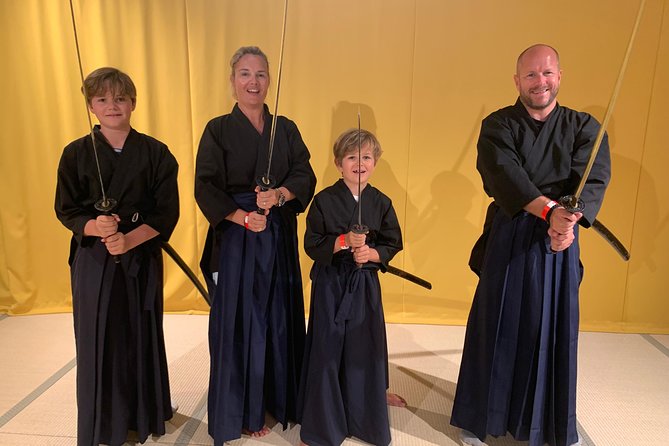
This experience begins at Samurai Ninja Museum in Asakusa, not far from public transit. Meeting there matters because you’re already in the right “world.” It’s easy to get oriented fast: you show up, meet your instructor team, and then the day shifts into training mode.
The start time is set for 2:00 pm, and you should plan your afternoon around about 90 to 120 minutes total, even if one description lists it as roughly 1 hour 15 minutes. That mismatch isn’t a red flag—it’s what usually happens when a “lesson + photos + museum” experience runs on real-time group pacing.
You can also read our reviews of more museum experiences in Tokyo


Dressing like a samurai: hakama, helmet, and the photo setup
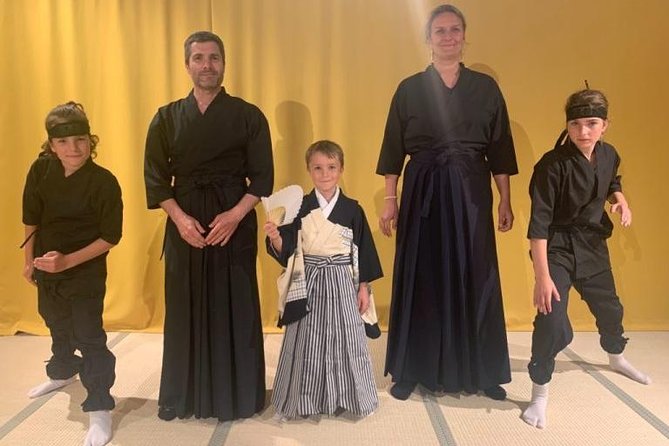
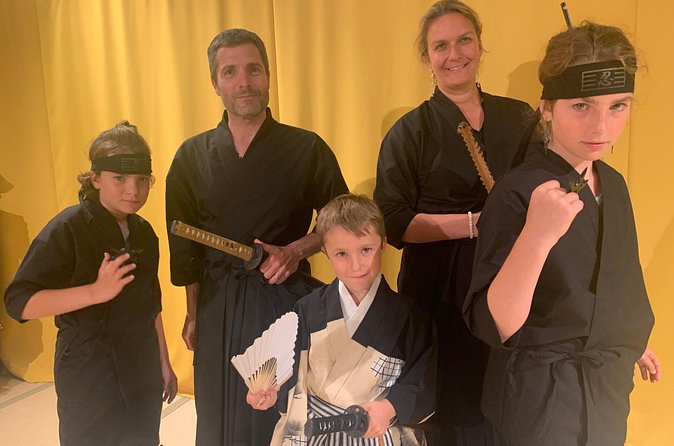
Suiting up is more than a quick costume change. You’ll wear a hakama and then a full samurai outfit plus a samurai helmet. Many people come for the look, but what I like is that it’s tied directly to the training and positioning—your body learns the posture, not just the outfit.
You also get a chance at a samurai armor trial and posing with swords in front of a studio-style area or samurai-themed backgrounds. Based on how this runs, the armor portion is designed for the experience flow and photos rather than long wear time. One review described the armor as fake rubber for a realistic look in pictures, which makes sense: it lets you try the visual without slowing the class down.
Practical tip: if you’re bringing kids, treat the dressing time as part of the activity. The faster you accept that you’re in a “slow-and-steady” moment, the more fun you’ll have when the sword practice begins.
Learning to wield a katana safely: what you actually practice
This is the core of the day. You get a hands-on lesson on using a samurai sword, and the goal is safe handling and learning simple movements that feel authentic. One of the best parts is that the instruction is structured. You don’t just hold a sword and guess.
In practice, you’ll go through a demonstration first, then you’ll practice with training gear. Reviews describe wooden swords and foam options for kids, then a chance to perform with a replica sword that is not sharp. That detail matters. You should expect choreography: learning steps, stance, and timing—not a “chop something” show.
The instructor quality is a big deal here. People mention names like Kenny and Momo for instruction and history context, and Ryo for a professional, friendly approach tied to long family samurai training (again, it varies by day). Even if you’re not a martial arts person, the class tone is built for first-timers.
What you’ll walk away with:
- Basic samurai stances and how to hold the sword safely
- A short sequence of movements you can remember
- A sense of why training mattered in historical Japan (more than just “swing it”)
Ninja weapons trial: throwing stars done the sensible way
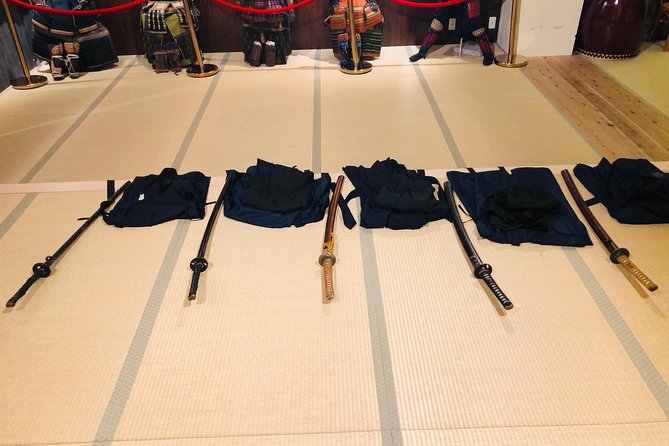
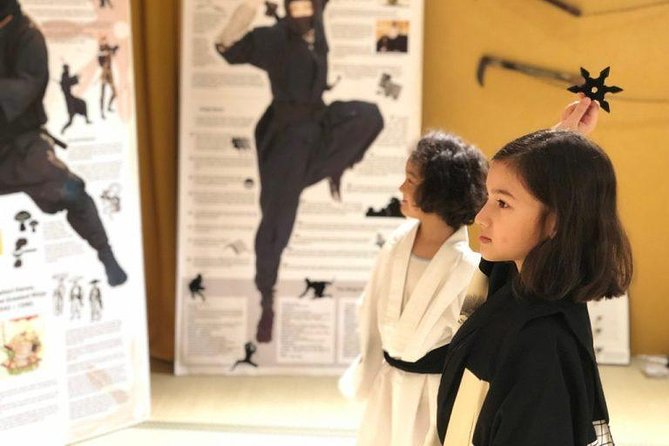
After the sword lesson, you switch gears to ninja culture. The ninja weapons trial includes throwing star practice. One review specifically mentioned hard rubber ninja stars thrown into Styrofoam, which is exactly the kind of setup that lets you try the action without turning it into a safety issue.
This part tends to be short—think around 10 minutes—but it lands well because it adds physical variety. If your group is part “history nerd” and part “I want to try this,” this is where both types stay interested.
Tip for photos: the throwing part is a good moment to plan what you want. If you want action shots, stand where you can see the throw path, but don’t get too close to the throwing area.
The museum tour: Samurai and Ninja Museum in a compact space
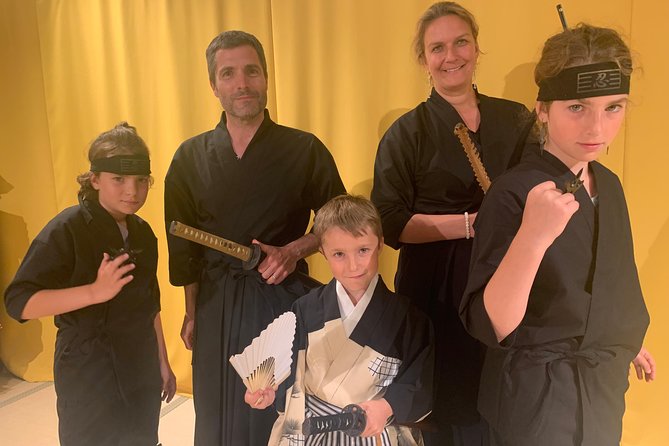
The museum portion is included, and it’s meant to connect what you just learned to objects and stories. Your tour continues after the sword and ninja activities.
Here’s what to expect realistically: it’s not presented as a huge, all-day museum. Reviews describe it as engaging but compact, with some rooms that can get crowded. If you’re the kind of person who loves slow reading at every display, you may feel rushed by the schedule.
Still, the museum tour is worth it because it gives names, context, and visuals behind the training. You’ll see samurai and ninja themed artifacts and displays, which turns your sword lesson from a fun workshop into something with cultural grounding.
If you care most about the museum: arrive hungry for short explanations, not long self-guided wandering. For museum slow-browsing, you’ll likely want to add extra time in Asakusa after your experience.






Instructor names you might meet (and why it matters)
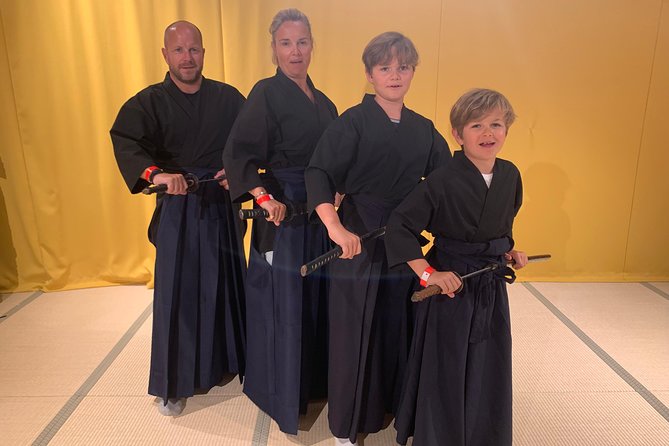
In a hands-on class, the instructor is half the product. This one is led by different staff on different days, and reviews highlight a few names:
- Ryo: described as professional, skilled, and friendly, with a long family samurai background
- Kenny: credited as a great sword instructor by name
- Momo: mentioned as knowledgeable about Japanese history
- Jack: noted for sharing history while teaching sword movements
Even if you don’t know these names ahead of time, the pattern is clear: you’re getting both movement instruction and cultural framing. That balance helps kids and adults stay connected to the “why,” not only the “how.”
Group size and pacing: the only real drawback to watch
This is a small experience, but a few details can still affect your mood.
1) Group size caps are listed differently across materials (maximum eight is mentioned in one place, while other info mentions up to 16 and a different cap appears as well). In normal conditions, you should expect a small-group feel.
2) If participants arrive late, the class flow can stretch. One review described long waits while people were dressed and photos/videos were done.
3) If the museum part gets crowded, you may not see every display deeply.
So your best move is simple: be on time for the 2:00 pm start. If you’re traveling with kids, plan snacks and bathroom breaks before you arrive so you’re not trying to solve timing problems mid-session.
Price and value: is $65.41 a fair deal?
At $65.41 per person, this sits in the “experience” price category, not a bargain workshop. But it can be good value if you judge it the way it’s built: you’re paying for instruction time, safety-focused sword handling, and multiple activity elements in one package.
What you get that supports the price:
- A structured sword lesson (around 40 minutes)
- A ninja weapon activity (around 10 minutes)
- Costume and gear: hakama, samurai outfit, helmet, armor trial
- Posing and studio-style photo moments
- A museum tour afterward
If you’re the type who loves hands-on learning and photos, you’re likely to feel it’s worth it. If you mainly want a quick costume snapshot and don’t care about technique, you may feel the experience is longer than you expected—especially if your session includes lots of waiting for dressing and group photo setups.
Who should book this experience (and who might prefer something else)
This is a great fit if:
- You want a first step into samurai culture without needing prior knowledge
- Your kids are old enough to enjoy structured movement (and note: children under 6 can’t enter the samurai venue)
- You like “try it yourself” activities more than reading museum placards
- You want photos and action moments, but also a real lesson component
It may not be ideal if:
- You strongly prefer self-paced museum time
- You dislike group timing and photo line-ups
- You expect sharp-blade sword performance or cutting demonstrations (based on how the session is described, practice is about safe movement, not cutting)
A simple booking checklist for a smooth afternoon
Do these and the experience feels easier:
- Pick a meeting point that’s easy for your group to find, since it starts at Samurai Ninja Museum in Asakusa.
- Show up early enough to handle bathroom and snack needs before dressing starts.
- Wear shoes you can move in comfortably while practicing sword stances.
- If you’re sensitive to crowds, know the museum can feel busy and compact during peak times.
- When you book, check your confirmation for the exact group cap for your session, since the materials show different numbers.
Should you book the Samurai Sword Experience at Samurai Ninja Museum Tokyo?
If you want hands-on sword technique, a real instructional pace, and a combo of samurai plus ninja culture, this is a strong yes. The best part is that it’s not only a costume stroll—you practice movements with training gear, then get a short ninja weapons moment and a museum tour.
I’d skip it only if you’re mainly chasing a quick photo with zero interest in the lesson, or if you’re very uncomfortable with schedule-driven group pacing. Otherwise, it’s a solid, family-friendly choice that turns Japan’s samurai myth into something you can actually do for a while.
FAQ
How long is the Samurai Sword Experience?
It’s listed as about 1 hour 15 minutes, and the overall experience can run between 90 and 120 minutes. One description breaks it into a sword lesson of about 40 minutes plus about 10 minutes for the ninja star activity.
Where does the tour start and end?
It starts at Samurai Ninja Museum Asakusa Tokyo at 1-chōme-8-13 Nishiasakusa, Taito City, Tokyo, and it ends back at the meeting point.
What’s included in the experience?
You’ll get a hands-on lesson about using a samurai sword, wear a hakama and samurai outfit with a helmet, do a samurai armor trial and posing, try ninja weapons (including throwing stars), and take part in a museum tour.
Are children allowed?
Children under 6 can’t enter the samurai venue. The experience is described as family friendly for appropriate ages.
Do you get to use a real sharp katana?
The class focuses on safe sword handling and practice with provided training equipment. One review described the replica sword as not sharp and not for chopping.
How big are the groups?
The materials describe small-group limits, including caps mentioned as maximum eight, maximum 16, and a maximum of 4 in one place. Check your confirmation for your specific session’s group size.
Is it refundable if my plans change?
Yes. You can cancel for a full refund up to 24 hours before the experience start time. Changes within 24 hours of the start aren’t accepted.