REVIEW · TOKYO
Tokyo Asakusa Rickshaw Tour
Book on Viator →Operated by Ebisuya · Bookable on Viator
A rickshaw makes old Tokyo feel close. This customizable Asakusa tour pairs shrine stops with city-photo moments like the Skytree view and Asahi’s golden flame.
I love how the route adapts to what you care about most, so you can steer toward temples, history, food-area vibes, or photo spots. I also like the human pace: you get short breaks at landmarks instead of rushing past everything on foot. One thing to plan for is comfort and access—rickshaws are only wide enough for certain body sizes, and there are rules about where you can ride during temple-area visits.
In This Review
- Quick things to know before you go
- Why a Tokyo Asakusa rickshaw tour feels different than walking
- Price and timing: what you’re really paying for
- Meeting point and how the tour actually starts
- The route you’ll get: tell your guide what matters
- Stop by stop: what each major stop feels like
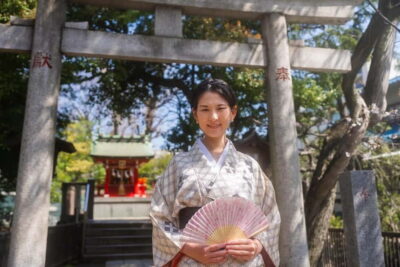
- Ushijima Shrine: Shinto details with a specific reason
- Sensoji Temple area: bright gates, but watch the rickshaw rule
- Honryuin Matsuchiyama Shoden: why radishes show up everywhere
- Imado Shrine: manekineko cats and a very photo-friendly vibe
- More than temples: Asakusa’s modern icons and playful streets
- Tokyo Skytree view across the Sumida River
- Asahi Beer headquarters: the golden flame icon
- Lucky Fortune Cow Shrine and the garden moment
- The raccoon street: the quirky part you’ll actually remember
- An old amusement park still running
- Sumida Park and the entertainment district feel
- Rokku Street and old show history
- An Asakusa entertainment heart
- Sumida Park: cherry blossom potential and a built-in break
- Comfort, warmth, and fitting into the rickshaw
- Weather and pacing: when a rickshaw tour works best
- Guide styles: names you might hear, and what that means for you
- Who should book this Tokyo Asakusa rickshaw tour
- Should you book this Asakusa rickshaw tour?
Quick things to know before you go
- Customizable route in Asakusa: tell your guide what you want, then adjust stops on the fly
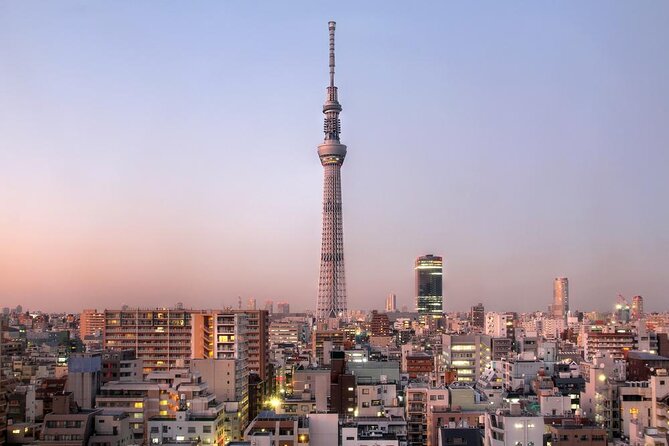
- Skytree photo moments from the Sumida River: you’ll get viewpoints that are made for pictures
- Temple details you’ll actually remember: like radishes at Honryuin and cat figures at Imado
- Edo-era streets plus retro entertainment lanes: raccoon-themed streets and older show districts
- Comfort depends on fit: max two adults per rickshaw, and it can be snug for bigger frames
Why a Tokyo Asakusa rickshaw tour feels different than walking
Asakusa is the kind of neighborhood where you can keep finding details even after you think you’ve seen it all. But walking the whole area on your own can feel like you’re speed-reading: temples here, shops there, then you realize you skipped the meaning.
A rickshaw changes the rhythm. You move slowly enough to notice shop facades, street textures, lantern colors, and the way different faiths and eras sit next to each other. It also turns the ride into a conversation, not just transportation—your guide can steer you toward what you actually want to see.
This is especially handy if you’re short on time. You get an overview fast, but you still stop long enough to take photos, ask questions, and reset your feet.
You can also read our reviews of more tours and experiences in Tokyo.



Price and timing: what you’re really paying for
At $42.90 per person, this tour is priced like a “hands-on Tokyo experience” rather than a casual stroll. The value comes from two things: you’re paying for a driver who can maneuver through Asakusa streets, and you’re paying for guided context at each stop.
The tour length runs from about 30 minutes up to 3 hours. That matters because Asakusa can expand quickly once you start talking to your guide and adding stops. If you want a quick orientation, go shorter. If you want time to linger at shrines, do the temples carefully, and get more photo angles across the river, pick the longer option.
Also note the schedule pattern: this experience is often booked around 54 days in advance on average. If you’re traveling in peak cherry-blossom season or on a weekend, booking early can help you lock in the time window you want.
Meeting point and how the tour actually starts
You’ll make your own way to the pickup spot at 1-chōme-1-4 Asakusa, Taito City. There’s no hotel pickup, so build in a little buffer to reach the station area before your start time.
When you arrive, you meet your guide outside Asakusa Station. Then you hop aboard and start moving through the neighborhood. The finish point is near your choice, but it’s determined with your guide on the day, and some alternative drop-offs may cost extra.
If you want an easy start, I’d aim to arrive slightly early. Asakusa can be crowded around popular sights, and you don’t want to rush the moment you should be chatting with your guide.
The route you’ll get: tell your guide what matters
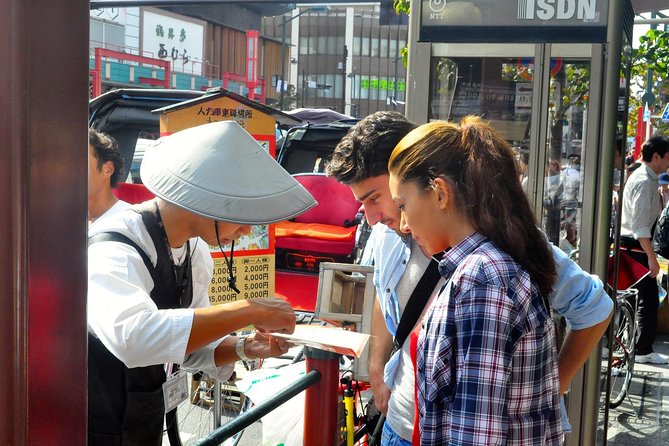
This tour is described as customizable, and that’s not just marketing. You actually set the tone at the start—tell your guide what you want more of, and they shape the stops to match.
Your ride can cover a mix of:
- religious sites and historic grounds
- Edo-era street scenes and old residential facades
- quirky theme streets (including a raccoon street)
- modern icons like Asahi Beer headquarters
Even if your specific stops vary by time length, you can expect a logical flow that covers Asakusa’s “old meets new” vibe. You’re not only passing landmarks—you’re also getting the meaning behind them, like why certain shrines have unusual features.
Stop by stop: what each major stop feels like
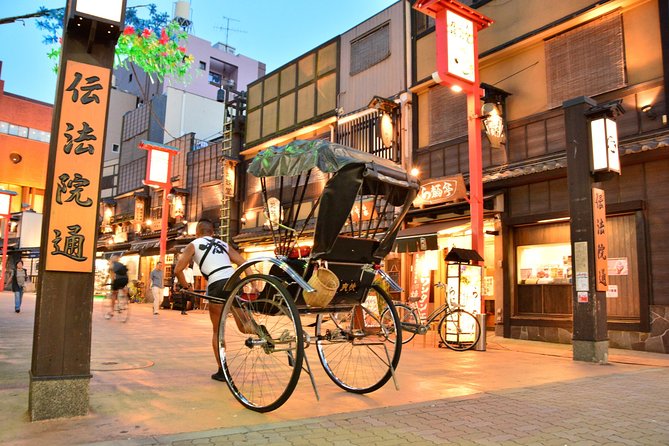





Ushijima Shrine: Shinto details with a specific reason
One of the early shrine stops is Ushijima Shrine. It’s Shinto, and you’ll spend around 15 minutes here when included.
The detail I’d look for is the gate with three entrances instead of the standard one. Your guide explains what makes that difference meaningful, so it’s not just a photo stop. This is a good place to slow down and listen, because the explanation turns what looks like an architectural oddity into something you’ll understand.
Sensoji Temple area: bright gates, but watch the rickshaw rule
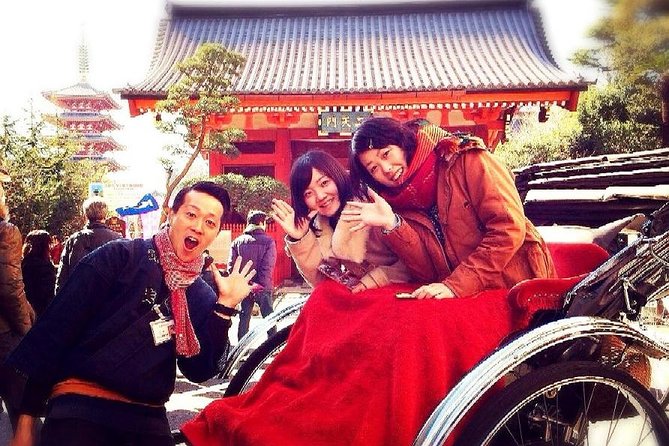
Asakusa’s most famous draw is Sensoji Temple and its surrounding area. You’ll see a colorful gate leading into the temple grounds, and you’ll learn how Shinto and Buddhism coexist in this neighborhood.
But here’s the practical catch: no rickshaw ride is allowed inside the Sensoji Temple/Asakusa Temple area. That includes temple buildings, temple grounds, and the Nakamise shopping street. In plain terms, you’ll park the rickshaw nearby and continue on foot for the parts that are restricted.
That sounds like a drawback until you realize it also makes the experience smoother. Temple crowds move at walking speed, so you don’t fight foot traffic from a narrow vehicle.
Honryuin Matsuchiyama Shoden: why radishes show up everywhere
If you like temple oddities that have a real explanation, Honryuin Matsuchiyama Shoden is worth your attention. It’s a Buddhist temple and can also run about 15 minutes when included.
The big clue is right in the theme: there are many radishes, and you might also see radishes painted on lanterns. Your guide connects that visual motif to the place’s practices and symbolism, turning what could seem random into a story you can repeat later.
This stop is also a good “contrast moment.” Shinto and Buddhism are both present in Asakusa, and the tour often points out how they’re practiced side by side.
Imado Shrine: manekineko cats and a very photo-friendly vibe
Another Shinto stop is Imado Shrine, often around 15 minutes. This one has a strong cat presence, especially the manekineko, the beckoning cat.
If you like visuals that are easy to spot and fun to photograph, this is one of the best stops. And because it’s part of the same guided flow, you’ll get context on why these figures matter at this specific place—not just that they exist.
More than temples: Asakusa’s modern icons and playful streets
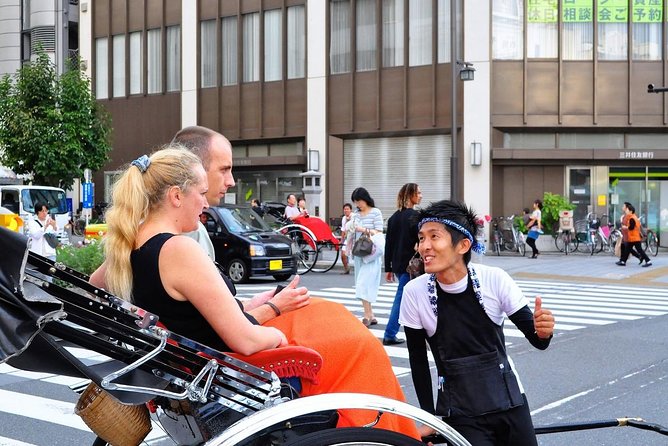
Tokyo Skytree view across the Sumida River
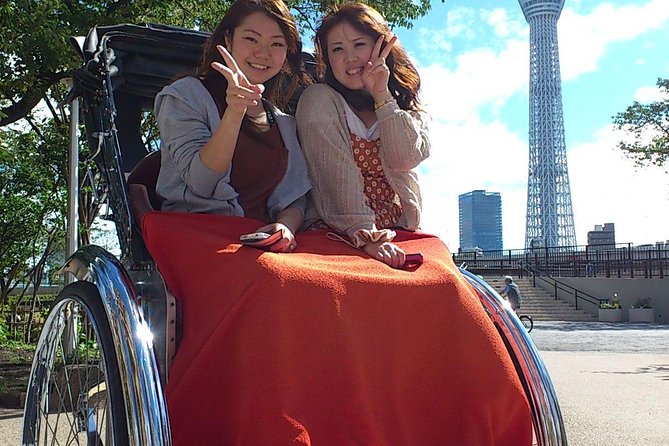
At some point, the route includes an excellent view on Tokyo Skytree from across the Sumida River. This is one of those “no extra travel required” photo moments, and it’s timed so you can look outward rather than only down at street level.
Even if you’re not a big photo person, I’d treat this as a reset. You get a breath of open space plus a skyline anchor that makes Asakusa feel connected to the rest of Tokyo.
Asahi Beer headquarters: the golden flame icon
You may also visit the Asahi Beer headquarters, known for the iconic golden flame on top of the building. This is a nice contrast stop: you’re in a neighborhood that feels old, but you’re also seeing a major Japanese brand’s headquarters nearby.
It works well on a tour because it gives you “context in one glance.” You can point to the flame and explain to someone later why Asakusa sits next to big-city industry.
Lucky Fortune Cow Shrine and the garden moment
The highlights mention relaxing in a Japanese garden to see the Lucky Fortune Cow Shrine. Even without a long stay, a garden stop can change how you experience the rest of the day. Shrines and streets can run fast in your brain; a garden slows that down.
If you’re doing this tour on a day with limited other downtime, this kind of pause is a real bonus.
The raccoon street: the quirky part you’ll actually remember
Asakusa has room for weird. A big example is a street where the theme is raccoons, with raccoon figurines placed every few meters.
This isn’t just decoration. It’s part of Asakusa’s playful, retro side. If you like streets where you can count details and spot something new every step, you’ll love this segment.
An old amusement park still running
The route can include one of Japan’s oldest amusement parks still in operation. This adds personality because it’s not just temples and photo gates—you see that Asakusa’s fun side has lasted through the decades.
Sumida Park and the entertainment district feel
Rokku Street and old show history
The tour may cover Rokku Street, which is part of the retro district. It used to be the top entertainment area before the war, with cinema and theaters.
When you hear that framing, you start looking at the street differently. It stops being just “older-looking buildings” and becomes a timeline.
An Asakusa entertainment heart
You might also visit the venue that has long been the center of Asakusa’s entertainment district, including comedy and shows. Even if you don’t catch a performance during your tour, you get a sense of why this area has that reputation.
It’s a good stop if you want to understand Asakusa as a place where people came to be entertained, not only to pray.
Sumida Park: cherry blossom potential and a built-in break
The route can end up at Sumida Park, a long riverside stretch along the Sumida River. In spring, it’s linked with cherry blossoms, and it’s also simply a good break spot.
You’ll get a view of Tokyo Skytree across the river again here. That means fewer “where should I stand” decisions on your own. It’s built into the flow.
Comfort, warmth, and fitting into the rickshaw
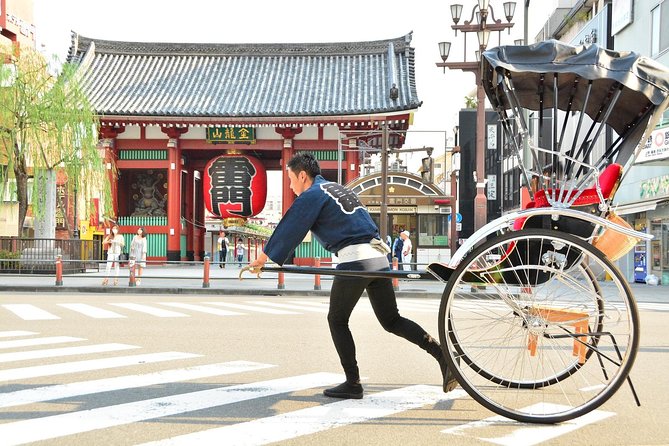
This is where you should pay attention to the practical details. Each rickshaw is 29.1 inches (74 centimeters) wide, and the tour follows a max of two adults per rickshaw. The tour allows up to two children aged 5 and under on an adult’s lap.
If you’re anywhere near the upper end of comfort needs, I recommend planning for it early. The instructions also note that it can be more comfortable to book individual rickshaws for each passenger.
A couple of small comforts show up in real-world experience too. Some guides have been described as keeping people warm and dry with seatwarmers and rugs, and the tour has handled rainy days well. That’s worth keeping in mind if you’re traveling when weather can flip quickly.
Weather and pacing: when a rickshaw tour works best
This experience requires good weather. If conditions are poor, it can be rescheduled or refunded, so don’t plan it as your single non-movable must-do if the forecast looks shaky.
Pacing is flexible. Some people pick a short tour to get the overview and then go explore on their own after. Others choose longer time to do the shrines carefully and take more time at each photo spot.
If you hate being rushed, longer is the safer bet. If you’re the type who wants to see five things well and then move on, shorter is a smart choice.
Guide styles: names you might hear, and what that means for you
You may meet different guides, but several names show up repeatedly in what people report: Issy, Micchy, Kei, Koko, Yusuke, Takumi, BUCHI, Taisei, and Kazumasu.
That matters because this tour works through dialogue. People often describe guides as energetic, friendly, and willing to answer questions. One driver had a soccer background, and that kind of detail signals a broader point: you’re not just getting a driver who pedals—you’re getting a guide who wants the experience to land.
If you prefer English or Japanese, specify at checkout. The availability is described as subject to availability, so the sooner you lock it in, the better.
Who should book this Tokyo Asakusa rickshaw tour
This tour is a good match if you:
- want a fast, guided introduction to Asakusa
- like temples, shrine details, and religious contrasts explained clearly
- want skyline and photo moments without building a whole walking route
- prefer a short, guided experience over planning every step yourself
It may be less ideal if you:
- need a lot of wheel access inside temple buildings and the Nakamise shopping street (since rickshaw ride isn’t allowed there)
- strongly dislike snug seating or may have comfort concerns in a narrow vehicle
- want zero coordination at the start (because you handle your own way to the meeting point)
Should you book this Asakusa rickshaw tour?
I’d book it if you want high time-value in a small area. You’re paying for guided context at key shrines and streets, plus the fun factor of riding instead of only walking.
If you’re going during peak seasonal crowds, pick a time that gives you breathing room. If you’re sensitive about comfort, consider booking a separate rickshaw per person. And if your heart is set on the most famous temple shopping lanes, go in knowing you’ll switch from rickshaw ride to walking at the restricted Sensoji area.
Done right, this tour gives you the kind of Asakusa memory that lasts: shrine details, playful street themes, and a view of Tokyo’s modern skyline from the riverside.