REVIEW · TOKYO
Tokyo: Full-Day Tour of the Six Majestic Spots of Mt Fuji
Book on GetYourGuide →Operated by JRT Group · Bookable on GetYourGuide
Fuji photos start before the crowd. This Mount Fuji day tour from Tokyo is built around the best sightlines: Hirano Beach for mirror-like reflections and Higashikawa Clock Shop for that long-road Fuji illusion. The big catch is simple: if skies turn cloudy, you may get fewer Fuji moments than you hoped.
I like how the day mixes “iconic Fuji” with lived-in local stops, not just viewpoint chasing. You’ll also get a fun, quick selfie moment at the Lawson connected to the same Fuji photo mythology, plus classic photo stops around Lake Yamanaka and Lake Kawaguchi. It’s also strong value for the price, especially because transportation is included.
One consideration: the day depends on weather and timing. There’s flexibility if conditions force changes, but you should plan for the possibility of missed or reduced Fuji views.
In This Review
- Key highlights worth waking up for
- A Mount Fuji day tour from Tokyo that stays focused
- Hirano Beach at Lake Yamanaka: the morning magic with swans
- Higashikawa Clock Shop: the long road illusion that sells the dream
- Asama Park and the Lake Kawaguchi area: scenic pauses that break up the day
- Arakurayama Sengen Park: the red pagoda and seasonal Fuji framing
- Oshino Hakkai: UNESCO springs and the village walk
- Oishi Park at Lake Kawaguchi: seasonal flowers as Fuji’s foreground
- How the guides help you get the best shots (not just the best stops)
- Practical tips so your day runs smoothly
- Who this tour is best for (and who should think twice)
- Should you book this Tokyo-to-Fuji day tour?
Key highlights worth waking up for
- Hirano Beach morning reflections with swans and water that can look like glass
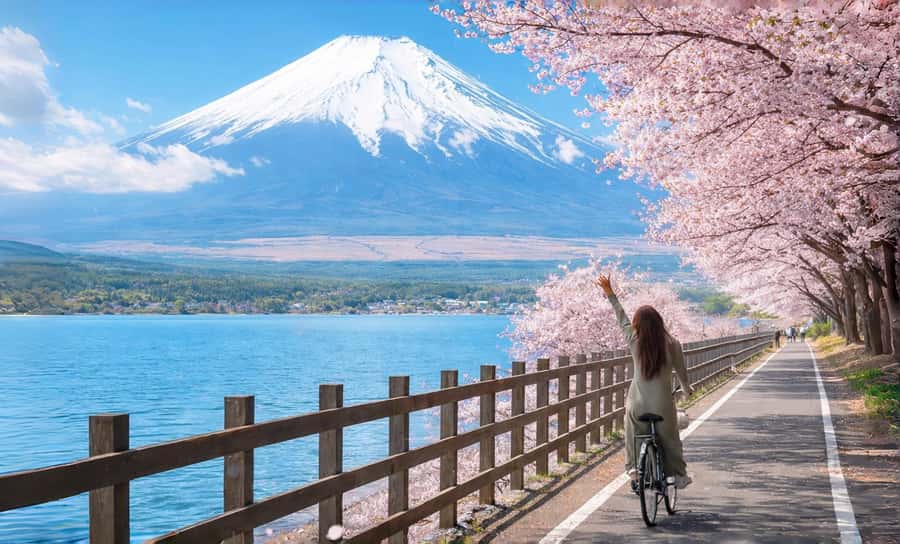
- Higashikawa’s straight road Fuji illusion that feels like the mountain is within reach
- Arakurayama Sengen Park’s red five-story pagoda with seasonal framing
- Oshino Hakkai’s UNESCO springs and a traditional village walk
- Oishi Park’s seasonal flower fields that give Fuji a colorful foreground
A Mount Fuji day tour from Tokyo that stays focused
This is the kind of day trip that makes sense if you want Fuji without turning your entire trip into logistics. From Tokyo, you’ll ride out in an air-conditioned vehicle with a guide and driver, then spend the day at a chain of high-impact spots where the views are the main event.
At $45 per person, the value comes from what’s included: transport, guiding, and a driver. Food isn’t included, so you’ll plan on lunch snacks on your own during stops. Still, if you’ve already spent time figuring out trains, buses, and timing for multiple Fuji areas, this packaged approach can feel like a shortcut to the “best hits.”
You’ll also notice the tour’s rhythm: early-ish for the morning lakeside shots, then a steady progression from photo stop to photo stop. One small note from experience in Japan: crowding can spike in peak seasons, and weekend traffic can squeeze schedules. This tour accounts for that by adjusting where needed.
You can also read our reviews of more tours and experiences in Tokyo


Hirano Beach at Lake Yamanaka: the morning magic with swans
Hirano Beach is your “early light” payoff. It’s a gravel shoreline in the northeastern part of Lake Yamanaka, and the whole point is the water. In the morning, conditions can create those classic dual shots: Mount Fuji above and its reflection below, almost like the mountain is duplicated.
The swans add a little something extra. They’re not just background décor here. If you’re patient, you can sometimes get close-up, calm-nature moments while you’re waiting for the best mirror effect.
Practical reality check: this stop is morning-only for the reflections. If you prefer a slower start, you’ll probably still enjoy it, but the signature “Fuji in two layers” look is the reason this is scheduled early.
Higashikawa Clock Shop: the long road illusion that sells the dream
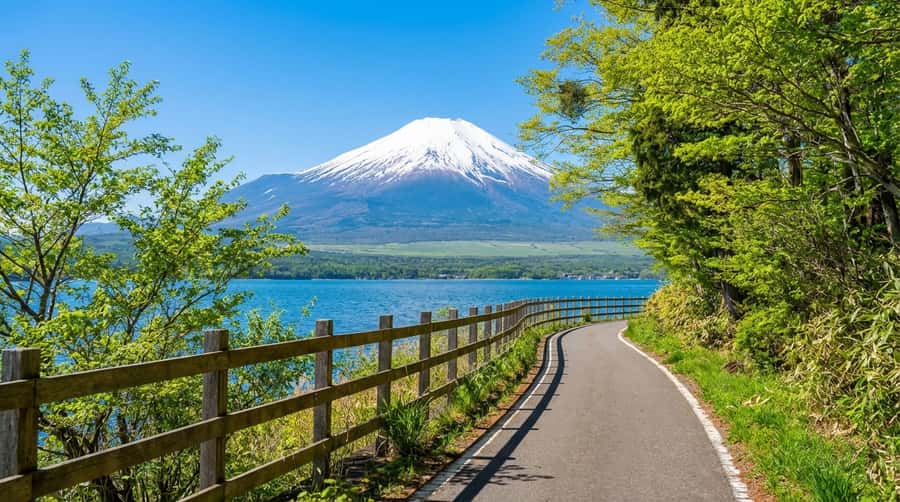
After the lakeside, the day shifts from water reflections to a more cinematic street scene: Higashikawa Clock Shop and its quiet, Fuji-facing setting. The key detail here is the layout. The road is straight and visually “stretches,” creating an illusion that Mount Fuji is much closer than it really is.
This is the kind of stop that feels like it was designed for framing. You can walk a bit, angle your shots, and watch how the mountain sits at the end of the perspective line. Even if you’re not chasing perfection, it’s fun because it looks good in normal phone cameras, not just big lenses.
Also, this part of the day includes the Lawson stop tied to the same Fuji photo culture. It’s worth treating it like a quick break, not a full meal plan. You’ll get an easy, minimalist backdrop for photos and a chance to rest your legs before the next scenic climbs.
Asama Park and the Lake Kawaguchi area: scenic pauses that break up the day
Between the main “headline” spots, you’ll spend time around Asama Park and the Lake Kawaguchi area. These segments matter because they prevent the day from feeling like nothing but crowded photo lines.
Think of this as your breathing room. You can regroup, check your camera settings, and adjust for how weather is behaving that day. If Fuji is teasing out of the clouds, these pauses are where you can catch a partial reveal and still enjoy the area even without a perfect panorama.
Arakurayama Sengen Park: the red pagoda and seasonal Fuji framing
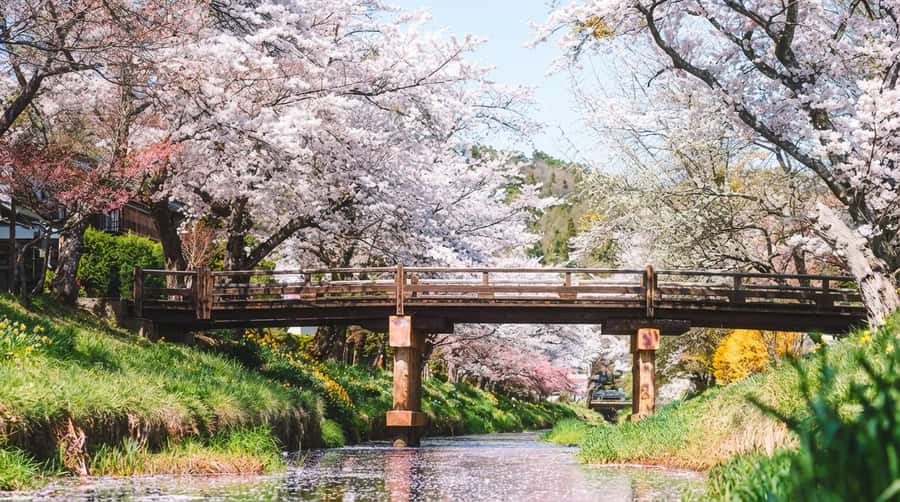
Arakurayama Sengen Park is one of the most famous Fuji viewpoints for a reason. It sits near Shimoyoshida Station, and the signature element is the red five-story pagoda. From there, Mount Fuji shows up like a backdrop to the architecture and the climb.
You’ll walk up stone steps, and you’ll want comfortable shoes. The views are why it’s worth it. In spring, look for cherry blossoms; in autumn, expect foliage tones that make Fuji look even more dramatic. Afterward, you can slow down with a coffee in the village below.
Accessibility note, said plainly: the tour notes say most stops are wheelchair-accessible except the pagoda steps at Arakurayama Sengen Park. And the operator also lists the tour as not suitable for wheelchair users, likely because that pagoda climb is a major part of the experience.





Oshino Hakkai: UNESCO springs and the village walk
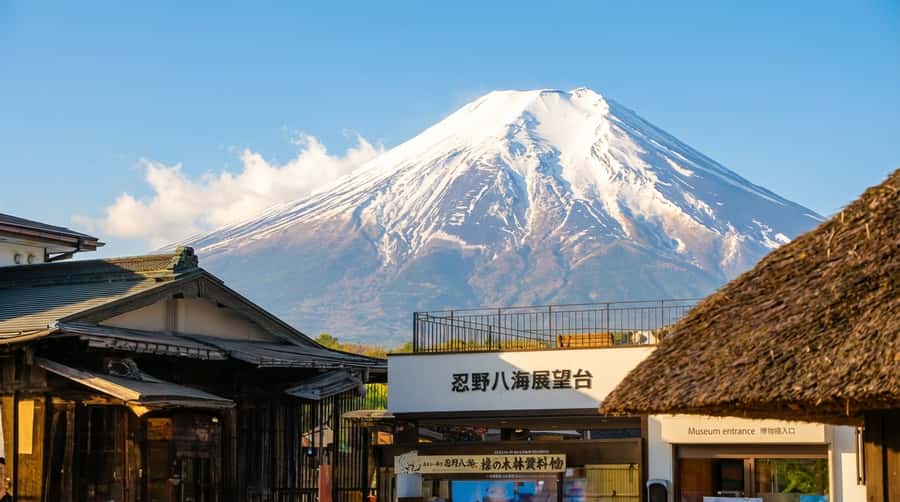
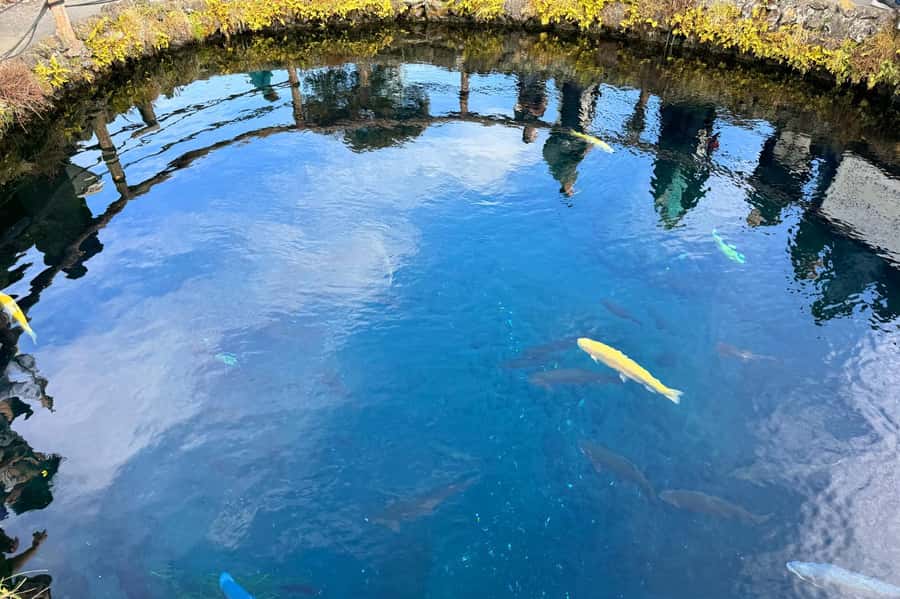
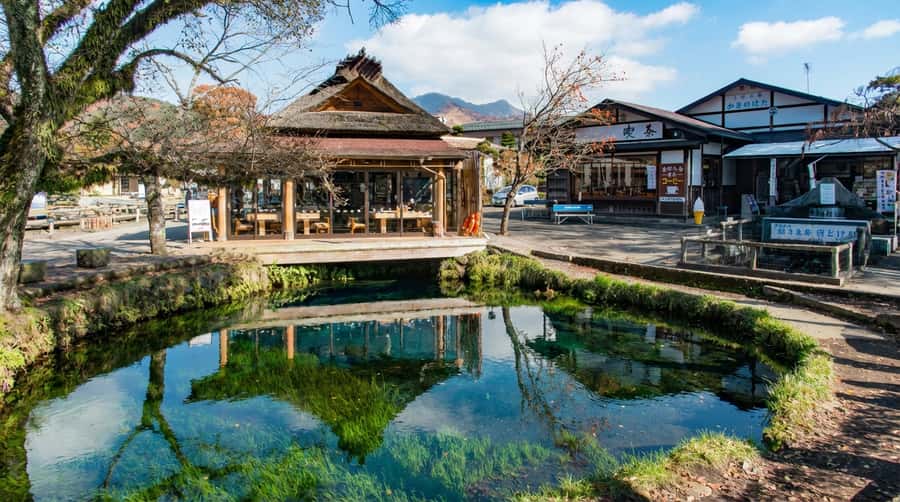
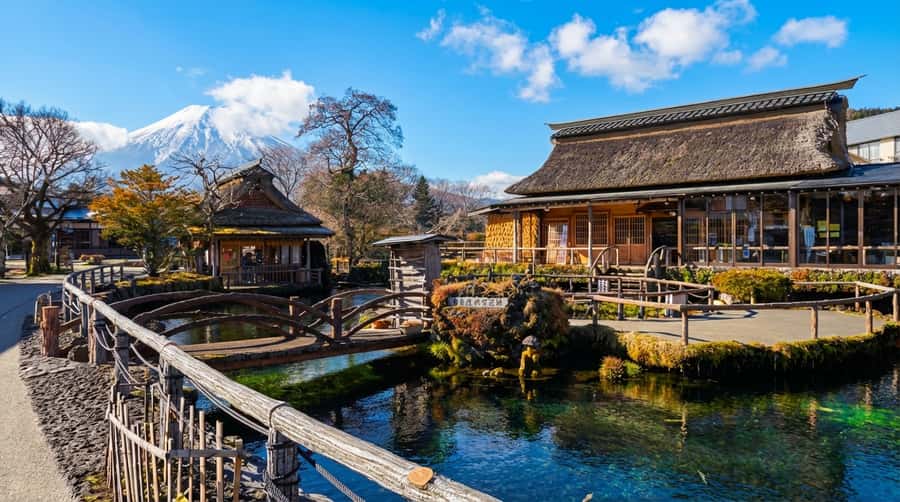
Oshino Hakkai is a different flavor of Fuji. Instead of aiming for a single iconic view, you’re surrounded by eight natural springs fed by melted snow from Mount Fuji. That water system is the whole story here.
You’ll wander through a traditional village setting with thatched roofs and wooden bridges. The springs themselves are known for crystal-clear, turquoise-toned water that often reflects Fuji in a clean, graphic way if conditions line up. Even when Fuji is faint, this stop still works because it’s more than scenery. It’s a walk you can slow down in.
The value of Oshino Hakkai in this tour is balance. You get lakeside reflections, then a more human-scale natural monument experience that doesn’t feel like you’re repeating the same photo from the same angle.
Oishi Park at Lake Kawaguchi: seasonal flowers as Fuji’s foreground
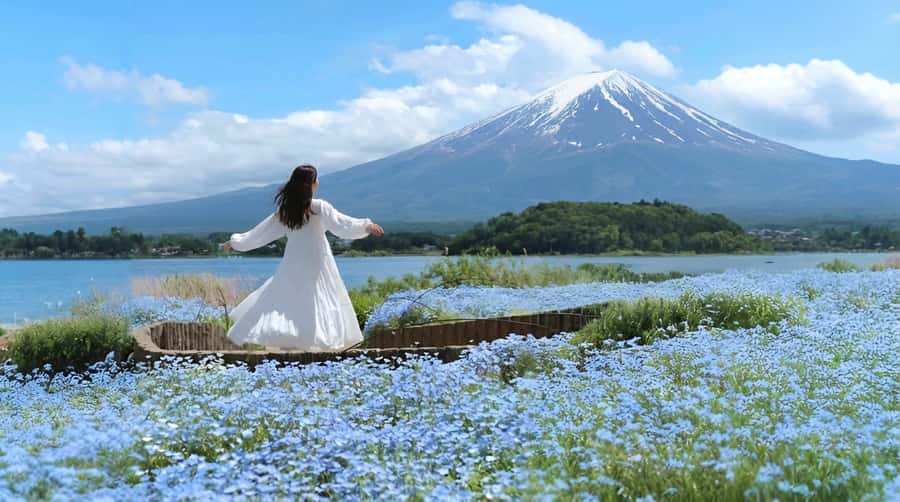
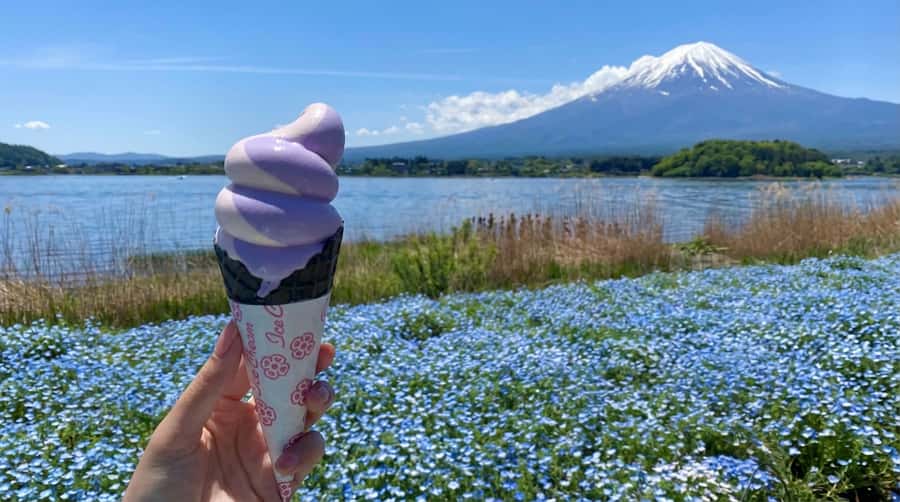
If you love color, Oishi Park is your payoff. It has large flower fields that change with the seasons, so Fuji isn’t the only star. The park’s big advantage is variety: you can get a different look depending on when you go.
What to expect by season:
- April: tulips, daffodils, rapeseed flowers
- May: moss phlox
- June–July: lavender (tied to the Kawaguchiko Herb Festival period)
- August–October: begonias
- November: scarlet maple leaves
In other words, you’re not just buying a Fuji photo. You’re buying a Fuji photo with a rotating color palette. That’s why this stop stays satisfying even if the day isn’t perfectly clear—there’s still visual payoff.
One caution: flower seasons can shift slightly. If you’re planning around a specific color, it’s smart to verify timing closer to your travel dates.
How the guides help you get the best shots (not just the best stops)
The tour’s quality often depends on the human factor. In the feedback I saw from guides and drivers, names like Will, Tim, Agnes, and Sakuragi come up alongside the same theme: they help you hit the good spots and use the time well.
Some guides also step in to help with photos. That’s a real advantage in Fuji areas, where the mountain can shift between cloud cover and clarity quickly. You don’t want to waste time fiddling with your settings or asking strangers to take your picture at the wrong angle.
There’s also a practical speaking note for small groups: the driver may double as the guide, with limited English commentary. When that happens, commentary may pause while the vehicle is moving. Multilingual support is available on board for international guests, but it’s not guaranteed to be a constant soundtrack.
One more reality check: I did notice at least one comment about bus air-conditioning not working. That’s not the norm you should plan on, but if you’re heat-sensitive, dress in layers and bring something light just in case.
Practical tips so your day runs smoothly
A full-day Fuji loop is all about preparation. Here’s what will make it easier:
- Wear comfortable shoes. You’ll face steps at Arakurayama Sengen Park, and it’s a long day outdoors.
- Bring comfortable clothes and plan for weather changes. Fuji country can flip from bright to gloomy fast.
- Don’t count on eating in the vehicle. The tour notes say no eating or drinking on the bus, so plan snacks accordingly at stops.
- If you have luggage, you should inform the provider in advance. There can be an extra payment for luggage.
- For the Fuji reflection stop, don’t treat the morning as optional. Hirano Beach is where the schedule matters most.
Also, the tour adjusts on weekends and holidays because traffic and closures can affect timing. If a closure happens due to weather, the itinerary may switch to other spots. That’s not something you can control, but you can keep your expectations flexible.
Who this tour is best for (and who should think twice)
This tour is a strong match if you want:
- A structured day from Tokyo focused on multiple Fuji zones
- A mix of lakes, springs, and seasonal flower scenery
- Photo time at the stops that most depend on timing, especially Hirano Beach
It’s less ideal if:
- You need step-free sightseeing at Arakurayama Sengen Park
- You fall into the operator’s listed non-fit categories: the tour is not suitable for pregnant women, people with high blood pressure, people over 70, and wheelchair users
If you’re fit and comfortable walking, you’ll likely find the pacing rewarding. If you’re not, you may spend more energy managing movement than enjoying the view.
Should you book this Tokyo-to-Fuji day tour?
I’d book it if you want a low-friction way to see several of Japan’s most photographed Fuji areas in one day, with transportation and a guide handled for you. The morning reflection focus at Hirano Beach, the iconic street perspective at Higashikawa, and the seasonal flower contrast at Oishi Park are a smart combo. And at $45, it’s easy to justify as a time-saver.
I wouldn’t book it if you’re the type who needs perfect Fuji clouds-free skies to enjoy the trip. Weather can change fast, and even with schedule switches, you could end up with fewer summit views than your best-case scenario. In that case, you might prefer a plan that’s more flexible on timing, or you might pair this with another approach on a different day.
If you do book, treat this like a photo-focused day with real walking. Charge your gear, show up ready for early light, and keep your expectations balanced. Fuji will do what Fuji does, but the route gives you plenty of ways to still come home happy.