REVIEW · TOKYO
Best Samurai Experience in Tokyo
Book on Viator →Operated by Samurai Theater Tokyo · Bookable on Viator
Want to handle a katana in Tokyo? In this Edo-style dojo, you’ll choose your kimono and hakama, then learn basic sword moves from instructors who’ve worked on major Japanese dramas and movies. I also like how playful and structured it stays, from sword drills to a choreographed fight sequence. One thing to plan for: the venue is tucked down side roads, so give yourself a few extra minutes to find Samurai Theater Tokyo.
If you’re traveling with kids or you just want a hands-on break from temples and trains, this is built for you. The session is about one hour, capped at 10 people, so you’re not lost in a crowd. Also, you can take photos and video inside the museum area, which turns the training into real trip memories instead of just a lesson.
In This Review
- An Edo-Period Dojo in Shinjuku (Without the Museum-Look Stiffness)
- Costumes First: Picking Your Kimono and Hakama
- Sword Training That Starts Simple (and Stays Safe)
- The Chambara Practice: Turning Moves Into a Mini Sword Fight
- The Music-Driven Finale: Exterminating the Bad Guys
- Photos and Video: How to Capture Your Samurai Moment
- Price and Value: Is $65 Worth It in Tokyo?
- Who This Samurai Class Is Perfect For (and Who Might Prefer Something Else)
- Getting There and Meeting Time: Find Samurai Theater Tokyo in Shinjuku
- Should You Book This Samurai Experience?
- FAQ
- How long is the Samurai experience?
- How big is the group?
- Do I need experience with swords or Japanese?
- Are photos and videos allowed?
- What is included in the price?
- Is transportation included?
- Can a single person book this tour?
- Is free cancellation available?
An Edo-Period Dojo in Shinjuku (Without the Museum-Look Stiffness)
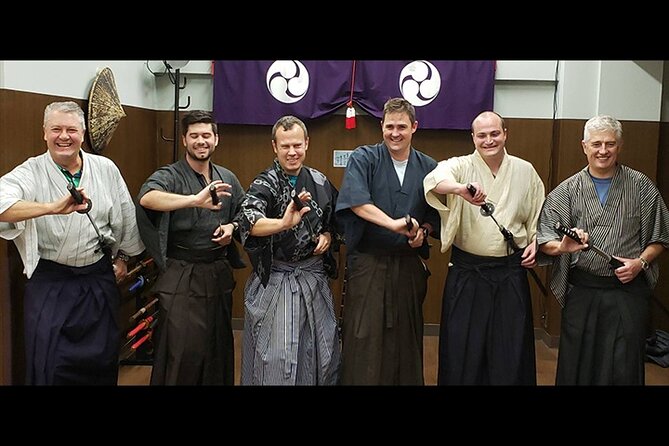
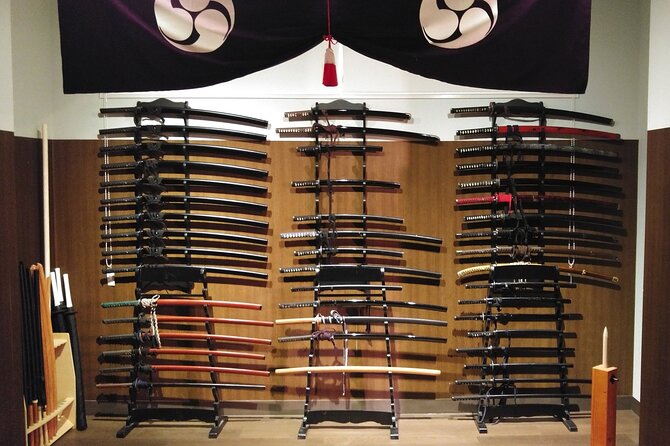
This isn’t a passive “watch and read” museum. The space is designed to feel like a working dojo from the Edo era—think armor on display, weapons around you, and a room that doesn’t look modern once you step inside.
That design matters. When a setting feels believable, it’s easier to follow instructions and harder to get bored. You also get that movie-like samurai atmosphere people come to Tokyo searching for, without needing perfect Japanese or prior knowledge.
There’s also a practical upside: the whole experience is compact. You’re not spending half a day commuting and waiting around. From start to finish, it’s about 60 minutes, and it ends back at the meeting point.
Costumes First: Picking Your Kimono and Hakama
The experience starts with dressing. You’ll choose a kimono and hakama—your call based on what you like—and get help putting everything on.
This is one of the most praised parts, and it makes sense why. Reviews highlight that the outfits feel more comfortable than first-timers expect, and the dressing process is treated as part of the show, not just a quick costume swap. I like the fact that you get agency here. You’re not stuck with a random outfit.
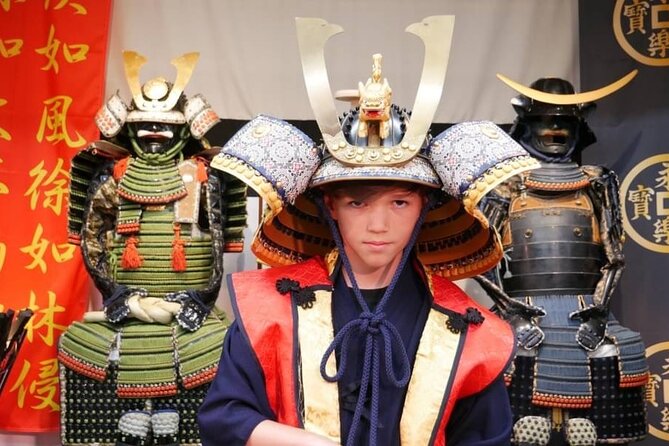
If you’re bringing kids, this is even more important. The costume moment is the hook. When a child gets dressed as a samurai, the rest of the training turns into play. Adults tend to relax too once the “I’m wearing this for real” moment clicks.
What to consider: you’ll want shoes that are easy to work with and clothes that won’t complicate getting dressed. The session includes costumes, so you’re not trying to source anything ahead of time—but you should show up ready to change comfortably.
You can also read our reviews of more tours and experiences in Tokyo.



Sword Training That Starts Simple (and Stays Safe)
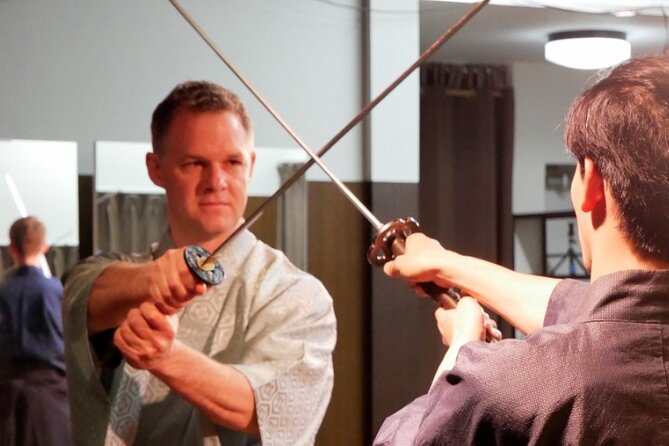
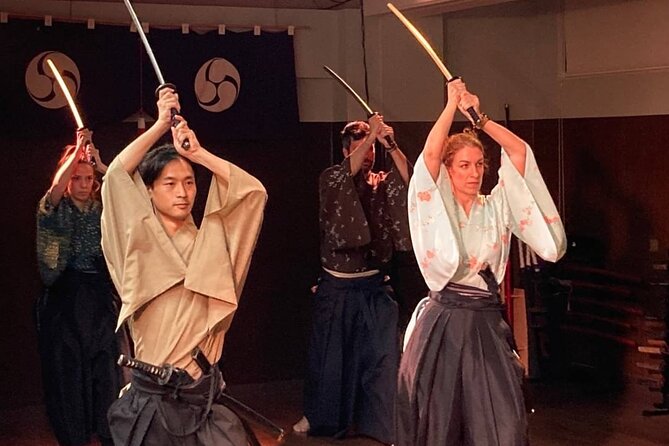
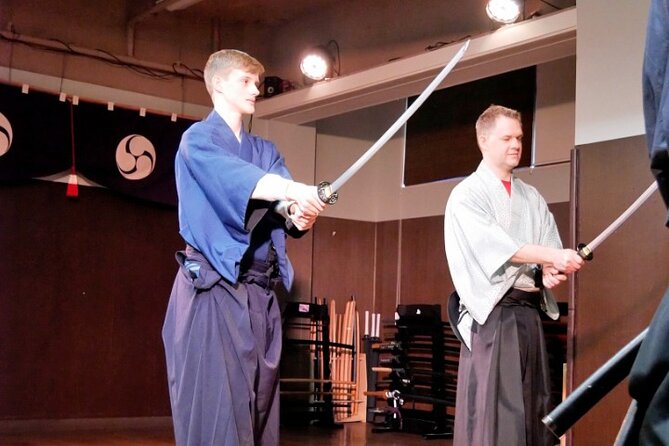
Once you’re geared up, it shifts into sword basics. You’ll learn how to use a Japanese sword with a focus on safe, beginner-friendly movements.
Here’s what the training includes:
- Drawing a sword
- Holding a sword properly
- Swinging in controlled ways
- Retracting the sword
This step-by-step order is smart. It builds confidence quickly because you’re not asked to jump straight into complex choreography. You’re learning the fundamentals first, so later fighting drills make sense instead of feeling random.
The instruction is also a big reason the ratings are so high. Reviews point to teachers who are friendly, patient, and clearly skilled—and that matters when kids or first-timers are in the group. You’ll get coaching in the moment, not just a one-time explanation.
Also, the dojo environment helps. With swords, spears, and armor on display, the class isn’t floating in a vacuum. You’re learning in a space that visually supports the story you’re acting out.
The Chambara Practice: Turning Moves Into a Mini Sword Fight
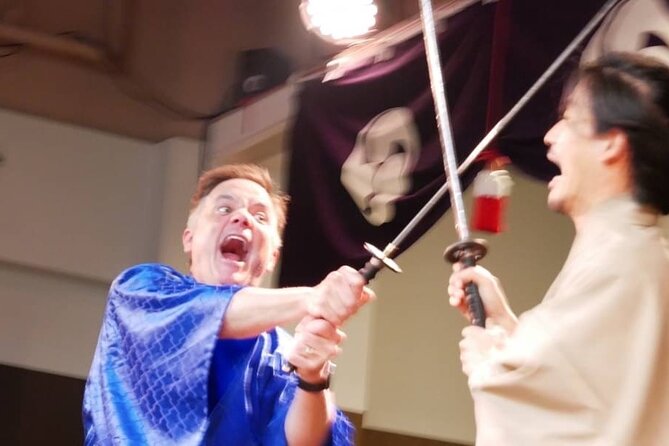
After the basics, you practice a simple chambara. Chambara is sword-fighting choreography—more controlled story-play than a chaotic brawl.
This is where the experience becomes memorable, not just instructional. Instead of repeating drills forever, you try the movements as a sequence. It’s the difference between learning steps and actually using them.
You’ll likely feel a little silly at first. That’s normal. Then the group rhythm takes over. When everyone’s following the same calls and timing, you get that fun “we’re doing this together” energy.
For families, this is often the moment kids light up the most. Reviews mention kids wanting to learn real samurai moves and becoming fully invested in the choreography.
The Music-Driven Finale: Exterminating the Bad Guys
Then comes the finale. The lesson moves into a theatrical fight segment set to music, where you try to “exterminate bad guys” in a choreographed sequence.
Even if you don’t know the samurai stories, the format works. Music tightens the pacing. It gives your movements a beat. And it turns “training” into “performance,” which is what most people really want from a top samurai activity.
From a value standpoint, this is important: it’s the part you’ll want to remember when the rest of your Tokyo days blur together. The finale gives you something to point to later—like a highlight scene from a film, except you’re inside it.
Photos and Video: How to Capture Your Samurai Moment
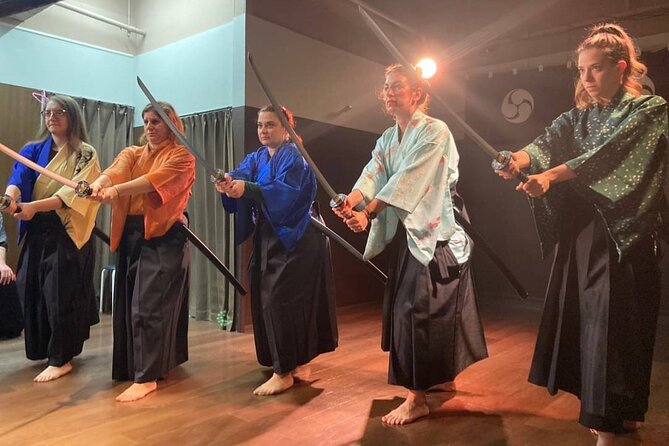
You can take videos with your smartphone and take pictures inside the museum area. That’s a huge deal because it lets you record the parts that matter to you: costume changes, sword moments, and the performance segment.
One more thoughtful detail: staff help with photos. Multiple reviews mention instructors taking plenty of photos and video so you don’t spend the whole time worrying about framing.
Practical tip: if you want the best shots, be ready to pose right after key moments—especially after dressing and before the sword drills start. In the flow of training, you’ll have fewer chances to stop later.






Price and Value: Is $65 Worth It in Tokyo?
At $65 per person for about an hour, this sits in the “activity value” category rather than the “big-ticket Tokyo production” category. You’re paying for three key things that would cost time and money on your own:
- Professional instruction (not just a costume session)
- Use of the sword training setup in a guided format
- Samurai costumes included in the price
And you’re not paying extra for a guide while you figure things out. The price includes all fees and taxes, plus the professional instructor and costumes.
Where value can shift for different people:
- If you want hands-on learning and photos, it’s a strong fit.
- If you mostly want history lectures or quiet sightseeing, you might prefer something more museum-like.
But if your goal is a fun, structured, and photo-friendly samurai experience in a short window, this price is easy to justify.
Who This Samurai Class Is Perfect For (and Who Might Prefer Something Else)
This works especially well for:
- Families with kids (the costume and chambara practice are made for attention spans)
- First-timers who want beginner sword basics without stress
- People traveling solo who still want a guided experience (one person can join)
- Groups who want a shared activity that isn’t just eating or shopping
Reviews repeatedly mention staff being patient and friendly, including accommodating kids and even solo visitors. That kind of support matters most when someone in your group is nervous about trying something new.
Who might not love it:
If you want a long, deep historical tour with no role-play and no training elements, this may feel too active. The session is built around doing—dressing, learning, practicing, performing.
Getting There and Meeting Time: Find Samurai Theater Tokyo in Shinjuku
You’ll meet at Samurai Theater Tokyo, 40 Yokoteramachi, Shinjuku City, Tokyo 162-0831, Japan. It’s near public transportation, which helps.
Still, reviews mention the venue sits down side roads, so it’s easy to think you’re at the wrong place for a minute. My advice: give yourself a little buffer time and watch for the flag when you reach the area.
The tour uses a mobile ticket. That keeps things simple once you’re on the move. The activity ends back at the meeting point, so you don’t have to plan an extra transfer.
Should You Book This Samurai Experience?
If you want a short, high-energy Tokyo activity where you dress up, learn real sword fundamentals, and end with a fun fight sequence you can record, this is a very safe bet.
I’d skip it only if you strongly prefer quiet museums, or if you don’t want any role-play at all. Otherwise, it’s one of the better “hands-on Tokyo” choices because the time is focused and the experience is built to keep both adults and kids engaged.
FAQ
How long is the Samurai experience?
It lasts about 1 hour.
How big is the group?
The experience has a maximum of 10 travelers.
Do I need experience with swords or Japanese?
No. Most travelers can participate, and the class focuses on basic sword moves and practice.
Are photos and videos allowed?
Yes. Photography and video recording are allowed inside the museum.
What is included in the price?
All fees and taxes are included, along with a professional guide/instructor and Samurai costumes.
Is transportation included?
No. Private transportation is not included.
Can a single person book this tour?
Yes. One person can join the tour.
Is free cancellation available?
Yes, you can cancel for a full refund up to 24 hours in advance of the experience’s start time.