REVIEW · TOKYO
Mochi Matcha Gluten Free Japanese Sweets Class near Shibuya area
Book on Viator →Operated by Hello japan matcha・wagashi classes · Bookable on Viator
Making mochi at home beats a show. I love the private home setting and the focused, hands-on teaching from Sakura-san. You also get a recipe to recreate everything back home. The only watch-out: it starts at a specific meeting point in Sangenjaya, so you’ll want to plan transit before cooking time.
This is a great weather-proof Tokyo activity. In about 2 hours, you’ll make matcha green tea mochi and three other gluten-free Japanese sweets, with coffee and/or Japanese green tea included.
Sakura-san is a standout teacher for families and beginners. I like that she’s known for teaching kids too, and you may even share the class space with her dog Chocolate.
In This Review
- Key things that make this class worth your time
- Why a matcha mochi class near Shibuya feels genuinely local
- Meet Sakura-san in Sangenjaya: getting oriented fast
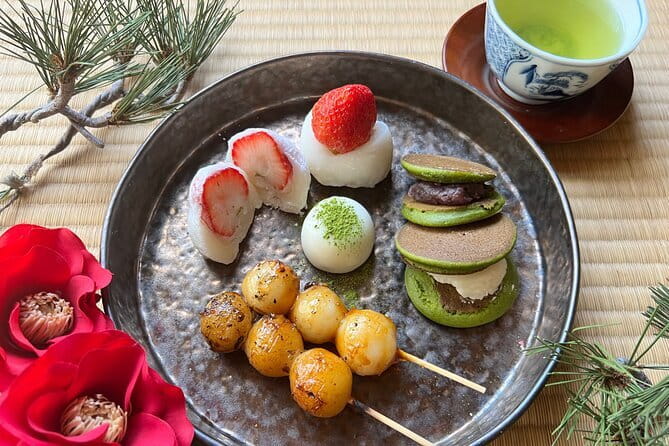
- What you actually make: matcha mochi plus 3 gluten-free sweets
- The instructor experience: why Sakura-san’s teaching style matters
- Turning dessert into a real travel memory on the photo-op table
- A 2-hour class that still feels unrushed
- Price and value: why $112.01 can make sense in Tokyo
- Who should book this (and who might skip it)
- Tips to enjoy the class more (especially on your first go)
- Should you book this mochi matcha gluten-free sweets class?
- FAQ
- How long is the Mochi Matcha Gluten Free Japanese Sweets class?
- Is this a private workshop?
- What sweets will we make during the class?
- Is the class gluten free?
- What is included in the price?
- Do I get anything to take home?
- Where is the meeting point?
- Is there a place to take photos of the finished desserts?
- What’s the cancellation policy?
Key things that make this class worth your time
- Private-home wagashi workshop in a cozy kitchen setting, not a crowded demo room
- Matcha mochi focus with gluten-free sweets designed for people who avoid gluten
- Four different sweets made in one session, so you leave with variety (and skill)
- Photo-op table for finished desserts, so your effort turns into real travel memories
- Sakura-san’s patient, friendly instruction, including clear guidance in English
Why a matcha mochi class near Shibuya feels genuinely local
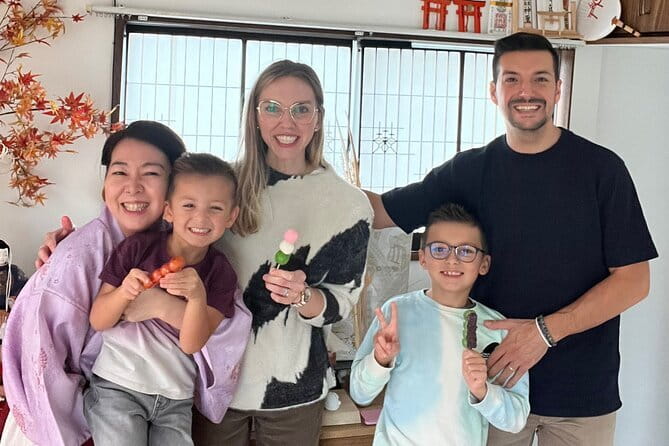
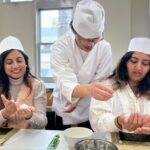
Tokyo has plenty of food experiences, but a sweets class like this hits a different note. You’re not just watching someone else work. You’re getting your hands involved and learning the small technique details that make Japanese sweets feel different.
The fact that it’s held in Sakura-san’s home matters. A home class tends to feel less staged, more conversational, and more like you’re joining a local routine for a couple of hours. You also get the practical payoff: a recipe you can take home, so your memory has a way to live on.
The matcha angle is also a smart choice. Matcha green tea flavors are everywhere in Japan, but making matcha mochi gives you more than taste. You understand how the flavor and texture work together when you handle the dough.
You can also read our reviews of more tours and experiences in Tokyo


Meet Sakura-san in Sangenjaya: getting oriented fast
The class meeting point is in Sangenjaya (Setagaya City), at 1-chōme-11-13 Sangenjaya, Setagaya City, Tokyo. From there, the experience ends back at the meeting point, so you’re not guessing where you’ll be dropped off afterward.
Because it’s near public transportation, you shouldn’t have to build a whole day around getting there. Still, I’d treat it like a real reservation: arrive a bit early so you’re settled before mixing starts. Mochi timing is its own thing, and kitchens move at cooking speed.
Once you’re there, you’ll meet your instructor and get set up with what you need. You’ll receive an apron, and you’ll start with coffee and/or Japanese green tea. That drink break isn’t just polite. It gives you a calm start before you get your hands sticky.
What you actually make: matcha mochi plus 3 gluten-free sweets
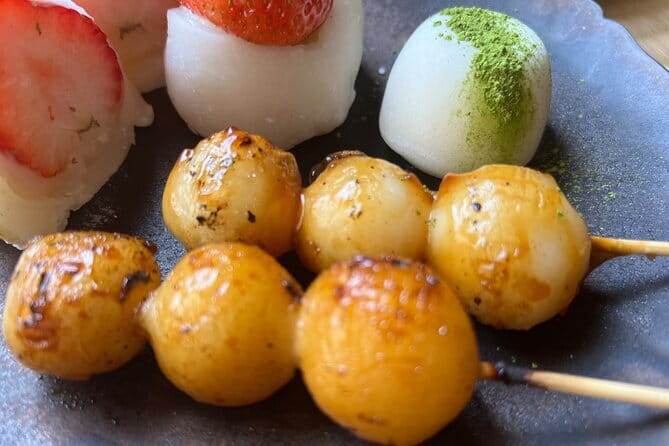
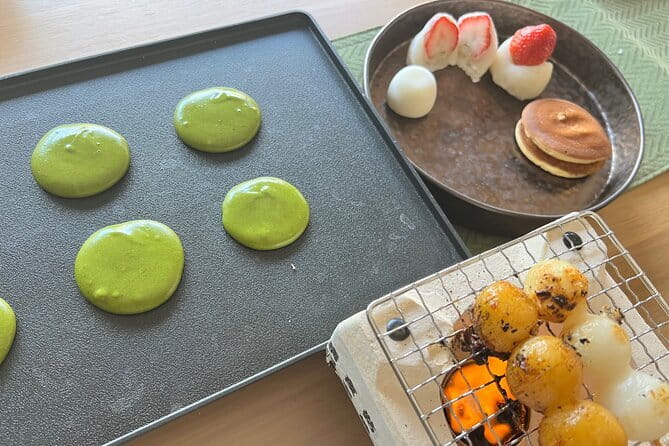
The class is built around making four different types of sweets together. You’ll definitely make matcha green tea mochi, and the rest of the session is about expanding what you can do with wagashi-style techniques—especially when you’re working in a gluten-free context.
Here’s the practical part: mochi texture is the star. The lesson focuses on that satisfying stretch-and-soft feel, which means you’ll pay attention to consistency as you work. If you’ve never made anything similar, expect a short learning curve and lots of guidance.
You also learn a bit about mochi’s origins as part of the experience. That matters because wagashi isn’t just a flavor trend; it’s a food tradition with cultural roots. Even a small origin lesson helps you understand why certain sweets look the way they do and why matcha is so commonly paired with mochi.
A nice detail is that this workshop is described as easy and delicious, making it suitable for all ages. That lines up with what you want on vacation: you want something fun and doable, not something stressful and fragile.
The instructor experience: why Sakura-san’s teaching style matters
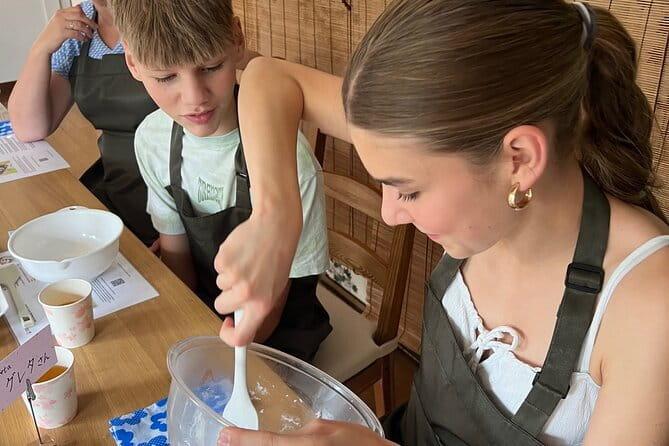
Sakura-san is described as welcoming and kind, and that tone makes a difference in a hands-on class. When you’re working with dough, heat, and timing, you don’t just need ingredients. You need clear steps and reassurance when your first try isn’t perfect.
Multiple participants highlight how Sakura-san communicates clearly and teaches with real patience. She’s also credited with being great with kids, which is a good sign if you’re traveling with younger family members or if you just learn better when an instructor breaks tasks down gently.
Language is another practical point. The class experience is taught in English (praised for being clear), which helps you understand what you’re doing rather than following gestures and hoping. If you’re a foodie who likes to know why something works, that context is a big part of the value.
And yes, it sounds like you might meet her dog Chocolate. That’s not a curriculum item, but it makes the session feel like you’re in a real home—not in a studio where everything is sanitized and scripted.
Turning dessert into a real travel memory on the photo-op table
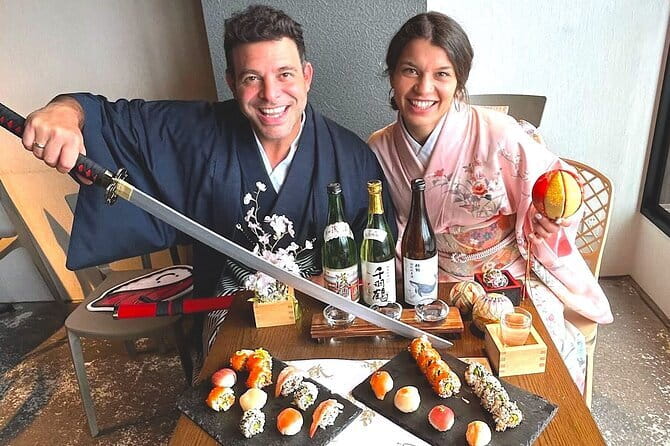
This class doesn’t end at the tasting phase. There’s a photo op table set up for your finished desserts, so you can snap photos of what you made.
That might sound minor, but it’s one of those small planning wins that makes the experience more satisfying. You’ll spend time shaping and finishing sweets, and then you get a clean, intentional moment to document it—no scrambling for the best angle while your dessert cools.
You’ll also likely appreciate the fact that the sweets look presentable enough to photograph. Mochi and matcha desserts tend to photograph well, and adding a dedicated table means your photos look like you meant it.
You can also read our reviews of more tours and experiences in Tokyo



A 2-hour class that still feels unrushed
The duration is about 2 hours. For Tokyo, that’s a good length for a paid class: long enough to learn, short enough to fit into a normal day of sights.
The pacing also matters. You get guided instruction while making the sweets, and the class is private to your group. In practice, that means you should be able to ask questions and get direct attention rather than watching someone else’s process from a distance.
That private setup is also a hidden advantage if you’re gluten-free. You can focus on what your hands are doing and on the instructor’s steps, instead of trying to figure out how to translate a cooking demo into a modified method.
If you end up in a very small group, the experience can feel even closer to a one-on-one lesson. It’s not guaranteed, but the class format supports that kind of attention.
Price and value: why $112.01 can make sense in Tokyo
At $112.01 per person for roughly 2 hours, this isn’t a cheap snack activity. But it is priced in line with what you’re actually buying: instruction in a private home, hands-on cooking, included apron and drinks, and a take-home recipe.
Think of what you’d spend if you tried to replicate it yourself. You’d need ingredients, tools, and time to learn techniques without an instructor watching your consistency and texture. Here, you pay for guided time plus the method—not just the final dessert.
You also get value through the included parts:
- Apron
- Coffee and/or Japanese green tea
- Guidance
- A recipe you can use later
There can also be group discounts, which is worth considering if you’re traveling with a small crew. If you can split the per-person cost inside a group booking, the value improves fast.
For me, the best reason to pay this price is the combination: Japanese sweets + matcha mochi + gluten-free design + a real teacher. If you want a hands-on food memory you can repeat later, that recipe is the big payoff.
Who should book this (and who might skip it)
This is a great fit if you:
- Want a hands-on Tokyo activity you can do even when it’s hot or rainy
- Care about gluten-free Japanese sweets and want to learn how they’re made
- Travel with kids, because Sakura-san is noted for teaching children well
- Like the idea of learning mochi techniques instead of just eating mochi
It may be less ideal if you:
- Hate cooking mess or sticky textures (mochi dough is, well, sticky)
- Want a big sightseeing day instead of a food-focused block
- Are looking for a view-based experience, because this is about the kitchen and the process
Tips to enjoy the class more (especially on your first go)
Bring a flexible attitude. Mochi can be a little tricky at first, and the fun is in figuring it out with an instructor watching. If your first attempt looks imperfect, that doesn’t mean you did it wrong—it means you’re learning the technique.
If you have gluten-free needs, keep that in mind during the class. This workshop is specifically framed as gluten-free, and the teaching approach is described as accommodating. Still, if you have strict requirements, be ready to be clear about your needs when you’re there.
For photos, plan to bring a charged phone and a quick wipe cloth. Mochi and matcha can stain fingers and surfaces, and you’ll want your hands clean when you snap shots at the photo-op table.
Finally, go in hungry for learning, not just for dessert. Even if you love eating sweets, the biggest satisfaction here is understanding the steps and leaving with something you can repeat later.
Should you book this mochi matcha gluten-free sweets class?
If you want a Tokyo class that’s practical, friendly, and focused on real technique, I think this one is a strong yes. The highlights that matter most are Sakura-san’s teaching style, the gluten-free matcha mochi focus, and the fact that you leave with a recipe you can actually use later.
Book it if:
- You’ll enjoy hands-on cooking and sticky dough
- You want an indoor activity that feels local and personal
- You’re traveling with kids or you want clear step-by-step instruction
Skip or reconsider if:
- You only want sightseeing and no cooking
- You strongly prefer large-group public demonstrations
- You’re on a schedule where 2 hours in the kitchen is hard to fit
If you’re choosing between another food tour and this class, ask yourself one question: do you want to taste sweets, or do you want to learn how to make them?
FAQ
How long is the Mochi Matcha Gluten Free Japanese Sweets class?
It runs for about 2 hours.
Is this a private workshop?
Yes. It’s listed as a private tour/activity, and only your group will participate.
What sweets will we make during the class?
You’ll make matcha green tea mochi and a total of four different types of sweets in the lesson.
Is the class gluten free?
The experience is specifically described as a gluten-free Japanese sweets class, centered on gluten-free sweets and recipes.
What is included in the price?
Included items are an apron, coffee and/or Japanese green tea, and guided instruction.
Do I get anything to take home?
Yes. You’ll come away with a recipe so you can make the sweets again at home.
Where is the meeting point?
The meeting point is at 1-chōme-11-13 Sangenjaya, Setagaya City, Tokyo 154-0024, Japan.
Is there a place to take photos of the finished desserts?
Yes. There’s a photo-op table set up for showcasing your finished desserts.
What’s the cancellation policy?
You can cancel for a full refund if you cancel at least 24 hours before the experience start time. Free cancellation is offered, and the cutoff uses local time.