REVIEW · TOKYO
Tokyo’s Kitchen: Tsukiji Market Food & Culture Walk
Book on GetYourGuide →Operated by Intrepid Urban Adventures - Japan · Bookable on GetYourGuide
Tokyo’s food shows up early. This small-group Tsukiji walk turns a famous maze into something you can actually enjoy, with an English guide explaining what you’re seeing and why it matters. I like the tiny size (six people) because it keeps the pace human, and I also love the way the tour connects food to shrine rituals instead of treating everything like just samples.
Two standout parts for me are the tasting flow and the culture thread. You’ll try fresh sushi, street snacks, and seasonal Wagashi while learning sushi’s story—and the market’s spiritual roots in Buddhism and Shinto—so every bite has context. One thing to plan for: Tsukiji can be wet and crowded, and you’ll eat a lot, so wear closed-toe shoes and don’t show up stuffed from breakfast.
In This Review
- Key Things I’d Prioritize On This Tsukiji Walk
- Tsukiji Outer Market Is Fun, If You Have the Right Lens
- Meeting at Higashi-ginza: Easy to Find, Fast to Start
- Kabuki Inari Shrine: The Quick Culture Primer Before the Eating
- Tsukiji Outer Market: How the Tasting Game Actually Works
- Sushi History and the Tsukiji-to-Toyosu Shift
- Namiyoke Inari Jinja: A Calm Reset in the Middle of the Noise
- Finish at Tsukiji Fish Market: What You’re Likely to Notice
- Small Group Pace: Why Six People Changes the Experience
- What to Eat (and How Not to Overdo It)
- Price and Value: Does $80 Make Sense for 3 Hours?
- Who This Walk Is Best For
- Should You Book This Tsukiji Market Walk?
- FAQ
- How long is the Tsukiji Market Food & Culture Walk?
- How big is the group?
- Where do we meet?
- What’s included in the price?
- Are vegetarian or vegan options available?
- Can I have alcohol on this tour?
- What should I wear?
- Can kids join?
- Can I cancel?
- Is there a pay-later option?
Key Things I’d Prioritize On This Tsukiji Walk
- Six-person max means you move through Tsukiji without feeling swept away by the crowd
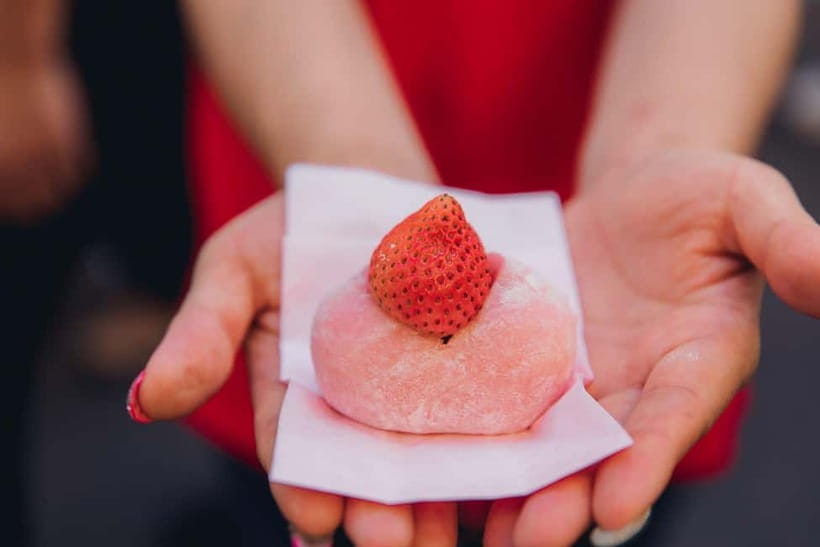
- Multiple tastings (sushi, snacks, seasonal Wagashi) help you sample widely without overeating
- Sushi history + market evolution including the tuna auction shift to Toyosu
- Shrine stops with simple ritual gestures so you understand what locals do, not just what they eat
- Guide-led vendor access that feels like walking in with introductions, not wandering solo
Tsukiji Outer Market Is Fun, If You Have the Right Lens
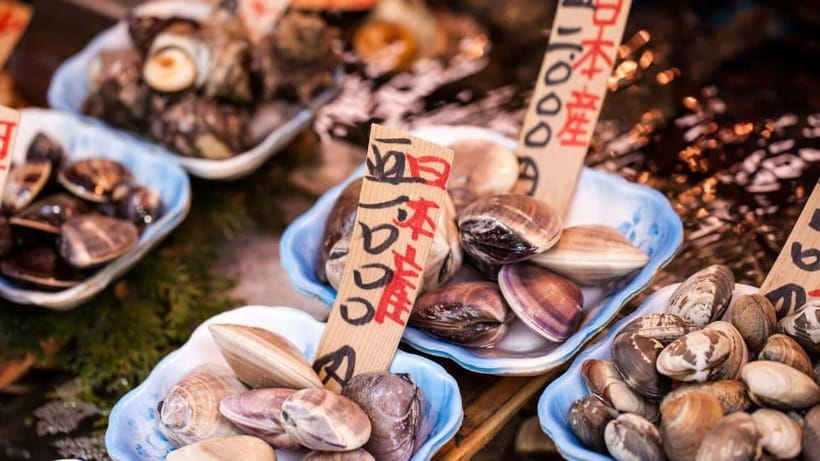
Tsukiji Outer Market is one of those places that can feel like sensory overload if you arrive cold. The stalls are loud, the lines form fast, and the smells hit in waves. This is why a guided walk works so well here: you get translation and context while you’re still curious, not after you’ve already missed what matters.
The biggest value isn’t that you see Tsukiji. It’s that you learn how to read it. Your guide points out what to look for in shops and what makes certain items worth tasting, including the crafts behind some foods you might otherwise pass by.
And because it’s built for a short morning (about 3 hours), the format keeps you moving. You’ll come away with a sense of the market as a working community, not just a photo stop.
You can also read our reviews of more walking tours in Tokyo


Meeting at Higashi-ginza: Easy to Find, Fast to Start
You’ll meet at Higashi-ginza Station (Tokyo Metro Hibiya Line and Toei Asakusa Line), Exit 3, street level at the top of the escalator. The meeting point is in front of the Kabukiza Theatre on Harumi Street side, near a small shrine with a Torii gate.
This matters more than it sounds. If you start the day with a clean, simple rendezvous, you’re less rushed once the market gets busy. Also, starting early helps you beat the thickest crowds.
Bring shoes you can trust. The market floors can be wet, and the tour route involves standing and walking in tight spaces.
Kabuki Inari Shrine: The Quick Culture Primer Before the Eating
The walk starts with a stop at Kabuki Inari Shrine, where the guide sets you up to understand the respectful gestures locals use. This is a small moment, but it changes the tone of the whole morning. Instead of jumping straight to food, you get a basic ritual framework for how people show respect around sacred spaces.
What I like here is the practicality. You don’t need to memorize anything complicated. You just learn the simple gestures so you don’t feel awkward stepping into the rhythm of the place.
If you’ve visited shrines before, you’ll still appreciate this stop because the guide ties it back to how the market operates and how spirituality shows up in everyday behavior.
Tsukiji Outer Market: How the Tasting Game Actually Works
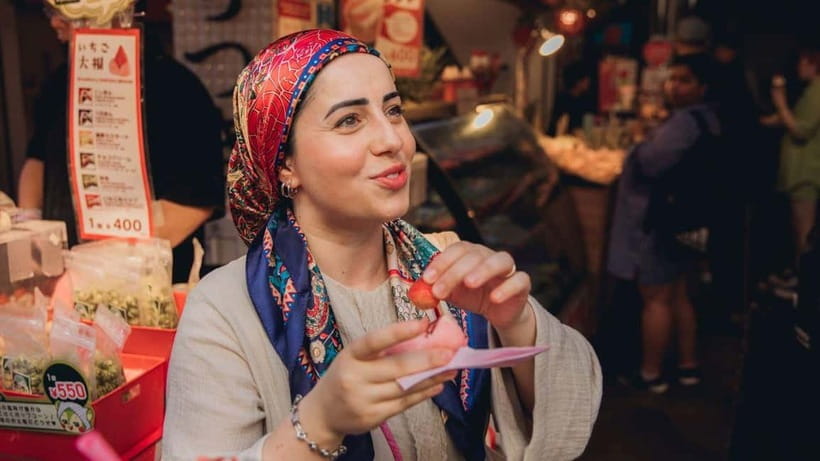
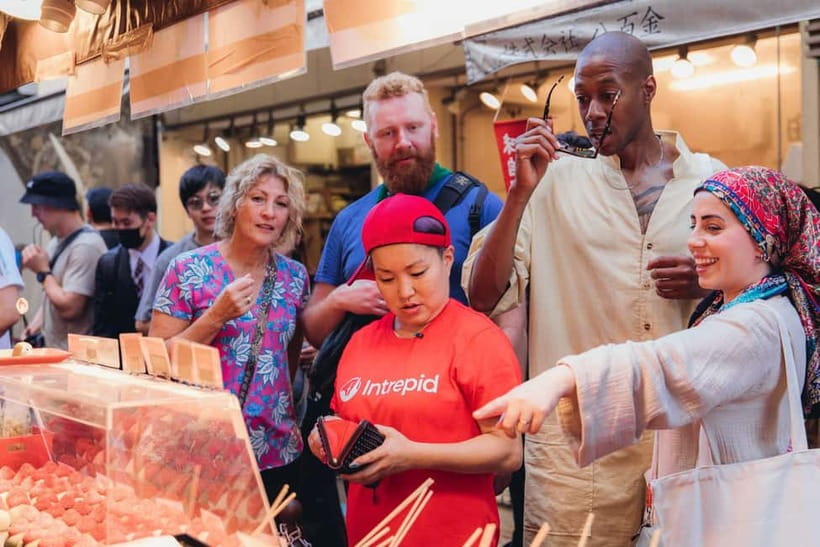
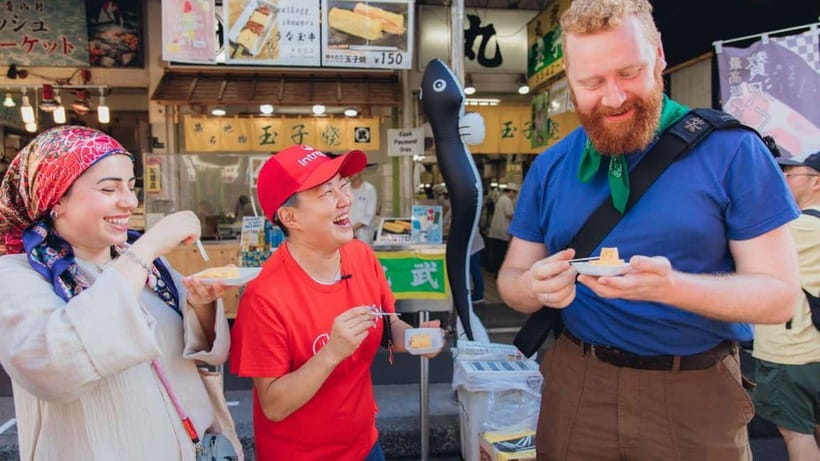
Now comes the star area: the Tsukiji Outer Market, guided for a small group of six people. The best part is that it doesn’t feel like you’re forcing yourself to sample everything. The tastings are spread out in a guided sequence, so you’re constantly learning what you’re about to eat and why that item is a highlight.
You can expect tastings that usually include:
- Fresh sushi
- Japanese street snacks
- Seasonal Wagashi sweets (when available)
What makes this better than a self-guided food crawl is the guide’s ability to keep you from wasting time. They help you choose what’s worth your attention, and they explain what to notice in each bite—like texture, ingredient quality, or why a particular item is linked to seasonal rhythm and craft.
You’ll also meet friendly vendors along the way. One reason this tour has a strong reputation is how guides handle introductions and keep the group moving respectfully through busy stalls. In past walks, guides such as Oku have been praised for pulling in multiple stops and even helping people understand foods like tamagoyaki and dashi as part of a bigger Japanese food story.
Sushi History and the Tsukiji-to-Toyosu Shift
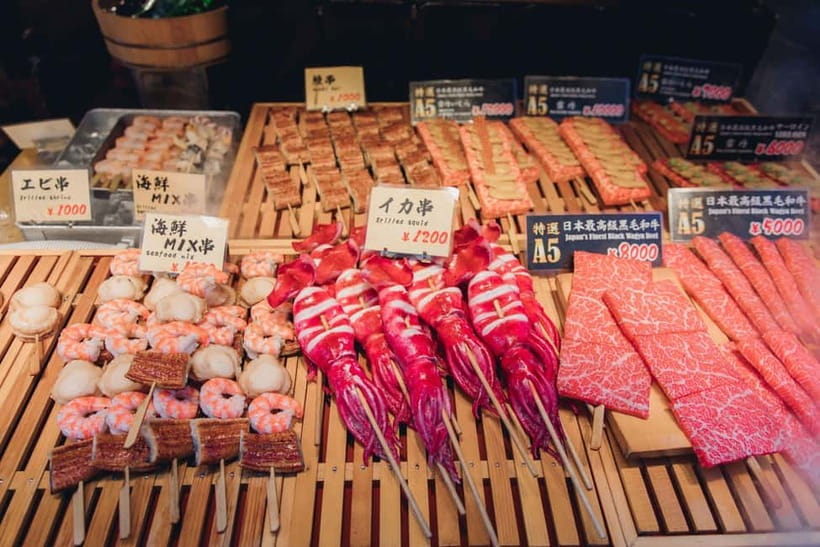
One of the most useful things you’ll hear is sushi’s history, and how the market evolved when the famous tuna auction moved from Tsukiji to Toyosu. That shift is a big deal, and it explains why Tsukiji Outer Market today is more about the surrounding food ecosystem than the auction floor itself.
This context turns your time here into something more meaningful. Instead of thinking you’re visiting a place frozen in time, you understand it as an adaptive food center. Markets don’t survive by staying the same. They survive by changing roles while keeping traditions alive.
You’ll also learn how the spiritual lens fits in. The tour explains the surprising connection between Tsukiji and Buddhist beliefs and Shinto spirit, and how that shapes market culture and food rituals. I like this approach because it’s not abstract. It shows up in everyday habits—how people act, how respect is practiced, and how food is treated as more than just consumption.
You can also read our reviews of more food & drink experiences in Tokyo




Namiyoke Inari Jinja: A Calm Reset in the Middle of the Noise
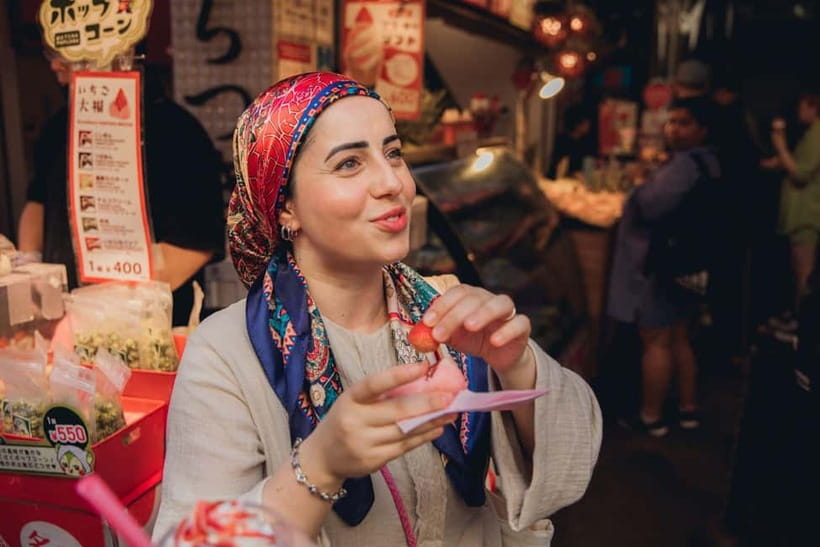
After the market tastings, you’ll visit Namiyoke Inari Jinja. This stop is a counterweight to the sensory intensity of Tsukiji. It’s where the tour slows down and helps you internalize the behavior side of Japanese culture.
You’ll learn about the simple gestures locals use to show respect, so you aren’t just tagging along—you’re understanding how people practice mindfulness and courtesy in a public, everyday space.
If you tend to feel overwhelmed by big food markets, this shrine moment can genuinely help. It gives you a mental breather and helps the day feel more grounded.
Finish at Tsukiji Fish Market: What You’re Likely to Notice
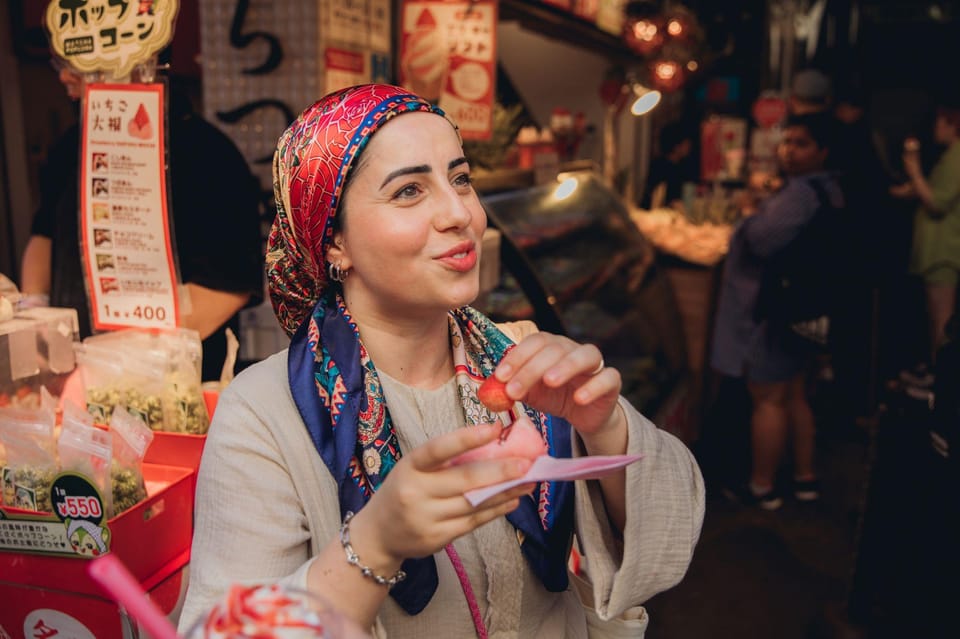
The tour ends at TSUKIJI FISH MARKET. Depending on what’s happening that morning, you may see different elements of the fish-market environment, but the overall effect is the same: you finish with a strong sense of the “real work” behind the food you sampled.
Even if Tsukiji’s most famous auction function has moved, the market identity still shows through. Finishing here feels like closing the loop: you started with the shrine mindset, moved through the tasting-focused outer stalls, and you end at the place that signals the industry backbone behind it all.
Small Group Pace: Why Six People Changes the Experience
With only six participants, the tour avoids that typical problem where you spend the whole morning stuck behind slower walkers or lost trying to catch up. Here, the guide can actually manage the flow—especially important in a place like Tsukiji where lanes tighten and lines form.
This is one of the most praised parts of the experience. People highlight that guides keep the group together and still find time to answer questions. You’re not just following. You’re learning in real time.
It also makes the route feel gentler. A few guides are known for being warm and funny in their teaching style (names that show up include Mikki, Mihori, Shinto, and Yumi). That matters, because a food tour is still human. If the guide makes the morning relaxed, the market stops feeling like a challenge.
What to Eat (and How Not to Overdo It)
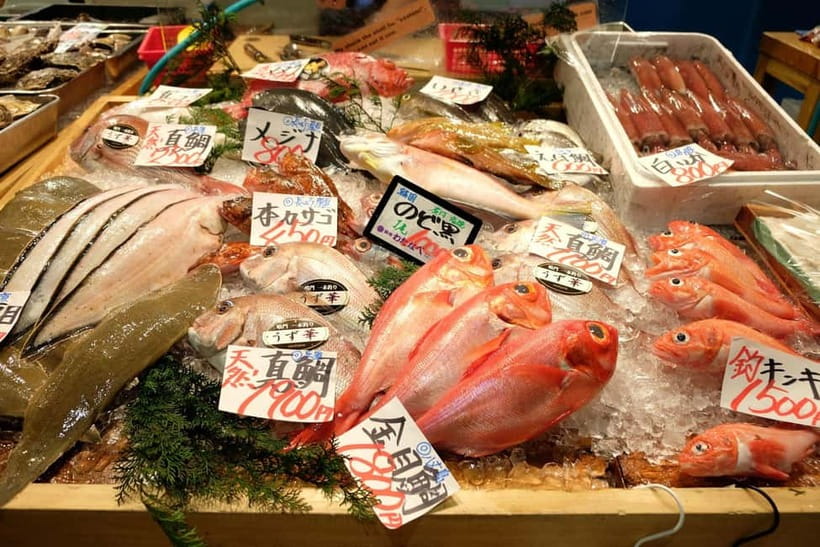
The tour includes multiple tastings, and the overall message is clear: come ready to eat, not ready to snack lightly and then regret your choices. Some people even give a friendly warning not to have breakfast, because the tasting schedule can stack quickly.
A practical approach:
- Start hungry, but not ravenous.
- If you’re the type who gets full fast, take smaller bites and pace yourself.
- Expect variety. You’ll likely try items you’d never pick on your own, like different forms of tamagoyaki, dashi-based flavors, matcha, and savory snacks.
Alcohol is handled thoughtfully too. If you’re 20 or older, you may enjoy alcoholic drinks such as sake. Anyone under 20 is offered non-alcoholic alternatives instead.
Also keep an eye on comfort. One review noted rain and wind when attending, and you’ll do better if you pack a light layer for weather changes.
Price and Value: Does $80 Make Sense for 3 Hours?
At $80 per person for about 3 hours, you’re paying for more than walking directions. You’re paying for:
- An English-speaking local guide
- Small-group management (six people max)
- Multiple tastings (fresh sushi, Japanese snacks, Wagashi)
- Shrine visits plus cultural explanations
- Context for sushi history and Tsukiji’s evolution, including the auction move to Toyosu
If you tried to replicate this yourself, you’d likely spend money and time figuring out where to go, what to order, and how to handle lines without wasting the morning. With the guide leading you, you get a structured food education, not just random samples.
The other value angle is ethical and impact-focused. This experience is described as carbon neutral and run by a certified B-Corp, with an emphasis on supporting local people and using travel as a force for good. Even if you don’t obsess over carbon math, it’s a sign the operator thinks beyond just the transaction.
Who This Walk Is Best For
This tour fits best if you want:
- A guided food experience in a place that can overwhelm you
- A mix of tastings and cultural meaning, not only eating
- A calm morning pace with a small group
- Easy learning: sushi history, plus Shinto/Buddhist connections tied to what you see
It can also work well if you’re a first-time Tokyo visitor. Starting with Tsukiji Outer Market gives you an immediate sense of Tokyo’s food identity and daily rhythm.
If you’re the type who hates crowds and lines, you should know Tsukiji can still be busy. The guide helps a lot, but the market environment doesn’t magically get quiet.
Should You Book This Tsukiji Market Walk?
Yes—if you want a morning that’s both delicious and understandable. The tour’s main strength is the combination: small group, real tastings, and spiritual and historical context that makes Tsukiji feel like a living culture, not a theme park.
Book it if you’re excited to eat sushi and snacks, and if you enjoy learning the “why” behind traditions. Skip it only if you strongly prefer total independence, or if you’d rather spend your time chasing big sights than sampling food plus shrine culture in one tight 3-hour window.
FAQ
How long is the Tsukiji Market Food & Culture Walk?
The duration is about 3 hours.
How big is the group?
The group is limited to six participants for a more personal pace.
Where do we meet?
Meet at Higashi-ginza Station, Exit 3, street level, at the top of the escalator, in front of Kabukiza Theatre on the side of Harumi Street, by the little shrine with a Torii gate.
What’s included in the price?
You get a guided walking tour of Tsukiji Outer Market, an English-speaking guide, multiple tastings (fresh sushi, Japanese snacks, and Wagashi), a visit to a nearby shrine, and cultural explanations including sushi history and spiritual connections.
Are vegetarian or vegan options available?
Vegetarian and vegan options are available, though choices may be limited due to the nature of the market. Let the provider know ahead of time so they can prepare.
Can I have alcohol on this tour?
If you are 20 or older, you can enjoy alcoholic drinks. If you are under 20, you’ll be offered non-alcoholic alternatives.
What should I wear?
Wear closed-toe shoes (like sneakers). Tsukiji market floors can be wet.
Can kids join?
Children aged 5 and under join free. If you’re bringing a child under 6, let the provider know when booking so they can plan.
Can I cancel?
Free cancellation is available up to 24 hours in advance for a full refund.
Is there a pay-later option?
Yes. The booking offers reserve now & pay later, so you can book and pay nothing today.