REVIEW · TOKYO
Full Day Private Ultimate Tour in Tokyo
Book on Viator →Operated by Discovi Travel · Bookable on Viator
Tokyo can feel like a maze. This full-day route gives you a tight guided circuit through Harajuku, Shibuya, Meiji Jingu, Senso-ji, Akihabara, and Shinjuku, with a Tokyo Metro pass folded into the cost.
I like two things a lot. First, you’re not wandering alone—your guide gives full attention and can steer you fast to the right spots. Second, the hotel pickup and drop-off plus metro pass makes it easier to spend your energy sightseeing instead of figuring transit all day.
The one big consideration: the day is packed, so each stop is short (often about 30 minutes). If you prefer slow hangs, this route will feel like a “checklist with momentum,” not a leisurely stroll.
In This Review
- Key takeaways before you book
- What $120 buys you in Tokyo (and why the Metro pass matters)
- Meeting at Yoyogi, ending at Kabukicho Tower: plan your day around the flow
- Harajuku and Takeshita Street: cute street style, crepes, and people-watching
- Shibuya Crossing and Meiji Jingu: two sides of Japan’s big-city identity
- Shinjuku stops: Tokyu Kabukicho Tower and the Godzilla head
- Senso-ji and Nakamise: temple views plus snack-and-shop time
- Akihabara: anime and electronics in a focused 50 minutes
- Ameyoko Shopping Street in Ueno: where street shopping meets food
- Pokémon Center Shibuya: a short fan stop that can still be worth it
- How private is private on this tour day?
- Your guide’s role: why pace and stories change the day
- What to bring (since snacks and dinner aren’t covered)
- Who this Tokyo day tour is best for
- Should you book Full Day Private Ultimate Tour in Tokyo?
- FAQ
- FAQ
- How long is the Full Day Private Ultimate Tour in Tokyo?
- Where does the tour start and end?
- Is pickup from my hotel included?
- What’s included in the price?
- Is the tour truly private?
- Are admission tickets included for the stops?
- What is not included?
- What happens if the weather is bad?
- What’s the cancellation window for a full refund?
Key takeaways before you book

- Metro pass included so you don’t have to price out transit on the fly
- Pickup and drop-off reduce the “where do we meet next?” stress
- Short, efficient stop times work well for first-time Tokyo bucket lists
- Big contrast day: cute street style → shrines/temples → neon districts
- Photo-friendly guide energy, including sending pictures via WhatsApp (at least one guide, Jonilo, has done this)
What $120 buys you in Tokyo (and why the Metro pass matters)
At $120 per person, this tour is clearly aimed at people who want a lot of Tokyo highlights without burning a day on route planning. You’re paying for guide time, coordination, and the fact that admission fees for the included sights are handled for you.
The best value lever here is the included Tokyo Metro pass. Tokyo transit can add up quickly when you’re hopping between wards like Shibuya, Shinjuku, Asakusa, and Akihabara in one day. Having the pass bundled means you’re less likely to second-guess your plan halfway through.
It’s also a tour format that tends to work well if you’re only in Tokyo for a short window. Think of it as a “strategic day” rather than a deep-dive into one neighborhood. You’ll see a lot, but you’ll also move on quickly—which is a trade-off you should like before you commit.
You can also read our reviews of more private tours in Tokyo
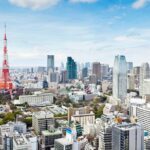

Meeting at Yoyogi, ending at Kabukicho Tower: plan your day around the flow
The day starts at Yoyogi Station (1 Chome-34 Yoyogi, Shibuya). It ends at Tokyu Kabukicho Tower in Shinjuku (open 11:00 AM–8:00 PM during the listed season dates).
That start/end pairing is handy: Yoyogi is a solid transit hub for reaching Shinjuku/Shibuya, and the finish at Kabukicho Tower lands you right in a lively nightlife zone if you’re continuing on your own. You’ll also want to think about dinner plans—since snacks and dinner aren’t included, you may need to grab something on your own either before you start or near the end.
The tour also uses a mobile ticket, which is convenient if you don’t want to deal with paper vouchers. And pickup is offered, which can be a real time-saver if your hotel is set up for easy meet points.
Harajuku and Takeshita Street: cute street style, crepes, and people-watching
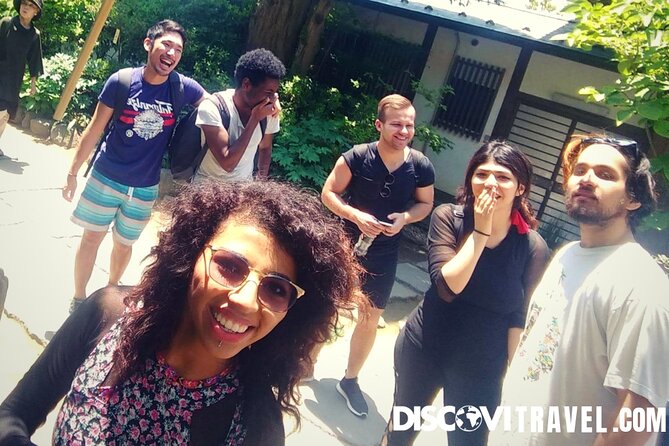
The Harajuku stop is built around Takeshita Street, one of Tokyo’s most famous fashion-watching lanes. You’ll get time for the visual candy (rainbow-style treats and classic crepe culture) and the energy of young street fashion.
This is one of the fastest-paced sections of the day, so treat the 30 minutes as: see what you want, take a few photos, and eat only if you can do it without turning the line into a second tour. If you want photos, position yourself with your guide’s timing—moving as a group usually helps you avoid wasted time.
Admission is free for this part, which is nice because it keeps your “out-of-pocket” surprises low. The bigger point is that Harajuku here works as a taste test: you get the vibe without losing hours.
Shibuya Crossing and Meiji Jingu: two sides of Japan’s big-city identity
Next up is Shibuya Crossing, the worldwide symbol of Tokyo’s “we really do this every day” street choreography. Even if you’ve seen the crossing on screens a hundred times, standing there forces your brain to accept scale: it’s big, fast, and constant.
Your stop time is about 30 minutes, so I’d use it like this: cross once, grab a photo from a safe spot, then step aside to rest your feet before the next transit jump. Shibuya is famous, so the crowds come with the territory.
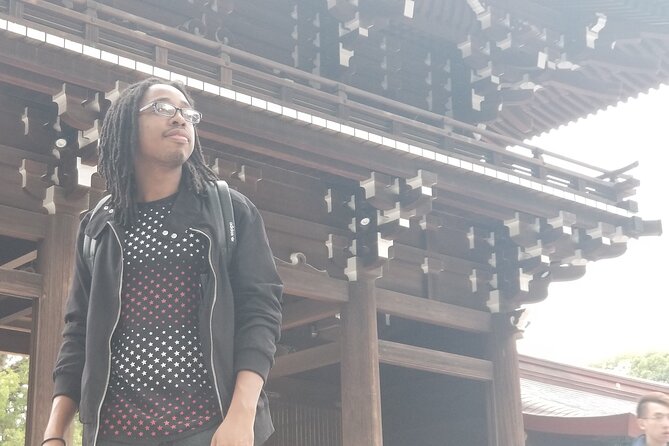
Then you shift to Meiji Jingu Shrine, dedicated to Emperor Meiji and Empress Shoken. This contrast is part of the value of the day: one stop is all motion and neon, the next slows you down with a sacred, wooded-feeling atmosphere.
Everything here is also structured for speed: you’ll see the core area and keep moving. If you’re the type who wants to read every sign and linger at every shrine corner, you may feel rushed—but for many first-timers, that’s exactly what they need to “tick it off” and keep going.
Shinjuku stops: Tokyu Kabukicho Tower and the Godzilla head
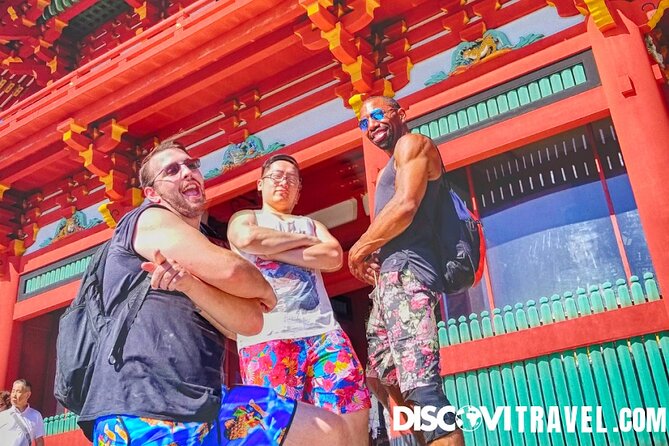
After Meiji Jingu, the route swings into Shinjuku with Tokyu Kabukicho Tower and the Godzilla Road & Head area.
Kabukicho itself is a district built for spectacle, and the Godzilla head is one of those Tokyo landmarks people remember later. You’ll spend around 30 minutes here at the tower area plus about 10 minutes at the Godzilla feature.
This portion is fun if you like pop culture Tokyo, signage, and the feeling that the city has a sense of humor. It also works well at this point in the day because your earlier temples and shopping stops prepare you for this kind of city energy—then you’re ready for the lights without having to force it.
A practical note: Shinjuku evening crowds can get intense, so I’d plan your comfort basics (good walking shoes, water). The tour isn’t built around long sit-down breaks.
You can also read our reviews of more tours and experiences in Tokyo

Senso-ji and Nakamise: temple views plus snack-and-shop time
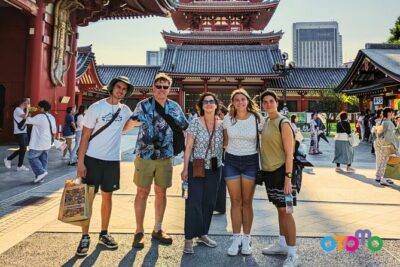
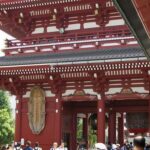
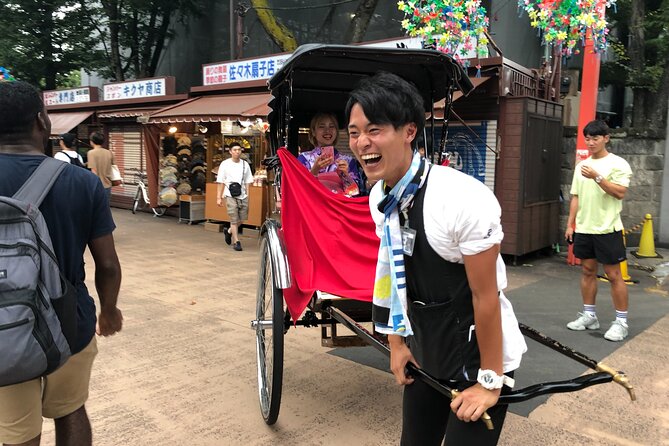
The day’s most classic “Tokyo icon” moment is Senso-ji Temple (with access around Kaminarimon). You’ll walk under the big gate and spend time along the temple approach area.
This is a perfect stop for context and photos because Senso-ji is designed to be seen from multiple angles as you move through. With a 30-minute window, you’ll likely hit the main gate, take a few photos, and see the immediate surroundings without turning it into an all-day commitment.
Right after that comes Nakamise Shopping Street, the famous lane of stalls right by the temple approach. This is where you can turn your sightseeing time into small buys and snacks, though your tour package doesn’t include snacks. If you want something to eat, this is one of the best times on the schedule.
One tip: keep your shopping expectations realistic. With limited time, choose 1–2 things you genuinely want and skip the “just browsing” trap. The guide can help you prioritize so you don’t lose the rest of the day.
Akihabara: anime and electronics in a focused 50 minutes
Then the route moves to Akihabara, Tokyo’s tech-and-anime district. Your time here is about 50 minutes, which is longer than most stops—so this is your best window for browsing.
If your interest is gadgets, games, or character goods, this is where you can actually shop instead of just stare at storefronts. With less time, you’d feel rushed; with 50 minutes, you can do a quick circuit of the main streets and still end up with something you came for.
This is also a good area for people who like loud color and dense storefronts, because you can turn “confusion” into fun by letting the guide point you toward what fits your interests. Admission is free, so you’re not paying extra to spend your time here.
Ameyoko Shopping Street in Ueno: where street shopping meets food
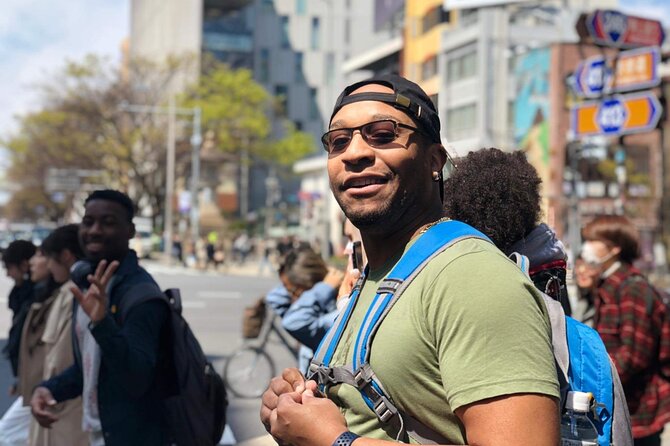
Next is Ameyoko Shopping Street in Ueno, another “Tokyo life” neighborhood stop with a mix of goods and food stalls. Expect a street-market feel, with lots of variety packed into a walkable area.
The stop time is about 30 minutes. That’s enough to pick up a snack, browse a few aisles, and move on—just not enough to do a full market tour like you might in a dedicated half day.
Ameyoko is a nice counterbalance to Akihabara. One is character and electronics. The other is street shopping variety and food choices. It’s also a good way to reset your brain before you hit Shibuya again.
Pokémon Center Shibuya: a short fan stop that can still be worth it
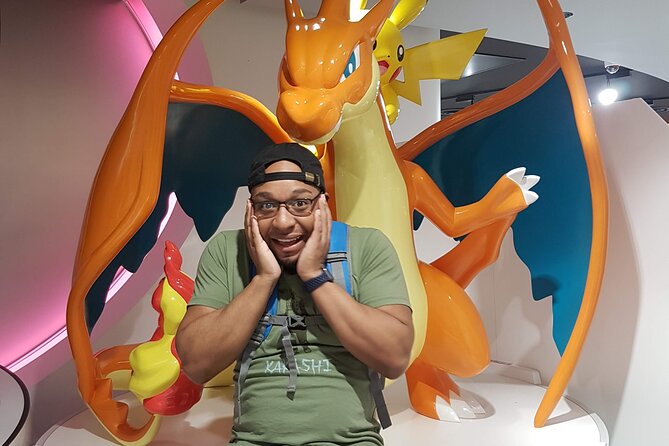
The last scheduled stop is Pokémon Center Shibuya. It’s about 30 minutes, which means you’ll get in, see the main merchandise, and have a chance to buy something before you get pulled back into the day’s end.
This stop is excellent for specific goals: if you want exclusives or iconic items, you’ll appreciate having the guide time it so you’re not wandering in circles. If you’re not a fan, you’ll probably treat this like a colorful break and photo-op zone.
Your tour ends after the Shinjuku finish, so think of Pokémon Center as a “buy/see one main thing” moment, not a slow museum visit.
How private is private on this tour day?
The tour is marketed as private, which usually means you’re supposed to have your guide’s full attention and only your group participates. In the real world, that doesn’t always mean the day feels silent—Tokyo landmarks are crowded even with a small group.
One review experience flagged that the tour didn’t feel truly private, even though it was presented that way. If privacy is a top priority for you—like if you’re traveling as a couple and want a quiet pace—send a quick message to Discovi Travel before booking and confirm how group size works on your exact date.
Your guide’s role: why pace and stories change the day
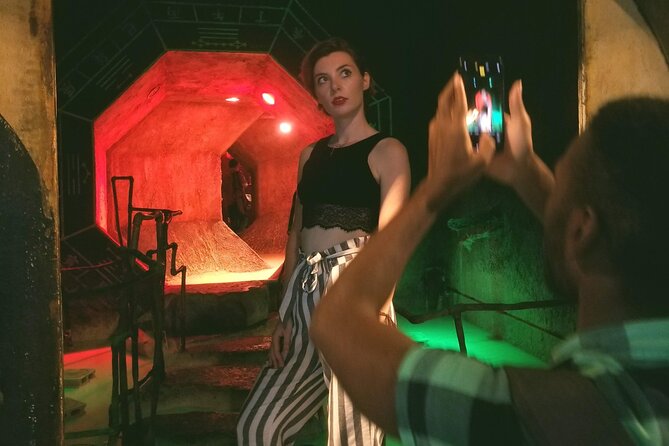
A tour like this lives or dies by the guide. One standout detail from a reported experience: the guide, Jonilo, was friendly and knew the places and history behind them, and he took photos and shared them via WhatsApp.
Even without assuming your guide will do the same exact thing, it’s a good sign of what a great guide can add: short stories that make landmarks make sense, plus simple photo help that prevents that awkward “I’ll take it in a second” moment.
If you want similar help, just ask early in the day. I’ve found that guides respond well to clear requests like: take one group photo at each major stop, and I’ll use my phone for the rest.
What to bring (since snacks and dinner aren’t covered)
Because snacks and dinner aren’t included, you’ll want a small strategy so you don’t get hungry at the wrong time. The tour includes entrance fees, but it doesn’t include the everyday costs of keeping your energy up.
Bring basics:
- Comfortable walking shoes (you’ll be on your feet across multiple districts)
- A refillable water bottle
- A small snack plan for the stretches between stops
Also, because parts of the day are outside and the tour requires good weather, have a light rain plan. If the weather turns, you could be shifted to a different date or refunded.
Who this Tokyo day tour is best for
This is a great fit if you:
- Want a lot of iconic stops without spending your day on transit planning
- Have limited time and want Harajuku, Shibuya, temples, Akihabara, and Shinjuku in one sweep
- Like short “see it, understand it, move on” sightseeing
It’s not the best match if you:
- Want long temple meditation time or slow shopping drifts
- Hate crowds and get annoyed when places like Shibuya Crossing are packed
- Prefer fully independent travel where you never feel a clock
Should you book Full Day Private Ultimate Tour in Tokyo?
I’d book it if your priority is speed-to-highlights. The included Metro pass, pickup/drop-off option, and entrance coverage make it a practical choice for a first or fast Tokyo trip. The route also has smart contrast—pop culture districts paired with shrines and temple areas—so the day doesn’t feel one-note.
I’d think twice if you’re sensitive to pacing. Each stop is short, and Tokyo is crowded by nature. And if true privacy is critical, double-check how the provider handles “private” in practice for your date, since at least one reported experience felt less private than expected.
FAQ
FAQ
How long is the Full Day Private Ultimate Tour in Tokyo?
The tour duration is listed as approximately 4 to 10 hours, depending on what’s scheduled for your day.
Where does the tour start and end?
It starts at Yoyogi Station (1 Chome-34 Yoyogi, Shibuya) and ends at Tokyu Kabukicho Tower (1-chōme-29-1 Kabukichō, Shinjuku City).
Is pickup from my hotel included?
Pickup is offered, and the tour is designed around stress-free hotel pickup and drop-off.
What’s included in the price?
The price includes a Tokyo Metro pass and entrance fees to the included activities.
Is the tour truly private?
It’s described as a private tour/activity where only your group participates. That said, one review mentioned it did not feel fully private, so if privacy matters, it’s worth confirming with the provider before you go.
Are admission tickets included for the stops?
Yes. Entrance fees to the included activities are part of what’s included.
What is not included?
Snacks, dinner, and alcoholic beverages are not included.
What happens if the weather is bad?
This experience requires good weather. If it’s canceled due to poor weather, you’ll be offered a different date or a full refund.
What’s the cancellation window for a full refund?
You can cancel up to 24 hours in advance for a full refund. If you cancel less than 24 hours before the start time, it won’t be refunded.