REVIEW · TOKYO
Tokyo Private Day Trip – Enjoy Your First-Time Visit to Tokyo!
Book on Viator →Operated by OTOMO Travel Guide · Bookable on Viator
First-time Tokyo can feel like a subway maze. This private day trip helps you get your bearings fast with an English-speaking guide and a route built around public transport. I especially like the mix of ancient shrines plus modern Tokyo Tower, and the fact that it stays flexible enough for shopping and food. One heads-up: you’ll cover a lot of ground on foot, so comfy shoes matter.
What makes this tour practical is how it strings together big, memorable stops without turning the day into a logistics headache. You’re not stuck in one tiny loop; you move from Harajuku into youth-fashion streets, then across to Tsukiji for food history, and end in Asakusa’s temple district.
Value-wise, the base price is reasonable for a private guide, but you’ll still pay for your own transit and admissions (lunch too). Think of it as paying for time-saving direction and a smart route, not for a fully “all-in” package.
In This Review
- Key things I’d watch for (before you book)
- How this Tokyo day trip actually works (and why it feels easy)
- Stop 1: Meiji Jingu Shrine and the calm reset before the city
- Stop 2: Takeshita Street and Omotesando for fashion, people-watching, and photos
- Stop 3: Tsukiji Fish Market’s history, food energy, and the real shopping plan
- Stop 4: Tokyo Tower for skyline views (and paying for the sight you want)
- Stop 5: Senso-ji Temple and Asakusa’s red-lantern atmosphere
- The private guide factor: what you’re really paying for
- Customizable option: good planning turns this into your day
- Money and value: what $99.49 gets you, and what you’ll still pay
- When this tour may not be your best match
- Quick, practical tips so your day goes smoothly
- Should you book this Tokyo private day trip?
- FAQ
- How long is the Tokyo private day trip?
- What’s included in the price?
- What isn’t included?
- Are there any entrance fees during the day?
- Where does the tour start and end?
- Is the meeting point fixed?
- Is it easy to reach by public transportation?
- Can I customize the itinerary?
- Is free cancellation available?
Key things I’d watch for (before you book)
- An English-speaking guide who can explain the rail system so you’re not guessing your way through Tokyo.
- A first-timer route that links neighborhoods from Harajuku to Asakusa in one day.
- Tsukiji food history with a real-world plan for closures (guides account for days when nearby shops shut down).
- Tokyo Tower as an optional-paid moment if you want the views, with admission not included.
- A true private setup for only your group, with a chance to customize if you plan ahead.
- Cash matters at some spots, plus a mask is recommended at Tsukiji.
How this Tokyo day trip actually works (and why it feels easy)
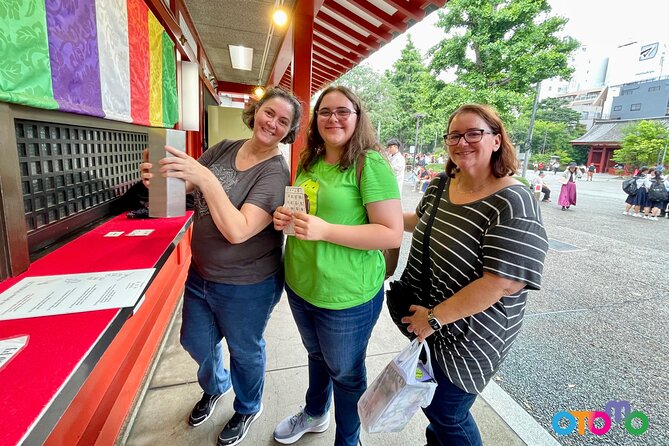
This is a private walking tour that leans on Japan’s public transportation instead of repeated taxis. That’s a big deal in Tokyo, where the streets are busy and the transit map can look like abstract art at first glance. With a guide, you spend your energy looking around, not decoding which line goes where.
The day is built around a smooth storyline: quiet greenery, then trendy street energy, then food-market heritage, then skyline views, and finally a classic old-temple finish. Even if you’re into totally different things—history, shopping, photos, food—you’re covered in one long afternoon.
Duration is listed at about 7 hours. That’s enough time to see major sights without rushing like a checklist, but it’s still a real day of moving. Wear sneakers and plan for breaks that won’t happen too long between stops.
You can also read our reviews of more private tours in Tokyo

Stop 1: Meiji Jingu Shrine and the calm reset before the city
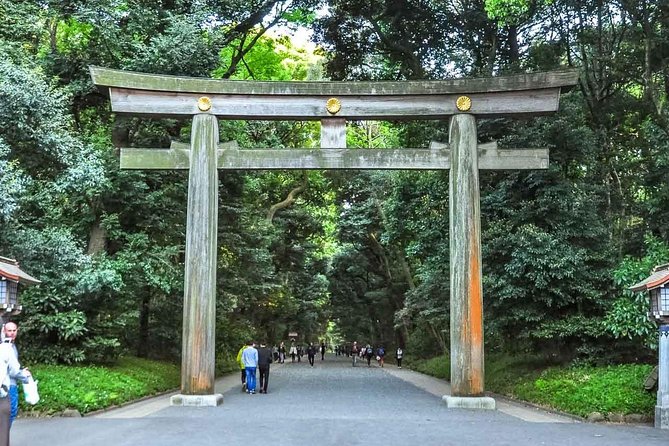
You start at Meiji Jingu, a shrine with some of the highest worshipping crowds in Japan. The setting is part of the point: big trees, thick greenery, and a calm that makes the surrounding city feel far away.
This is the kind of place where your guide’s context helps. If you know what you’re looking at—how shrines work, what rituals mean, why this site matters—you’ll get more than just pretty gates and photos. It’s also a good early stop because you arrive before the day’s crowds and energy build.
Admission is free here, so your budget isn’t pressured immediately. Expect about 50 minutes: long enough for a proper walk through the grounds, not so long that you lose momentum for the rest of the route.
Practical note: Meiji Jingu sits in a park-like environment. It can be hot or muggy in summer, and it can get slippery if it rains. Your sneakers will earn their keep early.
Stop 2: Takeshita Street and Omotesando for fashion, people-watching, and photos
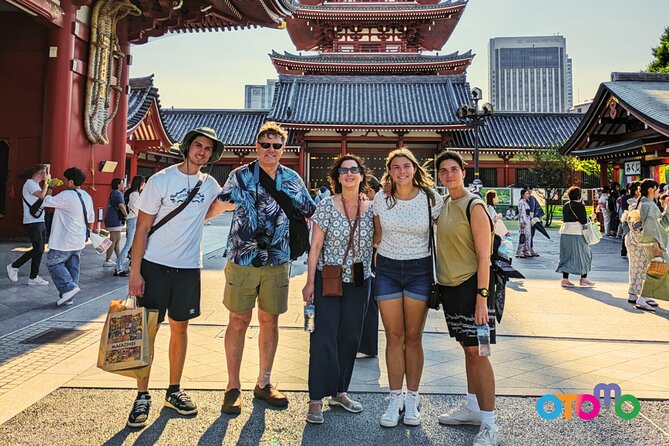
From shrine quiet, you head straight into street-level Tokyo. Takeshita Street is known for youth fashion culture—colorful shops, lots of motion, and a crowd scene that’s pretty much always on. Nearby, Omotesando gives you a more design-forward contrast, with that slick Tokyo shopping-street look.
This stop is about more than buying stuff. It’s Tokyo’s visual storytelling: the contrast between old spiritual Japan and modern style culture happens right in front of you. It also sets you up for photo opportunities, especially if your guide helps point out the best angles.
You’ll spend about 50 minutes here, with free admission. That’s a good length because you get time to wander without turning the day into an all-day mall crawl.
The only “watch it” thing is pacing. If you stop to shop at every block, you can lose time for Tsukiji and Senso-ji. Ask your guide for a quick plan: where to go first and what’s worth slowing down for.
Stop 3: Tsukiji Fish Market’s history, food energy, and the real shopping plan
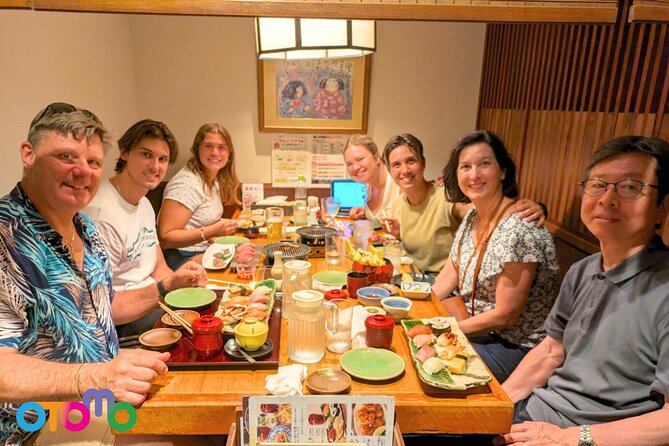
This is one of the most talked-about stops for a reason: Tsukiji isn’t just a market; it’s a piece of Tokyo’s food history. It used to be the large wholesale fish market through the mid-1900s, but it closed in 2018 and moved operations to Toyosu. Even so, the Tsukiji area still carries deep local appreciation and the vibe remains a draw.
You’ll have about 1 hour 30 minutes. That’s enough time to see what’s around, snack if you want, and still not feel trapped. In the guide plans, the day is set up so lunch works with what’s open.
Here’s the practical piece I really value: some places in the Tsukiji area are closed on Wednesdays, Sundays, and public holidays. On those days, your guide guides you toward places that are open, or steers you toward areas close by such as Ginza or Tsukishima. That matters. A lot of Tokyo plans fall apart when the calendar says holiday or a market is quiet.
You’ll also want to be ready for payment quirks. The info notes that some spots accept cash only, so bring some. And since this is a crowded food area, it’s recommended to wear a mask there if possible.
From the guide-style perspective, this stop is where many private tours either shine or fail: a good guide helps you taste and order confidently, and points out what’s worth your attention in the moment. Many of the strongest reviews emphasize that this is where guides pick solid places and keep things moving without turning it into chaos.
Stop 4: Tokyo Tower for skyline views (and paying for the sight you want)
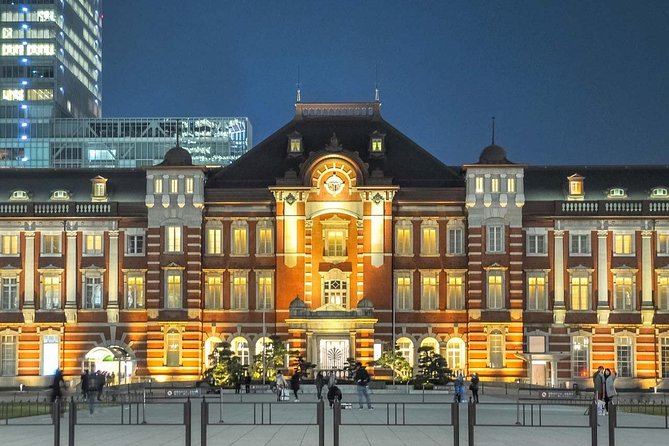
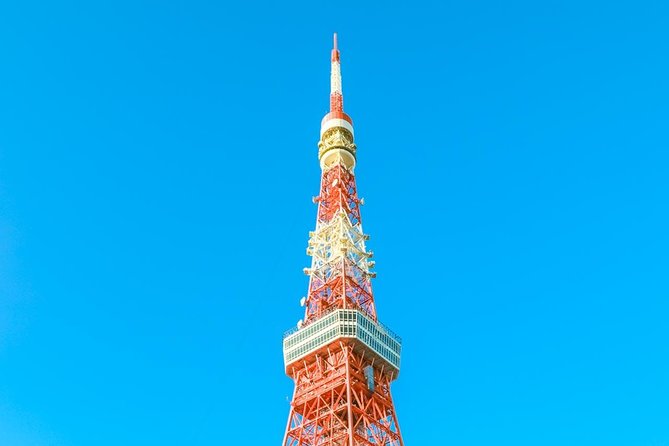
Next up is Tokyo Tower, built in 1958 and still treated like a symbol of Tokyo. It’s a classic “you’re really in Tokyo” landmark, with a presence that cuts through the surrounding density.
You’ll spend about 45 minutes. Admission here is not included, which is important. If your priority is the view from a platform, you’ll likely pay the extra ticket. If your priority is photos and just getting the tower into your memory, you can still enjoy it without buying entry.
Why it’s a smart stop in the flow of the day: after Tsukiji’s food-energy and street-level crowds, Tokyo Tower gives you a change in pace. It’s also a good photo anchor before the final temple finish in Asakusa.
If the weather is poor, expect your guide to adjust routes. The itinerary notes that destinations and routes can change on bad-weather days, which is exactly what you want in a city where plans can get messy quickly.
You can also read our reviews of more tours and experiences in Tokyo




Stop 5: Senso-ji Temple and Asakusa’s red-lantern atmosphere
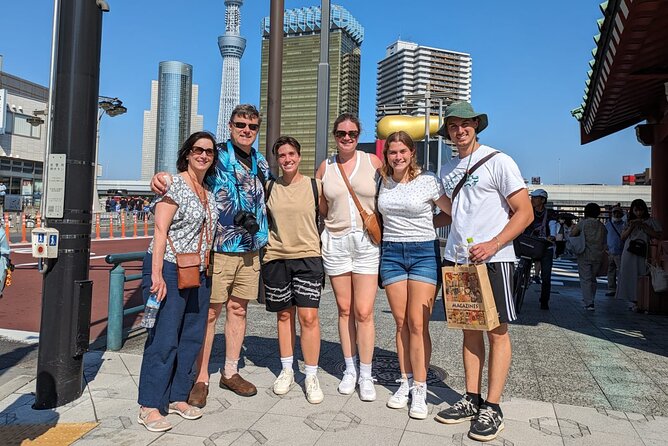
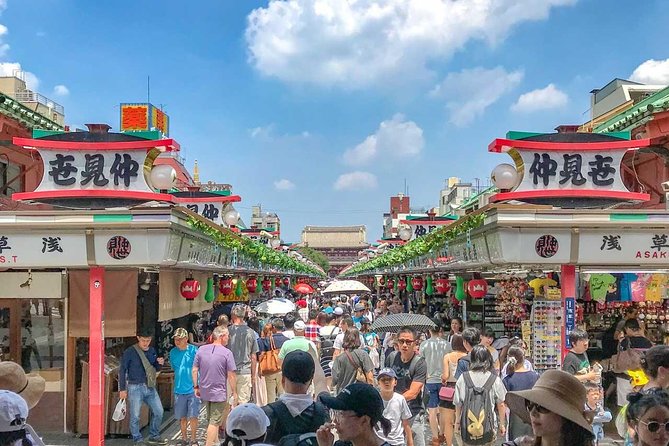
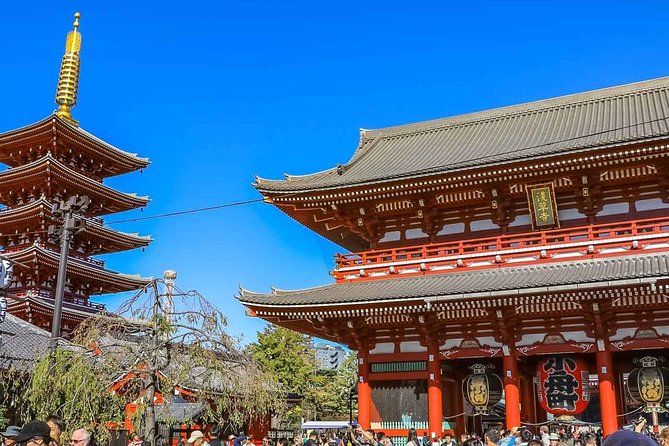
You end in Asakusa, with Senso-ji, Tokyo’s oldest temple. The big red lanterns aren’t just decoration; they’re the visual shorthand for the whole neighborhood. The temple buildings and the approach give you a sense of scale that modern Tokyo doesn’t always show.
This is a 45-minute stop with free admission, so your spending doesn’t spike right at the end. It’s also a strong finish because it feels like Tokyo’s older heart: tradition, crowds, incense vibes, and plenty of photo opportunities.
If you care about cultural context, this is another place where a guide makes a difference. Understanding what you’re seeing and why it’s done the way it’s done turns a quick look into something you actually remember.
You finish at Asakusa Station, around 1-chōme-1-3 in Taito City. That landing zone is useful because it’s well-connected for getting back to wherever your hotel is.
The private guide factor: what you’re really paying for
The listing makes it clear that the tour guide and the fact it’s private are included. That sounds basic, but it’s the key to why this tour works for most first-timers.
A private guide gives you three things:
- Speed with fewer wrong turns. In Tokyo, saving 20 minutes can mean saving an hour of stress.
- Context that changes what you notice. A shrine looks different when you understand the basics of worship and symbolism.
- Flexibility when your energy or interests shift. Many strong reviews mention guides adapting the schedule for interests, rain, and pacing.
You’ll see in the review examples how guides often do the “small things” that make a huge difference: meeting right where you are (some guides even arrive holding a name sign), explaining how to use the transport system, and recommending where to shop or eat so you’re not stuck guessing.
Names that showed up in those standout reviews include Murayama-san, Yutaka, Toshi, Tatsu, Ogawa Masazumi, Ken, Meg, Rumi, and Yassoo. The common thread wasn’t just English—it was clear communication and an ability to translate Tokyo into something you can actually navigate.
Customizable option: good planning turns this into your day
If you pick the customizable tour option, you contact your guide about two weeks in advance to shape the itinerary. If you don’t respond, the tour runs on the standard plan, so don’t rely on last-minute magic.
Also note an important cost detail: for customizable tours, entrance fees and other necessary expenses for the guide may apply. That’s not a reason to skip customization, but it’s a reason to ask what you’re expected to pay before you commit.
Who customization is best for:
- If you want more shopping and less “museum-style” stopping.
- If you have a specific food priority around Tsukiji.
- If you want your day adjusted for timing, like avoiding the worst crowd windows.
The best version of customization is simple: you tell your guide your priorities (photos, shopping streets, food snacks, cultural context) and they build a day that still hits the key landmarks without wasting your time.
Money and value: what $99.49 gets you, and what you’ll still pay
At $99.49 per person, you’re mainly paying for the guide and the private experience. Then you budget for the stuff you use as you go: transportation fees, entrance fees, lunch, and personal expenses.
There’s also a mention of estimated costs for the pre-planned must-sees option—listed as 2,780 JPY per traveler. Plus, Tokyo Tower admission is explicitly not included. So, expect a split budget:
- Tour price for direction and guide time
- Your spending on train rides, meals, and any tickets you choose to buy
Value comes from one thing: first-timer time is expensive. If this private route helps you avoid wrong subway lines, missed connections, and unclear “where do we go next” moments, the cost starts to feel fair fast.
If you’re traveling solo or as a small group, private pricing can still be a bargain compared to paying for multiple taxis or paying for separate tours in different parts of Tokyo.
When this tour may not be your best match
This tour is a strong fit if you want a well-paced sampler of Tokyo with minimal planning. It may not be best if you hate walking or you want a slow, sit-down “only a couple places” kind of day.
The itinerary covers major sights efficiently, but it’s still an active day. The info specifically recommends sneakers because of lots of walking.
Also, a small warning based on the range of guide experiences in general: the quality of history and depth can vary by guide. If you’re the type who wants detailed explanations at every stop, you should set that expectation when you meet your guide.
Quick, practical tips so your day goes smoothly
- Bring cash. Some spots are cash-only.
- Bring a mask for crowded food areas like Tsukiji.
- Wear sneakers and dress for heat or rain since weather can change routes.
- If Tsukiji shops are closed on your day, trust the guide’s workaround (Ginza or Tsukishima are nearby options).
- If you’re sensitive about pacing, tell your guide what pace you like early.
Should you book this Tokyo private day trip?
Book it if you’re a first-timer who wants a guided, public-transport day that hits Meiji Jingu, the Harajuku street-fashion vibe, Tsukiji food history, Tokyo Tower, and Senso-ji without you building the plan from scratch. It’s also a great pick if your group likes food and photos, and you want a guide who can keep things moving while still making stops feel meaningful.
Skip it if you want a relaxed, low-walking schedule, or if you already know the rail system well and feel confident doing this route on your own. In Tokyo, you can absolutely DIY these neighborhoods—but if you’d rather spend the day looking around instead of studying maps, this private format is where it wins.
FAQ
How long is the Tokyo private day trip?
It’s listed at about 7 hours (approx.).
What’s included in the price?
The tour includes a guide and the fact it’s a private tour.
What isn’t included?
Transportation fees, entrance fees, lunch, and other personal expenses are not included.
Are there any entrance fees during the day?
Some stops are free (like Meiji Jingu and Senso-ji), while Tokyo Tower admission is not included. There’s also an estimated amount for pre-planned must-sees (2,780 JPY per traveler).
Where does the tour start and end?
It starts at Harajuku Station (Jingumae, Shibuya) and ends at Asakusa Station (Taito City).
Is the meeting point fixed?
For the standard plan, it’s the designated Harajuku Station meeting point. For customizable options, you can pick a designated meeting point if available.
Is it easy to reach by public transportation?
Yes, the tour is described as near public transportation.
Can I customize the itinerary?
Yes, if you choose the customizable tour option. You should contact your guide about two weeks in advance, or it will run the standard itinerary.
Is free cancellation available?
Yes. You can cancel up to 24 hours in advance for a full refund.