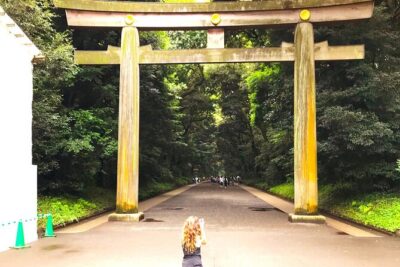
REVIEW · TOKYO
Hand-carved stamps made with craftsmen in Asakusa, Tokyo
Book on Viator →Operated by Attractive JAPAN · Bookable on Viator
Your name turns into a stamp. In Asakusa, you trade screen time for hands-on craft as a local artisan guides your hanko carving step by step. You also get some real perspective on the history and techniques behind Japanese name stamps, not just a souvenir photo-op.
I especially love the private, one-on-one setup with an English interpreter, because questions are easy and mistakes are fixable. I also like that you work with natural wood twigs (like sakura or sansho) to create a seal you can actually use and gift.
One consideration: you have a limited time window, so complex designs may be harder to finish. And if you’re hoping for a long, slow class, the session length can vary depending on how quickly you carve.
In This Review
- Key highlights you should know before you go
- What you make at this Asakusa hanko workshop
- Where it happens: the workshop meet-up in Taito
- Carving your design: natural wood, the tools, and the reality of timing
- The best part: learning the craft from a real artisan
- Taking your hanko home (and using it as a keepsake)
- Price and value: is $93.33 per person worth it?
- Practical tips so your session goes smoothly
- Who this is best for (and who might want to skip it)
- Should you book this hand-carved hanko workshop in Asakusa?
- FAQ
- How long is the hanko carving workshop?
- Is this a private experience?
- Where does the workshop start and end?
- What is the material used for the hanko?
- What should I bring?
- What is included in the price?
- What should I wear?
- Is there a toilet on-site?
- Who can participate?
- Can I carve a complex design?
Key highlights you should know before you go
- Private workshop in Asakusa: only your group, with personalized guidance from a local artisan
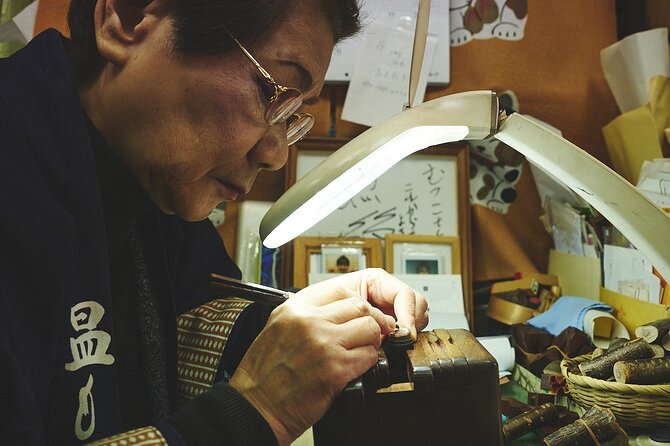
- Natural wood materials: small twigs such as sakura or sansho, about 10 cm long
- Tools and ink included: carving tools, wood materials, and a vermilion inkpad
- You design it: carve your preferred name or a custom pattern with expert help
- Time flexibility: the experience runs about 90 to 120 minutes, but finishing earlier can happen
- Clean, practical setup: there’s no toilet on-site, but a public restroom is about a minute walk away
What you make at this Asakusa hanko workshop
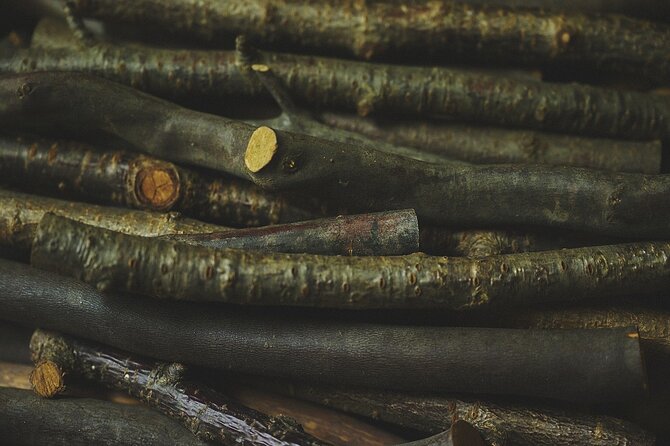
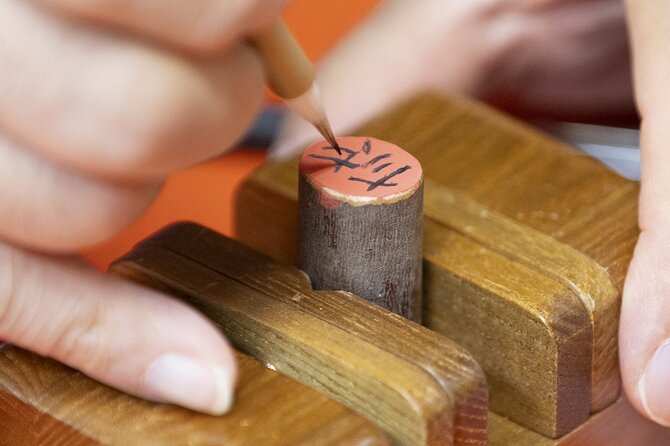
This is one of those Tokyo crafts where the result feels personal in a way that store-bought souvenirs just can’t match. You’ll carve a hanko seal from natural wood using carving tools, and you’ll take your completed stamp home. The workshop is built around the idea that you can make something uniquely yours, even if you’ve never carved anything before.
You’ll choose a design with guidance from the artisan. The wood is typically small twigs of natural material such as sakura or sansho, and the seal is about 10 centimeters long (plan on a compact, handmade piece rather than a huge sign-style stamp). The workshop includes the tools and materials, so you’re not hunting for supplies before you arrive.
The best part for me is the balance: it’s hands-on enough that you feel the craft, but supported enough that you’re not left to figure it out alone. The experience includes an English interpreter, and that matters because carving is all about tiny decisions—what to cut, what to leave, and how to shape the lines so they read clearly later.
You can also read our reviews of more tours and experiences in Tokyo.



Where it happens: the workshop meet-up in Taito
The meeting point is in Taito City, at 伊藤印房 1-chōme-19-4 Senzoku in Tokyo. The start and end are the same location, so you’re not doing a multi-stop chase around town.
You’ll find the workshop near public transportation, which is handy in Asakusa where walking is great but schedules can be tight. There’s also a practical reality check: the workshop itself notes that there is no toilet on-site. The good news is you’re told there’s a public restroom just about a 1-minute walk away, so you can handle it before you start and then focus on carving.
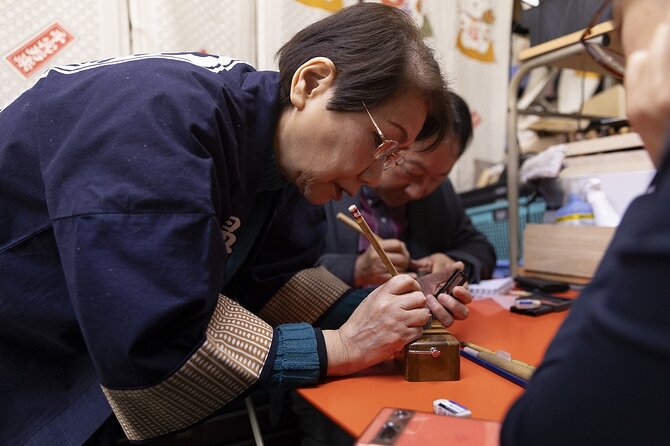
In terms of atmosphere, the experience is set up as a private session, so it feels less like a factory lesson and more like a working craft space. One of the reviews highlights that the host was kind and extremely helpful, and that you can get help when you need it without feeling rushed.
Carving your design: natural wood, the tools, and the reality of timing
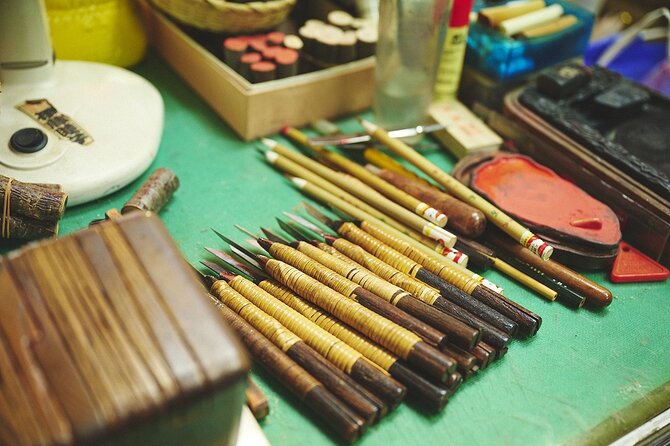
The core of the experience is the carving itself: you’ll carve your preferred design onto the seal. The material is natural wood twig stock, and you’ll use wood-carving tools to remove parts of the surface so your lines and shapes remain as the stamp face.
Here’s what you should plan for. The workshop is hands-on, and some skill is required for hand-carving. That sounds intimidating, but the key is that the artisan provides thorough guidance. The goal is not perfection—it’s learning how to carve so your design turns into something usable.
Design choice matters. The workshop notes that complex patterns may have a higher difficulty level and may not be feasible within the allotted time. If you’re the type who wants a tiny, intricate logo, you may be happier choosing something bolder and simpler. Think of it like calligraphy: thicker, clearer strokes usually translate better into a clean stamp.
Timing is another variable. The experience is listed as 90 to 120 minutes, but the actual pace depends on the customer and how efficiently the carving progresses. If you carve quickly, you may finish earlier within that range. If you’re extra careful (which is often smart), you may use most of the time.
The best part: learning the craft from a real artisan
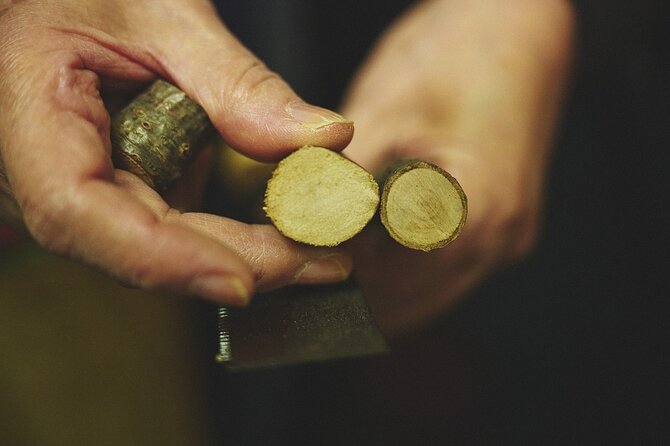
This workshop isn’t only about making an object. You also get insight into culture and tradition, specifically the history and techniques behind hanko carving. You’re taught by a local artisan who brings both skill and teaching energy.
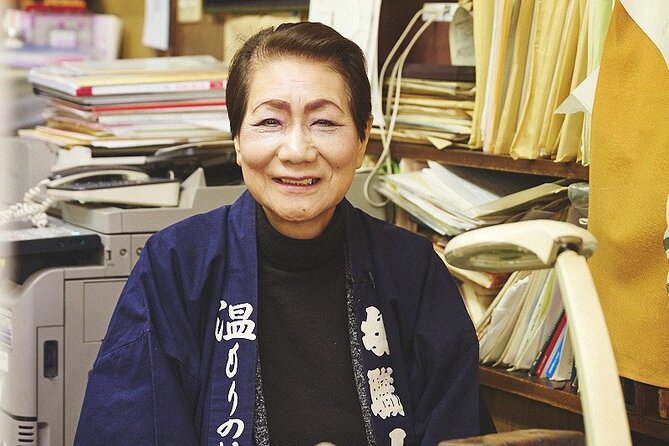
One review mentions an inspirational story shared by the shop owner, including that she is one of the first female hanko craftsmen. Whether or not you’re already a craft-history fan, that kind of context changes the experience. You stop treating the stamp like a novelty and start seeing it as a real craft tradition carried through individual makers.
Also, because it’s private, you’ll likely get more direct feedback on your carving choices. That’s important because mistakes in carving tend to be small but cumulative—one awkward cut can affect how the rest of the design looks. With guidance, you can adjust without wasting the whole piece.
And yes, the artisan’s teaching style matters. Multiple reviews emphasize the host being very polite, helpful, and supportive, with both kids and adults managing to complete personal stamps with help when needed. If you’re bringing family, that vibe is a strong sign you won’t feel like you’re in the way.
Taking your hanko home (and using it as a keepsake)
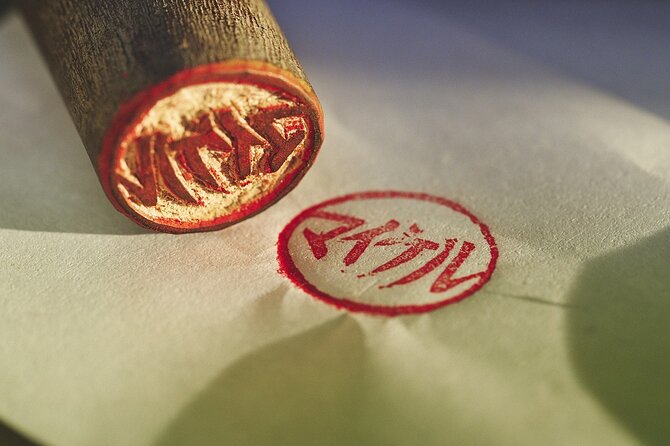
When you finish, the workshop includes the hanko created during the experience plus a vermilion inkpad. That means you’re not just walking away with a carved block—you also have the tools to make the stamp impression.
The workshop describes the seal as a handmade, Japan-made souvenir or gift. In practice, that kind of keepsake is more meaningful because it’s tied to your own hands and your own design decisions. It’s also one of those gifts that says I made this, not I bought this.
You’ll also notice the workshop mentions souvenirs are available at the workshop, but they’re not included in the experience. So you can browse if you want, but your main takeaway is the stamp you carved yourself.
If you’re a photo person, you’ll want to plan a moment for close-ups of the carved lines before you leave. A good handmade stamp has personality in the spacing and depth of the cuts, and those details are what you’ll want to remember later.






Price and value: is $93.33 per person worth it?
At $93.33 per person, this isn’t a cheap Tokyo add-on. The value hinges on what you’re getting, and this workshop does include several things that help justify the price.
First, it’s private for your group, which is a big deal in a city where many craft activities are set up as shared classes. Second, you get a guided carving session with an English interpreter, plus the tools, natural wood materials, and the vermilion inkpad included. That’s not just instruction; it’s supply coverage.
Third, you take home the actual finished hanko. For many craft tours, you pay for the experience but bring home something generic. Here, the object is customized: you’re carving your own name or pattern.
Where cost can feel tight is mainly in two scenarios: if you’re expecting a much longer course, or if you want an ultra-detailed design. The workshop’s time range is about 90 to 120 minutes, and the design feasibility note is real. If you’re someone who wants a very complex stamp, you might need to simplify your concept to keep the experience smooth and avoid feeling like time slipped away.
So I’d frame it like this: you’re paying for time with the artisan, private guidance, and included materials. If you want the craft process more than the tool shopping, it tends to make sense.
Practical tips so your session goes smoothly
You don’t need to bring anything special, but a few small prep moves will help.
Dress code is casual. If you’re worried about carving debris, the workshop suggests bringing your own apron. That’s an easy way to avoid stress when you start shaving and cutting wood.
Plan restroom timing. Since there’s no toilet at the workshop, go beforehand. Then use the nearby public restroom about a minute away right before your start time.
If you’re traveling with kids: the workshop is for over 10 years old. For kids under 10, separate confirmation is required. That tells you the activity has a minimum age comfort level, likely because carving needs careful focus.
For adults, this is also a great “first craft” because you’re not expected to arrive with carving experience. The instruction is hands-on, and the artisan guidance is built into the format. Just be realistic with your design: choose something you can carve cleanly within the time.
Finally, come with clear design intentions. If you already know your preferred name or pattern, you’ll get more out of the guidance. If you’re undecided, ask early and choose a simpler plan that matches what you can physically carve during the session.
Who this is best for (and who might want to skip it)
This workshop is perfect if you want a Tokyo souvenir that isn’t mass-produced. It’s also ideal if you care about craft technique and want a little cultural context while you make the object.
You’ll likely enjoy it if:
- you like hands-on work and don’t mind concentrating for an hour or two
- you want a personalized gift for friends or family
- you prefer a private setting over a large group class
- you’re traveling with a small group and want an activity that feels human, not staged
You might want to think twice if:
- you want a very long, slow class with lots of idle time (the session is limited)
- you’re set on a complex, ultra-detailed design that may not fit the time window
- you’re sensitive to mess and don’t want to consider bringing a simple apron
Should you book this hand-carved hanko workshop in Asakusa?
I’d book it if you want a crafted keepsake with real personal value and you’re happy to compromise on design complexity so you can finish confidently. The private format, included tools/materials, and the fact you end with a usable hanko plus a vermilion inkpad all point to solid value for the time.
I’d pass or adjust expectations if your main goal is a very detailed artistic project or if you’re expecting a much longer experience than the typical 90 to 120 minutes. In that case, you can still carve something meaningful, but you’ll need to simplify what you ask for.
If you like the idea of turning your name into something you made with your own hands, this is one of those rare Tokyo experiences that leaves you with an object you’ll actually keep.
FAQ
How long is the hanko carving workshop?
The experience is about 90 to 120 minutes, and the exact time may vary depending on the customer.
Is this a private experience?
Yes. It’s a private tour/activity, and only your group participates.
Where does the workshop start and end?
The activity starts and ends back at the meeting point: 伊藤印房 1-chōme-19-4 Senzoku, Taito City, Tokyo 111-0031, Japan.
What is the material used for the hanko?
You’ll carve on natural wood twigs such as sakura or sansho. The seal is about 10 centimeters long.
What should I bring?
Nothing in particular is required. If you’re concerned about carving debris, bringing your own apron is recommended.
What is included in the price?
Included items are the experience fee, tools, natural wood materials, the hanko you create, an English interpreter, and a vermilion inkpad.
What should I wear?
Wear casual attire. The workshop suggests an apron only if you want extra protection from debris.
Is there a toilet on-site?
No. There is a public restroom about a 1-minute walk away, so use it before you start.
Who can participate?
Most travelers can participate. The participation requirement is over 10 years old, and children under 10 need separate confirmation.
Can I carve a complex design?
You can create an original pattern with guidance, but complex patterns may be more difficult and may not be feasible within the allotted time.