REVIEW · TOKYO
Asakusa: 1400-year history exploration
Book on Viator →Operated by Arumachi · Bookable on Viator
Sensō-ji is older than Tokyo itself. This 3.5-hour walk gives you a guided thread through Asakusa’s past and present, from the Sumida River to the Kaminarimon gate, and the earphone system helps you keep up even when the street noise rises. My only caution: Asakusa can get packed, and if you drift too far from the group, the audio can be harder to catch.
I also like the food-and-street rhythm, especially the Nakamise-dori stretch where you stop for classic Japanese sweets like melon pan, rice dumpling, rice crackers, and sweet puffed rice. Guides rotate for different dates, but names that have shown up in recent runs include Amy, Emiko, Sachi, Aki, Yasu, Yoko, and Taka, and the common thread is the same: you leave with a clearer sense of what you just saw.
In This Review
- Key Takeaways Before You Go
- Asakusa in 3.5 Hours: What You’re Actually Getting
- Meeting Point by Azumabashi: A Practical Start
- Sumida River to Tokyo Landmarks: The River That Starts the Story
- Asakusa Culture Tourist Information Center: Quick Orientation, Real Help
- Kaminarimon Gate: The Thunder Gate Photo You’ll Actually Understand
- Nakamise-dori: Street Snacks Plus Souvenir Smart-Choices
- Hōzōmon Gate: The Inner Threshold
- Sensō-ji Temple: Where 1,400 Years Feel Concrete
- Asakusa Shrine: Buddhism and Shinto in One Place
- Denboin Street and the Rokku District: Old-Time Entertainment Life
- Price and Value: Why $91.17 Can Make Sense
- Practical Tips That Make This Walk Easier
- Should You Book This Asakusa History Walk?
- FAQ
- How long is the Asakusa: 1400-year history exploration tour?
- How big is the group?
- Where does the tour start, and what time does it begin?
- What’s included in the tour price?
- Is food or drinks included?
- Are entrance fees included for the sights?
- Do we use an audio system?
- Does the tour run in bad weather?
- Can I cancel and get a full refund?
Key Takeaways Before You Go
- Small group (max 8) keeps questions in the loop.
- Earphone guide system improves hearing when the area gets noisy.
- Sensō-ji details that matter like the 53 m five-storied pagoda built in 942.
- Nakamise snack tasting includes melon pan and other familiar street bites.
- Rokku district tips for where to eat, drink, and shop after the temple crowds.
Asakusa in 3.5 Hours: What You’re Actually Getting
Asakusa can swallow an afternoon whole. This tour gives you a structured route that makes the main sights feel connected, not just photographed.
You start by following the story tied to the Sumida River, then you walk gate-to-gate through the Sensō-ji complex, and you end by stepping into Rokku—a traditional entertainment area with plenty of everyday energy. You’re also not left guessing on snacks: part of the experience is a tasting selection, plus your guide’s suggestions for what to do next.
The big “value” here isn’t that the tour covers a long list of stops. It’s that you get context for why each stop exists, what to notice while you’re there, and how the old religious center connects to the shopping-and-street culture around it.
You can also read our reviews of more historical tours in Tokyo

Meeting Point by Azumabashi: A Practical Start
You meet at Burger King Asakusa Azumabashi, near Kaminarimon, and the tour starts at 1:30 pm. You end back at the meeting point, so you’re not stuck navigating your way out afterward while your legs ask for a refund.
This location matters because it puts you close to the action without forcing you to start deep inside the densest temple lanes. It also means you can reach the start point using public transportation without a complicated transfer.
Wear shoes that can handle uneven sidewalks and crowd-station traffic. This is a moderate walking experience, and there’s no “resting while we magically glide” option built in.
Sumida River to Tokyo Landmarks: The River That Starts the Story
Your first stop ties Asakusa’s origin to water. Starting near Azumabashi Bridge, you get a perspective that’s easy to miss if you only focus on temples and souvenir streets.
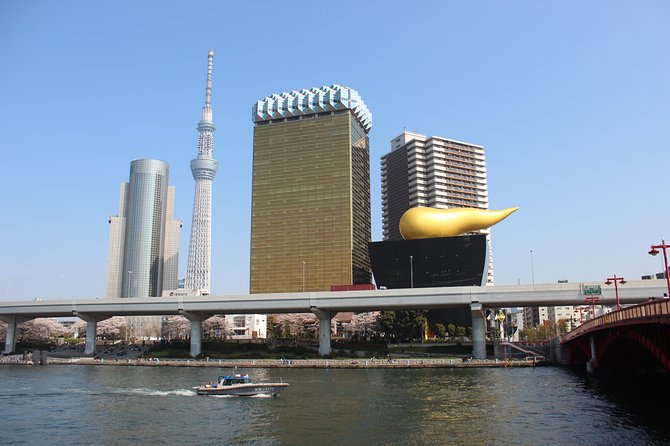
From this area, you’ll see landmarks like Tokyo Skytree and the Asahi Breweries headquarters with its famous golden flame object. The point isn’t the skyline photo (though you’ll get one). It’s the contrast: modern Tokyo rising over the riverside geography that helped shape Asakusa in the first place.
If you’re short on time in Tokyo, this is a smart early setup. It helps your brain place Asakusa on a map you already understand.
Asakusa Culture Tourist Information Center: Quick Orientation, Real Help
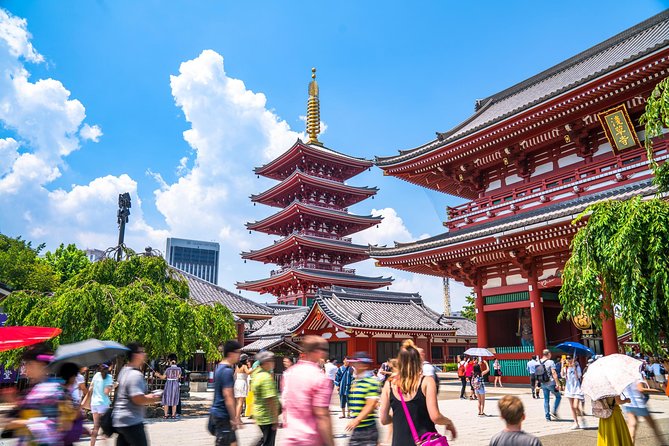
Next you stop at the Asakusa Culture Tourist Information Center, described as one of Asakusa’s newest attractions and housed in an eight-story building. You’re not there for a “sit and watch” program. It’s more of an orientation moment—something you can use immediately after your tour.
This is where the tour’s practical angle shows up. Even if you think you know where to go, Asakusa’s layout can trick you: streets that look similar can lead to very different areas. A quick orientation stop helps you avoid wandering in circles later.
Kaminarimon Gate: The Thunder Gate Photo You’ll Actually Understand
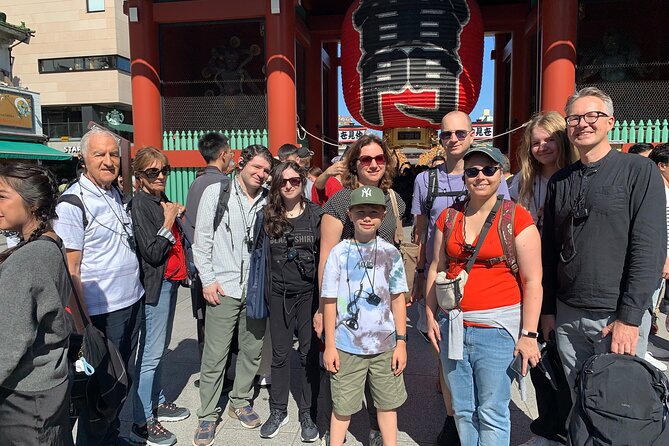
Then comes Kaminarimon, the outer gate that leads toward Sensō-ji. The standout features here are the huge red lantern and the statues.
What I like about having a guide at this exact moment is simple: the gate looks dramatic on its own, but with context it becomes a “beginning.” It marks the shift from the everyday street to the temple approach, and the guide helps you understand what you’re looking at rather than just noticing shapes and colors.
This is also where crowds can peak. If you want a smoother experience, keep your eyes up and follow the group’s pacing rather than trying to freeze for perfect shots.






Nakamise-dori: Street Snacks Plus Souvenir Smart-Choices
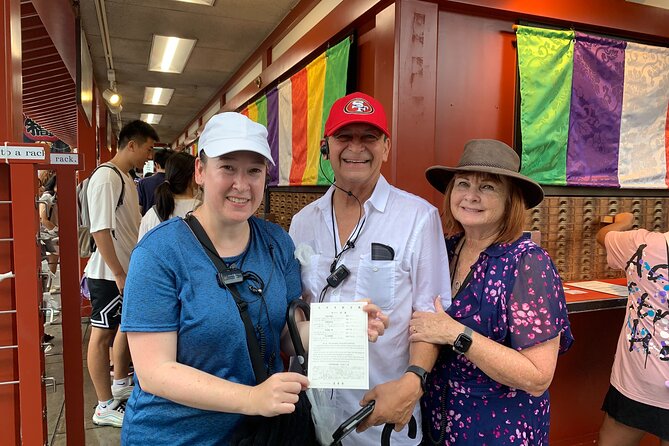
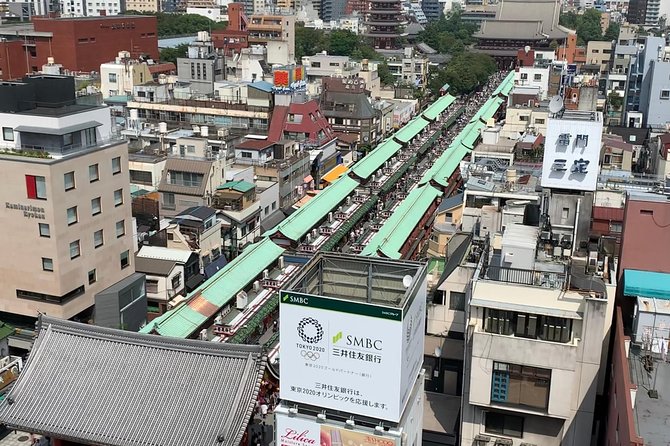
Between Kaminarimon and the temple grounds sits Nakamise Shopping Street, about 250 meters of shops and food stalls. This is where your tour becomes fun in a way that still feels useful: you get help spotting what to buy and where to go.
The tour includes a tasting selection of Japanese sweets and street snacks, such as:
- melon pan
- rice dumpling
- rice cracker
- sweet puffed rice
I love food moments like this because they turn a crowded street into something you can enjoy with your hands, not just your eyes. It’s also a great way to figure out what you want more of later without committing to random stalls.
One thing to watch: Nakamise gets loud and dense. If you prefer quiet sightseeing, you may feel a bit impatient here. The trade-off is that you get the true Asakusa street vibe.
Hōzōmon Gate: The Inner Threshold
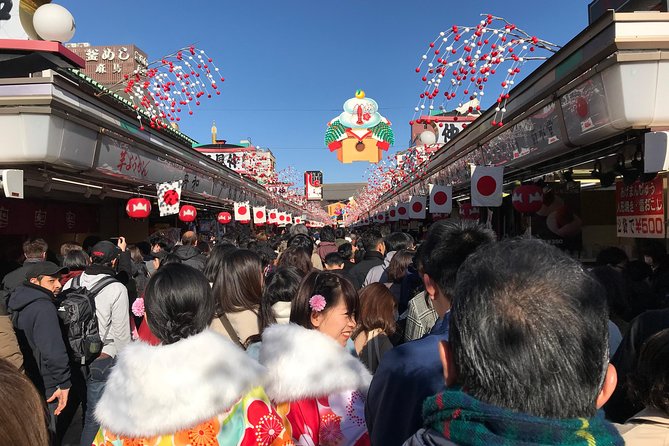
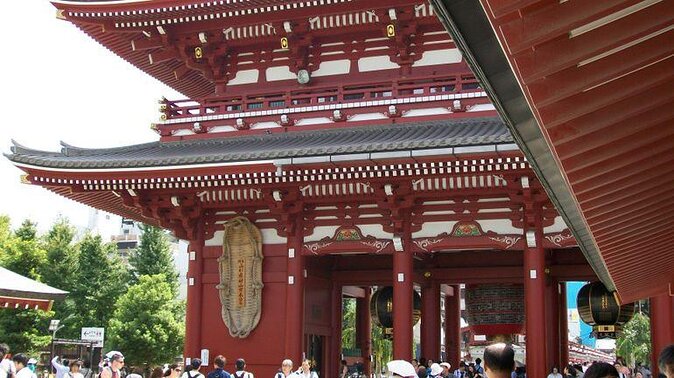
After Nakamise, you pass through Hōzōmon (Treasure-House Gate), the inner gate that leads into the temple complex. It’s a two-story gate, and it functions as a visual and psychological checkpoint: you’re now clearly inside the Sensō-ji world, not just walking past it.
This stop is short, but that’s the point. It’s designed to keep you moving while still teaching you how the temple grounds are staged. If you’ve ever walked a huge religious complex feeling lost at gate points, you’ll appreciate how the tour frames the transitions.
Sensō-ji Temple: Where 1,400 Years Feel Concrete
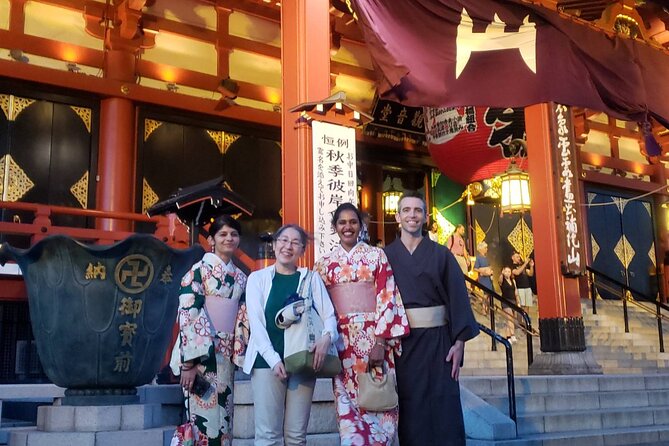
Sensō-ji is the centerpiece: a temple complex tied to a 1,400-year history, and a guide explains its founding story—centering on two fisherman brothers and the temple’s impact as Japan modernized.
Between the Hōzōmon gate and the main hall, you’ll see major structures and learn what to look for. One highlight is the five-storied pagoda, noted as the second highest in Japan at about 53 meters, built in 942, and described as holding Buddha’s ashes.
This stop is also where the temple’s history becomes more than a date on a sign. In Asakusa, you’re walking a place that’s been rebuilt through disasters and conflict, and the tour’s perspective makes it easier to see the complex as a living tradition rather than a museum exhibit.
Practical note: this is where crowds can make pacing tricky. If you’re the type who likes to stop and read every label, you might feel the tour moving a bit fast here. But it’s still set up as time for you to look around, not just march.
Asakusa Shrine: Buddhism and Shinto in One Place
Right on the same premises, you’ll visit Asakusa Shrine. The tour frames it as a rare coexistence: a Buddhist temple and a Shinto shrine sharing origins and worshipers.
That’s not just trivia. It changes how you understand what you’re looking at. Instead of treating each religion as a separate “zone,” you start seeing how they overlap in everyday space and ritual life.
This stop is brief but meaningful, and it helps balance the heavy temple architecture with another layer of cultural context. If you came expecting only one type of site, this is the course-correction.
Denboin Street and the Rokku District: Old-Time Entertainment Life
After the Sensō-ji focus, the tour shifts gears and walks into Rokku, Asakusa’s traditional entertainment district. The description is that it’s “always bustling yet rarely busy”—the kind of place where you feel motion even if you’re not stuck in a wall of bodies.
You’ll walk through what’s described as a shift “from Meiji period into the present day,” with stops along Denboin Street. This part works especially well if you like photography with a story behind it, since the street textures and storefronts often tell you more than any single landmark.
You’ll also get practical advice for where to eat, drink, and shop in Rokku. The value is not just where to go, but how to think about your next hour—especially helpful in an area with lots of options and competing vibes.
Price and Value: Why $91.17 Can Make Sense
At $91.17 per person, this isn’t the cheapest way to see Asakusa. But it includes several things that add up fast when you’re there in person:
- An English-speaking guide who keeps the route coherent
- An earphone guide system, which makes group sightseeing far more bearable in crowds
- A snack tasting selection (melon pan, rice dumpling, rice cracker, sweet puffed rice)
- Stops where entrance is free for most of the key sights (and the tourist information center is included)
Most temple and gate areas you’ll visit are free to enter on your own, so the main “payment” here is for interpretation and time saved. If you enjoy wandering but also want the meaning behind what you’re seeing, the guide earns the price.
If you prefer total independence and you’re comfortable reading on your own while you walk, you could build a DIY day. Still, this tour is designed to make a short visit feel richer, without forcing you to spend hours hunting for the right angles and explanations.
Practical Tips That Make This Walk Easier
Asakusa rewards smart pacing. Here’s how to make the tour feel smooth instead of chaotic:
- Bring or buy water. Bottled water is recommended, and vending machines exist.
- Follow the group closely during crowded segments. The earphones help, but they work best when you stay near the guide.
- Plan for standing time. Even though the tour has structured stops, gates and temple approaches involve pauses and slow movement.
- Expect moderate walking. Comfortable footwear is the real souvenir you’ll appreciate later.
- If you have dietary needs, contact the provider in advance. You’ll want to confirm accommodations for the included sweets.
Also, keep your questions ready. Many guides on this style of tour lean interactive, and it’s the fastest way to turn gate-stops into real understanding.
Should You Book This Asakusa History Walk?
Book it if you want:
- a small-group route that’s designed for questions
- a guided walkthrough of Sensō-ji’s gates and standout structures
- a built-in snack tasting plus suggestions for what to do next in Rokku
- a way to make a crowded area feel organized and readable
Skip it if you:
- hate crowds and want quiet sightseeing
- only care about photos and don’t want explanations
- prefer spending a lot of extra time shopping on your own without a guided pace
If you like history that connects to everyday street life, this is a solid use of an afternoon. You’ll come away with a clearer mental map of Asakusa, plus the kind of snack stops you’ll remember long after the lantern photo fades.
FAQ
How long is the Asakusa: 1400-year history exploration tour?
It runs for about 3 hours 30 minutes.
How big is the group?
The maximum group size is 8 travelers, and it’s designed as a small-group experience.
Where does the tour start, and what time does it begin?
The meeting point is Burger King Asakusa Azumabashi, and the start time is 1:30 pm. The tour ends back at the meeting point.
What’s included in the tour price?
An English-speaking guide, an earphone guide system, and a selection of Japanese sweet snacks (including items like melon pan, rice dumpling, rice cracker, and sweet puffed rice) are included.
Is food or drinks included?
Food and drinks are not included except for the specified snack tasting items.
Are entrance fees included for the sights?
Most of the main temple-related areas listed are marked as free to enter, and the Asakusa Culture Tourist Information Center includes an admission ticket.
Do we use an audio system?
Yes. You’ll have an earphone guide system so you can hear the guide’s voice securely from a distance.
Does the tour run in bad weather?
Yes, it operates in all weather conditions, so dress appropriately.
Can I cancel and get a full refund?
Yes. You can cancel up to 24 hours in advance for a full refund. If you cancel less than 24 hours before the start time, the amount paid isn’t refunded.