REVIEW · TOKYO
Private Sightseeing to Mt Fuji and Hakone with English Driver
Book on Viator →Operated by Bravo Japan Tours · Bookable on Viator
Mt Fuji in one day is a real test of time. This private, customizable trip makes it doable with an English driver and a pickup-ready plan that can flex around your pace. I like the mix of iconic views (including the 5th Station) plus hands-on cultural stops like shrine time and the Fuji lakes area. One thing to plan for: winter weather, summer road limits, and crowds can squeeze your schedule, so you’ll want the driver to help prioritize.
At about 10 hours, it’s a long but efficient day from Tokyo—especially if you hate the “transfer, wait, transfer” feeling. The mobile ticket is a nice touch for reducing admin stress. Still, budget for what’s not included: fees and taxes, plus Mt Fuji 5th Station costs, and any small admissions at specific spots.
In This Review
- Key points worth your attention
- Why a private English-driven day works for Mt Fuji
- Getting from Tokyo: timing is everything
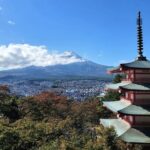
- Chureito Pagoda: 400 stairs and a memorial view
- Oshino Hakkai: Fuji springs, clear water, and Diamond Fuji hopes
- Kitaguchi Hongu Fuji Sengen Jinja Shrine: quiet Shinto pause
- Oishi Park: flower timing and easy lakeside pacing
- Mt Fuji 5th Station: the altitude hit, plus the real-world access rules
- Lake Kawaguchiko: ropeway views and hot-spring style recovery
- How to customize this day without losing time
- Price and value: where the money actually goes
- Weather, crowds, and the small decisions that matter
- Should you book this Mt Fuji and Hakone private trip?
- FAQ
- Is this tour private for my group?
- Does the tour include pickup in Tokyo?
- Is there an English driver included?
- What are the main stops during the day?
- Are entry fees included at every stop?
- What happens if the weather is poor?
Key points worth your attention
- Private, customizable route: you’re not stuck with a fixed bus script.
- English-speaking driver support: they can help you navigate timing and logistics.
- Chureito Pagoda + stairs: 400 steps up to big Mt Fuji photo angles.
- Oshino Hakkai springs: Fuji water, natural monuments, and seasonal “Diamond Fuji” conditions.
- Oishi Park flower timing: different flower seasons turn the same park into a new scene.
- Mt Fuji 5th Station access rules: toll road and seasonal vehicle restrictions affect how you get there.
Why a private English-driven day works for Mt Fuji
If your travel style is I want to choose what matters, this kind of private tour makes sense. You get a car and an English driver who can help keep the day moving—without turning your trip into a checklist you barely taste.
The best part is control. Want a slower shrine stop to read what’s there? Want more time on the lakeside for photos? With a private setup, you can usually stretch or shorten breaks without arguing with a group schedule. That matters a lot around Mt Fuji, where a thick cloud layer can flatten the mood fast. Having a driver who can adjust helps you chase clearer moments when possible.
The trip also does a smart job balancing “Mt Fuji face time” with local details. You’re not only looking up—you’re also seeing the shrine culture at the mountain’s base and the living landscape around the lakes.
You can also read our reviews of more private tours in Tokyo

Getting from Tokyo: timing is everything
This is a day trip that can feel smooth or chaotic depending on departure timing. The Fuji area has traffic spikes, especially when tour buses flood in. One practical win: some drivers have proactively offered earlier starts to dodge congestion, which can buy you calmer viewing time later.
Your day is built for a full arc: you leave Tokyo, work your way through Fuji viewpoints and spring-fed sights, then finish around Lake Kawaguchiko. Expect a long ride, but it’s comfortable thanks to an air-conditioned vehicle.
A small heads-up: Mt Fuji views are weather-dependent. If the mountain is hidden, don’t assume the whole day is ruined. You can still enjoy the shrines, the parks, the lakes, and the atmosphere—just don’t expect that iconic peak to always cooperate.
Chureito Pagoda: 400 stairs and a memorial view
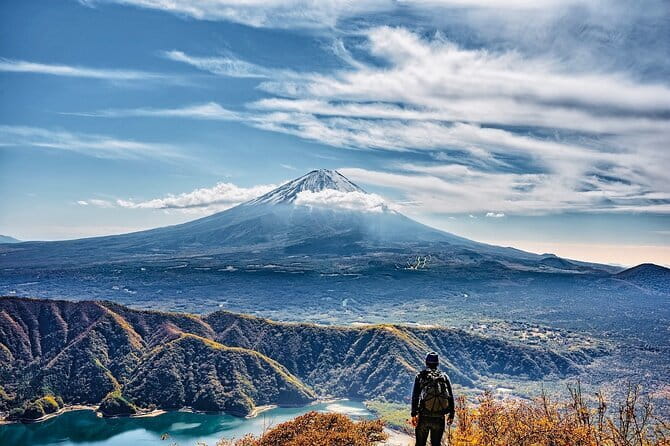
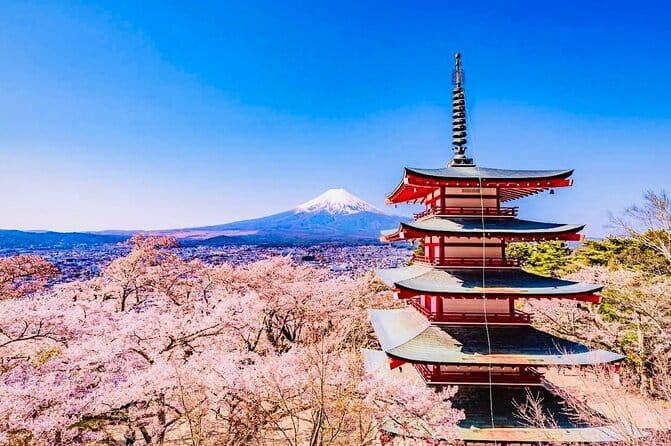
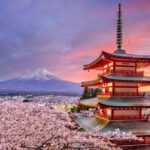
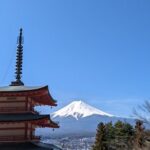
Chureito Pagoda is the kind of place you hear about for a reason. It’s paired with a peace memorial park and Shinto shrines, and it’s famous for views of Mt Fuji from different elevations. The big detail is the climb: up to 400 steps toward the observatory deck.
The memorial angle gives the stop more meaning than a quick photo. Built in memory of soldiers and civilians who lost their lives in World War I and World War II, the area feels reflective. That’s a nice contrast to the typical “just take the picture” viewpoint.
What to watch: stairs. If you’re not keen on lots of steps, you might want to plan your effort. Also, this is one of those photo spots that draws crowds when the weather is clear. Give yourself time to breathe, not just snap and bolt.
Oshino Hakkai: Fuji springs, clear water, and Diamond Fuji hopes
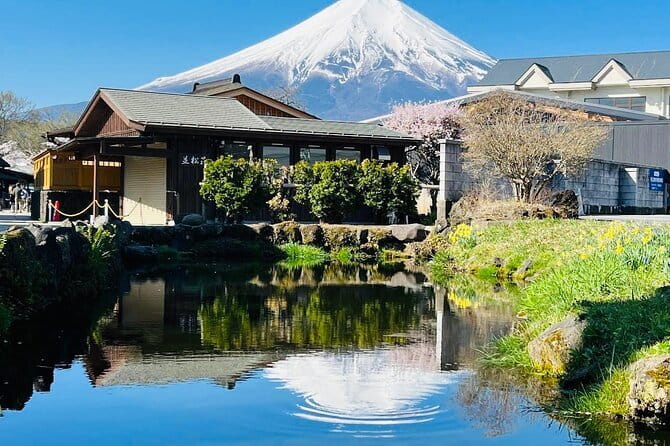
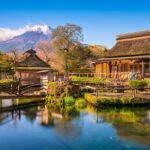
Oshino Hakkai is all about water. The springs here are fed by an aquifer connected to Mount Fuji, and the area is tied to the Mount Fuji World Heritage Site. The scene is simple—small ponds and spring outlets—but the water clarity is the whole point.
There’s also a seasonal optical effect that people chase: “Diamond Fuji.” When the rising or setting sun lines up with the peak, the mountain can appear to frame the sun, as if the caldera is cupping it. In practice, you can’t force the alignment, but your driver can position you for the best chance based on time of day.
Around the largest pond, there’s a small open-air museum area (Hannoki Bayashi Shiryokan) where a small admission fee may apply. Even if you skip the museum, the water and views are the star.
Consideration: this stop is great, but it doesn’t replace the need for clear conditions at the big viewpoint areas. Think of it as a calm, photogenic break while your day’s “Mt Fuji moments” are still ahead.
Kitaguchi Hongu Fuji Sengen Jinja Shrine: quiet Shinto pause
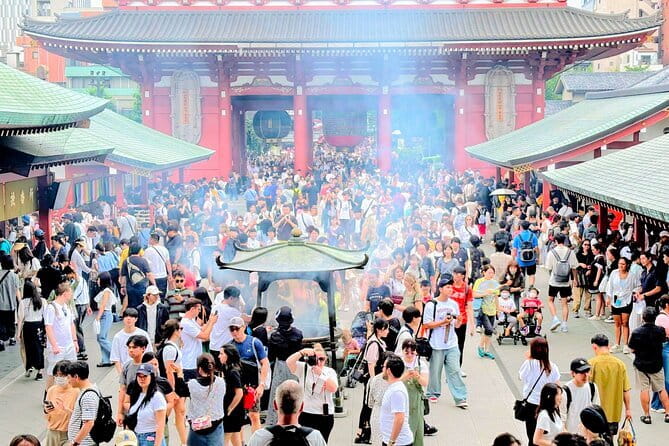
After the open-air viewpoints, Kitaguchi Hongu Fuji Sengen Jinja Shrine gives you the cultural anchor of the day. It’s a Shinto shrine, and the base of Mt Fuji is where you feel the mountain as a sacred presence, not just a landmark.
You’ll have a shorter window here, so use it well. Take a moment to slow down and look at the shrine elements and the way the space is organized. Even if you don’t read Japanese deeply, you’ll pick up the vibe: reverence, routine, and respect.
What I like about shrine stops like this is they help balance the “photo rush.” You leave feeling like the mountain connects to daily belief and ritual, not only Instagram angles.
You can also read our reviews of more tours and experiences in Tokyo

Oishi Park: flower timing and easy lakeside pacing
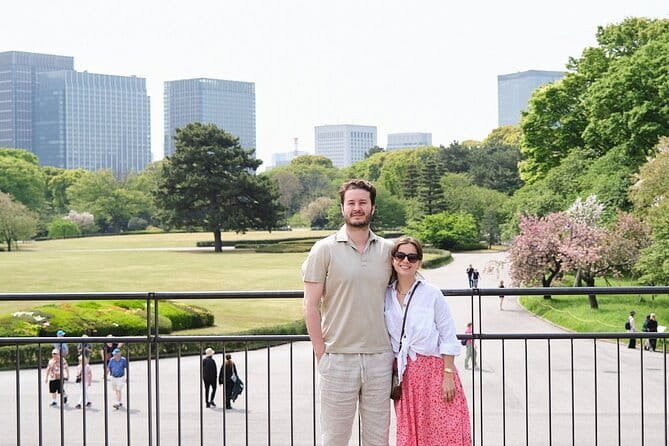
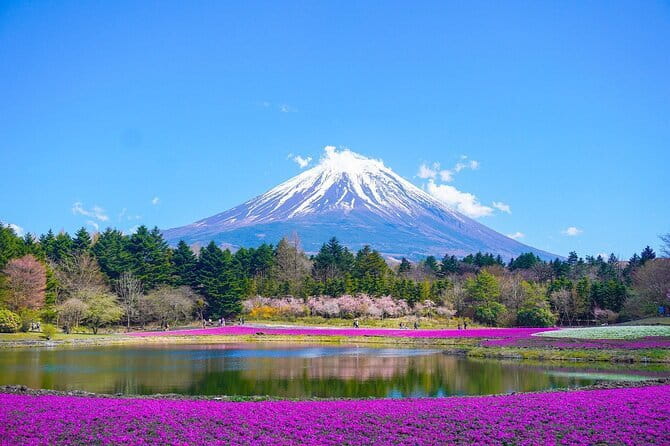
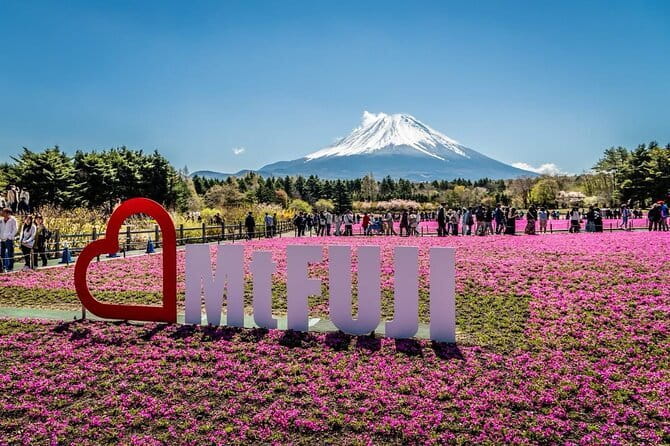
Oishi Park is a public park on the north shore of Lake Kawaguchiko with Mt Fuji views in the background. The park has a 350-meter walking path and lots of planted color along the way, and the best part is how the palette changes through the year.
If you’re visiting in:
- early April to late May: moss phlox can look like a pink carpet
- late June into late July: lavender blooms
- mid to late October: kokia shrubs can turn red
That seasonal variation is a gift. You’re not photographing the same scene each month—you’re getting a different version of the lakeside with Mt Fuji behind it.
There’s also a fun, practical food-and-activity option. The Kawaguchiko Natural Living Center offers fruit jam making and an all-you-can-eat cherry and blueberry picking course, plus a café where you can try blueberry ice cream. If you want a break that’s more than just sitting and waiting for clouds to clear, this is a good place to do it.
The only catch: flower seasons affect how crowded it feels. If you’re going during peak bloom, allow extra time for slower walking and photos.
Mt Fuji 5th Station: the altitude hit, plus the real-world access rules
Mt Fuji 5th Station is the highest point accessible by car (around 2,200m), and it’s a major reason people build their day around Mt Fuji. Even if you’re not hiking to the summit, being up here changes how you see everything. The air feels thinner. The views expand. You’re close enough to sense the scale of the volcano.
Getting there matters. The Fuji Subaru Line is a scenic toll road up the lower northern slopes, starting from Fujikawaguchiko Town. The toll is 2100 yen, and it can face partial closures in winter due to heavy snow.
Also important: during most climbing season (July 5 to September 10, 2024), the road is closed to private vehicles. Shuttle buses run between parking lots at the base and the 5th Station area. So your day still works—but your vehicle logistics change.
Another practical note: Mt Fuji 5th Station admission isn’t included. Build that into your spending plan so you’re not surprised at the top.
Lake Kawaguchiko: ropeway views and hot-spring style recovery
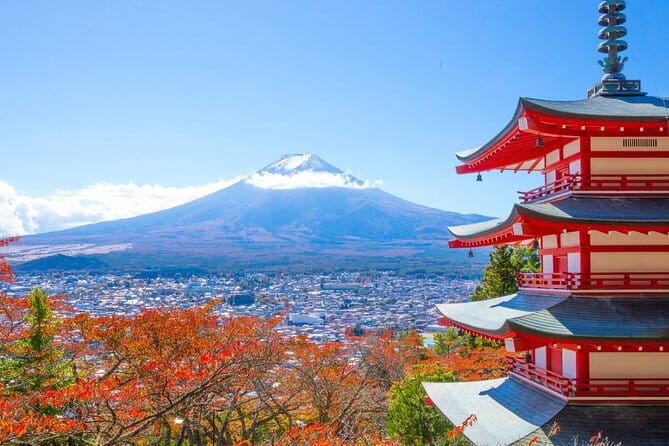
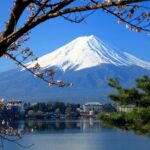
Finishing at Lake Kawaguchiko makes sense because it’s another strong “Mt Fuji in the frame” area. It’s the second largest of the Fuji Five Lakes, and it’s great for relaxing after the busier stops.
One standout option is the Kachi Kachi Ropeway, which goes up to an observation area near the summit of Mount Tenjo. From there, you can see Lake Kawaguchiko with Mt Fuji in the same view frame—plus it’s a nice change from ground-level walking.
The area is also known for hot springs. You don’t have to plan a full onsen session in order to benefit, but it’s a logical place to unwind after a long day. If you’re the type who likes to end a trip with comfort, this is where it fits.
How to customize this day without losing time
The tour is described as customizable, so your best move is to decide your “must-do” priorities up front. I’d treat it like this:
- Pick your non-negotiables: maybe Chureito Pagoda for the stair view, then 5th Station for altitude.
- Choose one lakeside add-on: either more time walking near Oishi Park or the ropeway at Kawaguchiko.
- Leave room for weather: if the mountain is clear, you can linger. If it’s not, you can shift your focus to shrines and springs.
Since this is a private day with an English driver, ask them what they recommend based on current conditions and traffic. In past experiences with drivers like Bajwa and Ali, the approach leaned toward practical help—like adjusting timing to avoid crowds and offering suggestions that keep the day realistic.
One thing to be aware of: this style can be more driver-assisted than “constantly talking like a museum guide.” If you want deeper commentary, confirm what level of guidance is included and what would cost extra before you get on the road.
Price and value: where the money actually goes
For around $60 for a roughly 10-hour private day, the value is mostly in the transportation and the time savings. Getting from Tokyo to the Fuji area efficiently usually costs time and stress even if you’re comfortable with public transit. A private car with pickup reduces that friction and lets you spend your energy enjoying stops, not coordinating transfers.
What’s not included is also important for a fair comparison. The tour notes that all fees and taxes are not included, and Mt Fuji 5th Station admission isn’t included either. Plus, the Fuji Subaru Line toll is part of the route (2100 yen). And at Oshino Hakkai, a small museum admission fee may apply depending on where you stop.
So the realistic way to think about it is: you’re paying for a guided-feeling logistics package, and you budget for minor attractions along the way.
Weather, crowds, and the small decisions that matter
This experience requires good weather. If Mt Fuji is obscured, it won’t be the same “wow” moment—but you can still have a meaningful day, especially at Oshino Hakkai and the shrines, where the atmosphere doesn’t depend entirely on seeing the peak.
Road closures and vehicle restrictions are the other real-world factor. Winter can bring snow issues on the Subaru Line. Summer brings private-vehicle limits during the climbing season, which means shuttle bus routing. Your driver’s job is to handle those shifts so you don’t have to.
Finally, keep your expectations flexible. Even on a great day, crowds can build at the stair and viewpoint areas. If you want your photos without sprinting, give yourself buffer time and trust the driver to minimize dead time with smarter routing.
Should you book this Mt Fuji and Hakone private trip?
I’d book it if you want a private, English-supported day that hits multiple Fuji landmarks without the hassle of planning every transfer. It’s a particularly good fit if you’re traveling with someone who values comfort, or if your schedule doesn’t match the rhythm of group tours.
I’d pause and ask a couple of questions first if the word Hakone is a big priority for you. The stops described around Mt Fuji focus on the Kawaguchiko area and 5th Station. That can still be an incredible day, but make sure you’re getting what you expect for Hakone-related time.
If you’re okay paying extra small admissions and tolls, and you understand that clear Mt Fuji views are weather-dependent, this is a strong value way to experience the mountain region in one coherent day.
FAQ
Is this tour private for my group?
Yes. This is a private experience, so only your group participates.
Does the tour include pickup in Tokyo?
Pickup is offered, and the tour is set up as a day trip from Tokyo.
Is there an English driver included?
Yes. The tour is described as having an English driver.
What are the main stops during the day?
You’ll visit Chureito Pagoda, Oshino Hakkai, Kitaguchi Hongu Fuji Sengen Jinja Shrine, Oishi Park, Mt Fuji 5th Station, and Lake Kawaguchiko.
Are entry fees included at every stop?
Not all fees are included. The tour notes that all fees and taxes are not included, and Mt Fuji 5th Station admission is specifically not included. Some places at Oshino Hakkai may have small admissions depending on what you enter.
What happens if the weather is poor?
The experience requires good weather. If it’s canceled due to poor weather, you’ll be offered a different date or a full refund.