REVIEW · TOKYO PREFECTURE
Tokyo: Samurai Sword Academy in the Hometown of the Last Samurai
Book on Viator →Operated by Samurai Sword Academy in the Hometown of the Last Samurai · Bookable on Viator
A sword lesson with Shinsengumi roots. This 2-hour kenjutsu session feels different because it’s taught in a real dojo, not a staged show, and you learn the Tennen Rishin-ryu basics in the hometown of the Shinsengumi. You also get a direct line to the lineage behind the practice through the program leader, Masao Inoue, chairman of the Tennen Rishin-ryu Hino Dojo and a descendant connected to Genzaburo Inoue.
I love that you actually handle a Japanese sword and learn how to hold it with proper basics, plus you’re guided through etiquette and forms rather than just swinging for photos. I also like the small-group feel (maximum of 4), which makes it easier to ask questions and get corrections, and English support can be part of the day through Yu Ma.
The main consideration: this is real sword training, so you should have a moderate physical fitness level and be ready for focused movement that’s more disciplined than recreational.
In This Review
- Key things that make this dojo program worth your time
- Why Hino City and the Shinsengumi story matter
- Meet at Genzaburo Inoue Shiryokan, then switch into training mode
- Tennen Rishin-ryu basics: forms, posture, and real etiquette
- Handling a Japanese sword: what you do (and what to expect mentally)
- Meet Masao Inoue and the English support that helps you learn faster
- Price and value: $118.60 for 2 hours, max 4 people
- Logistics that actually affect your day: location, ticket, and pace
- Who should book this (and who might skip it)
- Should you book the Samurai Sword Academy in Hino?
- FAQ
- How long is the Samurai Sword Academy experience?
- How much does it cost?
- Where do I meet for the experience?
- What is the group size limit?
- What sword style will I learn?
- Will I be able to handle a Japanese sword?
- Who leads the program?
- Is there English support?
- What is the cancellation policy?
Key things that make this dojo program worth your time
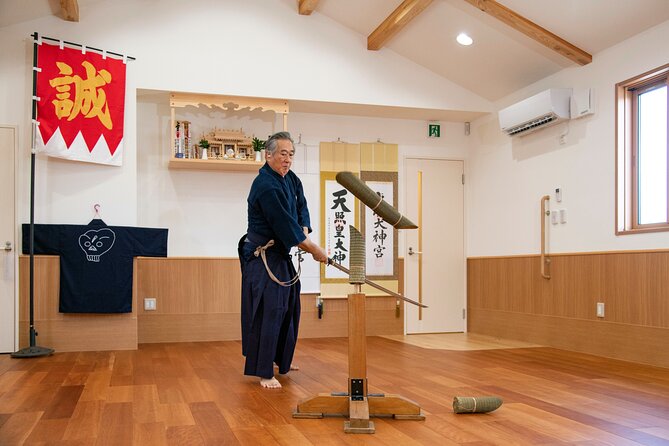
- Hino City Shinsengumi connection: You practice where the Shinsengumi formed at the end of the Edo period.
- Tennen Rishin-ryu, taught in its home dojo: The program centers on Tennen Rishin-ryu basics, not a generic intro.
- Swords-in-hand learning: You can handle a Japanese sword that’s described as embodying samurai spirit.
- Small group coaching: A maximum of 4 travelers keeps instruction practical and personal.
- Leadership tied to the lineage: Masao Inoue leads, with ties to the history connected to Genzaburo Inoue.
- Serious training, not a tourist show: Even the reviews emphasize the tension and the sense of real practice.
Why Hino City and the Shinsengumi story matter
If you like samurai history, this program hits a different note because it’s tied to a specific place, not just samurai lore floating around a museum. Hino City is presented as the hometown of the Shinsengumi, the group formed by swordsmen who practiced Tennen Rishin-ryu in the Edo period, and who became known as the Last Samurai.
That matters because you’re not only learning how to hold a sword. You’re learning how a sword style connects to a lived culture: discipline, role, and identity. In this kind of training, context is part of the technique. When you understand why the style exists, you tend to take the basic motions more seriously.
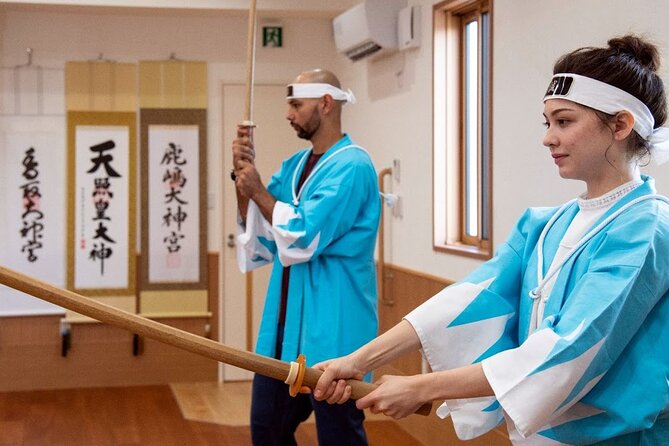
For many first-timers, the biggest surprise is that kenjutsu instruction is about control first. You’re shown foundations like posture, stance, and simple kata (forms). You’re also reminded that manners are part of the training, not an optional add-on.
You can also read our reviews of more tours and experiences in Tokyo Prefecture.
Meet at Genzaburo Inoue Shiryokan, then switch into training mode
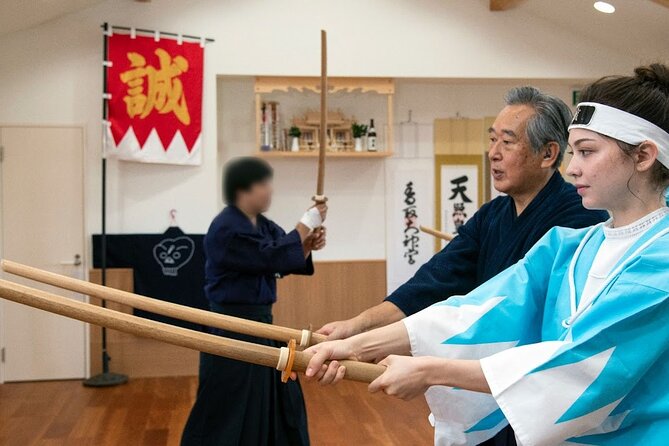
Your session starts at the Genzaburo Inoue Shiryokan (meeting point address: 191-0011 Tokyo, Hino, Hinohonmachi, 4-chōme 1112). This is a useful start because it frames the experience around the people and lineage behind Tennen Rishin-ryu, including the connected history of Genzaburo Inoue.
From there, the goal becomes practical: you move from history to physical practice. The program is designed as a true dojo experience at the Tennen Rishin-ryu Hino Dojo, so you’re not wandering around looking for photo angles. You’ll likely spend your time learning what to do with your body, your grip, and your focus.
Also, timing helps. Starting at 1:00 pm for about 2 hours means you can fit it into a Tokyo day without feeling like you’ve lost a full afternoon. And since the location is near public transportation, you’re not stuck hunting for a hard-to-reach private car ride.
Tennen Rishin-ryu basics: forms, posture, and real etiquette
The heart of the program is Tennen Rishin-ryu. The style is described as having roots in the Edo period and being carried on to the present day. In practical terms, that means you’ll be guided through foundational forms and how to set your body correctly before you add speed or intensity.
What makes this feel valuable is the way the basics are taught in a dojo setting. You’re not learning “a trick for beginners.” You’re learning the start of a tradition: how to stand, how to hold, how to move with intention. Even one review in Japanese calls out the included training areas clearly—reigi (礼儀, manners), sword stance and kat a, plus a serious test cut.
You should expect a lesson that asks you to slow down. Sword basics reward calm concentration. When you treat the first steps seriously, the rest of the session makes more sense fast.
Handling a Japanese sword: what you do (and what to expect mentally)
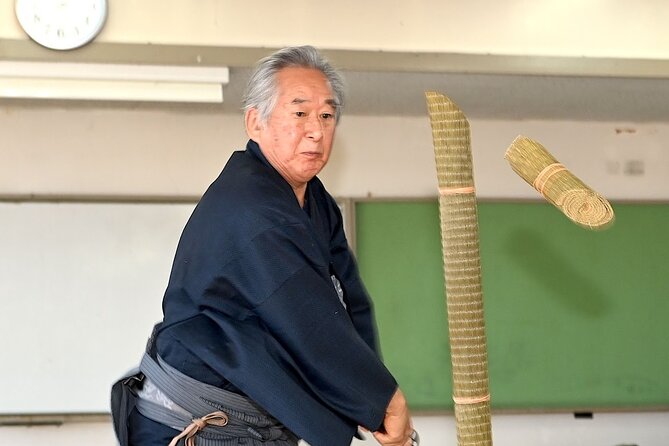
This is a big reason to book: you can actually handle a Japanese sword. The program describes the sword as the soul of the samurai, and the experience is framed as something that can shift how you feel about the craft.
In a real dojo, handling the sword isn’t just novelty. It’s a responsibility. You’re learning how the sword is meant to be held and used, with attention to how your grip and posture affect the motion. That’s also why many beginners feel tension at first. The sword looks familiar from movies, but your body is new to it, and your brain has to catch up.
There’s also an element of intensity in the training. One participant specifically noted a true serious sword test cut experience (真剣の試し斬り). Even if your exact moment depends on the session flow, you should treat the class as hands-on training rather than a casual demo.
Mentally, I’d go in ready to focus on small corrections. If you spend the whole time trying to “get it right perfectly,” you may feel stressed. If you focus on learning the correct basics and improving one thing at a time, the session usually feels rewarding.
Meet Masao Inoue and the English support that helps you learn faster
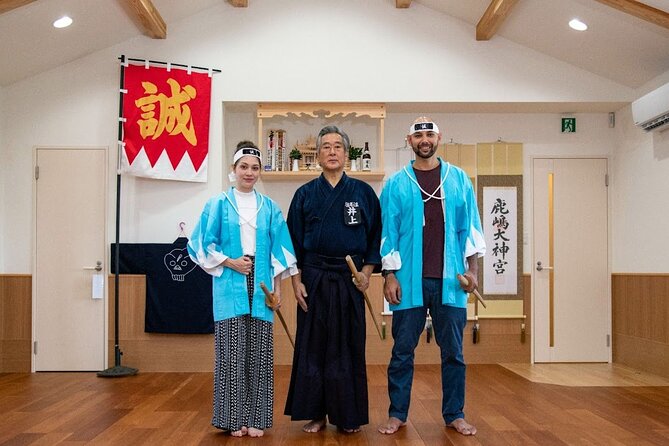
A key strength of this experience is who leads it. Masao Inoue, chairman of the Tennen Rishin-ryu Hino Dojo, guides the program. He’s described as a descendant connected to Genzaburo Inoue, which keeps the day rooted in real succession rather than just a generic instructor lead-in.
In practice, that kind of leadership matters because dojo-style instruction is about tradition plus attention. The instructor isn’t only teaching moves; they’re teaching what the movements mean and how you should carry yourself while learning.
Language support is another practical factor. One review notes English guidance by Yu Ma during the training. If you don’t read Japanese, that can make a big difference. You’ll be able to understand what the instructor wants from you, which is crucial in sword training where small adjustments matter.

Price and value: $118.60 for 2 hours, max 4 people
At $118.60 per person for about 2 hours, the price isn’t low. But for this kind of experience, the value comes from three specific things you don’t get in most casual “samurai experiences”:
First, it’s held in an authentic dojo setting, centered on a defined style (Tennen Rishin-ryu). That’s harder to replicate than a simple show-and-tell workshop.
Second, the group size is capped at 4 travelers. Small groups cost more to run, but they usually mean more time for corrections and fewer moments where you’re just waiting.
Third, you get hands-on sword interaction. You’re not only watching. You’re practicing the basics and handling the sword, which is what most people want when they book.
One more detail to consider: this class is booked about 31 days in advance on average. That suggests demand stays steady. If you’re serious about doing it, don’t leave it until the last week.
Logistics that actually affect your day: location, ticket, and pace
You’re meeting at a specific address in Hino, and the experience uses a mobile ticket. That’s helpful for Tokyo planning because you won’t need to hunt for a paper voucher.
The tour is also described as near public transportation, which is a big deal in Tokyo. For a 2-hour activity, getting there quickly and smoothly reduces stress. And if your energy level is limited that day, you’ll feel less rushed.
Pace matters too. This is not framed as a relaxed leisure activity. It’s a focused training session, and you’ll likely spend most of your time practicing rather than browsing or taking extended breaks. Plan your food and your schedule accordingly.
Who should book this (and who might skip it)
This is a good match if you want something more meaningful than a themed performance. If you’re curious about how Tennen Rishin-ryu connects to the Shinsengumi and you want your learning to feel real, not watered down, this is the kind of class that delivers.
It also suits travelers who like structured instruction. If you enjoy being corrected—hand position, posture, and form—you’ll probably get more out of the 2-hour session.
You might reconsider if you want a relaxed, beginner-friendly “try it once” vibe with minimal physical effort. The program expects at least a moderate physical fitness level. It’s not extreme, but it is physical and mentally focused.
Finally, if you speak only limited Japanese, English support (such as Yu Ma) can be a deciding factor for whether you’ll enjoy the session or feel lost.
Should you book the Samurai Sword Academy in Hino?
I’d book if you care about authenticity, small-group instruction, and hands-on sword learning in a dojo tied to the Shinsengumi story. The combo of Tennen Rishin-ryu basics, a real sense of discipline, and guidance from Masao Inoue makes it more than a novelty activity.
I would not treat this as a casual tourist stop. It’s closer to training: etiquette, stance, forms, and serious practice moments. If that sounds fun to you—and you can handle the moderate fitness part—this is a strong use of your time in Tokyo.
FAQ
How long is the Samurai Sword Academy experience?
It runs for about 2 hours.
How much does it cost?
The price is $118.60 per person.
Where do I meet for the experience?
You meet at Genzaburo Inoue Shiryokan at 191-0011 Tokyo, Hino, Hinohonmachi, 4-chōme 1112.
What is the group size limit?
The experience has a maximum of 4 travelers.
What sword style will I learn?
You’ll practice Tennen Rishin-ryu.
Will I be able to handle a Japanese sword?
Yes. The experience includes the chance to actually handle a Japanese sword.
Who leads the program?
Masao Inoue, chairman of the Tennen Rishin-ryu Hino Dojo, leads the experience program.
Is there English support?
English guidance is mentioned in the experience details through Yu Ma.
What is the cancellation policy?
You can cancel for a full refund up to 24 hours in advance of the experience start time, and cancellation is free.