REVIEW · TOKYO
Tsumami Zaiku Japanese Fabric Flower Class
Book on Viator →Operated by somenova · Bookable on Viator
Pinch, dye, and wear the craft. In Nihonbashi, this tsumazaiku class pairs hands-on silk dyeing plus pinching to form a flower brooch. You also use dyes sourced from a store with over 100 years of dyeing know-how, which makes the whole thing feel legit and not like a demo.
Two things I really like: you get real process time with both speckled dyeing and dip-dyeing, and the pace is set up so you learn a lot in about two hours without feeling rushed. One consideration: you’ll work within a short session and choose one color, so you’ll leave with a focused finished piece rather than lots of experiments.
In This Review
- Key things to know before you go
- Nihonbashi starting point: a craft class you can actually fit in
- What tsumazaiku is, and why it’s more than a pretty project
- Your 2-hour workflow: dyeing, then pinching, then assembling
- 1) Dyeing your silk: two styles with one color choice
- 2) Pinching and gluing: shaping the petals for a brooch
- 3) Extra craft layer: folding and dyeing washi paper
- Dyeing like a craft shop: speckled and dip-dye results you can recognize
- Speckled dyeing: texture you can build on
- Dip-dyeing: tone and depth
- One color choice: a constraint that keeps the class focused
- Turning technique into something you can wear: the kanzashi-style brooch
- Washed-out souvenir risk: how this class avoids it
- Price and value: what $105.68 buys in Tokyo
- Logistics that matter in real life: mobile ticket, transit, and time
- How to get better results fast (without overthinking it)
- Should you book this Tsumami Zaiku flower class?
- FAQ
- What is the Tsumami Zaiku Japanese Fabric Flower Class?
- Where does the class start and end?
- How long does the workshop last?
- What time does the class begin?
- What do I do during the dyeing portion?
- How big is the class?
- Is there free cancellation?
Key things to know before you go
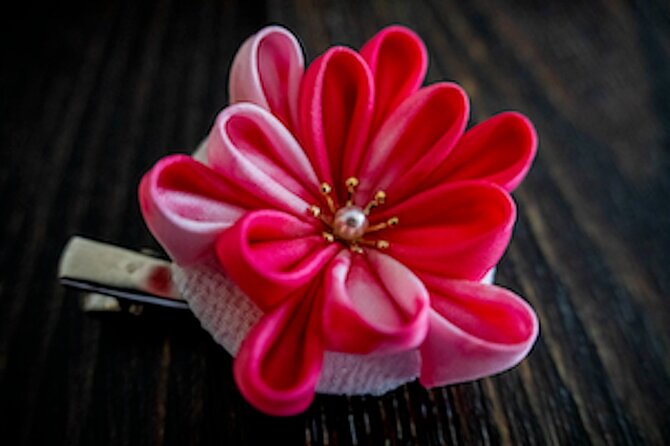
- You create a flower brooch/kanzashi by pinching and gluing dyed silk into shape
- Two dye styles: speckled dyeing and dip-dyeing, both with the color you choose
- Small class size with a maximum of 4 travelers
- Bonus washi paper activity: folding and dyeing included
- About 2 hours total, ending back where you start
- Mobile ticket and easy access via public transportation
Nihonbashi starting point: a craft class you can actually fit in
This class takes place in central Tokyo, in Nihonbashi—one of those areas where getting around is usually straightforward. You start at somenova, inside the address listed for the dye-experience space: somenova(染色体験スペース そめのば), 5F at 14-7 Nihonbashi Kobunachō, Chuo City, Tokyo 103-0024.
The timing is friendly for a day plan: it starts at 1:00 pm and runs for about two hours. It also ends back at the same meeting point, which is a small detail but a big stress-saver in Tokyo. When a workshop finishes where it starts, you can move on to dinner plans without guessing transit.
And yes, it’s clearly designed to be approachable. Most travelers can participate, and the class is capped at 4 people, which usually means more attention when you’re learning a hands-on technique. If you like crafts but don’t want a huge group hovering over your shoulder, this structure is a plus.
You can also read our reviews of more tours and experiences in Tokyo



What tsumazaiku is, and why it’s more than a pretty project
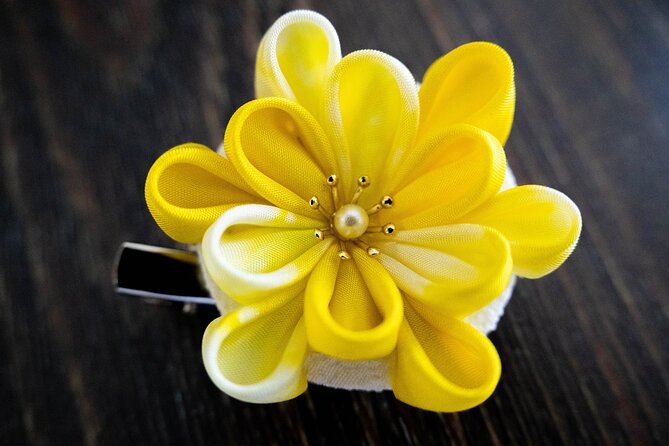
Tsumazaiku is a traditional Japanese craft idea that grew from Edo-period techniques. The core concept is simple to explain and tricky to do well: you manipulate tiny pieces of fabric—often silk—that have been dyed, then you pinch them and assemble them into flower shapes.
In this class, you’re not just making something cute. You’re practicing the logic behind the craft:
- Dye first (so the texture and color distribution become part of the flower)
- Pinch and glue to build the shape (so the petal look isn’t painted on)
- Fold and shape with care so the final piece reads as a flower instead of a pile of bits
The result is a flower-shaped brooch, and it has roots as a kanzashi, a hair ornament style that’s been part of Japanese aesthetics for a long time. That matters because it frames what you’re making: it’s not random arts and crafts. It’s a wearable design concept with traditional technique behind it.
Your 2-hour workflow: dyeing, then pinching, then assembling
This workshop is built like a two-part process, and the sequencing helps. You begin with dyeing small pieces of silk. After you see (and understand) what the dye does, you move into assembly—separating the silk into small pieces, then pinching and gluing them together into a flower brooch.
Here’s how it breaks down in plain terms:
1) Dyeing your silk: two styles with one color choice
You choose one color you want to work with. Then you do two dye techniques using that same color:
- Speckled dyeing
- Dip-dyeing
Even if you’re not an art person, these two approaches are a great pairing because they create different visual personalities. Speckled dyeing tends to give a speckled, lively surface effect. Dip-dyeing gives a more defined gradient or deeper color zone. When you later pinch tiny fabric pieces, those differences show up as petal texture—so your final flower ends up with more depth than a single flat dye would.
2) Pinching and gluing: shaping the petals for a brooch
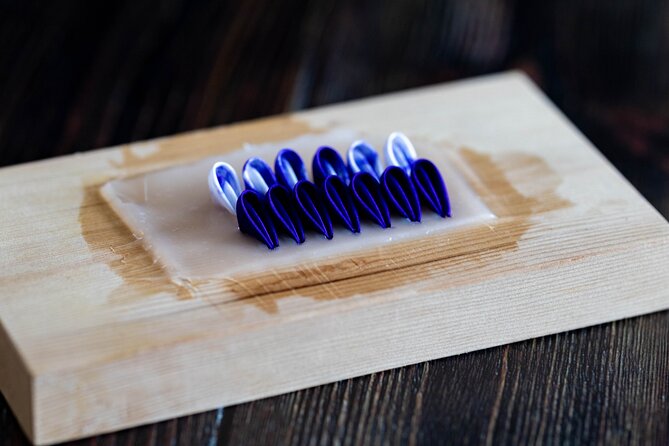
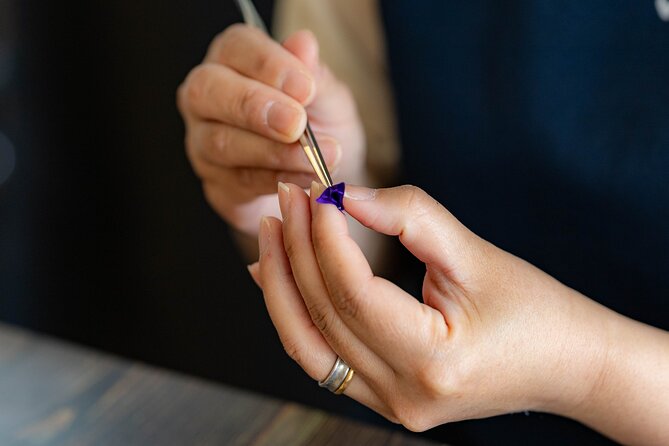
Once the dyed silk is ready, you move into the centerpiece skill: you separate the silk into small pieces, then pinch and glue them together.
That step is where tsumazaiku goes from “cool technique” to “I actually learned something.” Pinching isn’t just compressing; it’s about turning flat scraps into rounded petal forms. Gluing is your structure—making sure the pinned petal shape holds when the flower is assembled as a brooch.
In a short class, you’re unlikely to master every micro-variation in the technique. But you will leave with a usable mental model for how dyed texture and pinched form work together.






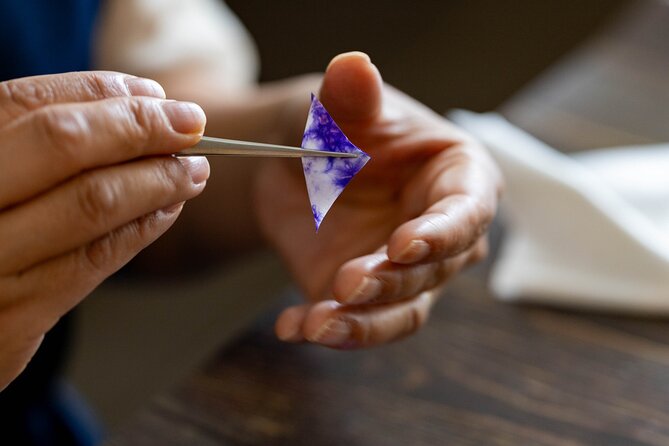
3) Extra craft layer: folding and dyeing washi paper
On top of the silk workflow, you also get to try Japanese washi paper folding and dyeing during the class. This adds variety without taking over the session.
Why this is valuable: washi paper dyeing and folding connects you to Japanese craft methods that are older than modern craft supply stores. You get to experience how folding changes how dye behaves, which complements what you’re learning with silk and pinching.
Dyeing like a craft shop: speckled and dip-dye results you can recognize
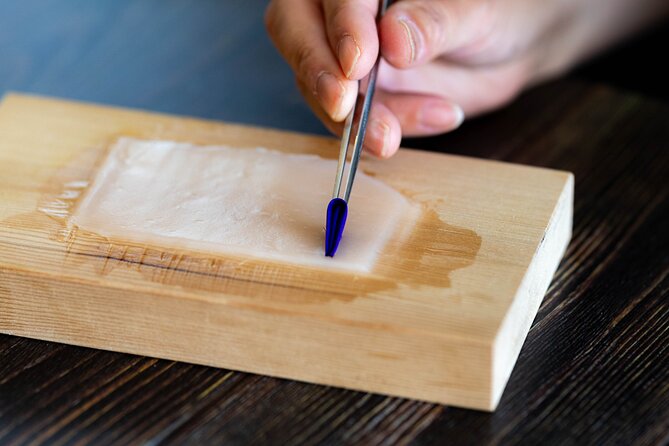
One of the smartest things about this class design is that it doesn’t just say, pick a color and wait. It teaches you how to see dye effects in two different ways.
Speckled dyeing: texture you can build on
With speckled dyeing, the surface effect is part of the design language. When later you pinch the small fabric pieces, the speckled pattern becomes visible on petal faces and edges. That gives your finished flower more of a hand-made, organic look.
If you like pieces that don’t look too “perfectly printed,” speckled dyeing is often the more interesting option visually. It also tends to feel forgiving in a good way: you’re not trying to reproduce an exact pattern like a stencil.
Dip-dyeing: tone and depth
Dip-dyeing is more about color intensity and tonal changes. Depending on the dye behavior, you typically get a darker area where the fabric was dipped and a lighter transition where dye didn’t penetrate as strongly.
That’s helpful because petals often look best when they have depth. Dip-dye results act like your shading system, while speckled dyeing adds texture.
One color choice: a constraint that keeps the class focused
You pick one color of your choice. This can feel limiting at first, but it’s also what makes the 2-hour session work for beginners. You’ll understand dye behavior without spreading your attention across multiple colors and multiple variables.
If you want lots of color options, you might need a longer workshop. If you want a solid, teachable outcome and a brooch you’ll actually wear, one-color focus is a feature.
Turning technique into something you can wear: the kanzashi-style brooch
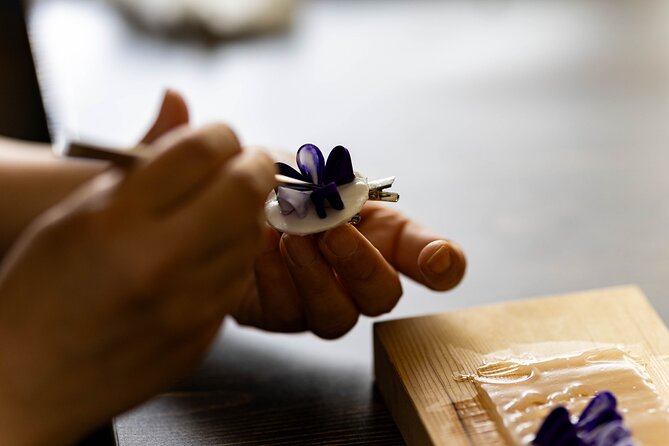
You end up with a flower-shaped brooch made through the tsumazaiku process. And it’s tied to the tradition of kanzashi hair ornaments, which helps you understand why the design is flower-first.
A brooch is also practical. It’s not a “keep it in a drawer” souvenir. When the technique is done right, the flower shape reads instantly—especially when the petals have visible texture from the dye.
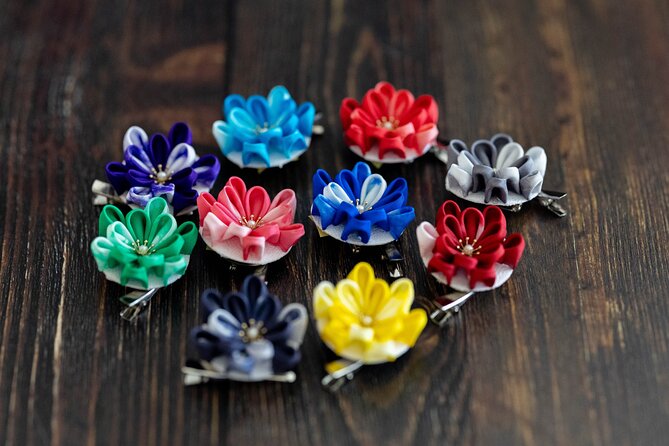
One more reason I like this outcome: it’s your own work. The dyed fabric pieces become part of the design, so the brooch looks different from person to person even when everyone chose the same color. That’s the kind of craft variation you can’t get from a factory-made item.
And because the class size is max 4 travelers, you’re more likely to get the kind of guidance you need to make the assembly step feel doable.
Washed-out souvenir risk: how this class avoids it
Some “make a craft” workshops end up feeling like you followed steps but didn’t really learn the thinking behind them. Here, the value is in the sequence:
- dyeing happens first
- pinching and glue happens after you understand how the dye looks on fabric
That means you’re not just assembling prepped materials. You’re responding to dye outcomes and translating them into a petal form.
Another good sign: the workshop is described as hands-on and authentic, with access to dyed silk pieces and dye sources connected to a shop with 100+ years of history. Even if you don’t care about historical trivia, that kind of supply chain usually correlates with better dye performance and more reliable results.
Price and value: what $105.68 buys in Tokyo
At $105.68 per person for roughly 2 hours, it’s not a throwaway activity. But it’s also not priced like a luxury private atelier.
So what are you paying for, realistically?
- Instruction for a technique that’s hard to fake
- Materials: dyed silk work plus washi paper folding and dyeing
- A finished wearable item (the brooch)
- Small group size capped at 4
In other words, the price buys you time with a process that’s difficult to learn from a YouTube video alone. If you like crafts, this is the kind of workshop that feels worth it because you leave with both a tangible item and a technique you can reuse creatively later.
If you’re the type who wants lots of repeat practice, multiple colors, or bigger outputs, you might feel the time cap. But for a single focused class, it’s a reasonable value.
Logistics that matter in real life: mobile ticket, transit, and time
This experience uses a mobile ticket, which is usually easier in Tokyo than paper vouchers. It’s also near public transportation, and that matters because you don’t want to burn your workshop time on long transfers.
The start time is 1:00 pm, and the session is about two hours. That’s a great length for slotting between sightseeing blocks. If you plan your day, consider grabbing lunch earlier or around noon, so you’re not rushing to your 1 pm start.
Also note the group limit of 4 travelers. That smaller size can help you feel comfortable asking questions when something doesn’t make sense—especially during the tricky pinch-and-glue phase.
How to get better results fast (without overthinking it)
Even without fancy tools, tsumazaiku rewards patience and small corrections. Here’s how I’d approach it if you want the best outcome:
- Watch the dye effects first. Speckled and dip-dyeing create different visual structures. Treat them like materials with different jobs.
- Take your time with pinching. The flower look comes from how the small pieces are shaped and assembled, not from brute-force speed.
- Let the glue be your structure. The goal is to get petals to hold their form. If you rush, the pieces may not stay where you want them.
- Use the washi paper activity as a reset. Folding and dyeing washi is a different tactile rhythm. It can help you shift gears so you’re fresh for the assembly.
One more practical note: because the class is hands-on and compact, it’s worth arriving with your schedule clear. You’ll enjoy it more when you’re not checking the clock every five minutes.
Should you book this Tsumami Zaiku flower class?
Book it if you want a real, traditional craft skill you can bring home as a wearable brooch. This is especially a good fit if you like hands-on learning and you enjoy seeing how materials behave—like how speckled dyeing and dip-dyeing create distinct textures that show up in the final petals.
Skip it if you’re looking for a long multi-day art immersion, lots of different colors, or a lesson that’s more performance than hands-on. This is a focused class: about 2 hours, one color choice, and a single finished piece.
If you’re in Tokyo and you’d rather make something you’ll actually use, the value here is in the technique and the finished kanzashi-style result. For many people, that’s the difference between a memory and an object you keep.
FAQ
What is the Tsumami Zaiku Japanese Fabric Flower Class?
It’s a hands-on Japanese craft workshop in Tokyo where you dye small pieces of silk, then pinch and glue them together to create a flower-shaped brooch. The class also includes folding and dyeing Japanese washi paper.
Where does the class start and end?
It starts at somenova (染色体験スペース そめのば) in Nihonbashi, Tokyo, and ends back at the same meeting point.
How long does the workshop last?
The duration is approximately 2 hours.
What time does the class begin?
The start time is 1:00 pm.
What do I do during the dyeing portion?
You choose one color and experience two types of dyeing: speckled dyeing and dip-dyeing.
How big is the class?
The experience has a maximum of 4 travelers.
Is there free cancellation?
Yes, you can cancel for a full refund up to 24 hours before the experience’s start time.