REVIEW · TOKYO
Official Japan Go-Kart Through Tokyo Bay / Ginza (IDP Required)
Book on Viator →Operated by JAPANKART · Bookable on Viator
Tokyo streets, but you drive them. This JapanKart go-kart tour takes you through big-name neighborhoods near Tokyo Bay and into Ginza, with a guide keeping the group on track on public roads. And yes, this one is strict about documents: you need your regular license plus an International Driving Permit (IDP).
I like two things a lot here. First, you get a thorough safety briefing before you start, and the ride is paced and managed with lead and follow vehicles so you’re not guessing in heavy traffic. Second, the tour includes the full “experience package”: karts, gas, costumes, and photos—so it’s not just driving, it’s also the fun part of dressing up and getting captured.
One possible drawback: the IDP rules are not flexible. If you show up without a qualifying booklet-style IDP (or the wrong convention type), you may be turned away with no refund. Add to that the requirement to arrive early, and this tour favors people who plan documents and timing in advance.
In This Review
- Key highlights you should care about
- Why Tokyo Bay and Ginza feels different in a go-kart
- What you really get for the price ($85.89)
- Safety briefing, road rules, and why it matters in Japan
- The route: from Toyosu to Asakusa (and near Skytree)
- Stop 1: Toyosu (waterfront + fish market area)
- Ginza: luxury streets and bright neon
- Nihonbashi Bridge: old Tokyo’s starting point
- Akihabara: anime, gaming, and tech energy
- Ueno: park area + museums + temples nearby
- Asakusa: Senso-ji area and classic Tokyo street life
- Near Tokyo Skytree: a “how big is Tokyo?” moment
- How the tour keeps you from getting lost (and from panicking)
- Costumes, photos, and that extra layer of fun
- Timing, group size, and what your day will feel like
- Price vs. other Tokyo activities: when this is the smarter pick
- Small rules that can make or break your experience
- Who should book this Tokyo Bay / Ginza go-kart tour
- Should you book JapanKart through Tokyo Bay / Ginza?
- FAQ
- Do I need an International Driving Permit (IDP) for this tour?
- Are International Driving Permits issued under the Vienna Convention accepted in Japan?
- What if my license is from a country with an exception?
- Is alcohol allowed before the tour?
- What should I wear and bring for the ride?
- What time should I arrive for check-in?
- How long is the tour and how big are the groups?
- What stops and sights are included during the drive?
- Is there a rest or photo break during the tour?
- What happens if the tour is canceled due to bad weather?
Key highlights you should care about
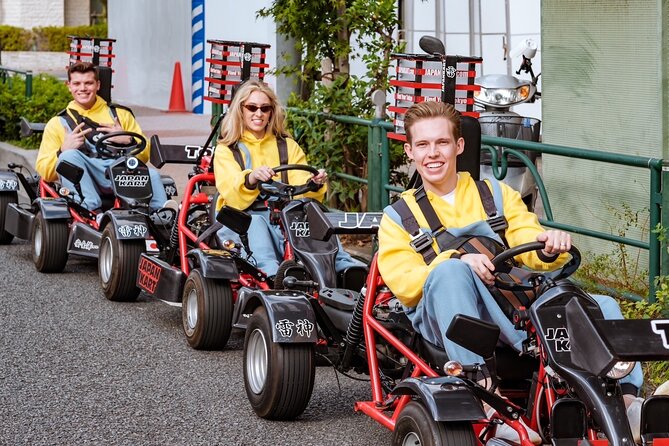
- Public roads with lead-and-rear vehicles to help you stay together and stay safe.
- Costumes + photos included, which makes it feel like more than a random kart rental.
- A formal pre-drive briefing focused on Japanese road rules and kart operation.
- A route that hits Tokyo mainstays like Ginza, Nihonbashi, Akihabara, Ueno, and Asakusa.
- A scheduled rest and photo break so you’re not driving nonstop the whole time.
- Max group size of 20, which helps keep the pace controlled.
Why Tokyo Bay and Ginza feels different in a go-kart
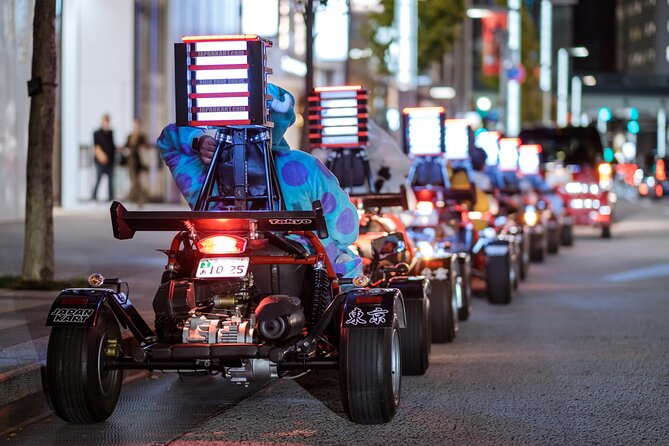
This tour is fun because it turns sightseeing into movement. Instead of staring at buildings from the sidewalk, you’re actually rolling through the city on small karts—close enough to feel Tokyo’s pace, even when the streets look intimidating on foot.
The route design also helps. You’re not left to navigate. A guide plan keeps you moving correctly, which matters in Tokyo where right turns, lane changes, and signage are not always obvious to visitors. The added safety setup—lead and rear vehicles—means the group has a rhythm, not a free-for-all.
And because the tour runs in the Tokyo Bay area and into central hotspots like Ginza, you get that contrast: sleek waterfront districts paired with neon-bright shopping streets. That mix is hard to replicate on foot in the same time window.
You can also read our reviews of more tours and experiences in Tokyo.



What you really get for the price ($85.89)
At $85.89 per person for about 2 hours 30 minutes, you’re paying for more than the kart. You’re also paying for the logistics and safety layer that make this work on busy public roads.
From the included items, you can think of your “value stack” like this:
- Go-karts + gas (you’re not paying extra for refuels or the vehicle time)
- Costumes (free dressing-up is part of the fun factor)
- Tour photos (so you don’t have to rely only on shaky phone shots)
A lot of Tokyo activities charge extra for equipment or experiences. Here, the price bundles the basics, and the 2.5 hours is long enough to feel like a real outing, not a quick burst.
Safety briefing, road rules, and why it matters in Japan
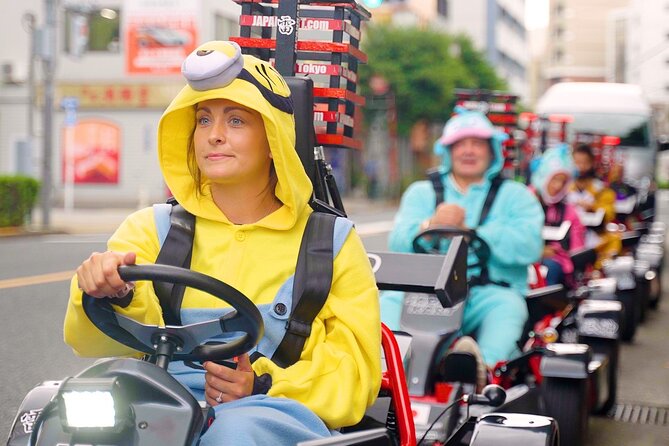
This is not a casual joyride. Before you set off, you’ll get a thorough briefing on kart operation and Japanese road rules. That matters because driving in Japan has its own habits—especially things like lane behavior and how traffic moves through intersections.
The tour is also structured to reduce separation. In multiple experiences, the group is guided with vehicles up front and behind, helping marshal riders through traffic stops and keep everyone together. One reviewer even called out how well it worked for people who aren’t used to driving on the left side.
If you’re the type who needs clarity before moving, you’ll probably appreciate the way this ride starts with instruction. If you’re the type who ignores rules, this setup will feel less fun—because the whole point is that you follow the briefing and stay safe.
The route: from Toyosu to Asakusa (and near Skytree)
Your tour cycles through a set of well-known neighborhoods, with photo chances and a break along the way. Exact time at each stop isn’t spelled out beyond the first stop, but expect short viewing moments rather than long museum-style wandering.
Stop 1: Toyosu (waterfront + fish market area)
You start in Toyosu, a modern waterfront district. This is the place tied to the Toyosu Fish Market, known for early-day seafood activity. Even if you’re not catching the auctions, this area gives you a distinct “Tokyo looks like tomorrow” contrast.
Practical tip: Toyosu is very open and city-planned. Good shoes matter because you may walk a bit before hopping back into the driving flow.





Ginza: luxury streets and bright neon
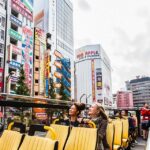
Ginza is Tokyo’s upscale showpiece. You’ll get the look-and-feel—designer storefronts, polished streets, and the kind of brightness you notice even while moving in a kart.
Why it’s worth it from a kart: on foot, Ginza can feel like window shopping. From the road, it becomes motion—lights, crowds, and street rhythm all at once.
Nihonbashi Bridge: old Tokyo’s starting point
Nihonbashi Bridge is tied to the historic start of Japan’s major roads. It’s one of those places where you see the blend: elegant stone bridge elements with the modern city pressing around it.
Watch for: if you’re expecting a long cultural lecture, you might feel underfed. This is more about visual passing-through and photo moments than deep history stops.
Akihabara: anime, gaming, and tech energy
Akihabara is Tokyo’s high-volume zone for anime, games, and tech shopping. When you approach from the road, the whole area reads like a light show plus arcade clutter.
Good fit: if you like kitschy streets and you want the Tokyo “collectible” vibe, this stop is likely to make you grin.
Ueno: park area + museums + temples nearby
Ueno is where you get a cultural mix. The big draw here is the Ueno Park area, with museums and temples in the surrounding zone.
Reality check: you’re in motion on a kart tour, so you won’t be roaming the park like a dedicated sightseeing day. But you’ll still get a meaningful slice of the neighborhood.
Asakusa: Senso-ji area and classic Tokyo street life
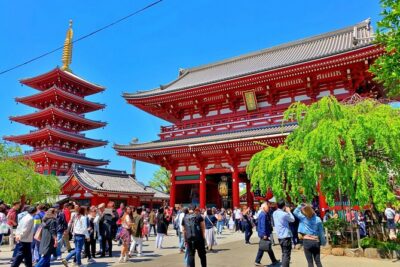
Asakusa is the gateway-to-the-past feeling of Tokyo, anchored by the Senso-ji Temple complex. You’ll likely notice the street energy—traditional stalls and that classic “walking Tokyo” vibe, even from the road.
If your ideal travel day includes both old-town atmosphere and lively street activity, Asakusa is one of the strongest stops on this route.
Near Tokyo Skytree: a “how big is Tokyo?” moment
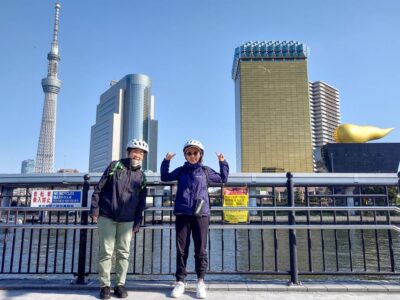
You also drive nearby Tokyo Skytree. This helps you anchor the scale of the city—like seeing a giant marker in the skyline while you’re already in the middle of traffic and neighborhoods.
How the tour keeps you from getting lost (and from panicking)
One of the biggest stress-reducers is how controlled the experience is. You’re driving on real roads, but you’re not driving like you’re on your own GPS.
That’s where the lead and follow vehicles help. They act like moving reference points: you can focus on your lane and your speed while someone else manages route timing. It also helps during traffic lights, when the group might pause and then move again.
If you’re nervous about road driving in a foreign country, this structure is the difference between fun and fear. You get the thrill without the whole navigation burden.
Costumes, photos, and that extra layer of fun
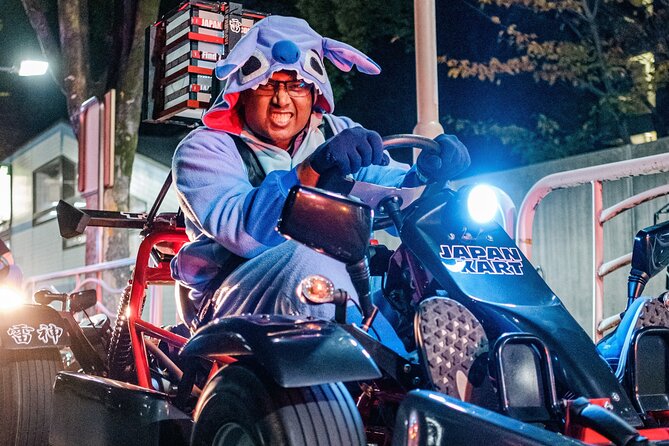
This isn’t just a kart rental. You dress in a costume that’s supplied, and the tour includes photos from the experience.
That costume piece can change the feel instantly. It turns the ride into a shared event. People wave more, smile more, and you look like you belong in Tokyo’s playful side.
One review also mentioned free phone mounts. That can be helpful because you want your phone stable for road photos. Still, since rules can vary about filming or phone handling, I’d treat this as something to confirm on the ground rather than assuming you’ll be able to record everything.
Timing, group size, and what your day will feel like
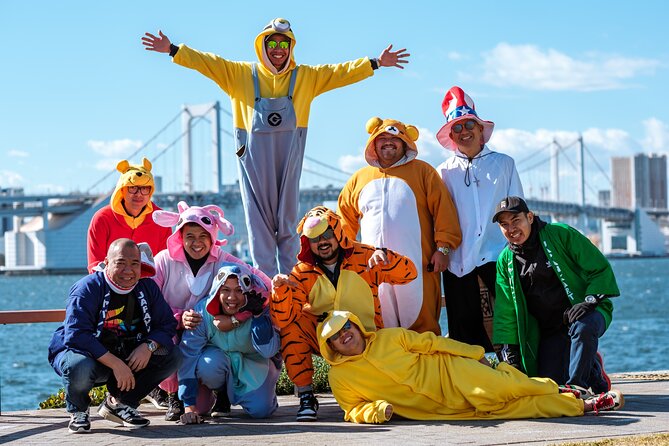
The duration is about 2 hours 30 minutes, and the max group size is 20 travelers. In practice, that’s big enough to feel like an event, but small enough for the guides to manage pace and spacing.
You should expect a short rest and photo break during the route. That matters because kart driving is physical and concentration-heavy. A planned pause keeps the experience from turning into a blurry endurance test.
Also, the tour includes an instructional video you’ll receive after booking. Watch it before you arrive. It’s the easiest way to avoid awkward delays when you’re standing by your kart trying to remember what to do.
Price vs. other Tokyo activities: when this is the smarter pick
Compared with many Tokyo tours, you’re getting a rare combo:
- real motion on public roads
- a guided safety structure
- costumes and photos included
- multiple major neighborhoods in one sitting
If you like your sightseeing active—wind in your face, streets passing quickly, quick flashes of famous areas—this is a high-energy way to pack Tokyo into half a day.
If you prefer quiet, slow-paced cultural stops, or you want detailed narration at every location, this might feel too focused on driving and photo moments. You’re on the move, so your attention is split between kart control and seeing what’s around you.
Small rules that can make or break your experience
This tour has clear boundaries, and the details actually matter.
- No alcohol before the tour. It’s prohibited, so don’t treat this like a casual night-out.
- Footwear and clothing restrictions apply. You should not wear long skirts, high heel shoes, or sandals. Wear something you can drive in comfortably.
- You must have the correct IDP format. It needs to be issued in the format of the 1949 Geneva Convention, and you must carry it as a booklet (not paper or A4). IDPs under the Vienna Convention 1968 are not accepted in Japan.
- Bring your passport and your license. The requirement is a driving license from your home country plus the IDP, and passport.
- Arrive early. The instruction is to arrive 15 minutes before your booking time, and they can wait only 10 minutes after the reserved time.
If you’re tempted to show up late or hope they’ll make an exception, don’t. This is one tour where the rules are part of the safety system.
Who should book this Tokyo Bay / Ginza go-kart tour
Book it if:
- you want a Tokyo highlight that feels like an event, not a checklist
- you’re comfortable driving and you like rules and instruction
- you want to see multiple neighborhoods quickly without worrying about navigation
- you enjoy dressing up and getting photos as part of the activity
You might skip it if:
- you don’t have the right IDP and you’re not sure you can obtain it in time
- you hate the idea of driving in traffic, even with lead/follow support
- you want long, calm stops for museums or temples
Should you book JapanKart through Tokyo Bay / Ginza?
If you already have your IDP sorted and you like active travel, I think this is an easy yes. It’s one of the few ways to feel Tokyo at speed while still having real safety structure around you, and the included costume + photos make it more memorable than a typical “see sights” outing.
I’d only hesitate if your travel plans are document-stressful or if you’re likely to arrive late. For this specific tour, being prepared is part of the fun.
If you want a practical “top pick” way to spend part of your Tokyo day, this one belongs on your shortlist—especially if Ginza + Asakusa + Akihabara energy is what you came to Japan for.
FAQ
Do I need an International Driving Permit (IDP) for this tour?
Yes. You must present both your driver’s license and an International Driving Permit to participate. The IDP must be issued in the format of the 1949 Geneva Convention, and it must be in booklet form.
Are International Driving Permits issued under the Vienna Convention accepted in Japan?
No. IDPs issued under the Vienna Convention 1968 are not accepted in Japan for this activity.
What if my license is from a country with an exception?
The IDP requirement has exceptions for people with licenses issued in Switzerland, Germany, France, Taiwan, Belgium, or Monaco. In those cases, you need a Japanese translation of your license from JAF (Japan Automobile Federation), along with your own driving license.
Is alcohol allowed before the tour?
No. Alcohol consumption before the tour is prohibited.
What should I wear and bring for the ride?
The tour asks you not to wear long skirts, high heel shoes, or sandals. You’ll also receive costumes supplied by the operator.
What time should I arrive for check-in?
Please arrive 15 minutes before your booking time. The operator can wait a maximum of 10 minutes after the reserved time.
How long is the tour and how big are the groups?
The duration is about 2 hours 30 minutes. The tour has a maximum of 20 travelers.
What stops and sights are included during the drive?
The route includes Toyosu, Ginza, Nihonbashi Bridge, Akihabara, Ueno, and Asakusa. The drive also goes near Tokyo Skytree.
Is there a rest or photo break during the tour?
Yes. There’s an en route rest and photo break.
What happens if the tour is canceled due to bad weather?
If the tour is canceled due to bad weather, you’ll be offered a full refund or the chance to reschedule depending on availability. For standard cancellations, you can cancel up to 24 hours before the start time for a full refund.