REVIEW · TOKYO
Sumo Practice Viewing Guided Tour and Photo with Sumo Wrestlers
Book on Viator →Operated by JTB Global Marketing & Travel Inc. · Bookable on Viator
Sumo practice is the best kind of backstage pass. This tour takes you into Tatsunami-beya, a traditional sumo training stable (a sacred place) to watch morning drills with an audio guide and a licensed English interpreter.
I especially like how close you are to real training, not a staged show, and how the rules keep the focus on the wrestlers. The second thing I like: after practice, you get a commemorative photo with sumo wrestlers plus time for a Q&A corner.
One possible drawback: the practice viewing is very quiet and structured. Talking is prohibited, you stay seated, and what you see can be mostly exercises by a smaller group on some days.
Key things to know before you go
- Tatsunami-beya is the Tokyo stable with an active Yokozuna (highest rank), though he does not appear every session
- No talking during practice; an audio guide helps you follow what’s happening
- You watch from tatami with a cushion, plus chairs if you request support in advance
- Shoes come off, and you’ll follow strict etiquette like no flash photography and no touching wrestlers
- Your visit ends with a photo moment and a Q&A corner, followed by shopping mementoes
In This Review
- Tatsunami-beya Sumo Stable: why this tour feels worth the ticket
- The no-talking etiquette is not a gimmick, it’s part of the real deal
- How the tour unfolds: lecture, practice viewing, then photo time
- Stop 1: a short viewing lecture (about 10 minutes)
- Stop 2: practice viewing with audio guide (about 45 minutes)
- Stop 3: commemorative photo with sumo wrestlers (about 15 minutes)
- What you’re likely to see during training (and why it may feel quiet)
- Photo with wrestlers: what to expect and how to make it count
- Price and value: is $118.60 a fair deal?
- Getting there from Asakusa: a practical morning plan
- Who this tour suits best
- Should you book the Tatsunami-beya sumo practice tour?
- FAQ
- How long does the sumo practice viewing tour take?
- Where is the meeting point?
- Is there an English guide?
- Can I talk during the practice?
- Is the commemorative photo included?
- Will the active Yokozuna appear during every visit?
- Are there any important restrictions inside the stable?
Tatsunami-beya Sumo Stable: why this tour feels worth the ticket
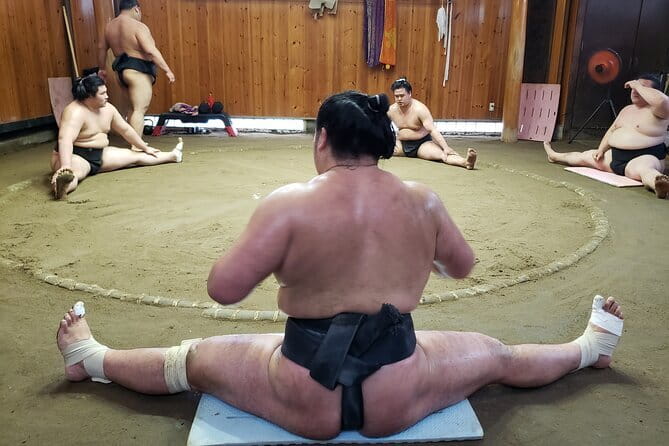
This is one of those Tokyo experiences that can feel simple on paper, then surprisingly powerful in person. You’re not just watching sumo from a distance. You’re stepping into a real training stable where wrestlers live and train every day, and the pace is different from arena sumo.
The stable has a standout distinction: it currently houses an active Yokozuna, the top rank in professional sumo. That doesn’t mean you’ll definitely see him in every practice session, but knowing the stable is home to that level of talent adds weight to the morning. It’s like visiting a workshop where the world’s best craft is happening right now.
If you care about authentic culture, the biggest value here is context. Sumo isn’t only about matches. It’s also about routine, discipline, and respect for tradition—especially in places considered sacred, like a training hall.
And yes, the practical side matters too. The tour includes a licensed English guide interpreter plus an audio guide, so you’re not stuck guessing what moves mean, what the drills are for, or why everyone stays so still and quiet.
The no-talking etiquette is not a gimmick, it’s part of the real deal
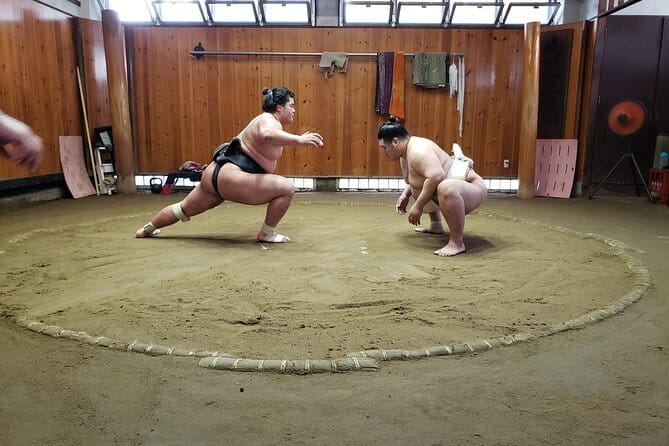
The tour has strict etiquette because the stable is not a museum. Practice time is work time. While watching, whispering and talking are prohibited. That sounds harsh until you realize how much it changes the experience: you notice footwork, breathing, body control, and the rhythm of drills instead of competing with conversation.
Here’s what you should plan for during practice viewing:
- You stay seated on tatami flooring (with cushions provided).
- Don’t stand up or move around.
- No flash photography.
- Keep your mobile phone on silent mode or turned off.
- Avoid strong scents like perfume or fabric softener scents.
- Don’t stretch your legs out toward the ring, since showing the soles of your feet is considered impolite.
- Don’t step on the ring or touch wrestlers without permission.
One more detail that trips people up: hats and sunglasses are considered rude inside the stable, so leave them off once you enter.
You’ll also remove your shoes inside. Shoes need to be kept neatly in place, and strollers and large baggage like suitcases can’t be brought in. If you’re traveling light, you’ll glide through this part. If you’re packing bulky stuff, you might want to rethink it before the morning.
The overall effect is that you get a focused view of training with fewer distractions—which is exactly what you want if your goal is to understand sumo as a discipline, not just a spectacle.
You can also read our reviews of more guided tours in Tokyo

How the tour unfolds: lecture, practice viewing, then photo time
The visit is short—about 1 hour 20 minutes to 2 hours total—so it feels concentrated. You start at 8:30am at Tatsunami-beya Sumo Stable, 1-chōme-16-5 Hashiba, Taito City, Tokyo 111-0023. It ends back at the meeting point.
The flow is simple and logical:
Stop 1: a short viewing lecture (about 10 minutes)
This is your setup. The licensed English guide interpreter gives basic information about proper etiquette and how to watch the practice. It’s not a long lecture, and that’s fine. The goal is to make sure you don’t accidentally derail anyone’s training rhythm.
What you’ll get out of this short briefing is less “history lesson” and more “how to behave here.” That matters in sumo, where tiny actions can come off as disrespectful or distracting.
Stop 2: practice viewing with audio guide (about 45 minutes)
This is the main event. You’ll watch sumo wrestlers train for the Grand Sumo Tournament, which is held 6 times a year. In the real world of sumo, these sessions are a steady march of preparation.
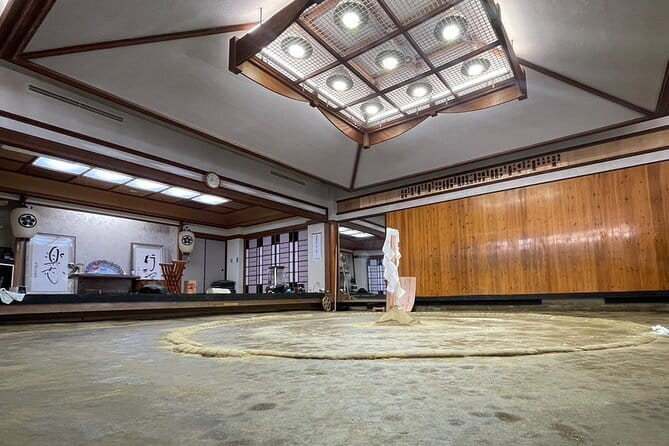
You watch seated on the wooden floor, and the tour uses an audio guide so you can follow explanations during the quiet viewing. Some days may feature a smaller number of trainees practicing, and the session can run shorter or longer depending on who’s training that morning.
If you want a “gym workout” style experience—up close and real—this is it. One review summed it up as sitting in silence watching men practice exercises, and while that might sound plain, it’s also the point: you’re not being entertained, you’re observing.
Stop 3: commemorative photo with sumo wrestlers (about 15 minutes)
After practice, the tour shifts gears. You get a commemorative photo with sumo wrestlers and you’ll have a Q&A corner. There’s also mention of checking out peronal belongings viewing and shopping exclusive mementoes.
This is where you turn observation into connection. You get to see the wrestlers as people, not just silhouettes in motion. And if you’ve been quietly thinking questions during practice, this is the window where answers make sense.
One practical note: a review noted some language issues with the guide/audio setup. So if English clarity is your top priority, keep your expectations grounded: the experience is designed for understanding through audio guidance, not for constant guided narration while everyone stays silent.






What you’re likely to see during training (and why it may feel quiet)
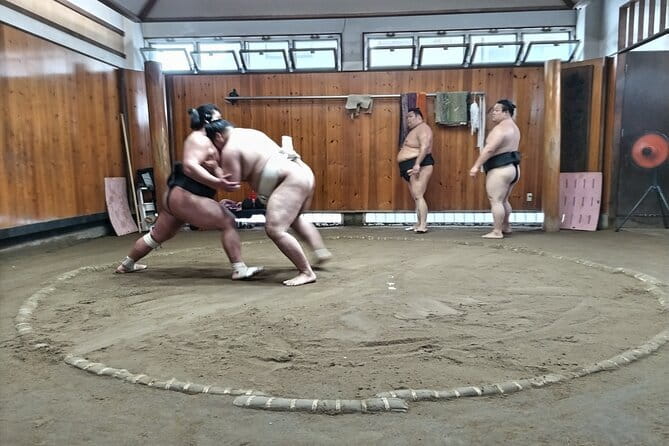
Your seats are close, which is a big deal. Sumo training can look dramatic from afar, but up close it’s about control—how they set their feet, how they manage spacing, and how practice routines build strength and technique.
That said, don’t assume every minute will feel like a mini show. The strict quiet rules mean you’re going to notice every pause. One concern raised in feedback is that some people expected more “action,” only to find the session focused on exercises by a small group.
Here’s the smart way to interpret that:
- If you’re here to learn how sumo training works, silence isn’t a problem—it’s the environment.
- If you want constant spectacle, you may find the experience feels more like watching a focused training block than watching a performance.
Also remember the time window can shift. The practice viewing time can be shorter if fewer wrestlers are training that day, and the tour can end earlier. It can also be longer. No refunds if it runs short, so plan your morning as flexible.
If you’re sensitive to audio clarity, bring patience. One review specifically flagged difficulty understanding the guide and audio devices. The tour does include an audio guide service, but sound quality can vary with equipment and where you sit.
Photo with wrestlers: what to expect and how to make it count
The photo portion is short, but it’s memorable. You’ll take a commemorative photo with the wrestlers after practice. The structure suggests a moment designed to be respectful and orderly, not chaotic.
To make it count, go into it with your mindset set: this isn’t a long meet-and-greet. It’s a brief photo and then onward to Q&A and mementoes.
A helpful tip is to come with 1–2 questions you want answered, so you don’t freeze when your chance arrives. The experience includes a Q&A corner, so you’ll be able to ask about what you saw or about sumo training etiquette and meaning.
Also, note the tour includes JTB Sunrise Tours original merchandise. That kind of included item can feel small, but it’s often the thing you’ll remember when the rest of the experience becomes just a blur of photos.
Price and value: is $118.60 a fair deal?
At $118.60 per person, this isn’t a budget activity. You’re paying for access plus guidance inside a working stable—something most visitors can’t do on their own.
Where the value really comes through:
- Licensed English interpreter and audio guide support
- Entry to a real training stable environment
- A structured look at practice with etiquette guidance
- The included commemorative photo and related time after practice
- Included original merchandise
So the question isn’t only whether you get to see sumo. You do. The real question is whether you want it explained and handled with care. If you want to avoid accidentally being disrespectful, and you want the cultural context that makes sumo click, the price can feel fair.
If you’d rather watch from outside with minimal guidance and lower cost, you may prefer a different sumo experience. But if your goal is “I want to understand how sumo training actually works,” this one fits.
Getting there from Asakusa: a practical morning plan
The stable entrance is about 30 minutes on foot from Asakusa Station (Toei Line, Tokyo Metro Line, Tobu Railway). You can also take a bus or loop route bus:
- Toei Bus East 42-Ko route
- Taito Ward Kita-Megurin loop bus
With an 8:30am start, your best move is to plan for a little buffer time. Morning stability helps when you need to find the exact meeting point and settle before shoes come off.
Also, since restrooms inside may be limited, it’s a good idea to use the restroom before you enter.
If you’re bringing a bag, keep it manageable. Large baggage like suitcases can’t be brought into the stable, and strollers aren’t allowed.
Who this tour suits best
This tour is ideal if you:
- Want an authentic look behind the scenes at a working sumo stable
- Appreciate cultural etiquette and can follow quiet instructions
- Like structured explanations (licensed guide interpreter plus audio)
- Want a close, photo-included experience tied to training reality, not a staged performance
It may not be ideal if you:
- Need constant high-energy narration during practice
- Get frustrated by strict rules like no talking, no moving around, and no flash
- Are very dependent on clear spoken English in real time (some feedback flagged understanding issues with guide/audio devices)
Should you book the Tatsunami-beya sumo practice tour?

If you’re in Tokyo and you want real sumo training access, I’d say yes—especially if you’re excited by discipline and tradition rather than hype.
Book it if:
- You’re comfortable with a quiet, respectful viewing style
- You want explanations during practice through audio
- You’d value the commemorative photo plus Q&A
- You like the idea of watching a stable that hosts an active Yokozuna (even if he doesn’t show up every time)
Hold off if:
- You’re expecting a louder show with lots of interaction during practice
- You strongly dislike silent environments
- You rely on being able to clearly understand live spoken English the entire time
Either way, go in knowing the experience is controlled on purpose. That quiet structure is what makes a behind-the-scenes sumo visit feel genuinely different from any other Tokyo attraction.
FAQ
How long does the sumo practice viewing tour take?
It runs about 1 hour 20 minutes to 2 hours, depending on how many wrestlers are practicing that day.
Where is the meeting point?
The tour meets at Tatsunami-beya Sumo Stable, 1-chōme-16-5 Hashiba, Taito City, Tokyo 111-0023, Japan.
Is there an English guide?
Yes. You’ll have a National Government Licensed English Guide Interpreter, plus an audio guide service during the practice.
Can I talk during the practice?
No. Whispering and talking are strictly prohibited while watching the practice.
Is the commemorative photo included?
Yes. You’ll have a commemorative photo with the sumo wrestlers after practice.
Will the active Yokozuna appear during every visit?
Not necessarily. The Yokozuna does not appear at every practice session.
Are there any important restrictions inside the stable?
Yes. You must remove your shoes, keep your phone silent, no flash photography, no eating or drinking, no hats or sunglasses inside, and you can’t touch wrestlers or step on the ring without permission. Strollers and large baggage like suitcases also can’t be brought in.