REVIEW · TOKYO
TokyoSumoShow, ChickenHotPot, and Mochi-Pounding by Pro Wrestlers
Book on Viator →Operated by SUMO LAND · Bookable on Viator
Sumo, right in your seat. SUMOLAND Tokyo Ryogoku turns the sport into a live, interactive program with former pro wrestlers and supervision by a 63rd Yokozuna, plus chanko hot pot and hands-on mochi pounding. It is designed for first-timers, not for hardcore tournament watchers.
I love how close the experience puts you to wrestlers—from the ring entrance ceremony to the photo moments. I also love that you’re not just watching: chicken chanko hot pot is part of the ticket, prepared in connection with the Isegahama stable.
One possible drawback: if a lot of people want the same participation moments (mochi pounding or the ring bout challenge), it can be limited per group or decided by lottery.
In This Review
- Key Highlights to Know Before You Go
- Sumo at SUMOLAND: Ryogoku’s Easy, Entertaining Entry Point
- Chicken Chanko Hot Pot: Included Meal with Real Sumo Flavor
- Ring Entrance Ceremony and the Main Sumo Show
- Mochi Pounding Challenge: Messy Hands-On Culture for Kids and Adults
- Sumo Bout Challenge and Photo Time: When You Step Into the Ring
- Seats, Safety, and Timing Around Ryogoku Station
- Price and Value: What Your $106.12 Includes (and What It Doesn’t)
- Who Should Book SUMOLAND Tokyo Ryogoku (and Who Might Skip It)
- Should You Book SUMOLAND Tokyo Ryogoku? My Decision Checklist
- FAQ
- How long is the SUMOLAND Tokyo Ryogoku experience?
- What’s included in the ticket price?
- Is the ticket a mobile ticket?
- Where is SUMOLAND Tokyo Ryogoku located?
- Can kids participate in mochi pounding and the sumo bout challenge?
- Are vegetarian or vegan meals available?
- Is gluten-free or halal food available?
- Are seat locations selectable?
- What if there are too many people wanting to join the challenges?
Key Highlights to Know Before You Go
- Ryogoku location: walkable from Ryogoku Station, in Tokyo’s sumo heart.
- Former top-division wrestlers: you get the real performance energy, not a costume show.
- Chicken chanko hot pot included: a filling meal you eat as the program starts.
- Mochi pounding challenge: kids can join, and you get hands-on time with wrestlers.
- Ring bout challenge and photos: interactive moments happen, but participation can be limited.
Sumo at SUMOLAND: Ryogoku’s Easy, Entertaining Entry Point
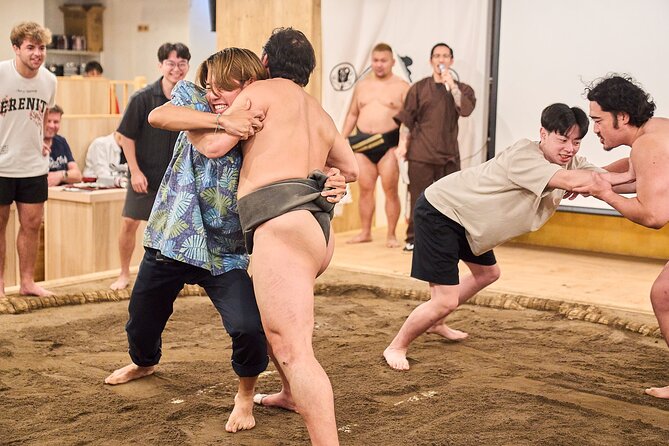
Ryogoku is where Tokyo keeps sumo close. This is the neighborhood feel you want when you want the culture without spending your whole day hunting for tickets or seats at a formal event.
At SUMOLAND, the tone is clear: this is an entertainment program inspired by sumo, not morning practice and not an official tournament bout. That matters because the pacing is built around showmanship and audience interaction, so it moves quickly and stays kid-friendly.
What you’re walking into is a ring-focused performance inside a purpose-built venue. Expect a mix of short instruction, theatrics, and actual sumo wrestling technique shown by experienced hands—former pros supervised by a 63rd Yokozuna figure, with Isegahama stable involvement for parts of the meal.
You can also read our reviews of more tours and experiences in Tokyo.



Chicken Chanko Hot Pot: Included Meal with Real Sumo Flavor
The ticket includes the main meal: chicken chanko hot pot. Since the hot pot is part of the flow, it also functions like a “welcome” stage—something warm and practical while you settle in and get your bearings.
I like that the meal is not an afterthought. It’s tied to sumo culture through the chanko tradition, and the program includes details that help you connect why wrestlers eat this way. Also, you’ll see food served as part of the schedule rather than as a separate restaurant stop.
How good is it? The overall feedback trend is positive, and several people specifically praised it for being satisfying and broth-forward. There are also a few notes that the food is fine rather than mind-blowing, which is fair if you’re expecting a top-tier Tokyo restaurant experience. The smart expectation is: you’re paying for the show, and the hot pot is a solid included bonus.
Diet notes you should take seriously:
- Vegetarian/vegan meals are available if you request at least 2 days in advance.
- Gluten-free and halal meals are not available, and you may need to plan around that (or bring your own food if needed).
- Alcoholic drinks and bottled water are not included.
Ring Entrance Ceremony and the Main Sumo Show
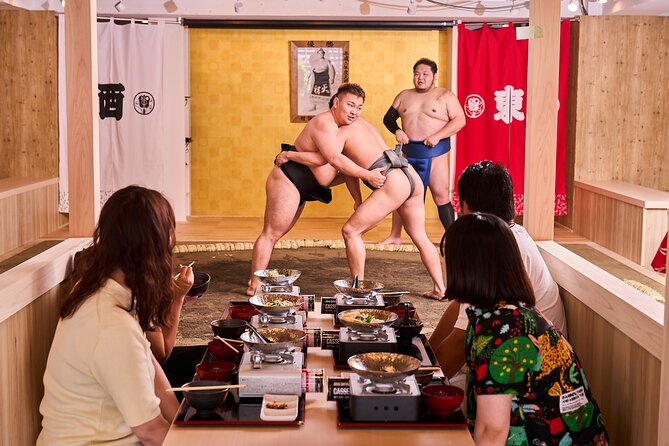
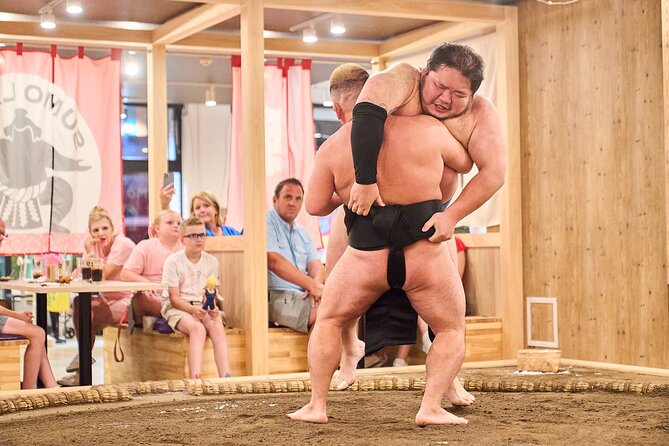
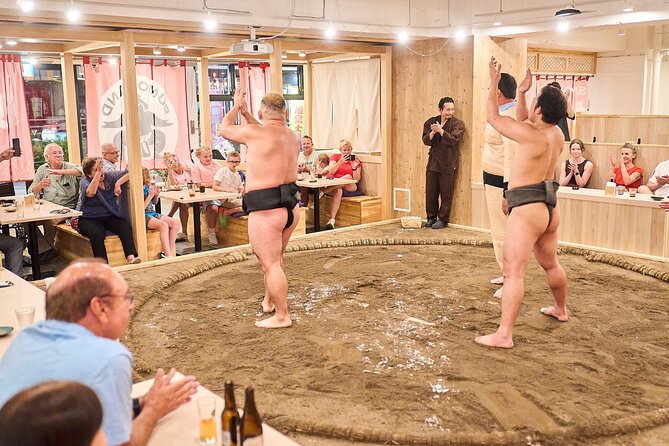
The big energy moment is the ring entrance ceremony. Former wrestlers make a powerful entrance, which sets the tone fast if this is your first time seeing sumo performed live.
Then comes the main sumo show, supervised through the yokozuna oversight mentioned in the program details. This part is where you get to see technique emphasized, not just wrestlers standing around looking intimidating. The performance highlights how sumo is both athletic and theatrical: controlled power, timing, and crowd interaction.
One thing I appreciate in the way these programs are built is how they explain things without killing the momentum. You get a guided understanding of basics, and the show helps you notice what to watch for once the bouts and challenges start.
If you’re the type who wants every fine point of tournament rules and ranking systems, you might feel the explanation stays at “starter level.” That’s not bad, it’s just the format. If that’s you, read a short primer before you go so you can enjoy the show and still understand the jargon.
Mochi Pounding Challenge: Messy Hands-On Culture for Kids and Adults
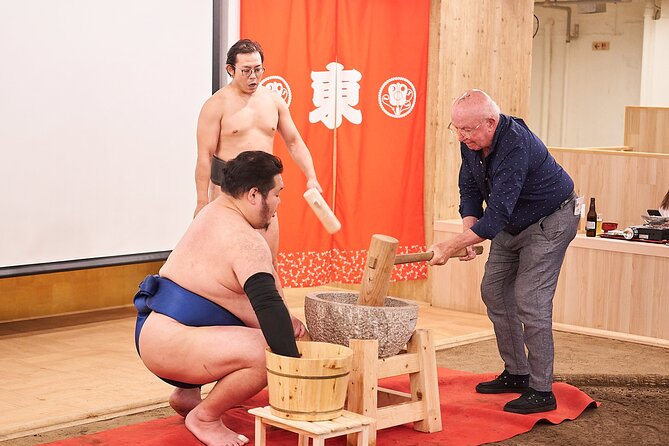
Then you get to do something physical: mochi pounding with wrestlers. This is the part that turns the show from passive to participatory, and it is genuinely memorable because it feels ancient but is still playful.
The program is set up so kids are welcome, which is a huge plus if you’re traveling with different ages. Even if you do not participate, watching someone try the pounding and realize it’s harder than it looks is part of the fun.
Know the practical reality: if too many people sign up for participation, your mochi pounding slot can be limited to one per group or decided by lottery. That means you should treat it like a chance to participate, not a guarantee.
Also, wear clothes you don’t mind getting a bit dramatic with dust or flour-like mess. You won’t be leaving wearing your best outfit, and that’s part of the charm.
Sumo Bout Challenge and Photo Time: When You Step Into the Ring
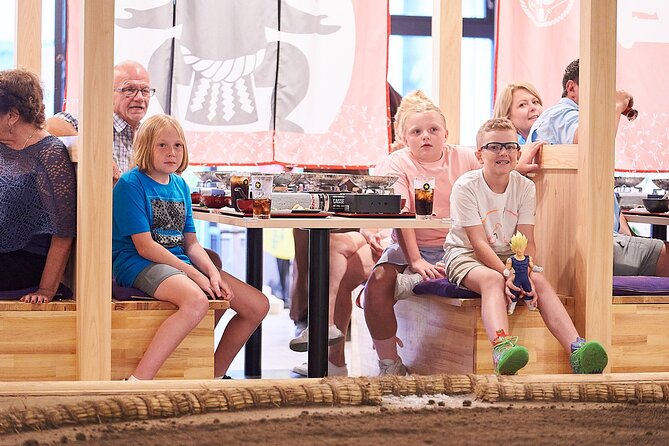
After the show segments, you’ll see the program shift into the interactive highlights.
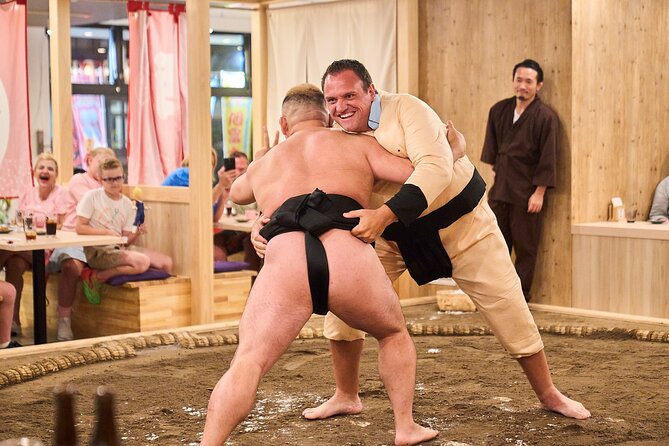
First is the sumo bout challenge, where you step into the ring and try a real sumo move or mini-bout concept with a wrestler. Again, this is also kid-friendly, so families can share a moment that feels like a Tokyo souvenir you can’t buy.
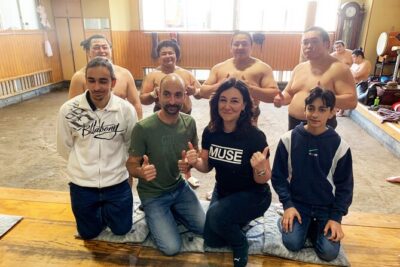
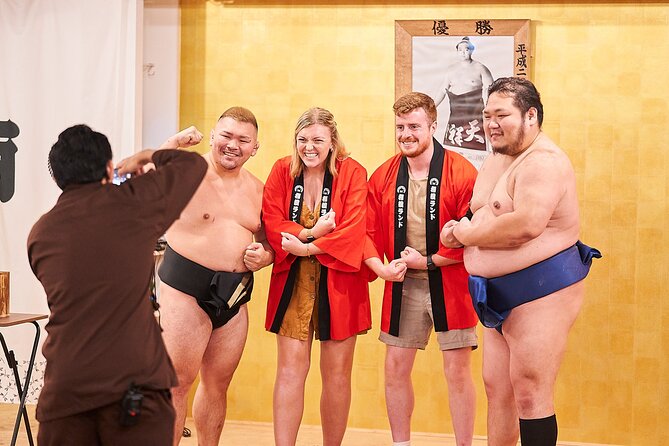
Then comes photo time with the wrestlers. This is where a lot of the “worth it” feeling kicks in. It’s one thing to watch from your seat; it’s another to stand next to the real deal and capture that Ryogoku connection.
Just like with mochi pounding, participation in the bout challenge can be limited when crowds are high. If you’re traveling with a group and mochi or bout time matters a lot, plan a bit of flexibility. You’ll still get the core show either way.






Seats, Safety, and Timing Around Ryogoku Station
This is one of the few Tokyo attractions where the seat details matter more than usual.
Seat locations are assigned by the venue and you cannot choose them when booking. That means your job is to book the right style of seating for your situation.
There’s a specific safety note: with standard seats, it can be dangerous to hold a child on your lap while seated. If you’re traveling with kids, the box seats are designed to be safer, including the option to sit with a child on your lap (box seats also support up to six people). If you know you want that flexibility, it’s worth thinking about seat type early.
Timing tip: the program runs on schedule, and arriving a few minutes early helps you avoid stress. Also, it’s a small venue setup, so getting there early lets you settle before the ring entrance ceremony starts.
Location-wise, you’re in a great spot. The store is on the first floor, and it’s a short walk from Ryogoku Station with clear sumo-themed signage. If you want to pair this with other Tokyo stops, Ryogoku also ties easily into sightseeing routes for Asakusa, Akihabara, Nihonbashi, and access toward Tokyo Skytree.
Price and Value: What Your $106.12 Includes (and What It Doesn’t)
At $106.12 per person, you’re paying for a packaged experience: entry, a real staged performance, and included food. In practice, that can be good value because you’re not separately buying meal + entertainment + activities.
Your ticket includes:
- Entrance fee
- Chicken chanko hot pot
- An お土産 (souvenir)
What’s not included:
- Alcoholic beverages
- Bottled water
For value, I like how the structure supports first-time sumo curiosity. You get a ready-made introduction: ring entrance, show segments, hands-on mochi pounding, and participation like the bout challenge. It’s basically a complete “taste and try” evening in about 1 hour 30 minutes to 2 hours.
The one “value trap” to avoid is assuming it replaces a full day at an official tournament. It won’t. But if you want an energetic sumo-themed program without lottery stress for tournament tickets, this is often the smarter buy.
Who Should Book SUMOLAND Tokyo Ryogoku (and Who Might Skip It)
This is a strong choice for:
- Families with kids who want interactive moments like mochi pounding and trying a bout concept.
- First-timers who want sumo explained in plain, show-based steps.
- People who like Ryogoku and want to tie their day to sumo culture with an easy schedule.
You might consider a different option if:
- You want a purely traditional, quiet, tournament-style experience. This program is built for energy and audience involvement.
- You’re very strict about dietary needs beyond the program’s supported categories (vegetarian/vegan with advance notice; no gluten-free or halal).
- Participation is your top priority and you hate the idea of lottery-based selection when crowds are high.
A practical rule: if the fun sounds good, book it. If you only want to watch official bouts, treat this as the “intro level” stop, not the main event.
Should You Book SUMOLAND Tokyo Ryogoku? My Decision Checklist
I’d book it if you want a low-effort way to get real sumo energy plus hands-on culture, all near a major station. The included chanko hot pot helps, but the real reason to go is the combination of close performer interaction, photo time, and the chance to try the challenges even as a first-timer.
Book it sooner if:
- You’re traveling with kids and want to plan seating smartly (box seats can be a big help).
- You’re aiming for a specific day and you don’t want to gamble on availability.
If you’re on the fence, ask yourself one question: do you want to do something (mochi pounding or the ring challenge), or do you only want to watch? This experience is built for doing.
FAQ
How long is the SUMOLAND Tokyo Ryogoku experience?
It runs about 1 hour 30 minutes to 2 hours.
What’s included in the ticket price?
The ticket includes the entrance fee, chicken chanko hot pot, and an お土産 (souvenir).
Is the ticket a mobile ticket?
Yes, it uses a mobile ticket.
Where is SUMOLAND Tokyo Ryogoku located?
It’s at 1F Takashima Ryogoku Mansion, 4-32-19 Ryogoku, Sumida City, Tokyo 130-0026, Japan. It’s near Ryogoku Station.
Can kids participate in mochi pounding and the sumo bout challenge?
Yes. Mochi pounding and the sumo bout challenge are listed as kid-friendly.
Are vegetarian or vegan meals available?
Yes, vegetarian and vegan meals are available if you request at least 2 days in advance.
Is gluten-free or halal food available?
No. Gluten-free and halal meals are not available, though you may bring your own food.
Are seat locations selectable?
No. Seat locations are assigned by the venue and cannot be selected.
What if there are too many people wanting to join the challenges?
Participation may be limited to one person per group, or decided by lottery if lots of people join the challenges.