REVIEW · TOKYO
Tokyo: Visit Sumo Morning Practice with English Guide
Book on Viator →Operated by エアーチョイス · Bookable on Viator
Sumo stops being TV in the morning. You’ll get special access to a Tokyo stable to watch serious training and understand what you’re seeing, not just pass it by. The English guide helps you work through the rules, rituals, and any questions, even if you’re starting from zero.
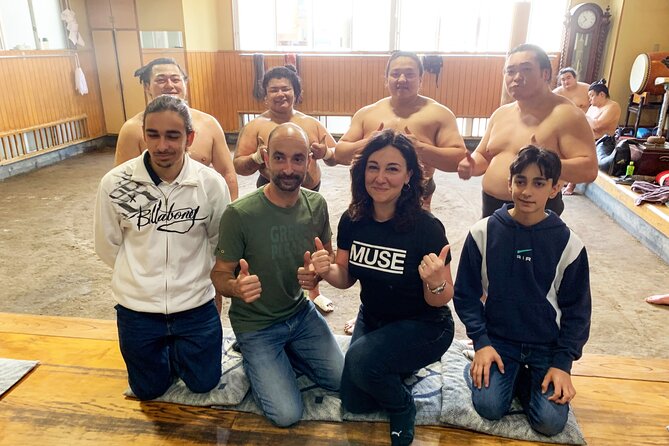
The best part for me is the sense of proximity. This isn’t a distant view during a tournament. You’re close enough to catch the effort, the rhythms, and even the sweat-and-sound reality, plus you’ll take home a commemorative photo with the wrestlers.
One thing to consider: the viewing area is small, and the seating may be on the floor or very basic. If you’re sensitive to uncomfortable chairs for 1.5 to 2 hours, plan accordingly.
In This Review
- Key highlights you’ll actually care about
- Ryogoku’s sumo energy (and why an English guide matters)
- Meeting at Ryogoku Station: how to avoid the morning scramble
- Takasagobeya practice: what you’ll see in 90 minutes to 2 hours
- The viewing setup: seating, comfort, and small-room reality
- Your guide’s role: how to turn a practice into real understanding
- After the practice: Asakusa is an easy next move
- Price and value: is $98.53 worth it?
- Who should book this sumo morning practice?
- Should you book this tour?
- FAQ
- How long is the sumo morning practice?
- Is the admission ticket included in the price?
- Do I need to speak Japanese?
- Where is the meeting point?
- What happens after the practice ends?
- How large is the group?
- Can I cancel for free?
Key highlights you’ll actually care about
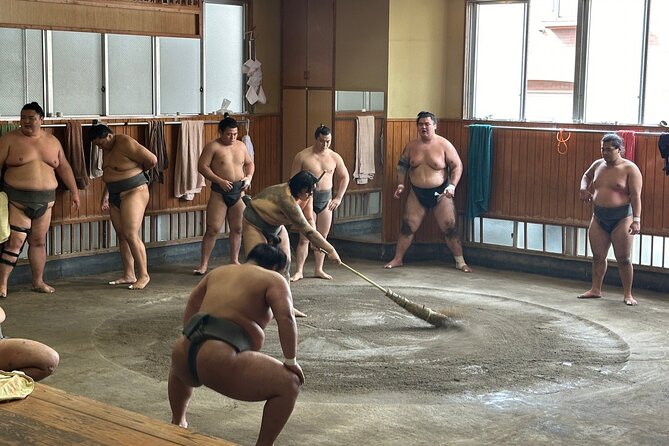
- English support so sumo terms and traditions make sense fast
- Close-up training viewing that feels more real than watching from farther back
- Takasagobeya practice session at a stable that’s produced many champions in Tokyo
- Ask-your-questions format during the session with an information sheet/fact support
- Commemorative photo with the wrestlers at the end of the practice
Ryogoku’s sumo energy (and why an English guide matters)
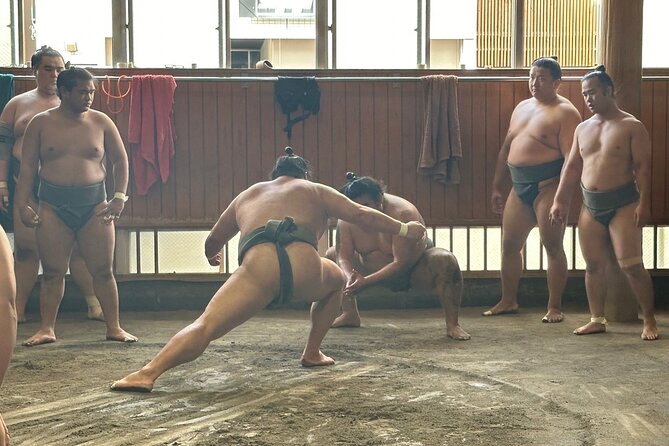
If you want sumo as culture, not just combat, this is a smart morning pick. Tokyo has a way of making big sports feel official and untouchable. A stable training visit flips that. You’re watching athletes prepare in the way they actually train, with context you can follow.
An English guide is a big deal here because sumo has layers: rituals, ranked routines, training exercises, and the vocabulary that makes it click. You’re not stuck reading a sign or guessing what the wrestlers are working on. If you want to ask about the sport’s traditions and history, that’s built into the experience.
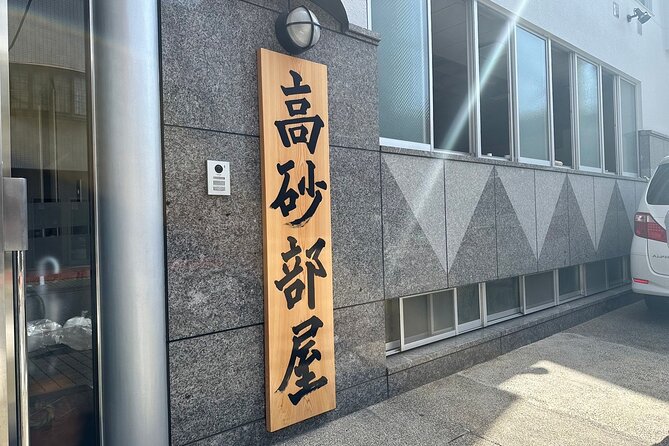
Also, the setting matters. This tour is based around Ryogoku, the sumo district, and the stable visit centers on Takasagobeya. That means you’re not bouncing around Tokyo for a random “sumo-like” performance.
You can also read our reviews of more guided tours in Tokyo

Meeting at Ryogoku Station: how to avoid the morning scramble
You’ll meet at Ryogoku Sta. (the meeting address is listed near Ryogoku Station 1-chōme-4-29 Yokoami). The tour starts in the early morning, with a listed start time of 8:00 am.
Here’s the practical tip that matters: plan to be at the station well before the departure minute. One set of meeting instructions stresses that the tour leaves exactly at 7:45, and mentions using a specific exit (A3). If you only show up right at 8:00, you’re playing catch-up.
The good news: the operator says there will be staff waiting, and they also provide a way to reach the guide if something goes wrong (a WhatsApp number is shared ahead of time). You’ll also get a mobile ticket, so you won’t be hunting for paper.
If you’re arriving by train, set aside extra time to find the correct exit. Ryogoku stations can feel like a mini maze before your coffee kicks in.
Takasagobeya practice: what you’ll see in 90 minutes to 2 hours
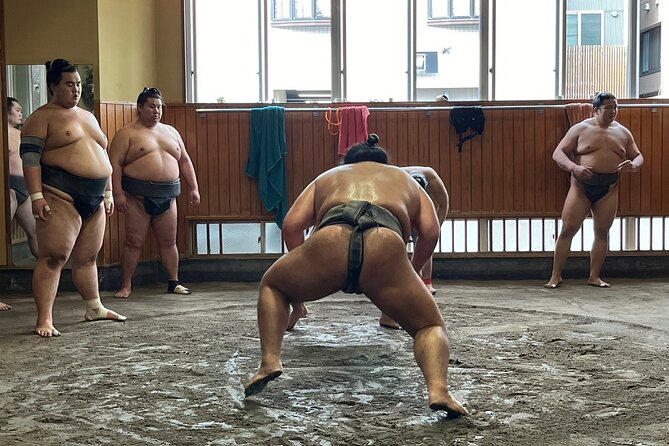
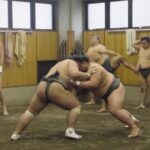
You’ll head from the meeting point to the sumo room with your guide. Then the session begins: a rare chance to watch training that’s normally closed off from the public.
What training feels like
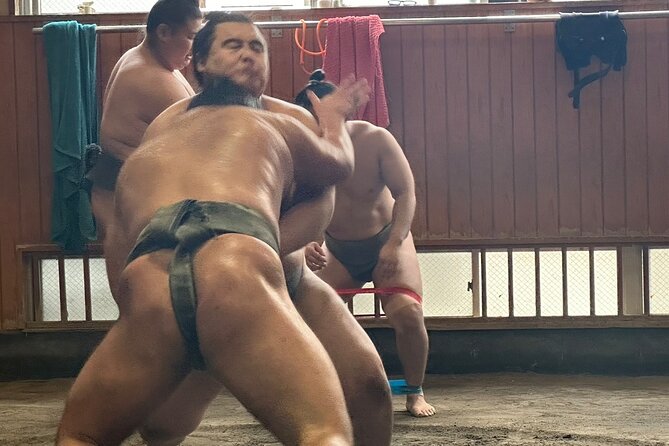
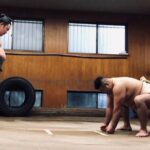
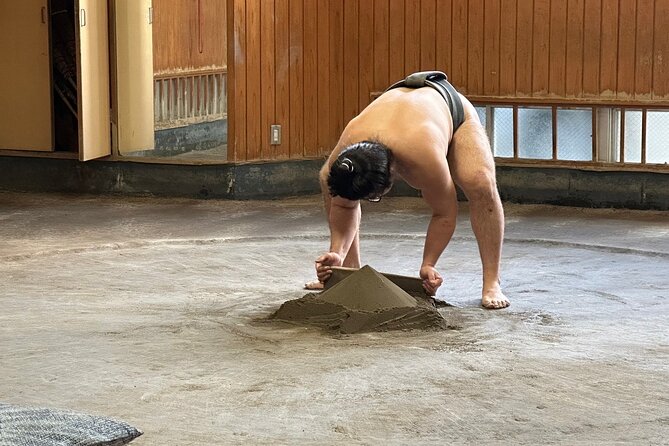
Expect a serious practice, not a show. You’ll see the wrestlers work through multiple phases, and the session typically includes:
- body preparation and stretching
- training rounds as different wrestlers take turns
- practice bouts that can feel intense even though it’s not the structured format of a tournament
One review described a flow like: stretching and preparation first, then younger wrestlers challenging each other, and later stronger wrestlers facing off. That kind of progression is exactly what you want if you’re trying to understand how a stable trains for competition.
Why this is valuable
Tournament tickets get you the moment of impact. Stable training gets you the “how.” You’ll learn what the athletes focus on before they ever step into a match—technique work, timing, discipline, and the physical grind of practice.
And yes, the training is up close in a way that changes your perception. In small spaces, the sound is part of the experience. When you’re watching sweat and effort at close range, sumo stops looking like a TV spectacle and starts looking like a sport built on repetition.
The viewing setup: seating, comfort, and small-room reality
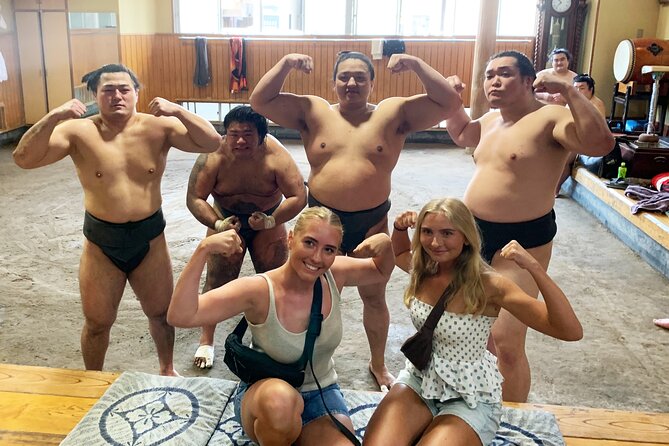
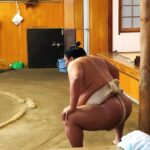
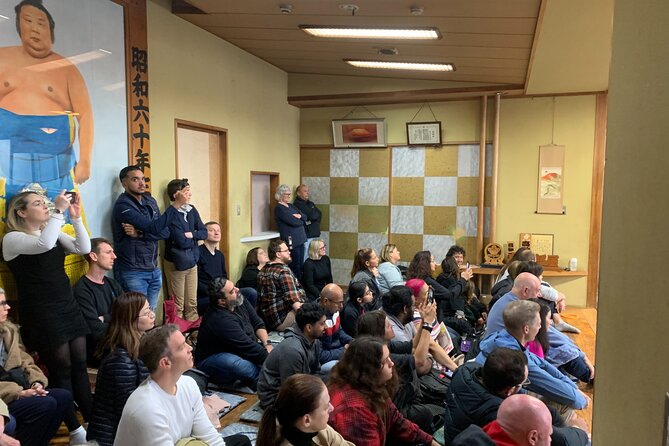
This is where you should calibrate expectations. The stable viewing area is not a big stadium. It’s described as a small room, and the seats may be on the floor or use basic/limited seating tools.
What that means for you
- If you’re okay with an awkward posture for 1.5–2 hours, you’ll probably love the closeness.
- If you need comfortable seating to enjoy yourself, bring a simple strategy (like planning for breaks afterward). You might find the room tight, especially if other groups are present at the same time.
One review noted that seating can get crowded or “squeezed” if another tour joins the session while it’s underway. Another review specifically flagged that floor-style seating can be uncomfortable for some western visitors.
Translation: this tour can be fantastic, but it’s not designed like a theme-park comfort setup.
Your guide’s role: how to turn a practice into real understanding
This tour is built for questions. A good guide doesn’t just translate words—they explain what you’re seeing and why it matters. People praised the guides for being friendly, warm, and very willing to answer lots of questions, even after the training.
A useful clue from past experiences: guides like Naomi have been singled out for speaking excellent English and handling dozens of questions (before and after training). Even if Naomi isn’t your guide, the pattern is clear: you’re not on your own with a printed card.
Also look for a fact sheet or information support during the session. One review specifically said the distributed materials covered terms and training details enough to understand what’s happening while you watch.
What you can ask (and get real answers for)
If you want to leave feeling like you “get it,” ask questions about:
- how training practice differs from tournament viewing
- what specific exercises are for
- how tradition shapes daily stable life
- the meaning behind common sumo rituals
Even if you know nothing about sumo, this guide-led context helps you appreciate the effort and seriousness immediately.
You can also read our reviews of more tours and experiences in Tokyo
After the practice: Asakusa is an easy next move
The tour doesn’t end with you stuck in a stable forever. After the session, you’ll be dismissed at the stable area, and your guide will show you how to get to your next destination.
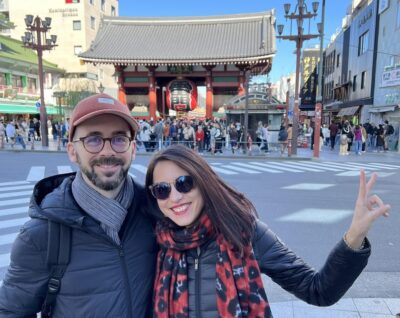
There’s an optional add-on vibe here: you can go sightseeing in nearby Asakusa after the viewing if you wish. This is a smart pairing because it turns your morning access (sumo) into a classic Tokyo afternoon (temples, streets, and old-meets-new atmosphere).
If you’re building your own itinerary, plan to continue toward Asakusa right after. You’ll be awake, energized, and more interested in the culture than you would be if you started the day with shopping.
Price and value: is $98.53 worth it?
At $98.53 per person, this isn’t the cheapest activity in Tokyo. The value comes from three things you’re unlikely to replicate on your own:
1) Rare access
Sumo training in a stable is not generally open like a normal attraction. This is special viewing access for a training session that’s typically closed off from spectators.
2) English guidance
You’re not just watching you’re learning what you’re seeing. The guide’s role—answering questions and explaining traditions—adds real value, especially if you don’t read Japanese sumo terms.
3) A souvenir moment
You get a commemorative photo with the wrestlers. That’s not just a marketing add-on. It’s the kind of memory you’ll actually want later.
And compared to a large formal tournament day, this can feel more personal. One review even suggested it can be better than attending a big event in some ways because you’re up close and the “serious” practice energy is front and center.
So: if you care about cultural access and you want the sport to feel human, the price starts to make sense fast.
Who should book this sumo morning practice?
This fits best if you:
- want authentic training over a staged performance
- like sports that have strong tradition and rules
- want an English-speaking guide to help you understand the sport
- are traveling in a group size that appreciates a smaller, controlled experience
It can also be a strong family pick. One review highlighted it as a highlight, especially for teenagers, because it’s intense to watch and easy to understand once the guide explains what you’re seeing.
Who might skip it:
- If you’re extremely uncomfortable sitting on the floor or in cramped conditions for up to 2 hours, you may find this less enjoyable.
- If you hate early mornings and strict meeting times, this tour’s early start could feel stressful.
Should you book this tour?
I’d book it if your Tokyo “musts” include real culture and real sport. This is the kind of experience that makes the rest of your sumo watching make sense. You get closeness, context, and a souvenir photo—without needing Japanese language skills.
Just do two things to set yourself up for success:
- arrive early and use the correct station exit, because the meeting time is taken seriously
- be ready for small-room seating for the duration of the practice
If that sounds okay, this is a high-value Tokyo morning with a lot of meaning packed into 90 minutes to 2 hours.
FAQ
How long is the sumo morning practice?
The experience runs about 1 hour 30 minutes to 2 hours.
Is the admission ticket included in the price?
Yes. An admission ticket is included.
Do I need to speak Japanese?
No. The tour includes an English guide who helps navigate language barriers and answer questions.
Where is the meeting point?
You’ll meet near Ryogoku Station at Ryogoku Sta. 1-chōme-4-29 Yokoami, Sumida City, Tokyo.
What happens after the practice ends?
After the tour ends at the stable (Takasagobeya / Takasago Stable area), you’re dismissed and your guide will show you how to get to your next destination. You can also go sightseeing in nearby Asakusa if you wish.
How large is the group?
The tour has a maximum of 20 travelers.
Can I cancel for free?
Yes. Free cancellation is available up to 24 hours in advance for a full refund.