REVIEW · TOKYO
Tokyo:Calligraphy &Make your original folding fan in Asakusa
Book on GetYourGuide →Operated by Local Earth · Bookable on GetYourGuide
Tokyo’s most calming creative workshop starts with ink. You’ll learn Japanese calligraphy the proper way, from posture and brush control to writing you’ll actually want to keep. Then you turn your work into an original folding fan, with a green tea break and a postcard you write to yourself back home.
I love how practical the teaching is. You get focused guidance on posture and the right way to use a Japanese brush (fude), so your strokes improve fast instead of feeling like guesswork.
One thing to consider: it’s hands-on and your clothes can get ink on them. Comfortable, slightly disposable clothes are the smart move, and you’ll want to keep the session as a no-food, no-drink experience.
In This Review
- Key things I’d bet you’ll like
- Asakusa Calligraphy: A Calm Break From Tokyo Chaos
- From Ink Stick to Fude Brush: What You Learn in the First Steps
- Posture, Right Amounts, and the Eight Techniques That Make Writing Click
- 30 Minutes on Thin Paper: Choosing Your Favorite Final Look
- Turning Your Calligraphy Into an Original Folding Fan
- Green Tea and a Postcard to Your Future Self
- Price, Value, and What’s Not Included (T-Shirts and Henna Options)
- Who This Workshop Suits Best (and Who Might Skip It)
- Should You Book This Asakusa Calligraphy Class?
- FAQ
- How long is the calligraphy and folding fan experience?
- How much does it cost?
- Is the instructor available in English?
- What will I take home?
- Do I need to bring anything?
- Are food and drinks allowed during the session?
- If I choose henna tattoo options, do I still do the calligraphy?
- Is this experience wheelchair accessible?
- Where do I meet the instructor?
Key things I’d bet you’ll like
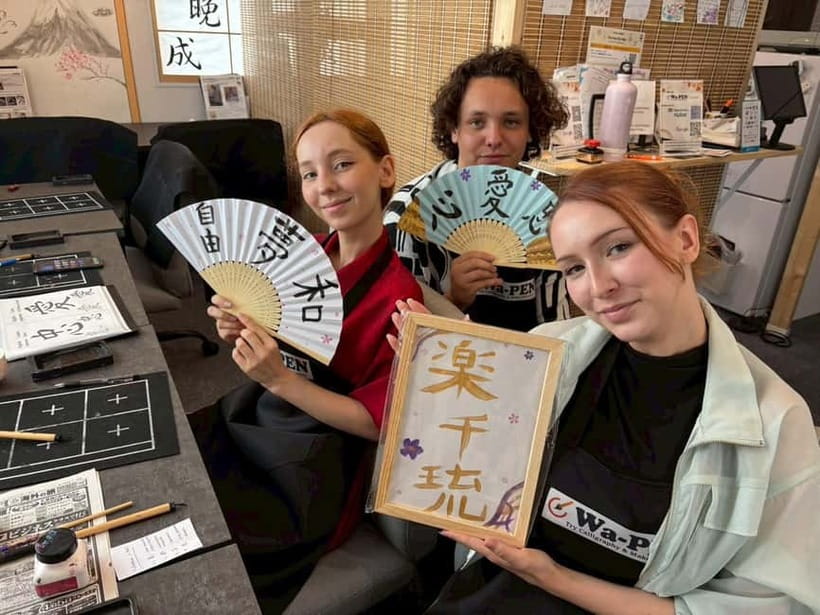
- Real brush-and-ink practice with guide paper and an ink-melting step
- Eight technique-style drills so your writing has structure
- 30 minutes on thin paper to slow down and get your final look
- A folding fan souvenir made from your own calligraphy design
- Green tea plus a postcard you send to yourself to remember the moment
Asakusa Calligraphy: A Calm Break From Tokyo Chaos
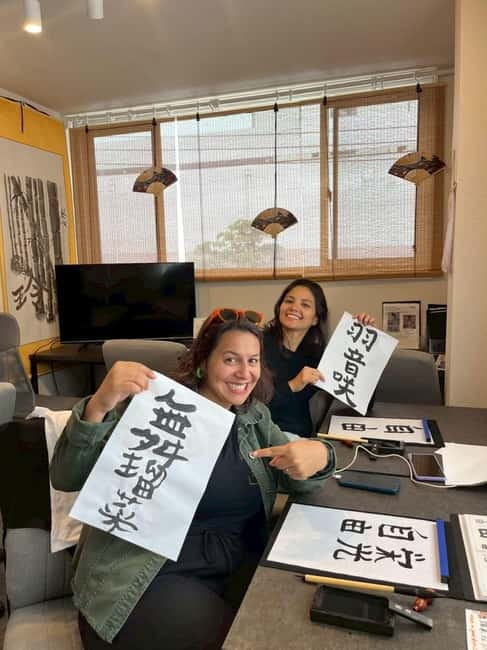
Asakusa can feel like overload in the best way—crowds, street life, constant motion. This workshop gives you a different tempo. Instead of rushing between sights, you sit down and learn a craft where time stretches out. Ink dries, strokes settle, and you focus on small decisions: pressure, angle, speed.
The biggest win is that it’s not just a demo. You study the background of Japanese calligraphy, including how hiragana connects to everyday life and mindset, and then you immediately apply what you learn. If you’ve ever tried to copy calligraphy and ended up frustrated, this format helps because the instruction is built around repeatable moves.
Another reason people rate this so highly is the teacher tone. Sessions described here feel patient and encouraging, with time to practice until you’re satisfied. That matters in a class like this. Calligraphy isn’t about “getting it right” in five minutes. It’s about learning what your hand needs to do.
One practical note: expect a creative session where you’ll get close to ink and paper. The workshop provides aprons, but you still should wear clothes that can take a little risk.
You can also read our reviews of more tours and experiences in Tokyo.



From Ink Stick to Fude Brush: What You Learn in the First Steps
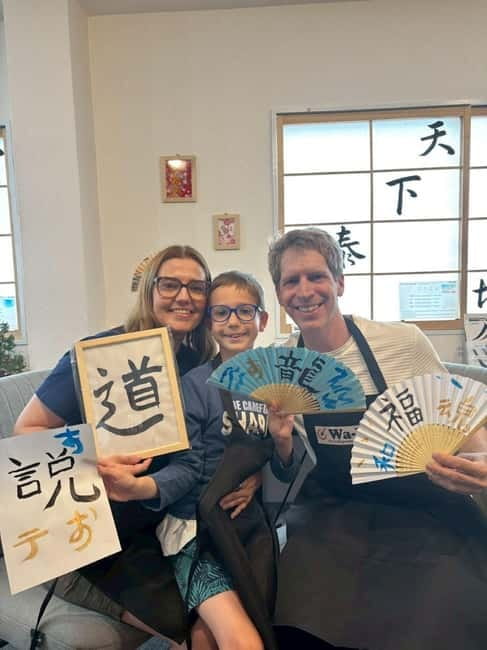
You start with the craft fundamentals, not just the final design. You’ll learn about the history of Japanese calligraphy and what hiragana represents—more than symbols on a page, it’s tied to feeling and everyday expression. That context helps your brain stop treating calligraphy like decoration and start treating it like communication.
Then you move into materials and technique. The workshop uses traditional solid ink sticks. You melt the ink by using water—so instead of working with a bottled product, you feel the ink come alive. You also learn how to use the brush called the fude. The goal isn’t fancy jargon. It’s control: how to load ink, how to angle the brush, and how to let the brush do its part instead of forcing it.
You’ll also get a quick lesson in mindset: posture and attitude for calligraphy. That sounds simple, but it’s a big deal. When your body is aligned, your hand doesn’t fight you. Your strokes become more consistent. That’s the difference between shaky lines and confident ones.
And because the instruction is in English, you don’t waste your energy translating. You can focus on the physical parts: the wrist, the pull of the ink, and the pacing of each stroke.
Posture, Right Amounts, and the Eight Techniques That Make Writing Click
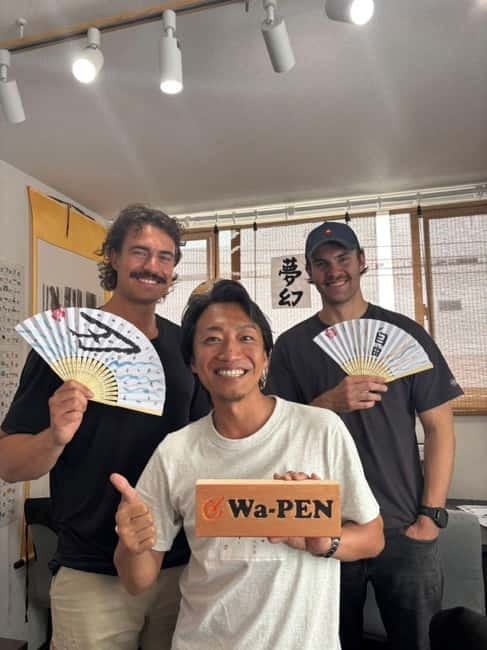
Most calligraphy workshops fail in one way: they teach the concept but don’t teach the mechanics. Here, you practice the mechanics.
You’re guided on posture and attitude for writing, including the right way to hold yourself as you work. You’ll learn how to produce the correct stroke feel—partly from brush handling and partly from getting the ink amount right. Too little ink and you get a weak mark. Too much and the brush behaves differently.
Then comes the technique practice. You work through basically eight core techniques using guide paper. This is where the class becomes quietly effective. You aren’t trying to build an entire piece from scratch immediately. You’re training parts of it—like practicing letters in a language class before writing a full paragraph.
Why this helps you: once you learn what each stroke is supposed to do, your final piece stops being random. You start making choices with intention.
If you enjoy structured activities, this part will feel satisfying. If you don’t like structure, don’t worry—the drills are short enough to stay fun, and you’re still creating something at the end.
30 Minutes on Thin Paper: Choosing Your Favorite Final Look
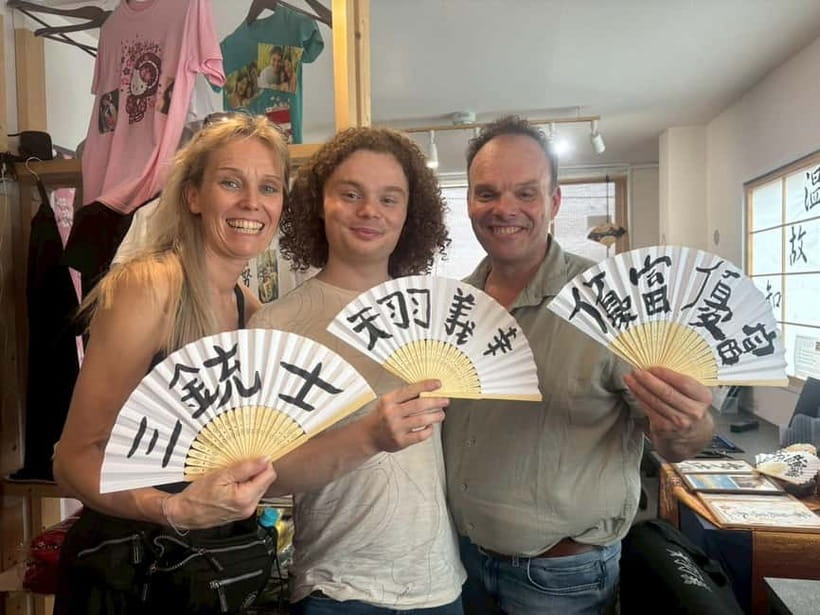
After the technique training, you get to practice for about 30 minutes on thin paper. This is where you slow down and let your best strokes happen. Thin paper is important in calligraphy because it responds differently than thicker sheets. The brush feel changes, and that’s part of why the practice time is so valuable.
You also get help choosing your final design. You can pick from a sample book, or ask the expert staff for guidance if you want your calligraphy to match what you’re picturing. The aim is for your final result to feel like yours—not like a cookie-cutter souvenir.
What I’d pay attention to here: don’t rush your “favorite.” Your first draft might be good, but your second or third attempt might be better because your hand is warmed up and your posture is settled. If the session allows you to keep refining, take that extra time. Calligraphy rewards patience.
Then your finished calligraphy is yours to take home. It’s presented as a one-of-a-kind souvenir, and it doesn’t feel like a mass-produced item. That’s the difference between buying a souvenir and bringing back a piece of your own effort.
Turning Your Calligraphy Into an Original Folding Fan
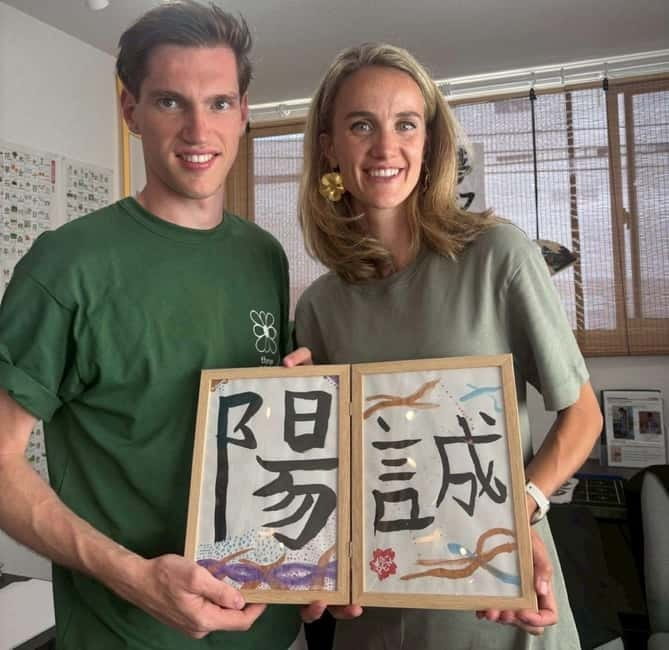
The workshop ends with the fun part: making an original folding fan using your own calligraphy work.
This is clever value. Paper art is great, but it’s easy to lose track of it once you return home. A folding fan is practical and displayable. You can keep it in a drawer, hang it, or use it when the weather gets warm. More importantly, it’s a souvenir that carries your writing, not just a design you picked from a shelf.
You’re not just assembling a craft item. You’re translating something delicate (brush strokes) into something usable. That connection is why people tend to love the final step: it feels like your practice becomes a finished object.
One more practical point: because the workshop includes an ink process, you’ll want to let things dry and handle carefully. The session is structured so you can finish what you’re making and take it home properly.






Green Tea and a Postcard to Your Future Self
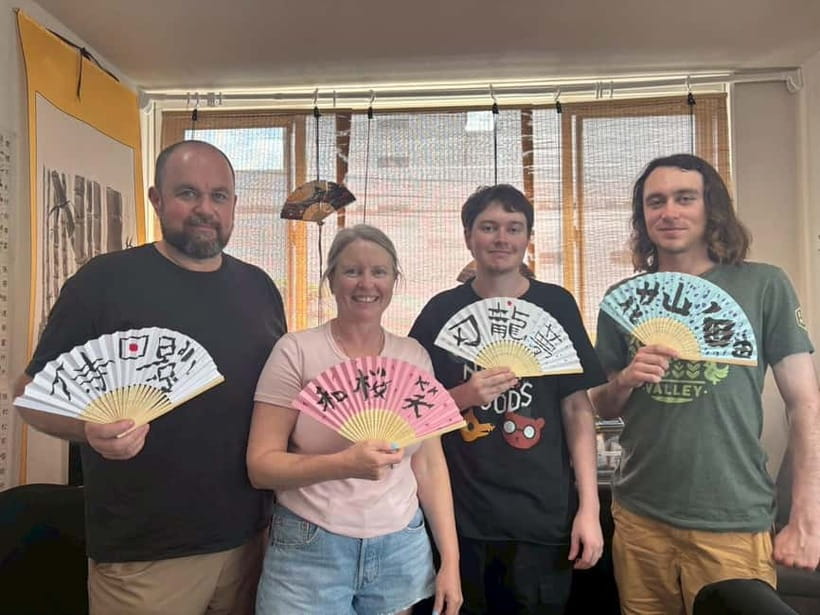
You get a cup of green tea as part of the experience, which gives you a small reset in the middle or end of the session. It’s a simple touch, but it supports the whole point of calligraphy: calm focus.
Then you write a postcard to yourself at home. The idea is memorable and practical. You describe your emotions after the calligraphy and explain what you want your future self to remember. That turns a craft class into a time capsule.
It also helps with storytelling when you get home. Weeks later, it’s easy to remember the famous sites but hard to remember the quiet moments. This gives you a concrete note tied to the way the class felt.
Some people also appreciate that the postcard part is easy to do even if your Japanese level is limited. You’re writing about how you felt, not trying to pass a language test.
Price, Value, and What’s Not Included (T-Shirts and Henna Options)
At $16 per person and a duration that can run from about 30 to 90 minutes, this workshop is priced like an accessible cultural activity—not a big ticket class. The value comes from the combination: instruction, practice time, ink materials, a final keepsake, and the postcard moment.
You do get a full “process,” not only the outcome. You learn history and technique, you practice with guide paper, you write on thin paper, and then you convert your work into a folding fan.
What’s not included matters if you’re planning ahead:
- Printing your calligraphy design onto a T-shirt is not included. If you want that, you can buy a T-shirt in the shop.
- If you select henna tattoo options, the calligraphy experience is not included. In other words, check what’s bundled with your booking so you get the calligraphy you want.
One more practical note: there’s no food or drinks allowed during the session. If you’re doing this around sightseeing, plan a quick meal before you arrive and then treat the green tea as your scheduled pause.
Who This Workshop Suits Best (and Who Might Skip It)
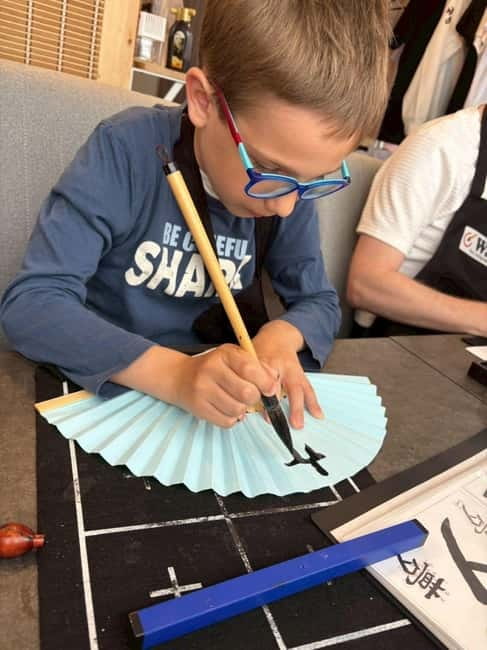
This class is a great fit if you want an activity that’s:
- creative but structured (you’ll learn techniques, not just copy a sample)
- relaxing (calligraphy naturally slows your brain down)
- meaningful as a keepsake (fan + your calligraphy + postcard)
It’s also friendly for different group types. Some people come with family members and enjoy it as a bonding activity. If you’re traveling with someone who loves art but worries they’ll be “bad at it,” you’ll likely appreciate the supportive teaching style described in recent experiences.
Who might skip it: wheelchair users. The tour data says it’s not suitable for wheelchair users, so look for a different activity if mobility access is needed.
Also, if you’re extremely sensitive to mess, remember the ink factor. The workshop provides aprons, but your clothes could still get marked. Wear something you don’t mind treating as “art clothes.”
Should You Book This Asakusa Calligraphy Class?
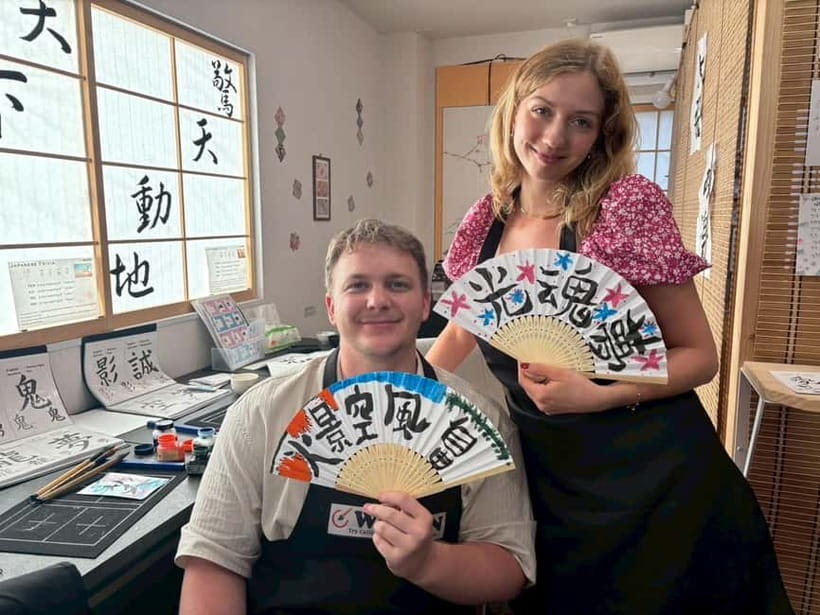
If you’re the type who likes bringing home something personal, this is an easy yes. For $16, you’re not just buying a souvenir—you’re getting instruction, practice time, and a finished fan made from your own writing. Add the postcard to yourself, and you’ve got both an object and a memory anchor.
I’d book it if you want a break from Tokyo’s nonstop pace and you’d rather learn something you can hold than just take photos. It’s also a strong choice when you only have a short window, because even the minimum sessions still include hands-on practice and a keepsake.
Just be ready for mess potential and choose ink-friendly clothing.
FAQ
How long is the calligraphy and folding fan experience?
The duration is listed as 30 to 90 minutes, depending on the option booked and availability of starting times.
How much does it cost?
It’s priced at $16 per person.
Is the instructor available in English?
Yes. The instructor is listed as English-speaking.
What will I take home?
You’ll take home your calligraphy work as a one-of-a-kind souvenir, plus an original folding fan made with your calligraphy. You’ll also write a postcard for yourself at home.
Do I need to bring anything?
Bring comfortable clothes. You should wear something that can get a bit dirty from ink (and the workshop has aprons ready).
Are food and drinks allowed during the session?
No. Food and drinks are not allowed during the session (green tea is included as part of the experience).
If I choose henna tattoo options, do I still do the calligraphy?
No. If you select the henna tattoo options, the calligraphy experience is not included.
Is this experience wheelchair accessible?
It is not suitable for wheelchair users.
Where do I meet the instructor?
The meeting point may vary depending on the option booked. Coordinates are given as 35.7162239, 139.7922354.