REVIEW · TOKYO
Shinjuku Go Karting Tour with Funny Costume
Book on Viator →Operated by AKIBA KART OSAKA · Bookable on Viator
A costume-and-kart tour in Tokyo is pure chaos. It works because you get a guided ride with an automatic transmission plus wardrobe help, while you also clock landmark sights like Shibuya Crossing and Harajuku.
I like that the setup is friendly for beginners: adjustable seats, one-person karts, and clear instruction from the English-speaking guide. If you end up with guide Lam, you’ll likely come away with lots of photos and videos, taken while you’re driving (not awkwardly after the fact). You’re also not worrying about add-on fees for gas since the price covers the fuel surcharge.
The main thing to consider is the paperwork: you need a valid driving license that Japan accepts, or your ride won’t be possible. This tour also has strict physical limits (you must be 150–190 cm tall and under 100 kg), so check those before you get excited.
In This Review
- Key things to know before you book
- Why this Shinjuku go-kart costume tour is a smart first-timer choice
- Meeting point in Shinjuku: timing, transit, and what you must bring
- The driving feel: pace, safety instructions, and the photo factor
- Harajuku on wheels: why dressing up changes the whole vibe
- Shibuya Crossing from a go-kart: the “movie moment” factor
- Omotesando’s architecture and shopping street rhythm
- Price and value: is $80.93 worth one hour in Tokyo?
- Weather reality: why rain can matter for your plans
- Who this tour suits best (and who should skip it)
- Should you book this Shinjuku go-kart costume ride?
- FAQ
- What is the duration of the Shinjuku go-kart tour?
- Where is the meeting point?
- Is hotel pickup or drop-off included?
- What speed can I expect during the ride?
- Do I need a driving permit, and what types are accepted?
- Are costumes included in the price?
- Are there height and weight limits?
- What happens if it rains heavily?
Key things to know before you book
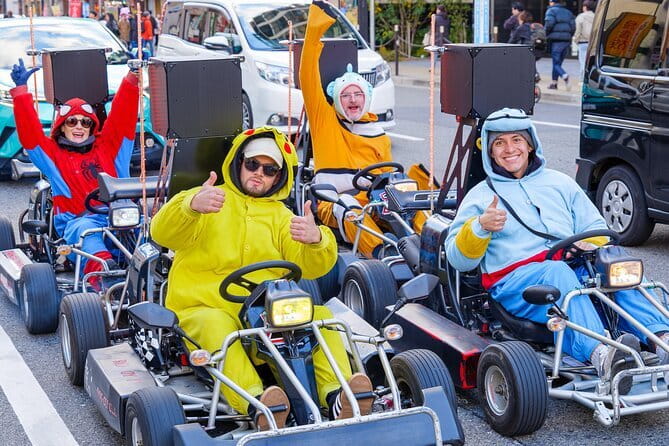
- Automatic transmission and adjustable seating make the driving side less stressful
- Up to 60 km/h (37 mph) with a guided group pace that still feels fast
- Costumes are included (and you can upgrade with a quick stop at Don Quixote)
- Fuel surcharge is included so the price is more predictable
- Small groups (max 5 people) help keep instructions clear and photos easier
- You hit three big neighborhoods: Harajuku, Shibuya Crossing, and Omotesando
Why this Shinjuku go-kart costume tour is a smart first-timer choice
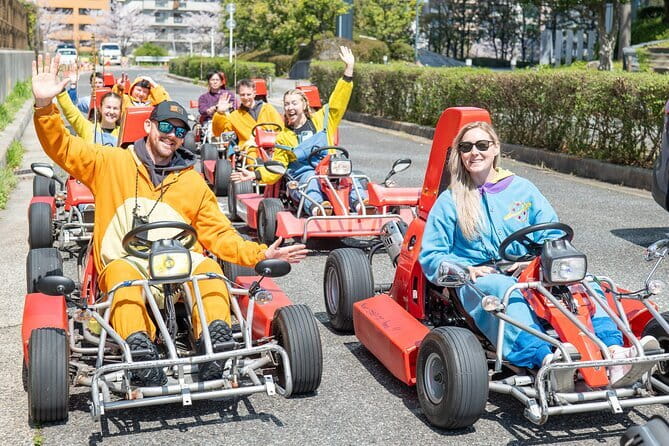
This is one of those Tokyo activities that’s hard to plan on your own, because the fun isn’t just the kart. It’s the package: you’re driving, you’re dressed up, and you’re moving through the areas you’d otherwise only see on foot.
The automatic transmission is the big practical win. You don’t need to think about shifting gears, so your focus stays where it should be—steering and enjoying the street energy. Add adjustable seats, and you’ll spend less time fighting for a comfortable position.
It also helps that the ride is guided. You’re not stuck guessing routes or worrying about when to slow down. Since you’re part of a group, you get a steadier rhythm. And because the tour caps at five travelers, it tends to feel more like a shared activity than a production line.
One more detail that matters: the go-karts are one person per kart. That’s great if you want a true personal drive, but if you’re expecting to take turns in the same vehicle with someone beside you, this isn’t that kind of setup. Plan on separate karts for separate riders.
You can also read our reviews of more tours and experiences in Tokyo.



Meeting point in Shinjuku: timing, transit, and what you must bring
Your meeting point is 1-chōme-2-8 Shinjuku, Shinjuku City, Tokyo 160-0022, Japan. The activity ends back at the meeting point, and there’s no hotel pickup or drop-off, so you’ll want to be comfortable getting yourself there using public transportation.
The tour asks that you arrive 20 minutes early. Don’t treat that as a suggestion. You’ll need that buffer for check-in, getting fitted, and handling the driving-license verification process.
What you should bring:
- Your valid driving license that Japan accepts (see FAQ-style details below)
- Your passport is a good idea (it’s specifically mentioned as something to remember)
- A mobile ticket (you’ll have it on your phone)
Physical requirements aren’t “soft” here. You must be between 150 cm and 190 cm tall, and under 100 kg. If you’re near the edge, it’s worth double-checking so you don’t end up disappointed on the day.
And yes, the “dress up” part is real. The operator provides costumes at no additional charge. If you want a personal costume, you can buy one cheaply at Don Quixote, but you don’t have to. This matters because it lowers the cost and removes the hassle of packing something bulky just for one hour.
The driving feel: pace, safety instructions, and the photo factor
The route is fast enough to feel exciting—up to 60 km/h (37 mph)—but not so chaotic that the experience turns into pure adrenaline. That balance is usually what makes these tours worth the money: you get speed without guessing what’s next.
The guidance is also part of the value. You’re not just given a kart and told to go. You’ll have an English-speaking guide giving instructions, plus safety directions in a way that works for multiple languages. That’s especially important when you’re in busy Tokyo streets and you need to know exactly what’s expected.
One of the most praised parts is the photo and video support. The guide (including Lam, when assigned) is known for taking shots while you’re driving, not only during quick stops. If you want the fun version of Tokyo without relying on selfie-stick luck, this is a real advantage.
Also, remember you’re driving in a city that’s used to pedestrians and cyclists moving in predictable patterns. You’ll still want to stay calm and follow instructions closely. This isn’t a race. It’s a guided ride through recognizable neighborhoods, timed so you can enjoy the sights rather than just survive the road.
Harajuku on wheels: why dressing up changes the whole vibe
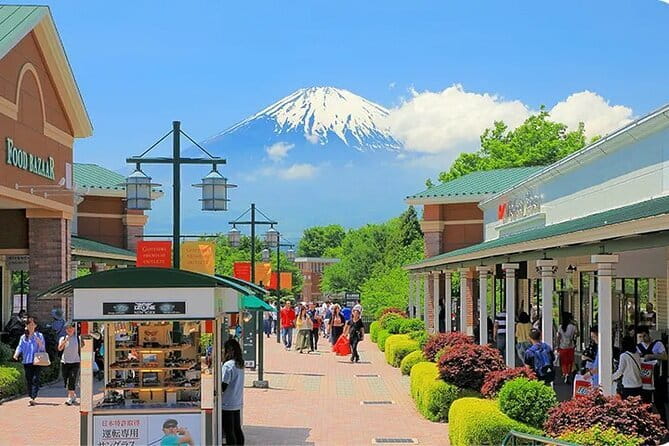
The first major stop is Harajuku, famous for Japanese youth culture. This is where the costume stops being a gimmick and turns into the whole point.
Because you’re dressed as a character and rolling through a youth-focused area, you naturally become a moving focal point. You’ll likely catch people’s attention, and it creates that fun “Tokyo is responding to me” feeling that you don’t get when you’re just walking with a camera.
What’s smart about this stop is the pacing. Harajuku gives you a lively, youth-oriented contrast to the more street-famous energy of Shibuya. You’re still in a place with buzz, but the vibe helps your brain settle into the fact that you’re driving through real Tokyo neighborhoods, not a theme-park set.
A practical note: costume choice matters, but not in the way you’d expect. Don’t stress over finding the perfect costume. The operator provides costumes with no additional charge, so you can choose something that feels comfortable and easy to move in. If you buy something at Don Quixote, pick something you can drive in comfortably, not just something that looks great on a rack.
Shibuya Crossing from a go-kart: the “movie moment” factor
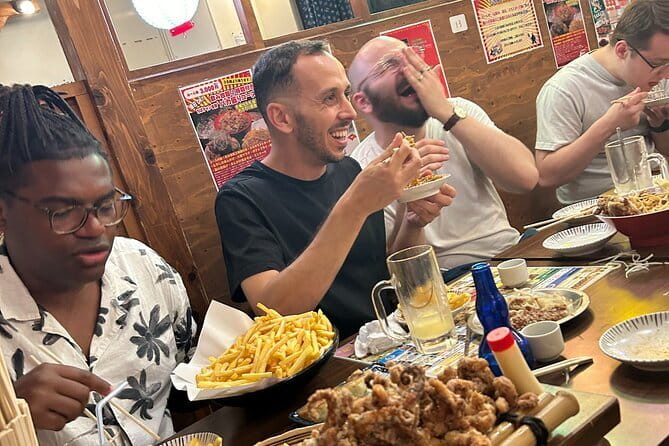
The second stop is Shibuya Crossing, the famous pedestrian scramble intersection. Seeing it from inside a go-kart gives you a perspective you don’t get on foot, because you’re higher and moving, which changes the way the crowd flows.
This stop is also the ultimate “reaction” zone. You can expect people to notice you, and hands waving is part of the fun. That’s not just entertainment—it also helps you orient yourself. Even if you’ve seen the crossing in photos before, driving past it gives you a more grounded sense of where everything sits.
There’s also a built-in nostalgia effect if you’ve seen Shibuya on screen. The ride naturally evokes that fast-city feeling people associate with Tokyo pop culture. It’s not about pretending you’re in a movie; it’s about getting that same intense sense of motion while staying grounded in a guided, controlled experience.
If you’re someone who likes landmarks but hates the “standing still for photos” rhythm, this is the stop you’ll probably remember most.




Omotesando’s architecture and shopping street rhythm
The third stop is Omotesando, known as a shopping area with impressive architecture. This is a nice shift after Harajuku and Shibuya, because the energy changes from youth-culture chaos to a more stylish, designed-street feel.
From a rider’s perspective, Omotesando works because it gives you something to look at while also giving your body a chance to reset between action moments. You’re still on the route, still driving, but the visuals can be calmer than the scramble-intersection intensity of Shibuya.
If you like Tokyo for its variety—neon corners, then clean lines, then crowds—Omotesando helps you experience that mix in a short window. It’s also a good place to let the camera do its job, since architecture tends to frame well around moving subjects.
Price and value: is $80.93 worth one hour in Tokyo?
At about $80.93 per person for roughly one hour, you’re paying for more than rental time. You’re paying for the whole package: go-kart rental, costume rental, insurance fee, and an English-speaking guide.
You’re also getting fuel coverage built into the rate through the fuel surcharge included. That matters in Tokyo, where small extras can add up quickly in other experiences. Here, the cost is more straightforward: you show up, bring the correct license, get suited up, and drive.
The biggest value question is whether you’ll enjoy driving through recognizable areas. If you want iconic photo stops but you’d rather not walk for hours, this is a strong trade. The tour is short enough to fit into a tight Tokyo itinerary, yet structured enough that you won’t waste time figuring things out.
The main trade-off is that it doesn’t include food or hotel pickup. If your day includes snacks and transit anyway, that’s not a dealbreaker. Just don’t count on this replacing a meal, and plan your schedule so you’re not rushing to check in right after something else.
Weather reality: why rain can matter for your plans
This activity depends on good weather. If it rains heavily, the tour may be cancelled. The good news: you’ll be offered a reschedule without charge, and if you can’t find an alternative date, you get a full refund.
So, if your schedule is flexible, you’re in decent shape. If you’re locked into one tight day with no room to move, you’ll want a bit of caution and a backup plan for that same neighborhood.
Who this tour suits best (and who should skip it)
This go-kart costume ride is best for:
- Adults who already have an accepted driving license (including International Driving Permit options)
- People who want a high-fun, short-duration activity in major Tokyo districts
- Anyone who likes costumes but doesn’t want to bring their own
- Small groups who can keep it coordinated since each kart is one person
It might not suit you as well if:
- You don’t want to deal with driving paperwork before the trip
- You’re outside the height or weight limits
- You hate the idea of being in a planned route where the guide sets the rhythm
If you’re traveling solo, the experience can still work great, because the karts are individual and the group stays small.
Should you book this Shinjuku go-kart costume ride?
I’d book it if you want Tokyo highlights without turning your whole day into walking logistics. The combination of automatic driving, included costumes, and a route that covers Harajuku, Shibuya Crossing, and Omotesando is a practical way to get variety in a single hour.
I’d think twice only if the license rules are a hassle for you, or if you’re right at the 150–190 cm / under 100 kg limits. If you can meet the requirements and you’re okay with the rain contingency, it’s a fun use of time in Shinjuku that feels much bigger than the clock says.
FAQ
What is the duration of the Shinjuku go-kart tour?
The tour lasts about 1 hour.
Where is the meeting point?
The meeting point is at 1-chōme-2-8 Shinjuku, Shinjuku City, Tokyo 160-0022, Japan.
Is hotel pickup or drop-off included?
No. Hotel pickup and drop-off are not included.
What speed can I expect during the ride?
The tour can reach up to 60 km/h (37 miles) per hour.
Do I need a driving permit, and what types are accepted?
You need a valid International Driving Permit, a Japanese drivers license, or a Japanese SOFA license (based on the 1949 Geneva Convention). Certain countries can also use an official Japanese translation provided by JAF or an embassy/consulate.
Are costumes included in the price?
Yes. Costume rental is included, with no additional charge. You can also buy inexpensive costumes at Don Quixote if you want your own.
Are there height and weight limits?
Yes. Height must be between 150 cm and 190 cm, and the weight limit is under 100 kg.
What happens if it rains heavily?
If it’s cancelled due to heavy rain, you can reschedule without charge. If you can’t use an alternative date, you receive a full refund.