REVIEW · TOKYO
Tokyo: Sumo Show and Experience in Shinjuku
Book on GetYourGuide →Operated by Traveling Tokyo · Bookable on GetYourGuide
A sumo show in Tokyo feels like stepping into another rhythm. Here, you get live sparring, an English-speaking MC, and a rare chance to go into the ring. It’s set right in Shinjuku, so you can mix it with your day of trains, ramen, and neon without getting lost.
I especially like the way the program turns sumo from something you watch on TV into something you can actually follow. Shiko foot stomping and the salt-throwing rituals are explained, and the sparring matches show the power up close. One drawback to keep in mind: this is not a tournament, so it’s more about demonstrations, technique, and exhibition-style bouts than a real ranking event.
In This Review
- Key points to know before you go
- Entering the Shinjuku Sumo World (Sekisaku Building)
- What the 90 minutes actually feels like
- The ring action: sparring, shiko, and salt
- The English-speaking MC makes it click
- Suit up in a traditional outfit and step onto the dohyo
- Crowd energy, questions, and up-close moments
- Price and value: why $69 can make sense here
- Who this is best for (and who should choose another option)
- Practical tips so you get the best experience
- Should you book the Shinjuku Sumo show experience?
- FAQ
- Is this a sumo tournament?
- How long is the experience in Shinjuku?
- Where do we meet?
- What is the entry rule for the building?
- Is there an English-speaking guide?
- What’s included in the price?
- Is food included?
- What if I arrive late?
- Can I cancel and get a refund?
Key points to know before you go
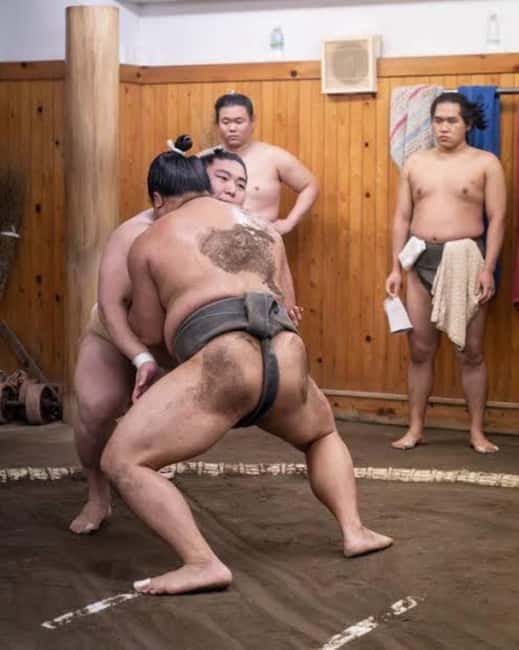
- Shinjuku location, real pro wrestlers: This is staged in the heart of Tokyo, not out in the countryside.
- English MC for the rituals and rules: You’ll hear what’s happening and why it matters, not just watch moves.
- Live sparring matches: You get intensity on display, not only slow demonstrations.
- You can wear the traditional outfit and challenge a wrestler: It’s interactive in a way most shows never allow.
- Short and focused at 90 minutes: Easy to fit into a busy Tokyo itinerary.
- Food isn’t included: You’ll want to plan a meal before or after.
Entering the Shinjuku Sumo World (Sekisaku Building)
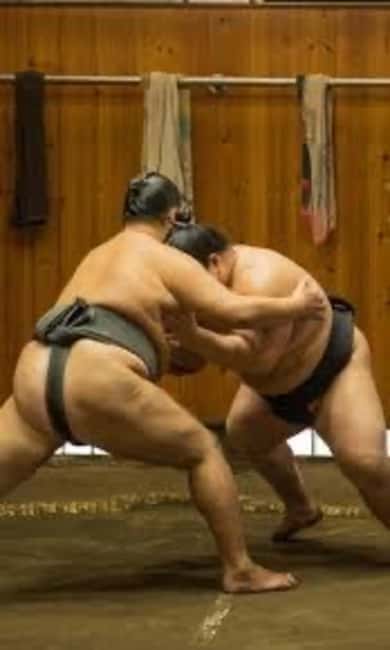
This experience takes place in Honshu, Japan, in the thick of Shinjuku—one of Tokyo’s easiest areas to plug into a day. The whole show is designed to be approachable even if you’re brand new to sumo. You’re not expected to already know the rules or follow terminology like a lifelong fan.
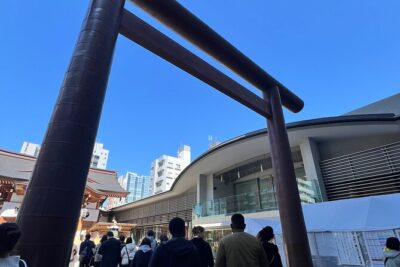
Meeting is at the second floor of the Sekisaku Building in Shinjuku. The show also has a strict time schedule, so timing matters more than usual. Entry is only permitted through the front of the building facing the main door next to Daiso, and late entry may not be accepted by the front desk. In practice, that means you should aim to arrive a little early and keep things simple on the way over.
If you like experiences where you learn something and still get a big performance at the same time, this hits that sweet spot: it’s cultural, physical, and funny.
You can also read our reviews of more tours and experiences in Tokyo

What the 90 minutes actually feels like
You’re looking at a 90-minute program, and it moves with purpose. Think of it as a sequence: explanation first, then action, then audience participation, and finally the hands-on moment where you step into sumo gear and face a wrestler.
The pacing is one reason people rate this so high. In a lot of cultural performances, you sit through a lecture and hope something exciting happens later. Here, the show stays practical—what you’re hearing connects directly to what you’re seeing.
Also, the setting helps. You’re not separated by distance or stained-glass mystery. You’re in a space built for this kind of performance, so when the wrestlers move, it reads instantly as strength + technique, not just size.
The ring action: sparring, shiko, and salt
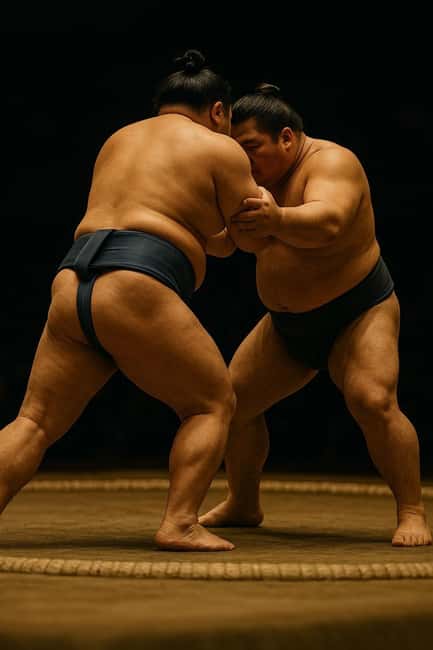
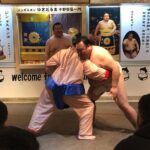
The main event centers on professional sumo matches and live sparring. You’ll see wrestlers demonstrate techniques with intensity, and you’ll also get the rituals that make sumo feel unique compared to other combat sports.
A few specific moments to expect:
- Shiko (foot stomping): It’s loud, and it’s not random. You’ll hear what it’s for as part of the ritual structure.
- Salt throwing: Another key ritual moment that sets the tone before contact.
- Live sparring matches: You get real movement patterns—grappling attempts, balance changes, and quick bursts where strategy becomes obvious.
The big payoff is that you see how the techniques work under pressure. Even if you only catch a few moves, you’ll feel the rhythm: setup, engagement, leverage, and sudden shifts. That helps you watch more intelligently after the show, whether you decide to learn sumo rules further or just enjoy it as sport and theatre.
The English-speaking MC makes it click
One of the strongest parts of this experience is the English-speaking MC. You’re not left to guess. The host explains the rituals and what’s happening in the ring while keeping the mood friendly.
From the way the event is described, the MC’s job isn’t just translation. It’s turning sumo into a story you can follow:
- what each ritual signals,
- how techniques fit together,
- and why the wrestlers approach bouts with serious discipline.
You might see different MCs depending on your date. Names that come up include Dai, Paula, Ari, and Ali. Across those accounts, the common thread is the same: clear explanations, crowd interaction, and humour that doesn’t turn the sport into a joke.
If you’ve ever wished a museum guide could speed-run what you’re seeing, this is that energy—only it’s happening with wrestlers in front of you.
Suit up in a traditional outfit and step onto the dohyo
After the match and explanation segments, the show shifts into the most memorable part for many people: putting on a traditional sumo outfit and getting the chance to challenge a sumo wrestler.
This is the moment where the experience becomes personal. Watching from the audience is one thing. Being in the gear, standing on the dohyo, and facing a wrestler is another. Even if you know you won’t win, the contrast is part of the lesson: technique and balance beat raw strength most of the time.
The show also creates a sense of ceremony around it. You’re not handed a costume and sent off. You’re brought into the atmosphere of sumo performance, with the crowd watching and the wrestlers treating it like part of the show, not a stunt.
And yes, people often leave feeling like they gained a new respect for training. You’ll see it in how seriously the wrestlers move and how clearly they explain or demonstrate during the program.





Crowd energy, questions, and up-close moments
A lot of sumo shows try to keep you quiet. This one tends to pull you in. Audience interaction is part of the format, and you may see:
- crowd involvement during the program,
- moments where the wrestlers engage with questions,
- and volunteers joining in after the main action.
One review-style detail that matches the overall feel: staff are friendly and approachable from the moment you arrive, and there can be moments for photos with the rikishi. That kind of personal interaction is a big reason the experience rates so strongly for first-timers and families.
If you’re travelling with kids or you want something that breaks up the day without turning into a long sit-down, this interactive element matters. It keeps attention where it should be and makes sumo feel less distant.
Price and value: why $69 can make sense here
At $69 per person for about 90 minutes, this sits in the middle of the Tokyo “small group show” price band. The value comes from how much you actually get:
- live pro sparring and matches,
- an English MC who explains rituals and techniques,
- a traditional outfit moment,
- and a chance to challenge a wrestler.
That combination is the key. If it were only entertainment, it might feel pricey. If it were only educational, you’d be sitting and listening. This event does both, and it adds hands-on access in a way that most cultural performances don’t.
Also, there’s no food included, so you should treat this as a performance block, not a dinner replacement. Plan to eat nearby in Shinjuku before or after, then come in rested and ready to watch and participate. A bottle of welcome water is included, which is a nice basic touch in a city where you’ll spend a lot of time walking.
Who this is best for (and who should choose another option)
This experience is ideal if:
- you’re a first-time visitor to sumo and want clarity fast,
- you like shows that are interactive, not passive,
- you’re travelling with family (including kids who might not want to sit through a long lesson),
- or you want a Shinjuku activity that feels authentically Japanese without needing complicated planning.
It’s less ideal if your goal is to watch the exact kind of matches you’d see in a major tournament setting. Remember: it’s not a tournament. So you shouldn’t expect a full championship format or a competition bracket. What you’ll get instead is a well-paced, educational, and energetic showcase of rituals, technique, and sparring.
Practical tips so you get the best experience
A few small moves can help you enjoy this more:
- Arrive a bit early. Entry is only through the front next to Daiso, and late entry may not be accepted.
- Wear shoes that are easy to manage. You’ll be moving through the space during the show and crowd moments.
- If you’re new to sumo, don’t worry about memorizing terms. The MC’s job is to translate what you’re seeing into something you can follow.
- Plan your meal. Since food isn’t included, you’ll enjoy the show more if you’re not hunting for food during it.
Also, keep expectations realistic: the challenge is a chance to participate, not a fair fight. The point is the experience and the respect you’ll walk away with.
Should you book the Shinjuku Sumo show experience?
If you want a Tokyo activity that’s short, cultural, and genuinely fun, I’d book it. The strongest reasons are simple: live sparring, English explanations, and the hands-on suit-up and ring challenge. For first-timers, that combo turns sumo from confusing into memorable in less than two hours.
Skip it only if you’re specifically chasing tournament-style competitive bouts. Otherwise, this is a smart Shinjuku night plan: easy to fit, easy to understand, and focused on the parts of sumo you’ll remember later—ritual, technique, and the sheer physical reality of how these wrestlers train.
FAQ
Is this a sumo tournament?
No. This is not a tournament, so it’s designed as matches and demonstrations rather than a formal competition.
How long is the experience in Shinjuku?
The duration is 90 minutes.
Where do we meet?
You meet at the second floor of Sekisaku Building in Shinjuku.
What is the entry rule for the building?
Entry is only permitted through the front of the building facing the main door next to Daiso.
Is there an English-speaking guide?
Yes. The tour includes an English-speaking MC.
What’s included in the price?
The experience includes professional sumo wrestling matches, an English-speaking MC, a welcome drink (bottled water), the chance to wear a traditional sumo outfit, and an opportunity to challenge sumo wrestlers.
Is food included?
No. Food is not included.
What if I arrive late?
The show follows a time schedule, and late entry may not be accepted by the front desk.
Can I cancel and get a refund?
Yes. You can cancel up to 24 hours in advance for a full refund.