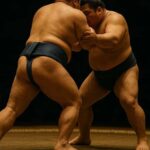
Sumo is not what you expect at lunch. This experience pairs retired sumo wrestlers with a hands-on demo, plus the chance to try a simple bout yourself, and it ends with a proper chanko soup-style meal. The one catch: it is a show format, so it is not the same as watching a full official tournament match.
I like that it keeps moving. You get explanations of sumo rules and training rhythms, then you jump into the action through audience participation and photo time. You also get fed by the people who live the sport, with vegetarian options available if you request ahead.
If you are sensitive to small seating quirks, plan for it. Some tables can end up farther from the dohyo area, so you may need to stand for the best view, especially if you are seated at the edge of the room.
In This Review
- Key Highlights Worth Your Focus
- How The Sumo Show Works in 90 Minutes
- Meeting at Yokozuna Tonkatsu and Getting Seating Sorted
- Sparring Demos: Moves, Rules, and Training Rituals
- Friendly Bout Options and Costume Photo Time
- Tonkatsu and Chanko Nabe Lunch (and Drinks You Still Need)
- Price and Value for a Tokyo Meal-Plus-Show
- Who Should Book This Sumo Show
- Should You Book This Sumo Show?
- FAQ
- What is the duration of the SUMO show experience?
- What time does it start and where do I meet?
- What is included in the price?
- Are drinks included?
- Can I request vegetarian or dietary accommodations?
- If I cancel, can I get a refund?
Key Highlights Worth Your Focus
- A real interaction with retired wrestlers: you learn and participate, not just sit and watch
- Sparring demo + friendly bout options: if you want to wrestle, you can
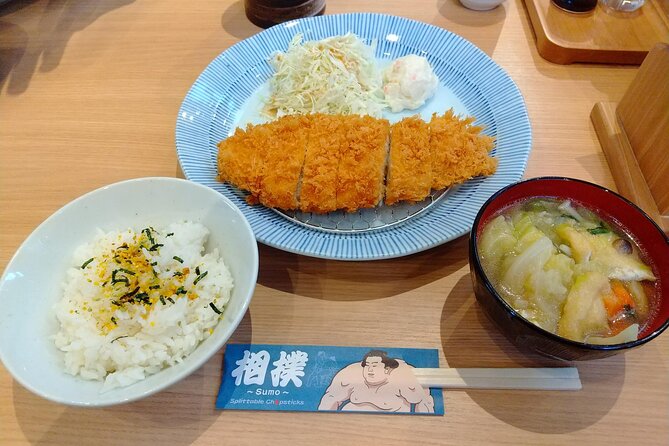
- Tonkatsu and chanko lunch included: a full meal is part of the deal, not a snack
- Costume photos: quick and memorable, with wrestlers before you wrap up
- Small-group feel for a big sport: max 60 people, near public transportation
How The Sumo Show Works in 90 Minutes
This is a tightly timed, very human sumo experience. The whole show runs about 1 hour 30 minutes, built around three beats: learn, watch/participate, and eat. You start by meeting your host and the retired wrestlers who will guide the session, then you move into a short demo of sumo techniques and basic rules.
The reason I think this format works is simple: it keeps you from getting lost in a sport that can look confusing at first. You hear the rules in plain language, you see movements up close, and then you get a chance to test what you learned in a friendly way. If you like sports, you get action. If you like culture, you still get the rituals and the why behind the wrestling.
And then comes the best part for many people: lunch. You do not have to plan a meal or hunt for something nearby. Tonkatsu plus chanko soup is included, prepared as part of the experience.
You can also read our reviews of more tours and experiences in Tokyo

Meeting at Yokozuna Tonkatsu and Getting Seating Sorted
You meet at Yokozuna Tonkatsu/Sumo lunch at 3-chōme-1-11 Tatekawa, Sumida City, Tokyo. The start time is 1:00 pm, and the activity ends back at the meeting point. Since it is near public transportation, you should be able to reach it without a complicated transfer plan.
Here is the practical reality: seating can vary. The organizers may ask you to share a table with another group, and seating is decided by the order reservations are received. Arriving early does not automatically guarantee a better seat.
In plain terms, if you care about a close view of the dohyo area, come ready to stand. One common complaint is that some tables end up far from the action, which makes standing part of the experience. If that sounds annoying, you can still make it work—just plan to wear comfortable clothes and expect a bit of shifting during the show.
Also, plan your timing. This is not a slow dinner event. You are there, you learn, you participate, and you eat, all within that 1.5-hour window.
Sparring Demos: Moves, Rules, and Training Rituals
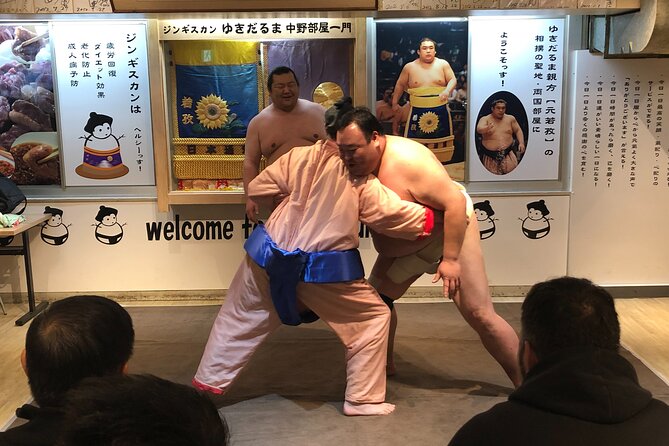
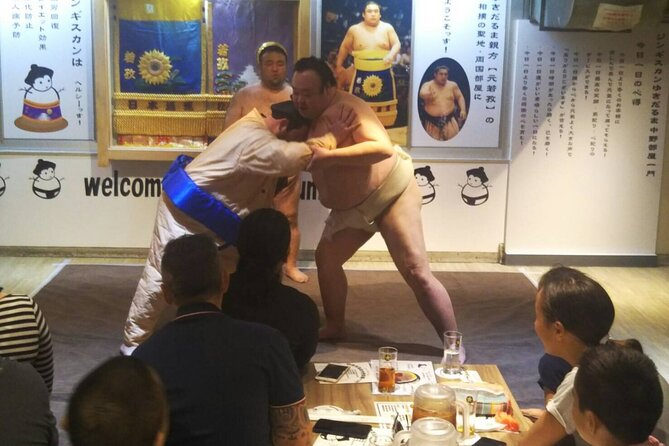
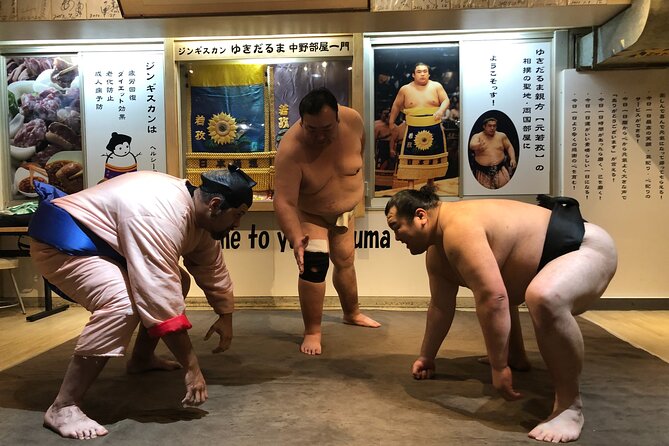
The demo stage is where you get your bearings. You will see a few moves and techniques demonstrated, and you will be walked through the history of sumo and its rules. You also learn about training rituals—how wrestlers prepare and what routines matter day to day.
What I like about the way this is framed is that it focuses on comprehension. Sumo has a lot of terminology, and the rules can feel oddly specific at first. Here, you get a guided explanation so you can understand what you are watching when sparring begins. You are not stuck guessing why someone is doing something.
Then the session turns slightly playful. You may be invited to challenge a wrestler in a friendly bout. This is not about winning a real match. It is about experiencing how the sport feels in the flesh and learning why technique matters more than just muscle.
If you are coming with kids, this portion also helps. It is interactive enough that younger people stay engaged, and you get moments where everyone laughs at how big and fast everything looks when it is happening right in front of you.
Friendly Bout Options and Costume Photo Time
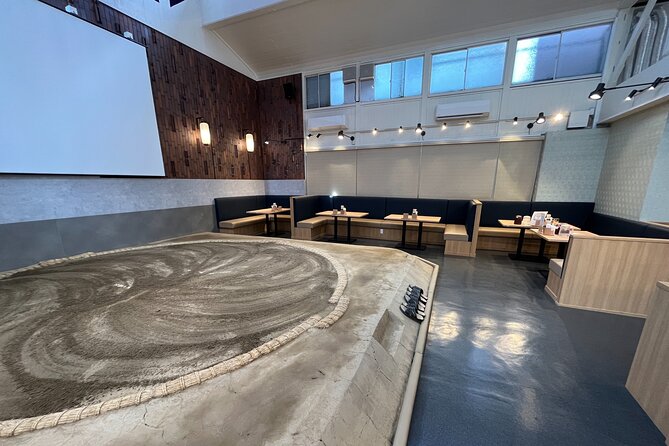
The heart of the experience is the chance to step into the fun. If you are feeling brave, you can challenge a wrestler to a bout. Expect it to be structured by the staff and designed to keep things safe and friendly, with good instructions from the retired wrestlers themselves.
Even if you do not want to wrestle, you still get value. The show explains what matters: footwork, balance, and the kind of pushing and pulling that is hard to understand from a video. And because the wrestlers are involved, you are getting feedback in real time.
After the wrestling moments, you get a photo window. You can take photos with the sumo wrestlers while wearing a traditional sumo costume. This is short, but it is memorable. You leave with a souvenir that actually feels tied to what you did, not just a generic picture.
One more detail that matters: the interaction level is high. People describe the staff and wrestlers as engaging and funny, and they spend time at tables and with participants. That turns the experience from a “sit and watch” activity into something closer to a guided performance with personal moments.
Tonkatsu and Chanko Nabe Lunch (and Drinks You Still Need)
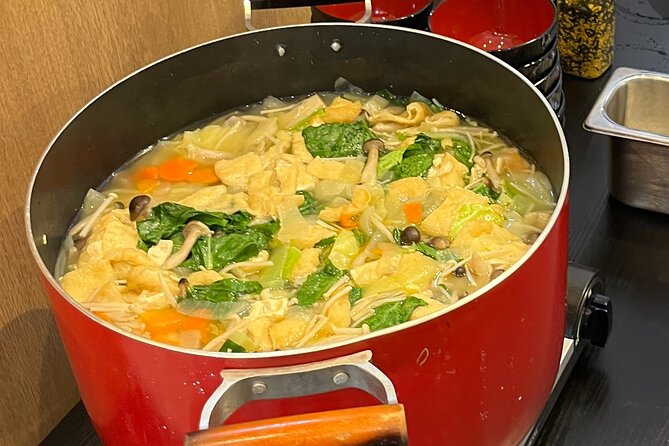
Food is not a side quest here. Tonkatsu and chanko soup are included, and the meal is part of the show experience—prepared by the wrestlers. Chanko is the big draw for many people because it is the classic wrestler meal style: hearty, comforting, and built for fueling training.
Tonkatsu also lands well for visitors. It is familiar enough to feel safe, but you still get the satisfaction of eating as part of a sumo themed event rather than ordering lunch off a random menu. Several people say the food was surprisingly good, which matters because it is a lunch included in a paid show.
Dietary needs are addressed, too. Vegetarian and other dietary accommodations are available upon request. The key practical point: indicate restrictions or allergies in the special notes when you reserve, and requests received less than 5 days before the event date may not be handled.
Drinks are not included. So if you want tea, water, or anything else, plan to pay separately. The meal is filling, but you should not assume it is a full beverage package.
A small word of wisdom: if you have a strong preference for soup portions, you might want to mentally prepare that the meal format could be portioned like a set lunch rather than a huge soup bowl. A few people specifically wished for more soup volume.





Price and Value for a Tokyo Meal-Plus-Show
At $89.54 per person (with a mobile ticket option), this is not a budget activity. The value comes from the mix: you are paying for guided participation with retired professionals plus an included lunch.
In Tokyo, you can easily spend similar money on things that are mostly passive: a ticket, a show, and you walk out. Here, you get explanations, interaction, and the chance to participate in the ring. That matters, because you are not just buying entry—you are buying a “try it” experience.
The included meal also helps justify the price. Tonkatsu and chanko soup are not just a voucher or a snack. You eat as part of the event, which is practical if your schedule is packed.
The one caution is fairness of value. A small minority felt it was expensive for what they got. If that is your mindset, treat this as a fun cultural activity with participation, not an academic sumo seminar or a full-scale tournament day. The timing is about 1.5 hours, so your learning and participation are designed for that length.
If you want a safe bet for value, focus on the experience type: you will get multiple touchpoints—demo, participation, costume photos, and a wrestlers’ lunch.
Who Should Book This Sumo Show
This is a strong choice for people who learn by doing. If you like hands-on cultural experiences, you will probably have a great time. If you are curious about sumo but do not know rules yet, you also have a good path in, because the explanations are meant to make the sport understandable.
It also fits families. People have described it as a solid family activity, including kids who were engaged by the interactive parts. If you are traveling with someone who needs a more interactive environment than a quiet museum, you might find this format easier to enjoy.
You should also book if you want a memorable, photo-worthy activity that feels tied to real people in the sport. The costume photos with the wrestlers are a big part of the payoff.
You might think twice if you strongly prefer quiet, seated viewing with guaranteed proximity. Seating can vary, and you may need to stand. And if you want a long, slow meal experience, the schedule is short and structured.
Should You Book This Sumo Show?
I think this is worth booking if you want a fun, interactive way to understand sumo in a limited time window. The combination of retired wrestlers, friendly participation, and an included lunch is a practical win, especially in a city where meals and tickets add up fast.
If you are mainly chasing a long, tournament-style match experience, you may feel it is too brief. But if your goal is to learn the basics, try the sport in a safe, guided way, and eat tonkatsu and chanko in the same sitting, this is one of those Tokyo activities that makes the day more interesting fast.
FAQ
What is the duration of the SUMO show experience?
The sumo demo plans including the meal are about 1.5 hours.
What time does it start and where do I meet?
It starts at 1:00 pm. You meet at Yokozuna Tonkatsu/Sumo lunch, 3-chōme-1-11 Tatekawa, Sumida City, Tokyo 130-0023, Japan, and the activity ends back at the meeting point.
What is included in the price?
The experience includes meeting and learning from retired sumo wrestlers, plus tonkatsu and chanko soup for lunch.
Are drinks included?
No. Drinks are not included.
Can I request vegetarian or dietary accommodations?
Yes, vegetarian and dietary accommodations are available upon request. Make sure you enter restrictions or allergies in the special notes when reserving.
If I cancel, can I get a refund?
Yes, you can cancel for a full refund up to 24 hours before the experience’s start time. If you cancel less than 24 hours before, the amount paid is not refunded.