REVIEW · TOKYO
Tokyo Sumo Morning Training/ Sumo Practice with Wrestlers
Book on Viator →Operated by Japan Wonder Travel · Bookable on Viator
Want to see sumo before the city wakes?
This tour gets you into a working sumo stable to watch training up close, with a guide to explain what you’re seeing and rules to help you act like you belong in the ring world.
I especially like that you get close access to the training routine, then a photo with a sumo wrestler to take home proof the morning was real. I also like how the experience is built around learning: you’ll hear explanations as you go and you’re expected to watch respectfully.
The main drawback to plan for is comfort and control. Practices can run a bit short or long, chairs may not be available, and once you exit the stable area you can’t go back in—so you’ll want to arrive ready and dressed for early, chilly conditions.
In This Review
- Key things I’d circle on your itinerary
- Entering The Tokyo Sumo World: what you’re really signing up for
- Meeting point and timing: show up ready, not rushed
- Stop 1: your pre-briefing and the quick hop to the stable
- Stop 2: watching training in the stable (quiet, close, and rule-driven)
- The commentary: headset-style guidance
- Seating and comfort: expect floor-level reality
- After training: photo time and the human side of sumo
- Who can participate: women, shoes, and the dohyō rules
- Price and value: why $99.10 can be fair, or not, depending on your expectations
- Weather, chanko, and what to pack for a Tokyo morning
- How to get the most out of your 55 minutes of training viewing
- Common gotchas (so you don’t lose money to avoidable mistakes)
- Final verdict: should you book this Tokyo sumo morning training tour?
- FAQ
- How long is the sumo training experience?
- Does the meeting time or stable location change?
- What’s included in the tour?
- Can I take photos or videos?
- Is food allowed during the visit?
- Can I leave the stable during the practice?
- Are women allowed to join?
- Do I need to remove my shoes?
- Is the stable visit wheelchair- or chair-friendly?
- What if I need to cancel?
Key things I’d circle on your itinerary
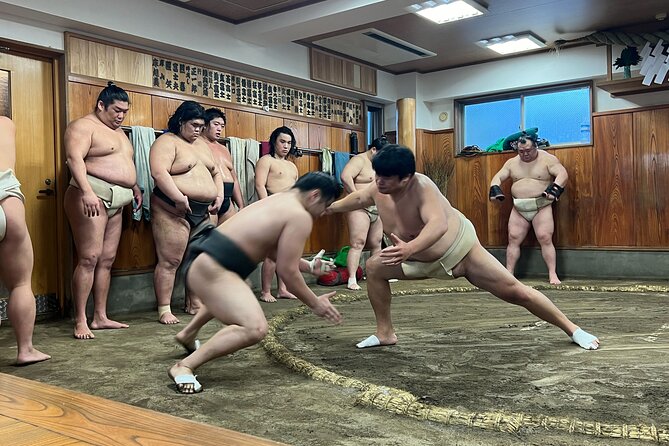
- Up-close stable access to watch daily training where it actually happens
- Guide-led explanations as you move from meeting point to the stable
- Quiet, respectful viewing rules (no flash, no recordings, and no leaving mid-practice)
- Photo with a sumo wrestler included as a trip souvenir
- Shoes-off culture around the ring area, plus floor seating at some stables
- Women can participate, but dohyō (ring) entry is restricted to designated seating
Entering The Tokyo Sumo World: what you’re really signing up for
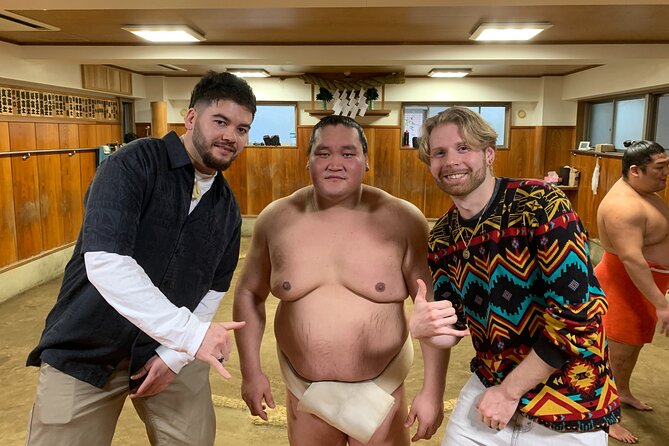
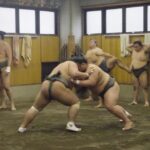
This is one of those Tokyo experiences that feels simple on paper, then turns into something surprisingly technical once you’re there. You’re not just watching a show. You’re watching a training rhythm: warmups, practice engagements, and the kind of focused routine you almost never see up close unless you’re invited into a stable’s world.
The tour keeps a clear mission. First you meet your guide, then you head to the stable. Once inside, you watch quietly and let the real details land—stance, timing, repetition, and how everything stays disciplined even when it looks like pure strength on the outside.
Also, the tone matters. The rules are strict for a reason: you’re in a serious training space. Phones are silent, eating is not allowed, and you’re expected not to interfere with the wrestlers’ concentration. If you can follow those guidelines, you’ll get a calmer, more rewarding experience.
You can also read our reviews of more tours and experiences in Tokyo

Meeting point and timing: show up ready, not rushed
Your meeting point is in Sumida City at 1-chōme-2-8 Chitose, Sumida City, Tokyo 130-0025. The exact start time and the stable location can vary by tour date, because morning schedules depend on the stable’s training flow. After booking, you’ll receive the specific meeting time and details.
That variability affects one thing: planning. In practice, you should build in buffer time and check your messages the day before and again the morning of your tour. Late arrivals can’t be compensated or refunded, so you’ll want to be early enough to absorb instructions without stress.
Bring a practical mindset. Use the restroom before you arrive, because once the session starts you’re expected to stay with the group. Also, you can’t just wander in and out. Once you leave the stable, you cannot re-enter.
Stop 1: your pre-briefing and the quick hop to the stable
Stop 1 is basically your jumpstart. After you meet your guide, there’s an explanation about sumo and how to watch training so you actually understand what you’re seeing. It’s short, about five minutes, but it sets you up to notice details that would otherwise blur together.
Then you head to the stable. This transfer is where you feel the difference between reading about sumo and standing near it. You’ll be surrounded by everyday Tokyo noise at first, but once you reach the stable, the atmosphere shifts into quiet focus.
One practical tip: dress for the weather before you dress for the stable. A rainy, cold morning can mean you’re waiting outside longer than you’d like. Layering helps because the stable itself can still feel chilly.
Stop 2: watching training in the stable (quiet, close, and rule-driven)
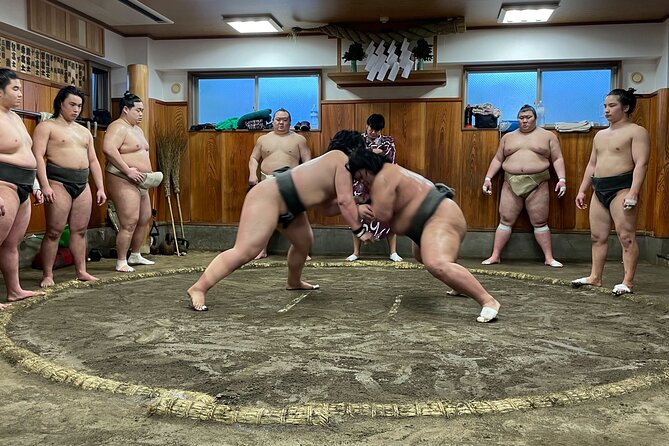
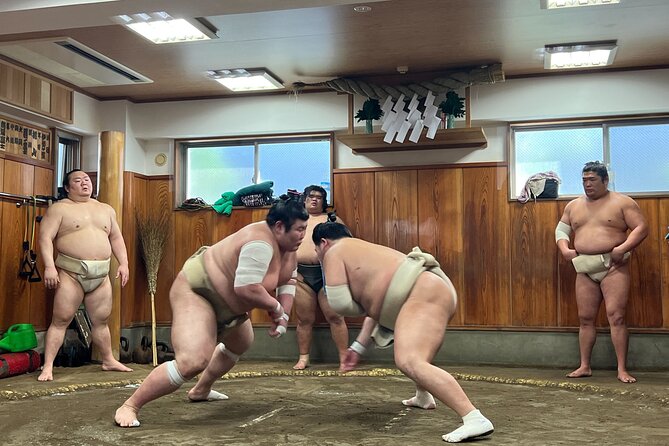
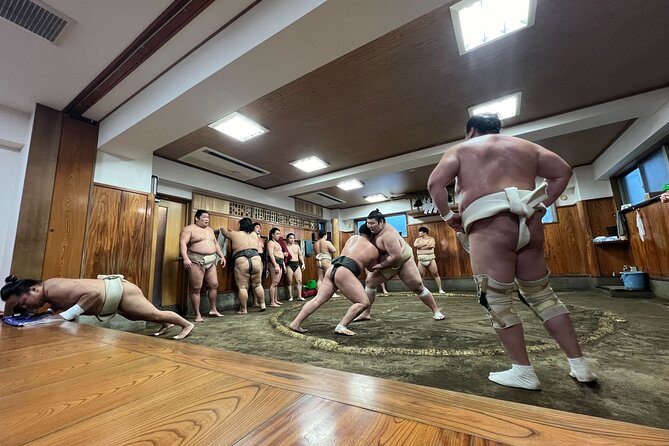
Stop 2 is where the magic happens. You enter the stable, find your designated viewing spot, and watch the wrestlers go through their daily routine. The stop is about 55 minutes, but the real training might run slightly short or slightly long depending on what’s happening that morning.
The most important thing: watch quietly and respectfully. The tour is designed so you don’t disrupt the wrestlers’ focus. That means no stretching legs toward the ring, no showy foot positioning, and no blocking sight lines. You’re there to observe, not to direct traffic.
The commentary: headset-style guidance
A big plus here is the learning support. Many people end up with English commentary via headset, so you can follow what’s happening without playing detective. It turns the experience from watch-and-nod into watch-and-understand.
This matters because sumo isn’t just about who’s stronger. It’s about timing, balance, and repeated technique. With the guide’s explanations and the running commentary, you’ll pick up why a training session looks like a set of rehearsed problems rather than random sparring.






Seating and comfort: expect floor-level reality
Not every stable offers chairs. Some viewers end up sitting on the floor, cross-legged or in a floor position for the whole session. If you’re not used to that, it can feel long, especially in a chilly room.
I’d plan for “warm layer + flexible body.” If you know you’ll struggle sitting on the floor, wear comfortable pants and consider bringing a small cushion if your tour instructions allow it—though you should rely on what the guide says on the day.
After training: photo time and the human side of sumo
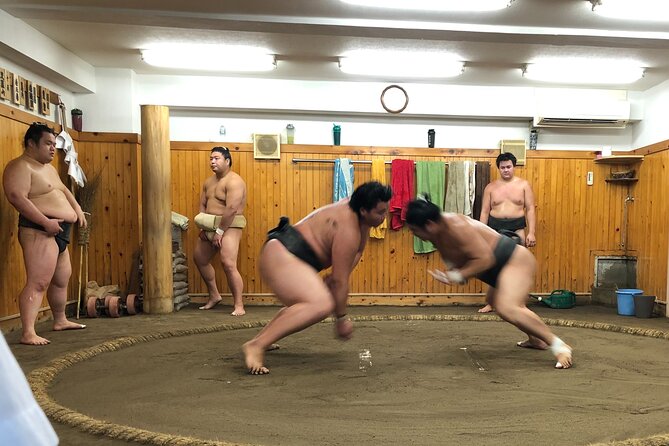
The experience includes a photo with a sumo wrestler. That’s the part that turns this from a quiet observation into a memorable keepsake you can actually share.
You may also get a bit of interaction time after practice, depending on the stable schedule. People often come away surprised by how friendly the wrestlers can be in those short moments, as long as you stay respectful and follow the rules.
Just keep expectations grounded: this isn’t a long meet-and-greet event. It’s a training session first. The photo is the souvenir, and your best learning comes from watching carefully during the main routine.
Who can participate: women, shoes, and the dohyō rules
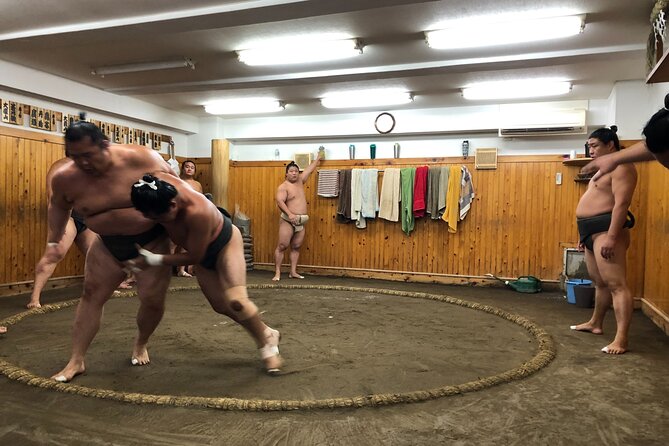
This tour is open to most travelers, and it has a maximum group size of 25. That smaller size helps keep the stable environment calm and manageable.
There are two cultural safety rules to understand up front:
- Women are welcome, but they’re not permitted to enter the dohyō (sumo ring) due to religious and cultural traditions at the facility. Women can fully participate from designated seating areas.
- Men must remove their shoes before stepping onto the dohyo (ring).
If you’re planning clothing, wear comfortable clothes you don’t mind getting adjusted or sitting in for a while. Also, phones must be on silent.
These rules aren’t “extra.” They’re part of how stable life works. Follow them and you’ll blend in faster.
Price and value: why $99.10 can be fair, or not, depending on your expectations
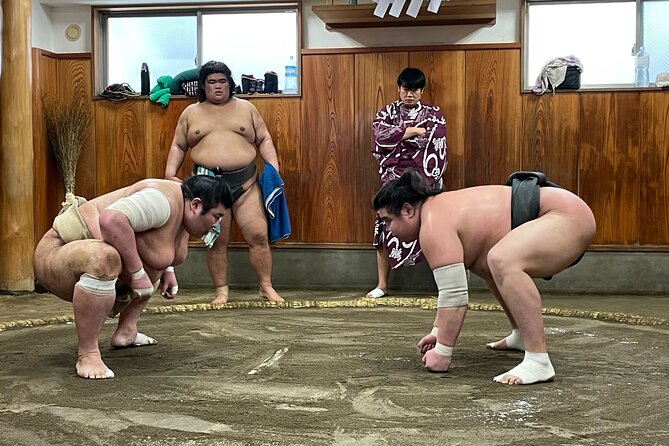
At $99.10 per person for about 1 hour (approx.), this isn’t a casual bargain activity. The value depends on what you want from the experience.
Here’s where it can feel like a win:
- You’re getting rare in-stable access to watch training up close.
- You get structured learning from your guide and live commentary support (often through a headset).
- You get a photo souvenir, which many short Tokyo experiences don’t include.
Here’s where you should be careful:
- The most “action-heavy” moments may not match your idea of constant slam-bang wrestling. Training includes deliberate work, not just dramatic contests.
- The practice content and length can vary day to day. If you expect a fixed schedule with maximum visible ring time, build in flexibility.
Also, while the stable is where a yokozuna trains, you’re not guaranteed to see that yokozuna. The presence of top wrestlers depends on the morning’s reality, so the experience is still about the training atmosphere and routine—not a guaranteed star sighting.
Weather, chanko, and what to pack for a Tokyo morning
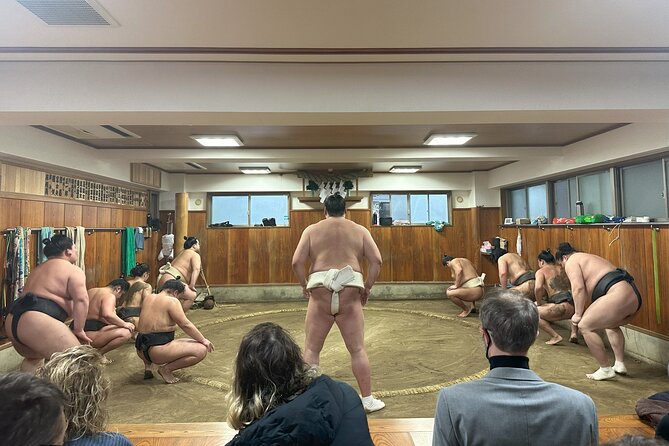
Morning practice tours in Tokyo come with a predictable enemy: temperature swings. Even when the stable is indoors, it can still feel chilly. Bring warm layers for before entry.
Water is allowed. Eating is not allowed inside the stable, but you can drink water and sports drinks. So skip breakfast binge mode and save your appetite for later.
Some people have mentioned chanko as part of what they experienced around this kind of stable visit. The only safe takeaway from your data is that stables sometimes add food moments, but you shouldn’t treat it as guaranteed unless your specific tour details confirm it.
What you can count on: you’ll sit, you’ll watch, you’ll listen, and you’ll photograph.
How to get the most out of your 55 minutes of training viewing
This is the part many people miss: your best experience comes from how you watch.
I’d do this:
- Arrive early and calm, so you can focus on instructions.
- Keep your phone away and silence it. If you’re tempted to record, follow the rule instead. Video recording isn’t allowed.
- Watch technique first, force second. The explanations help, but your eyes do the rest.
- Be patient. Some practice rhythms repeat, and that repetition is the point.
Also, don’t try to “help” by stretching toward the ring. It’s considered impolite to show the soles of feet toward the wrestlers. Those small gestures matter in a stable.
Common gotchas (so you don’t lose money to avoidable mistakes)
A few practical things can make or break the day:
- You can’t leave the stable in the middle of practice, and once you leave, you can’t re-enter. Plan restroom time before arrival.
- Cellphones must be on silent.
- Photos are allowed, but no flash and no shutter sounds.
- No eating is allowed inside the stable.
Another reality check: the activity duration might shift slightly depending on training content, and especially when a Grand Tournament is coming up. Sometimes practice ends earlier, which shortens the tour.
Finally, tour cancellations can happen due to scheduling conflicts at the stable with limited notice. That’s not something you can fully control, but it’s smart to keep your calendar flexible if you can.
Final verdict: should you book this Tokyo sumo morning training tour?
Book it if you want a real feel for how sumo training works day to day. If you enjoy sports culture and you like learning what you’re seeing, this is the kind of tour that turns a cool curiosity into real understanding—especially because the guide helps you read the action.
Skip it if your main goal is non-stop wrestling entertainment or if you’re very sensitive to comfort issues like floor seating and cold waiting. At $99.10, you’ll only feel delighted if you go in expecting observation, discipline, and short moments of human connection, not a long wrestling event.
If you’re flexible, respectful, and genuinely curious about sumo life, you’re very likely to love this morning.
FAQ
How long is the sumo training experience?
The tour runs about 1 hour (approx.). The pre-stable briefing is around 5 minutes, and watching in the stable is about 55 minutes, with some day-to-day variation.
Does the meeting time or stable location change?
Yes. The location and time of the morning practice may vary by tour date. After booking, you should receive the specific meeting point and time.
What’s included in the tour?
You’ll enter a sumo stable to watch training up close, have a guide with explanations, and receive a photo with a sumo wrestler. Admission tickets are listed as free.
Can I take photos or videos?
Photos are allowed as long as there’s no flash and no shutter sounds. Videos are not allowed.
Is food allowed during the visit?
Eating is not allowed inside the stable. You can drink water and sports drinks.
Can I leave the stable during the practice?
No. You can’t leave in the middle of the practice. Once you leave the stable area, you cannot re-enter.
Are women allowed to join?
Women are welcome to join, but they are not permitted to enter the dohyō (sumo ring). Women can fully participate from designated seating areas.
Do I need to remove my shoes?
Men must remove their shoes before stepping onto the dohyo (sumo ring). The tour also notes shoe removal related to entering practice areas.
Is the stable visit wheelchair- or chair-friendly?
Some stables may not have chairs, and you may need to sit on the floor. The tour data advises noting this in advance.
What if I need to cancel?
You can cancel for a full refund if you cancel at least 24 hours before the experience starts. If you cancel less than 24 hours in advance, the amount paid won’t be refunded.