Shibuya Crossing without the confusion. I like that this small-group Shibuya walk keeps you oriented while still hitting the biggest photo stop, then pressing on to the lesser-known lanes and local hangouts nearby. I also love the guide-led pacing, because you do not just stare at crowds—you get a route that helps you stay with the group and understand what you are looking at (and yes, guides like Loc and Rio are the kind that answer questions instead of rushing you out).
One possible drawback: the start point can be easy to miss. The meeting location is inside Shibuya Mark City (at SABON Shibuya Mark City East Mall 3F), so I’d plan to arrive early and confirm the spot on the day—once you’re walking, the tour itself is smooth.
In This Review
- Key highlights at a glance
- Why Shibuya Crossing needs a real game plan
- Price and value: what $25 buys you here
- Meeting at Shibuya Mark City, then finishing at Hachiko
- Stop 1: Myth of Tomorrow at Shibuya Station
- Stop 2: Shibuya Crossing, the scramble with purpose
- Stop 3: Miyashita Park, a multi-level Shibuya reset
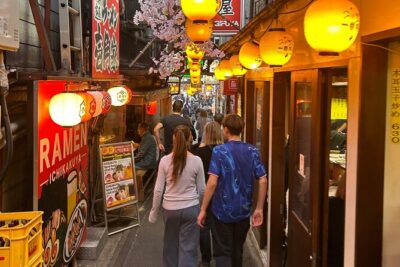
- Stop 4: Nonbei Yokocho and the charm of a narrow alley
- Stop 5: Shibuya Center-gai for that street-life energy
- Stop 6: Maruyamacho and the echoes of a former red-light district
- Stop 7: Hachiko, where your Shibuya night can start
- The guide factor: why names like Loc, Rio, and Grey keep showing up
- What to wear and how to survive Shibuya comfortably
- Who this tour is best for (and who might skip it)
- Should you book this Shibuya Crossing and Hidden Streets walking tour?
- FAQ
- How long is the Shibuya Crossing and Hidden Streets walking tour?
- What is the group size limit?
- What does the price include?
- Where do we meet and where does the tour end?
- Is there any admission cost for the main stops?
- What happens if weather is poor?
Key highlights at a glance
- Shibuya Crossing (The Scramble): you get the context behind the world-famous intersection and practical ways to cross it without getting separated
- Taro Okamoto’s Myth of Tomorrow: a striking atomic-bomb mural you’ll find at Shibuya Station that most people skip
- Miyashita Park: an urban park space that functions like a multi-level sports and recreation area
- Nonbei Yokocho: a small historical alley near the station that’s perfect for noticing the old Shibuya style
- Maruyamacho + Center-gai: shopping street energy plus neighborhood history, including echoes of the area’s former red-light district
Why Shibuya Crossing needs a real game plan
Shibuya is famous for being chaotic in the best way. But if you show up with no plan, you end up doing the same thing everyone does: take a quick picture, get swallowed by the crowd, and then spend time backtracking.
This tour helps you avoid that. With a maximum group size of 12, your guide can keep track of everyone and steer you from one stop to the next. And because you’re moving together, you get to spend more time actually seeing Shibuya rather than trying to locate your next landmark while the station swallows your sense of direction.
You can also read our reviews of more walking tours in Tokyo


Price and value: what $25 buys you here
At $25 per person for about two hours, this feels like a solid “get your bearings fast” option. You’re paying for three practical things: a human route, insider context for what you pass, and local recommendations that help turn the walk into a better night out.
Also, the tour includes all fees and taxes, so there’s no surprise added cost for the listed stops. Tips to the guide are not included, but you know that going in—and if your guide is the reason you had a great time, it’s the kind of tour where tipping makes sense.
Meeting at Shibuya Mark City, then finishing at Hachiko
Your start is at SABON Shibuya Mark City East Mall, 3F. That’s a helpful detail, but it’s also why I call out the one drawback: it’s inside a complex mall area, and it’s easy to drift to the wrong hallway if you arrive late or rely on memory.
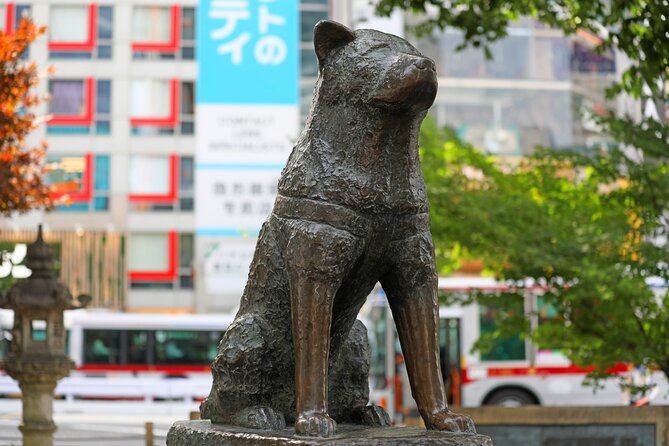
Your finish is outside at the Hachiko Statue. This is great, because it’s one of those dependable Tokyo landmarks. Once you end there, you can immediately pivot to dinner, drinks, or another neighborhood without re-planning your route.
Stop 1: Myth of Tomorrow at Shibuya Station
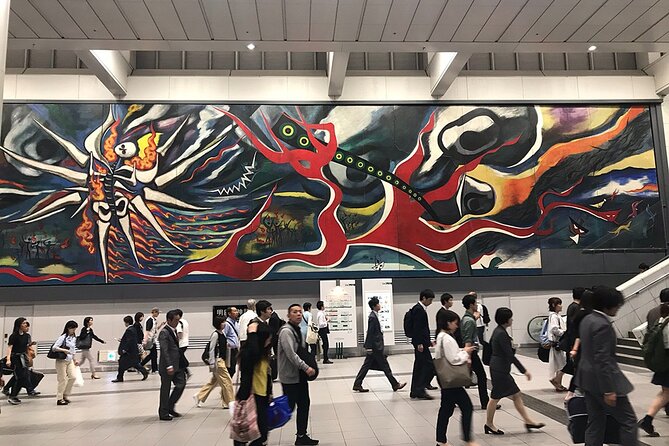
The first stop is Myth of Tomorrow, a large mural by artist Taro Okamoto. It sits in/near Shibuya Station, which is exactly why it’s such a good choice for a walking tour: you get an important, thought-provoking art stop without needing a separate detour.
What I like about starting here is the contrast. Shibuya can feel fast and surface-level when you’re focused on the famous crossing. This mural gives you a different lens—one that makes the rest of your Shibuya walk feel more grounded and intentional. Admission for this stop is free.
Practical note: plan a few slow moments. Even if you’re not a museum person, it’s worth standing still long enough to read the impact of what you’re seeing.
Stop 2: Shibuya Crossing, the scramble with purpose
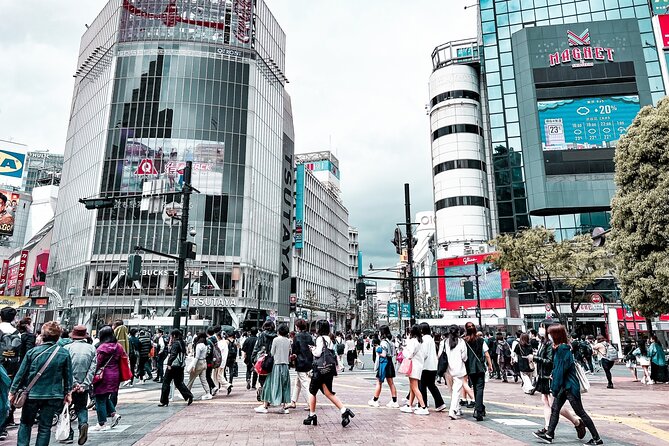
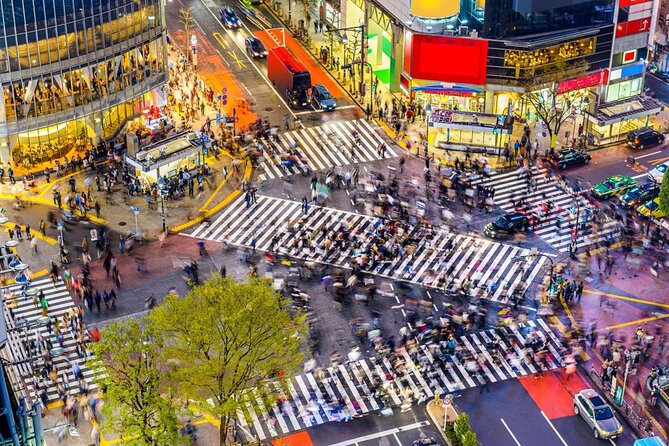
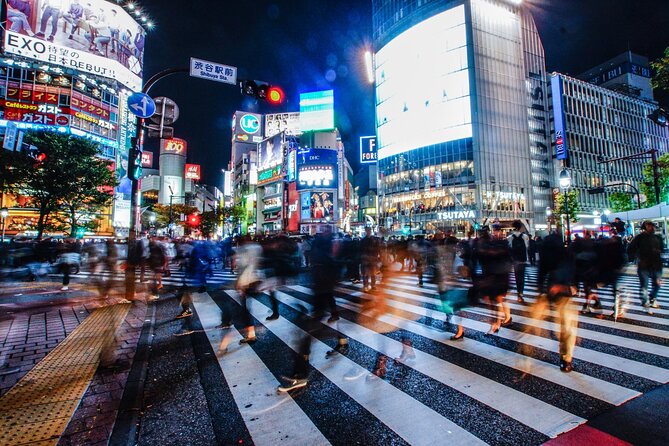
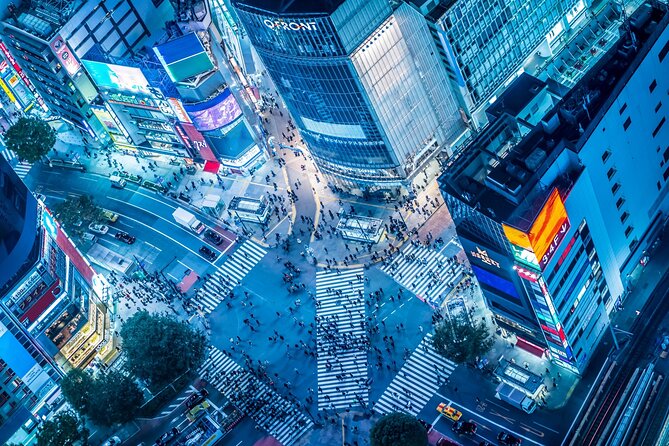
Of course you hit Shibuya Crossing—often called The Scramble. Your guide helps you understand why it’s so iconic, and you also get smart guidance for timing and where to stand as you cross.
I’d treat this as your two-part stop:
- Part one: the photo moment (yes, it’s that famous)
- Part two: learning how to move through it without losing time
Because your group stays together, you’re less likely to end up separated or spending the next five minutes trying to find the correct curb. Even if you’ve been to Tokyo before, Shibuya Crossing still hits differently when you’re moving with a plan.





Stop 3: Miyashita Park, a multi-level Shibuya reset
Next up is Miyashita Park, an urban renewal project that turned what sounds like a simple park area into something far more active. It’s designed as a multi-level sports and recreation space, which makes it feel less like a quiet break and more like a hangout that happens to be green.
I like this stop because it’s a breath between the big landmarks. You’ll also get a better sense of how Shibuya isn’t just shopping and crowds—it’s also day-to-day living.
If you’re trying to time your walk for the best photos, this is the place where the scene often changes the fastest. People filter in, the views shift by level, and you get a more local feel than the station area.
Stop 4: Nonbei Yokocho and the charm of a narrow alley
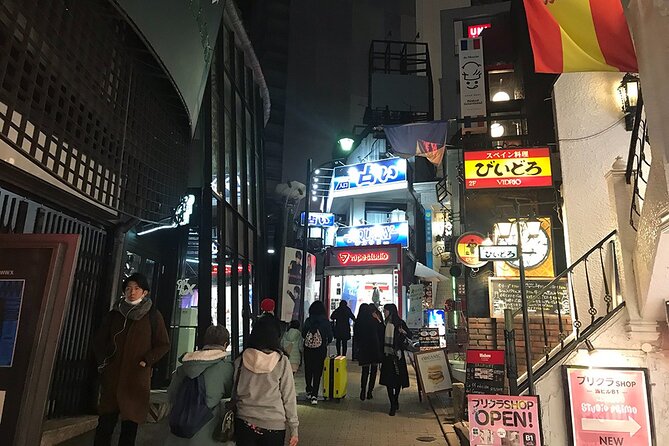
Then you get to Nonbei Yokocho, sometimes translated as Drunkard’s Alley. It’s a narrow, tucked-away alley near Shibuya Station, and that geography matters.
Alley areas like this do two things:
- They slow your pace naturally.
- They make you look up and notice the details that a main street hides.
This is one of those stops that feels small on a map but memorable in person. Even if you’re not planning to eat or drink right now, it’s a good place to understand the Shibuya nightlife pattern—lots of compact spots, lots of close community, and a vibe that changes street by street.
Stop 5: Shibuya Center-gai for that street-life energy
Shibuya Center-gai is the pedestrian shopping street at the district’s core. This is where Shibuya shows its youth-forward style—signs, storefronts, and people moving with purpose.
If you only think of Shibuya as one intersection, Center-gai broadens the picture. It’s not about one single landmark—it’s about the rhythm of the neighborhood.
A practical tip: wear shoes you don’t mind walking in. This part can be a bit step-heavy, and if the weather is humid, you’ll appreciate frequent short stops.
Stop 6: Maruyamacho and the echoes of a former red-light district
Next is Maruyamacho, an area with historical significance as a former red-light district. Today it’s transformed into a trendy neighborhood, but the past shows up in the way blocks are arranged and how the area developed.
I like this stop because it helps you avoid the common Tokyo mistake: treating neighborhoods as themed sets instead of layered places. Maruyamacho gives you context, so when you see today’s shops and nightlife, you can understand the neighborhood’s shift without turning it into an awkward history lecture.
Stop 7: Hachiko, where your Shibuya night can start
Your final stop is Hachiko, the bronze statue just outside Shibuya Station. It’s one of those spots where the crowd has a reason: people meet here, wait here, and use it like a city compass.
Ending at Hachiko also makes the timing easier. After two hours, you’re not forced to stand around or guess your next move—you can decide on the spot where to go next.
And here’s a fun way to use your guide time: if you get a guide who’s chatty about local nightlife history, ask about Love Hotels in Shibuya. That topic came up in the feedback I saw, and it’s one of those odd-but-real Tokyo details that adds color to what you just learned.
The guide factor: why names like Loc, Rio, and Grey keep showing up
A big reason this tour earns high marks is that the guide experience can feel personal. People highlighted guides such as Loc, Rio, Grey, Zac, and Daichi for being friendly, answering questions, and shaping the walk around what you want to know.
If you end up with a guide like Loc or Rio, you can expect more than a list of stops. They tend to share local context and help you turn Shibuya into a plan, not just a walk.
Two more guide-tested benefits you should care about:
- They can adjust pace if you need it. One review flagged hills as a factor, and a good guide will slow down and take breaks.
- They can steer you when parts of the city change hours. One person noted that around New Year some places were closed, but the guide still pointed them toward what was open.
What to wear and how to survive Shibuya comfortably
You’re walking for about two hours, and Shibuya has hills. One review specifically called out quite a lot of uphill walking, so I’d treat this as real cardio.
Here’s what helps:
- Comfortable shoes with good grip (stations and sidewalks can be slick after rain)
- A small water plan if it’s warm
- Patience at intersections. Shibuya Crossing feels intense. It’s not hard, but it’s loud and busy
Also, your group stays together, but the pace can still feel brisk because Tokyo sidewalks are built for movement. If you’re someone who likes lingering, tell your guide early.
Who this tour is best for (and who might skip it)
This is ideal if you want:
- A strong first-time Shibuya orientation
- A reliable route that connects famous sights with quieter backstreets
- Practical recommendations for bars and eats after the walk
- A small-group experience that feels like a conversation
You might skip it if you’re the type who loves to wander without guidance. If you already know Shibuya well and you don’t care about learning the context behind the mural, the alley, or the neighborhood history, you could DIY it quickly.
But if you want your Tokyo time to be efficient and interesting, this hits a sweet spot.
Should you book this Shibuya Crossing and Hidden Streets walking tour?
Yes, I’d book it—especially if it’s your first or second time in Tokyo. For $25 and around two hours, you’re getting a structured route through the Shibuya highlights people talk about, plus several stops that most independent visitors miss.
Book it if you value:
- Small-group guidance (12 max)
- A mix of photo-worthy sights and street-level neighborhoods
- A guide who can help you turn the walk into a better night out
If you’re worried about finding the start inside a mall, solve that by arriving early and using the exact meeting location. Once you’re underway, the route does what you want: it makes Shibuya feel navigable, not overwhelming.
FAQ
How long is the Shibuya Crossing and Hidden Streets walking tour?
The tour lasts about 2 hours.
What is the group size limit?
The experience has a maximum of 12 travelers.
What does the price include?
All fees and taxes are included in the price.
Where do we meet and where does the tour end?
Meet at SABON Shibuya Mark City East Mall 3F. The tour ends at the Hachiko Statue.
Is there any admission cost for the main stops?
The listed stops include free admission for the mural and other sights shown during the walk.
What happens if weather is poor?
This experience requires good weather. If it’s canceled due to poor weather, you’ll be offered a different date or a full refund.