REVIEW · TOKYO
Mt. Fuji and Hakone Day Trip From Tokyo with Bullet Train Option
Book on Viator →Operated by H.I.S.Co., Ltd. · Bookable on Viator
Mt. Fuji in one long, packed day. This Mt. Fuji and Hakone loop is interesting because you get timed photo stops, a guided volcanic walk-and-ride, and a real Lake Ashi viewpoint plan without wrestling Tokyo transit. I like the Wi-Fi coach for the long outbound drive and the fact that the day includes major sights that are hard to stitch together smoothly on your own. The main drawback: it’s weather-dependent, so fog can erase the views and you won’t get a refund.
You start in Shinjuku at 8:30 am and get back around 7:30 pm (sometimes later). The tour runs about 11 hours, and you can choose either the return-by-bus option or the faster bullet train return from Odawara to Tokyo.
In This Review
- Key moments that make this tour feel worth it
- One-day value: how this tour saves you from Tokyo transit math
- Shinjuku meeting point: find the LOVE statue and get moving
- Mt. Fuji 5th Station stop: the best payoff for first-timers
- Owakudani volcanic valley: sulfur steam, hot-spring vibes, and guided context
- Hakone Ropeway to Togendai: a quick aerial break from the long day
- Lake Ashi pirate ship cruise: the classic Hakone viewpoint
- Odawara transfer and the Shinkansen return: faster, but you manage the last mile
- If you choose the bullet train return
- If you return by bus
- Lunch upgrade (+Lunch): handy if you plan it, uneven if you’re picky
- Pacing and “how long is enough?” for Fuji, Owakudani, and the ropeway
- Coach day comfort: Wi-Fi helps, but bring the basics
- Clear-sky mindset: what to do if Mt. Fuji is blocked by fog
- Who this tour suits best
- Should you book this Mt. Fuji and Hakone day trip?
- FAQ
- Where is the meeting point, and what time does the tour start?
- How long is the tour, and when do you get back to Tokyo?
- Is lunch included?
- What happens if Mt. Fuji 5th Station is inaccessible due to weather or road conditions?
- What’s included for the Hakone part of the day?
- How does the bullet train return option work from Odawara?
Key moments that make this tour feel worth it
- Shinjuku start point made simple: meet at the Robert Indiana Sculpture LOVE with a blue HIS flag.
- A true Hakone sequence: Owakudani to Ropeway to Togendai, then a Lake Ashi cruise.
- Optional lunch upgrade: Japanese-style lunch included only if you select +Lunch.
- Clear plan for the Fuji 5th Station: if access is blocked, the route shifts to the highest feasible stop.
- Two return styles: slower bus back to Shinjuku, or Shinkansen from Odawara with a self-guided final connection.
One-day value: how this tour saves you from Tokyo transit math
The big appeal here is that you buy the “hard part” of the day: transportation plus an organized order of stops. You’re not coordinating separate trains, local buses, ropeways, and a lake cruise in between. Instead, you’re dropped into each zone with a schedule, an English-speaking conductor, and time blocks that keep things moving.
At $97.52 per person for an approximately 11-hour outing, this is best understood as “you’re paying for the package.” You also get practical inclusions: an air-conditioned coach with free Wi-Fi, guided narration in English, and “all fees and taxes.” Ropeway and Lake Ashi cruise are built in, so you’re not paying separately for the big-ticket experiences that can eat your day (and your energy) if you DIY.
The tour also caps at a maximum of 45 travelers. In small groups, you might even ride in a smaller van instead of a full bus, which can feel less chaotic than the mega-coach version of day trips.
You can also read our reviews of more tours and experiences in Tokyo



Shinjuku meeting point: find the LOVE statue and get moving
Your day begins at the Robert Indiana Sculpture LOVE in Shinjuku (6-chōme-5-1 Nishishinjuku). The staff meet you there with a blue flag with the HIS logo, so you’re not guessing which van belongs to which tour.
This is not a “show up whenever” situation. The departure is timed (start time is 8:30 am), and the operator says you should strictly adhere to the advised departure time. If you’re late, you can’t join partway through due to schedule constraints.
Practical tip: if you’re staying far from Shinjuku, don’t rely on “I’ll figure it out in the morning” optimism. The meeting point is central, but you still need enough buffer to arrive calm, not sprinting.
Mt. Fuji 5th Station stop: the best payoff for first-timers
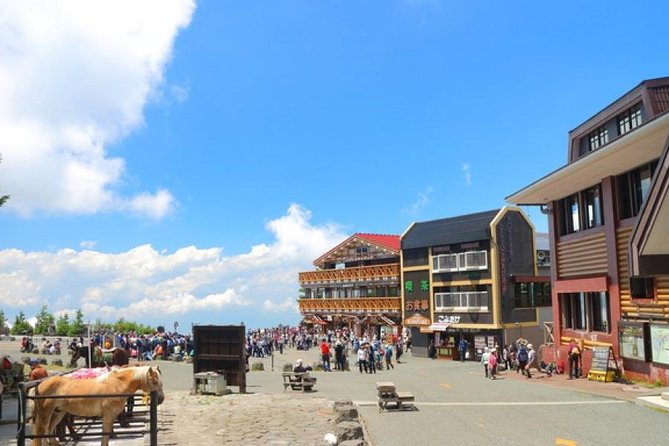
The headline stop is Mt. Fuji’s 5th Station, with about 30 minutes on site. When conditions cooperate, this is where you feel like you’re really at the foot of the mountain’s high-country world. You’ll see the view angles people come for, and you get a sense of the Fuji experience beyond postcards.
A key detail: the tour doesn’t just blindly say you’ll go to the 5th Station and hope for the best. If roads or weather block access, you go to the highest station possible. If conditions are worse, the plan may shift to the Fujisan World Heritage Center or sightseeing at Fuji 1st to 4th Station areas.
One important reality check: the tour notes there’s a chance you cannot see Mt. Fuji in bad weather, and it won’t be canceled or refunded for weather-based visibility issues. That means you should treat Mt. Fuji visibility as a bonus, not a guarantee.
Owakudani volcanic valley: sulfur steam, hot-spring vibes, and guided context
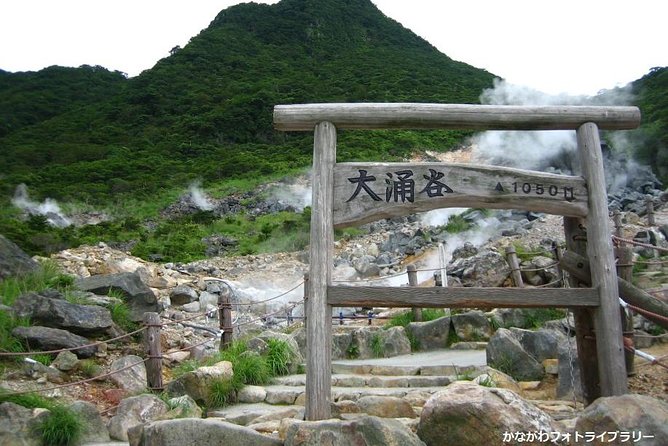
After Fuji, the itinerary heads into Hakone’s volcanic heart: Owakudani Valley. You get about 30 minutes here. This is the part that feels most “Hakone,” with steaming vents and geothermal activity that looks otherworldly if the day is clear enough to see details.
Your guide provides context before you move on, which matters because Owakudani can look like just dramatic steam to newcomers. With explanation, you understand what you’re seeing: the sulfuric vapors, the geothermal landscape, and how this active zone fits into Hakone’s volcanic story.
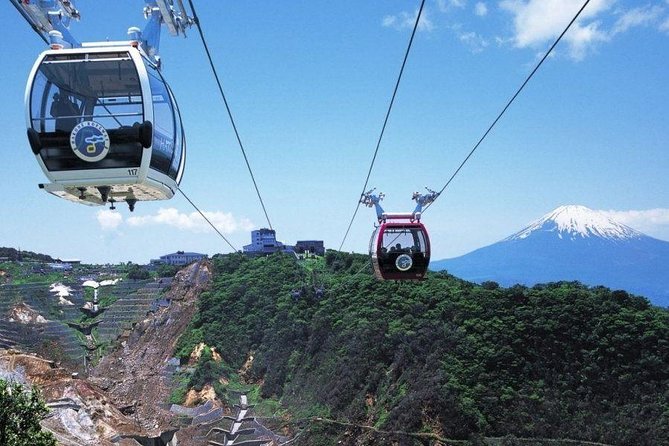
Then comes the transport link that’s more than just a ride: the Hakone Ropeway. You have about 25 minutes, and it’s designed to get you above the volcanic terrain. If you’re the kind of traveler who likes a short “wow” segment between stops, this one usually delivers.
Weather can still affect operations. If the Ropeway is unable to operate, the tour may be guided to alternative options such as a different ropeway route, boat options, or other nearby attractions (the plan lists several possible substitutes rather than canceling).
Hakone Ropeway to Togendai: a quick aerial break from the long day
The Ropeway portion acts like a reset button in the middle of the tour. You’re not just being moved along; you’re positioned for views as you travel from Owakudani toward Togendai. Even if Mt. Fuji is hidden, Hakone’s steam-and-valley visuals can still be photogenic.
Keep expectations realistic: your total time in the Hakone area is limited by the nature of an 11-hour schedule. That’s why this tour works best when you treat each stop as “a strong sample” rather than “hours to wander.”



Lake Ashi pirate ship cruise: the classic Hakone viewpoint
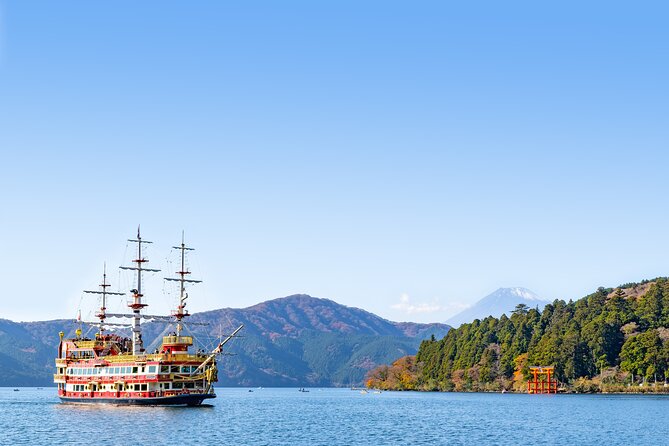
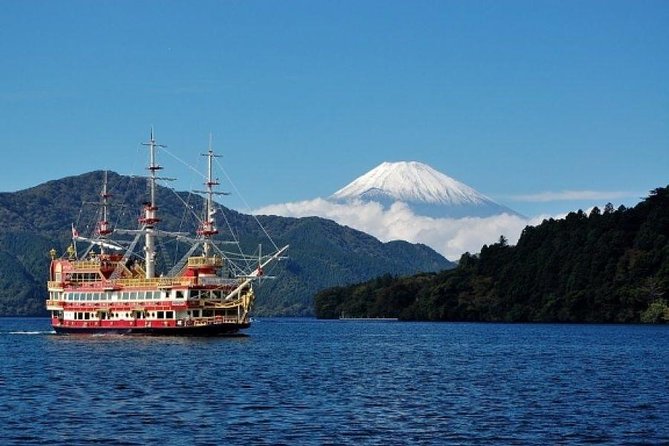
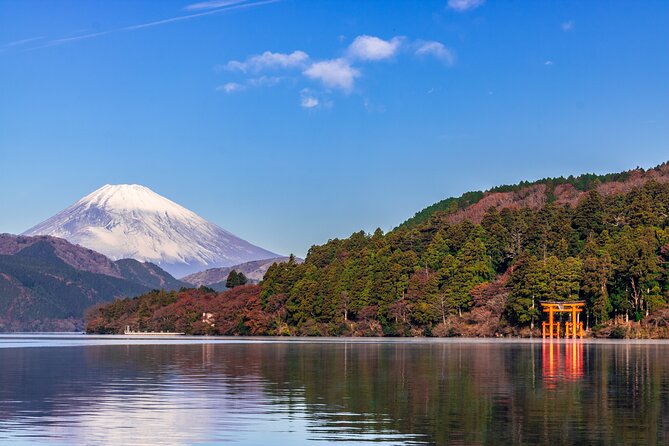
After Ropeway, you board the pirate-themed pleasure cruise on Lake Ashi for about 30 minutes. The itinerary notes that when the weather is clear, you’ll be amazed by Mt. Fuji peeking from behind the hills.
Even when Fuji is hidden, the cruise helps because it changes your perspective. You’re on open water, moving slowly, with views of the shoreline and the surrounding ridges. It also gives your legs a break from walking, which becomes important later in the day.
One timing note from real-world experience: wind can affect how comfortable the cruise feels. If the lake is choppy, you may get more bouncing than you want. This isn’t a “you did something wrong” issue; it’s just conditions.
If the pirate ship is canceled, you’ll be redirected to sightseeing in the Hakone area instead of canceling the whole tour. So you’ll still get something, even if it’s not the cruise you hoped for.
Odawara transfer and the Shinkansen return: faster, but you manage the last mile
This is where the tour’s two return options diverge.
If you choose the bullet train return
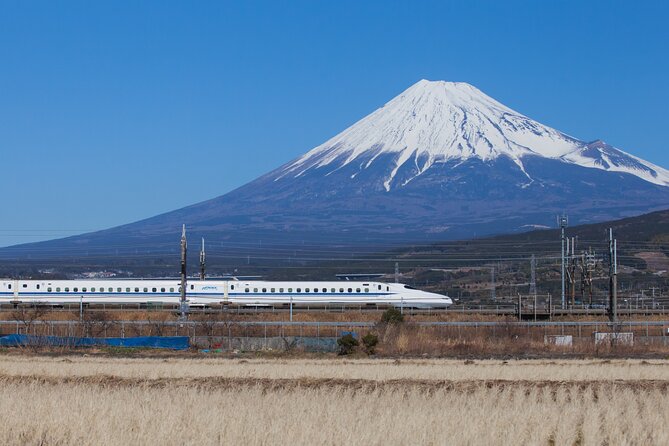
You’ll split off at Odawara Station Tourist Information Center (about 10 minutes). You receive non-reserved seats for the Shinkansen from Odawara to Tokyo Station. The schedule notes there are about two trains per hour on average for that route.
There’s one crucial operational detail: the tour guide will not board on the bullet train due to operation reasons. The guide provides instructions on how to get back to your hotel area from Tokyo Station before you board.
Also, if you miss your train after disembarking at Odawara due to delay, the tour warns that there’s no refund, and you should take the next train in the non-reserved section. So you’ll want to treat the Odawara transition as time-sensitive.
Practical reality: Tokyo stations are big. Even with tickets, your biggest risk is not missing the train—it’s getting yourself oriented for the final connection after Tokyo Station.
If you return by bus
The bus option takes you back to Shinjuku (the tour notes an end point on the Shinjuku West Exit area). That can feel easier because you stay inside the tour system until the end.
Lunch upgrade (+Lunch): handy if you plan it, uneven if you’re picky
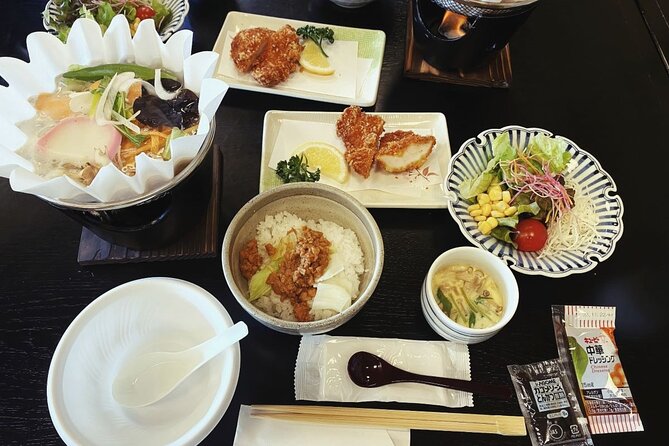
Lunch is included only if you select the +Lunch option. It’s described as a Japanese-style lunch.
If you choose the option without lunch, the tour recommends you prepare lunch before departure, since lunch places may not be available.
In real terms, your lunch experience can vary by venue and timing. Some departures have described it as decent, while others have flagged that it can be a bit tight on comfort or quality depending on the restaurant. If you have strong food preferences or sensitive stomach needs, plan to bring a snack you trust.
Diet notes from the tour information:
- Alcoholic beverages are not included.
- Gluten-free meals are not provided, though most allergy requests can be accommodated.
Pacing and “how long is enough?” for Fuji, Owakudani, and the ropeway
This tour is designed to hit a lot in one day. You’re looking at short, efficient visits: roughly 30 minutes at Mt. Fuji’s 5th Station and 30 minutes at Owakudani, plus set time blocks for the Ropeway and Lake Ashi cruise.
That structure is great if you want the highlights with minimal planning. It can feel rushed if you prefer slow travel—especially at the Fuji station where you might want more time to breathe and adjust to altitude-chill weather.
The tour also warns about schedule changes due to traffic or road conditions. Sometimes you’ll get alternate stops if the road to Fuji 5th Station can’t be passed, and in some cases sightseeing time can be shortened at certain locations.
My practical take: go in with a flexible mindset. Your “wins” will be the guided flow and the variety, not the guarantee of extra time at any single stop.
Coach day comfort: Wi-Fi helps, but bring the basics
The coach is air-conditioned and includes free Wi-Fi, which is a real benefit on a long drive from Tokyo. You can map the next stop, check weather updates, or just download offline music and settle in.
You should also plan for walking. The tour advises wearing shoes that make walking smoothly and easily possible. Even if each stop is short, you’ll still move around.
There’s also a Japanese law requirement to wear your seat belt on the bus. It sounds obvious, but it’s worth noting because it’s part of the tour’s rules.
Finally, restroom options on board are listed as not included. So if you need frequent breaks, you’ll rely on stops along the way.
Clear-sky mindset: what to do if Mt. Fuji is blocked by fog
The tour is blunt about weather: there’s a chance Mt. Fuji cannot be seen due to bad weather, and no refund is offered for claims based on weather or schedule changes.
So what should you do? Treat this as a day for Hakone’s geothermal scenery plus the “Fuji bonus.” If you get visibility, great. If not, you’ll still see Owakudani’s steam activity and ride the Ropeway and Lake Ashi cruise.
This approach will keep your day from feeling like a wasted bet. And if you’re traveling when conditions are unpredictable, pack accordingly: layers, a light rain layer, and sun protection for the moments the clouds lift.
Who this tour suits best
I’d book this tour if:
- You want a structured first-pass into Fuji and Hakone without transit planning.
- You like guided storytelling that helps you understand what you’re looking at in Owakudani.
- You want both a mountain viewpoint stop and a geothermal + lake sequence in one day.
- You’d rather do a guided day than figure out ropeway and cruise timing alone.
I’d think twice if:
- You hate long bus rides and prefer slower pacing.
- You’re very sensitive to food quality and comfort details at lunch.
- You’re relying on Mt. Fuji photos more than the overall Hakone experience, because visibility is not guaranteed.
Should you book this Mt. Fuji and Hakone day trip?
If your goal is a well-organized highlights day from Tokyo, this one is a strong buy. The value comes from bundling the coach with Wi-Fi, an English-speaking conductor, and the key Hakone experiences like Owakudani + Ropeway + Lake Ashi cruise. The optional lunch can simplify your day, especially if you don’t want to hunt for food near each stop.
Just go in knowing the trade-offs: it’s a long day, the stop times are short, and Mt. Fuji visibility depends on weather. If you can accept that, you’ll likely enjoy the variety and the convenience.
FAQ
Where is the meeting point, and what time does the tour start?
The meeting point is at the Robert Indiana Sculpture LOVE in Shinjuku (6-chōme-5-1 Nishishinjuku). The start time is 8:30 am.
How long is the tour, and when do you get back to Tokyo?
The duration is about 11 hours. The tour arrives back around 7:30 pm, though it can run later depending on traffic.
Is lunch included?
Lunch is included only if you select the +Lunch option. Without lunch, you’re advised to prepare lunch before the tour.
What happens if Mt. Fuji 5th Station is inaccessible due to weather or road conditions?
If access is blocked, you’ll visit the highest station possible. If conditions are worse, the tour may switch to alternatives like the Fujisan World Heritage Center or sightseeing at Fuji 1st to 4th Station.
What’s included for the Hakone part of the day?
The tour includes the Hakone Ropeway and the Lake Ashi pirate-themed cruise (admission included for both).
How does the bullet train return option work from Odawara?
If you choose the bullet train return, you’ll split off at Odawara and take the Shinkansen to Tokyo Station with non-reserved seats. The tour guide won’t board the Shinkansen, and you’ll receive instructions for how to get to your hotel area from Tokyo Station.