REVIEW · TOKYO
Tokyo Sumo Morning Practice: Viewing & Exclusive Interaction
Book on GetYourGuide →Operated by 合同会社 TASUKI · Bookable on GetYourGuide
Sumo starts before sunrise, and you feel it. This Tokyo sumo morning practice gets you into an active stable in Sumida for real sumo training and a close-up wrestler Q&A you usually only see behind closed doors. You begin at Narihira Park, get fast sumo context, then head in for the sounds and routines of professional practice.
I especially like the comfort-first approach: you can choose zabuton floor cushions in front or sit on stools if floor sitting isn’t your thing. And you don’t leave empty-handed, since you receive an official banzuke ranking sheet in a souvenir folder. One possible consideration: the morning is early, and stable rules are strict—no food, no flash, and no video or audio recording.
In This Review
- Key highlights you’ll actually notice
- A real sumo practice morning, not a watered-down show
- Narihira Park meeting point: where your etiquette briefing starts
- Inside the stable: close viewing with zabuton cushions or stools
- What you’re actually watching during sumo practice
- The exclusive interaction: Q&A and photos with active wrestlers
- The banzuke souvenir: why that piece matters
- Deep Q&A in the park: the time you don’t get on typical tours
- Timing: how the 3 hours fit your Tokyo morning
- Price check: is $93 a good value?
- Rules and practical boundaries (so you don’t get tripped up)
- Who should book this, and who might not love it
- Should you book Tokyo Sumo Morning Practice?
- FAQ
- Where is the meeting point for the tour?
- How long is the Tokyo sumo morning practice experience?
- What is the price per person?
- What’s included in the tour price?
- How do I get to the meeting point?
- Is there food during the experience?
- Can I take photos or record video?
- Are there any age limits?
- What happens to the schedule during the Grand Sumo Tournament?
- Is there a cancellation policy and can I pay later?
Key highlights you’ll actually notice
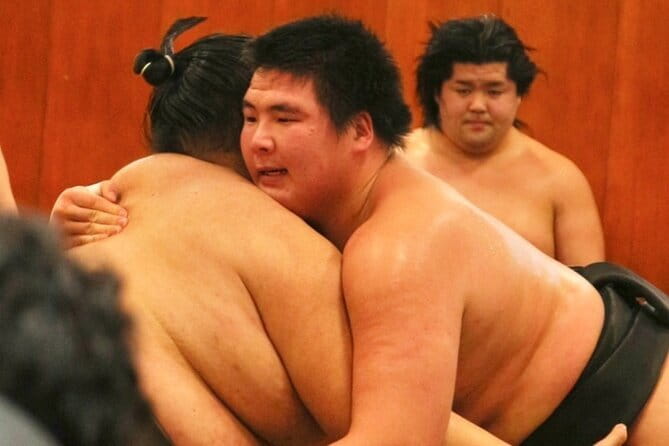
- Narihira Park prep + real stable time: learn manners and basics before you watch practice from very close range.
- Zabuton or stools: pick the seating that matches your comfort level without missing key action.
- Exclusive wrestler interaction: Q&A and commemorative photos with active wrestlers through your guide.
- Official banzuke souvenir: a tangible ranking-sheet memento in a designed folder.
- Deep Q&A at the park: ask anything sumo-related, plus get Tokyo tips from your guide.
A real sumo practice morning, not a watered-down show
Tokyo has plenty of tourist-friendly sumo content. This experience is built around something different: you’re watching training as it happens, not a staged performance. That matters, because sumo is as much about discipline and ritual as it is about impact.
What you’ll feel first is how serious the room is. Even before you see the wrestlers working, your guide sets expectations about quiet behavior and proper manners. That tone helps the stable feel like a workplace—because it is.
You can also read our reviews of more tours and experiences in Tokyo
Narihira Park meeting point: where your etiquette briefing starts
You’ll meet near the multipurpose restroom at Narihira Park. It’s a practical spot for sorting people quickly, and it sets you up for an orderly start before you move toward the stable.
Your guide checks your name and then hands out materials related to sumo. Expect a clear primer on history, rules, and etiquette—especially the small things that keep you from accidentally doing the wrong thing in a space that’s tradition-heavy and rule-driven.
If English support matters to you, this is one of the strongest points. The guide is English-speaking (and your experience may run bilingual as needed). Reviews repeatedly mention guides like Haru, Sana, Momo, Ryoko, and Sarah as helpful and professional, which lines up with how important this etiquette step is.
Inside the stable: close viewing with zabuton cushions or stools
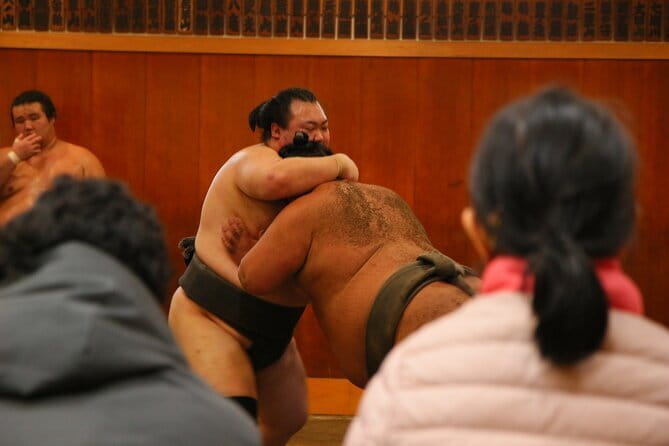
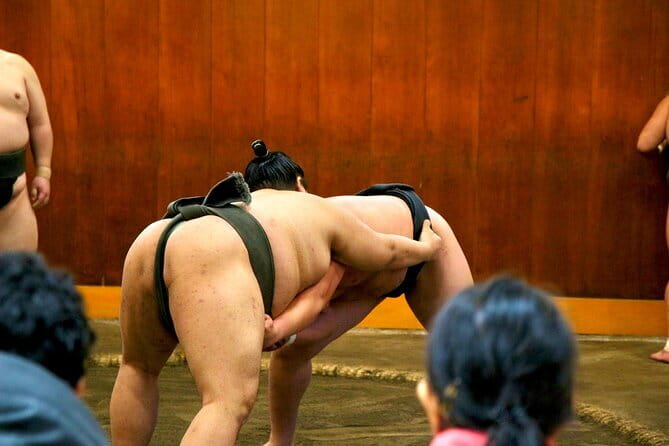
Once you walk into the active stable area, the setting changes fast. This isn’t a distant grandstand. It’s close enough that you notice the physicality and the intensity of warmups and training.
You get flexible seating, which I think is a big deal for comfort and attention. You can sit on traditional floor cushions (zabuton) in the front row for the closest, most grounded view. If you’d rather not sit on the floor, stools are available at the back.
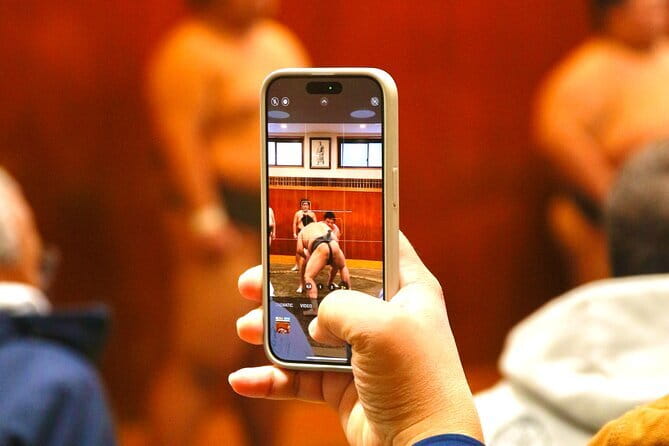
Also keep your expectations realistic about photography. Photography is allowed, but you must stay quiet during practice. Flash photography is not allowed, and you’ll need to follow seating and positioning rules so you don’t block anyone’s view.
What you’re actually watching during sumo practice
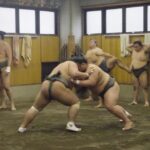
Sumo practice is not just “someone throws someone else.” It’s repetitive drilling, warmups, and technical work that builds timing and strength. You’ll see wrestlers doing structured training blocks, and you’ll get a feel for how their bodies move together (and against each other).
Your guide’s opening explanation helps you read what you’re seeing. When you know a few basics—like why certain routines happen before sparring—you stop treating it like random collisions and start recognizing it as skill-building.
If you’re the type who likes sports with rules and rituals, this is the perfect tone. The experience keeps pulling you toward understanding the culture behind the sport.
The exclusive interaction: Q&A and photos with active wrestlers
This is the part many people come for, and it’s handled in a thoughtful way: not chaos, but structured interaction through your guide.
After the practice, you’ll have time to talk directly with the wrestlers and take commemorative photos together. Your guide helps translate and also nudges the conversation toward what’s practical to ask—daily training life, mindset, and how they approach their routines.
A few reviews highlight that wrestlers are generous with their answers. You’ll also notice a pattern: the guide isn’t just passing along facts. They’re creating a bridge so your questions make sense in context. That’s why names like Haru, Momo, Sana, and Ryoko show up in praise—guides are doing real work here.
In some sessions, you might also see brief audience participation moments—like trying in the ring or getting a turn for sparring. Don’t assume it’s guaranteed every time, but it has appeared in real past experiences, and it adds a memorable “now I get it” layer to the morning.






The banzuke souvenir: why that piece matters
After training, you return to Narihira Park for a special closing session. Here’s where you get a souvenir that’s more than just a photo prop: an official banzuke (sumo ranking sheet), placed in a specially designed souvenir folder.
Why this matters for value: a printed ranking sheet connects you to the sport’s official world. It’s not random branding, and it’s a clear reminder that you spent time around the real structure and tradition of sumo—rules, ranks, and all the formality that comes with them.
If you like collecting things that feel tied to what you actually did, the banzuke hits the sweet spot.
Deep Q&A in the park: the time you don’t get on typical tours
Instead of rushing you into a meal plan, the schedule includes additional time for questions. Around the park, you’ll do a deep Q&A session with your guide.
This isn’t a quick “any questions” moment. It’s more like you get a chance to clarify anything you noticed during practice and ask follow-ups about rituals and traditions. Guides also use this time to offer Tokyo tips, so the tour doesn’t end at the stable door.
In reviews, people mention leaving with a deeper appreciation for how intense training is and how much daily routine shapes an athlete’s life. That kind of takeaway is exactly what the deep Q&A is for.
Timing: how the 3 hours fit your Tokyo morning
The tour runs about 3 hours and wraps around 11:00 AM. That’s a smart design for Tokyo because you’re not stuck in a half-day you can’t recover. When you’re done, you’re in position to keep exploring—many people naturally connect this with areas like Skytree or Asakusa.
During the Grand Sumo Tournament (roughly two weeks in Jan, May, and Sept), there’s a schedule adjustment. Practice starts about 30 minutes earlier, and viewing time is about 1 hour. If your trip overlaps those dates, plan to arrive ready for that early shift so you don’t feel flustered.
Price check: is $93 a good value?
At $93 per person, you’re paying for access, guidance, and the interaction piece—not just entry into a location. For context, sumo stable visits can be hard to access in ways that let you ask questions and get close viewing.
Here’s how the value adds up:
- You’re paying for the stable visit fee plus an English-speaking guide to translate etiquette and training context.
- You get flexible seating, which reduces the “sore legs tax” and keeps the experience comfortable enough to enjoy.
- You receive an official banzuke ranking sheet in a souvenir folder.
- You get structured wrestler Q&A and commemorative photos, which is the rare part that many similar “watch-only” experiences don’t offer.
If you care about authenticity and want your morning to feel purposeful—not like another sightseeing checklist—this price is easier to justify. If you only want a quick look and don’t care about explanations or interaction, you might find it pricier than a simple observation stop. But for people who like sports culture, it’s a strong use of money.
Rules and practical boundaries (so you don’t get tripped up)
The stable rules are part of what makes the experience respectful and safe. Here are the non-negotiables from the tour info:
- No food
- No flash photography
- No alcohol or drugs
- No video recording
- No audio recording
Photography is allowed, but you still need to be quiet during practice. Keep your phone on silent. If you’re taking pictures, watch your timing so you’re not disrupting anyone seated nearby.
If you’re coming from somewhere with breakfast plans in your head, mentally reset. This is a training-focused morning, and the tour uses the time for Q&A instead of turning it into a food stop.
Who should book this, and who might not love it
This works best for adults and older kids who enjoy structure, rules, and cultural context around sports. It’s also ideal if you want to ask questions directly—because the Q&A with active wrestlers is the real special sauce.
It’s not suitable for children under 6 years old, so plan accordingly. And if you have mobility issues with floor seating, choose the stools option in advance when you arrive—since that seating choice is built into the experience.
Should you book Tokyo Sumo Morning Practice?
Book it if you want a true sumo stable morning: close viewing, real training energy, and an organized chance to talk with wrestlers. The banzuke souvenir also gives you a concrete, meaningful memory, not just a photo.
I’d skip it if you want a casual, late-morning outing or if strict rules (quiet time, no flash, no recordings, no food) feel like a hassle. This isn’t that kind of experience.
If you fit the first group, this is one of the most memorable sports-cultural activities you can do in Tokyo. And with an 11:00 AM finish, you still get a strong second half of the day to explore Asakusa or head toward Skytree—without sacrificing what makes this tour different.
FAQ
Where is the meeting point for the tour?
Please gather near the multipurpose restroom at Narihira Park.
How long is the Tokyo sumo morning practice experience?
The duration is 3 hours.
What is the price per person?
The price is $93 per person.
What’s included in the tour price?
Included items are the sumo stable visit fee, guidance by an English-speaking guide, and a special souvenir.
How do I get to the meeting point?
Transportation to the meeting point is not included, so you’ll need to arrange your own way to Narihira Park.
Is there food during the experience?
Food is not allowed during the visit, and the schedule includes deep Q&A time at the park instead of a meal.
Can I take photos or record video?
Photography is allowed, but flash photography is not allowed. Video recording is not allowed, and audio recording is also not allowed.
Are there any age limits?
Children under 6 years old are not suitable for this activity.
What happens to the schedule during the Grand Sumo Tournament?
During the Grand Sumo Tournament (about two weeks in Jan, May, and Sept), practice starts about 30 minutes earlier and viewing time is about 1 hour.
Is there a cancellation policy and can I pay later?
You can cancel up to 24 hours in advance for a full refund. You can also reserve now & pay later.