REVIEW · TOKYO
Tokyo Sumo Morning Practice: Viewing & Exclusive Interaction
Book on Viator →Operated by Escape Tokyo for Serenity:Private Onsen, Nature, Local Cuisine · Bookable on Viator
Morning sumo feels more real.
This tour gets you up close to a working stable, not a staged show. I like that the morning session leaves time for Tokyo sightseeing right after, and that you also get a small-group feel capped at 45 people. One thing to plan for: traditional rules mean some ring access is limited during the hands-on moments.
You’ll also get more than just watching. The experience is built around a guide-led explanation of rituals and training before you watch, plus an interaction window with exclusive Q&A and photos with the wrestlers. And you leave with an official sumo souvenir set, including a banzuke in a special folder.
There is one drawback to take seriously. If you’re hoping to step into the ring, long-standing tradition limits that option (and guests have specifically noted this constraint for women).
In This Review
- Key Things That Make This Sumo Morning Worth It
- Morning Practice Beats Match Day: What You’re Really Watching
- Narihira Park Meet-Up: The Quick Start That Prevents Stress
- The Orientation Before Practice: How the Rituals Make Sense
- Watching Morning Practice Up Close: The Part Everyone Talks About
- Exclusive Q&A and Photos: Real Contact, Real Rules
- The Closing Session With the Banzuke Souvenir Folder
- Optional Japanese Brunch After Sumo: A Good Use of Your Morning
- Price and Value: Is $95.77 a Fair Deal?
- Logistics That Matter: Transport, Group Size, and Timing
- Who This Tour Suits Best (and Who Should Think Twice)
- Should You Book This Tokyo Sumo Morning Practice Tour?
- FAQ
- How long is the Tokyo sumo morning practice tour?
- How much does the experience cost?
- What’s included in the tour?
- Where do we meet for the tour?
- Is there an optional brunch after the sumo practice?
- Can I take photos and ask questions with the wrestlers?
- What is the cancellation policy?
Key Things That Make This Sumo Morning Worth It
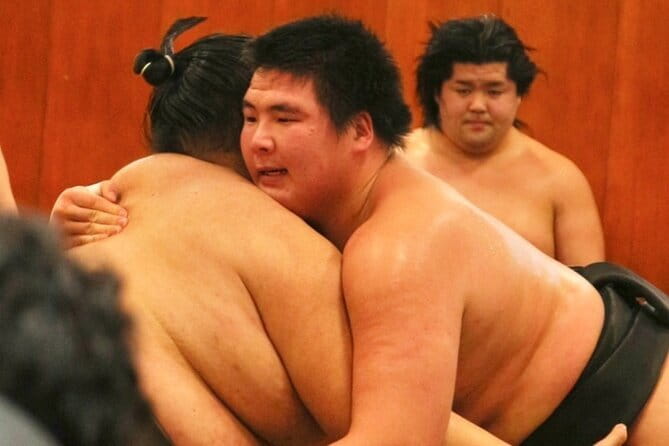
- Up-close morning practice: you’re meters away from real training impacts.
- Pre-practice orientation: you get context on rituals and how sumo life works.
- Wrestler interaction time: Q&A plus a photo session after practice.
- Official banzuke souvenir set: you’re not leaving empty-handed.
- Time for the rest of Tokyo: the schedule is short enough to keep sightseeing plans intact.
- Optional Japanese brunch: a smooth way to continue the morning without scrambling.
Morning Practice Beats Match Day: What You’re Really Watching
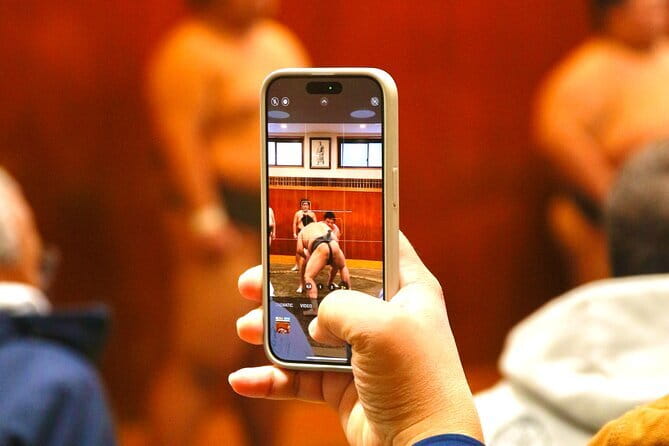
A sumo tournament is exciting. But tournament days can feel like a highlight reel.
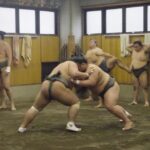
Morning practice is the opposite. It’s training. It’s repetition. It’s discipline you can see in motion, not just in big match moments. You watch wrestlers go through their routines and practice bouts in a working setting. That matters because you start to understand what “getting strong” means in sumo—power, timing, balance, and controlled aggression.
I also like the energy of the timing. This is a morning experience in Tokyo, which means you get the good part of the day: less crowd stress, and more daylight to keep exploring afterward.
And you’ll usually be surrounded by people who are genuinely into sumo, not just passing by. That’s why the guide’s explanations land. You hear why certain rituals come first, why training is structured, and why the stable life has its own rules.
You can also read our reviews of more tours and experiences in Tokyo
Narihira Park Meet-Up: The Quick Start That Prevents Stress
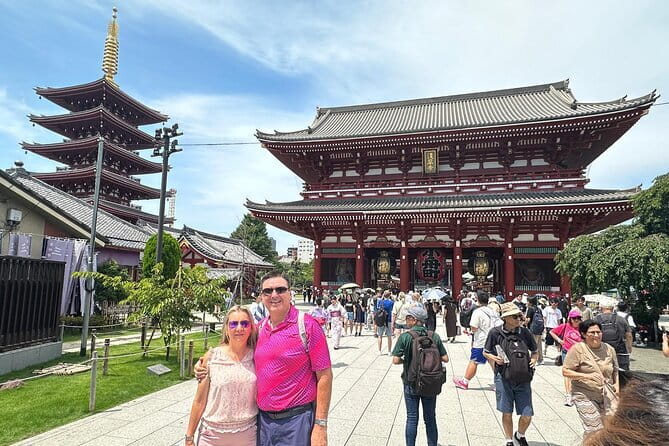
Your tour starts at Narihira Park in Sumida City, Tokyo. The meeting point is listed as 2-chōme-3-番 Narihira, and it’s described as being near the multipurpose restroom. That detail sounds small, but it’s a big deal when you’re trying to arrive on time in a big city.
Plan to get there early enough to find the restroom area and get your bearings fast. This is the kind of tour where arriving late can make you miss the orientation part, and that orientation is a core part of the value.
There’s also a practical perk: the tour has a mobile ticket, so you don’t have to hunt through printouts or worry about paper. When you’re traveling light, that’s helpful.
Finally, with a maximum of 45 travelers, you should still expect a smooth pace, but the early meeting still requires attention. I’d treat this like a timed appointment, not a casual meet.
The Orientation Before Practice: How the Rituals Make Sense
Before you head into the stable area for viewing, your guide sets the stage. Expect a briefing that covers hidden history, rituals, and what you’re about to observe. The goal isn’t to overwhelm you. It’s to give you a set of lenses so you don’t just see athletes training—you understand the system around them.
This is where the guide’s style really shows up. In past groups, guides such as Sarah, Haru, Peach, Moana, Momo, and Taka have been singled out for being informative and for helping visitors understand stable behavior and sumo rules.
You’ll also learn how training works on that morning schedule. And because you’ll already know what to look for, the practice itself hits harder. You notice the discipline. You recognize patterns. You understand why certain steps matter.
One more thing: sumo culture has etiquette. Even if you don’t memorize every rule, the orientation helps you avoid awkward moments inside a traditional setting.
Watching Morning Practice Up Close: The Part Everyone Talks About
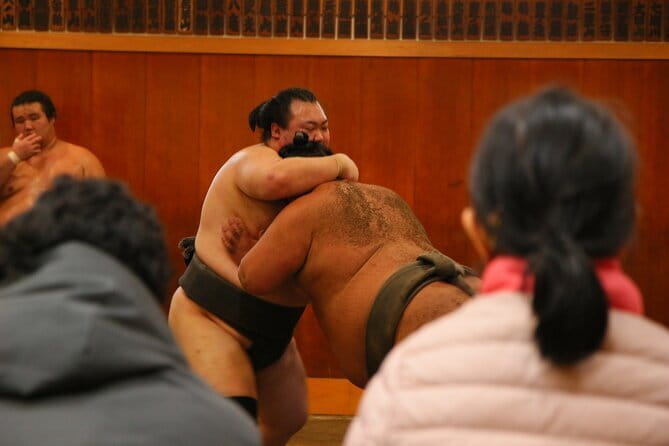
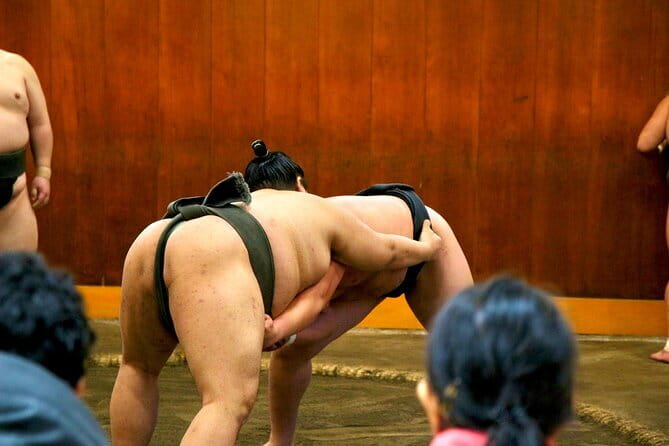
The main event is the morning practice viewing. You spend about 1 hour 30 minutes watching training and practice bouts up close.
This is the portion that earns the highest praise. Guests describe it as not staged. They mention practice matches while training is underway, and they emphasize how close they are—close enough to feel how intense it is. Some people talk about hearing the impact and watching the wrestlers’ control, not just their strength.
What you learn fast is that sumo isn’t just big bodies colliding. It’s timing and technique repeated until it’s automatic. Morning practice shows you the raw work behind what you see later in tournaments.
You should also be prepared for a quiet, respectful viewing setup. This isn’t a “walk around and chat” attraction. One family-focused comment suggests it may not be ideal for kids who can’t sit quietly for up to two hours (depending on how the practice runs that day). If your group includes young kids, bring patience—or choose your outing expectations carefully.
Exclusive Q&A and Photos: Real Contact, Real Rules
After watching practice, you move into interaction time: exclusive Q&A and a photo session with the wrestlers. This is one of the most-loved parts because it turns a spectator experience into a conversation.
In several accounts, guests describe the wrestlers as friendly and open during the Q&A. People also mention that they were able to ask about training and experiences, and they appreciated how the guide handled translation and kept questions flowing.
You also get photos together. That’s not a minor perk. In Japan, it’s often the difference between collecting memories and building a real story. Here, the photos come at the end of a morning you already understand, so they feel earned.
One practical consideration: photo and Q&A time can be structured. Don’t assume you’ll have unlimited questions. Think of it as a guided exchange, not a private meet-and-greet. Also, expect the group to move as a unit, so listen for instructions and keep things moving smoothly.




The Closing Session With the Banzuke Souvenir Folder
The tour wraps back at the park with a closing session. This is where you receive an official banzuke (ranking sheet) presented in a specially designed souvenir folder.
It’s a smart finish. The morning has context and interaction. The banzuke gives you something tangible that ties the experience back to how sumo is actually organized. Even if you don’t follow every ranking detail yet, having the physical artifact helps you remember the morning’s training focus.
Some guests also mention extra Q&A during the closing. That can be a great time to ask the questions you didn’t think of earlier—especially if your guide covered rituals before practice and you want to connect that to what you saw.
Optional Japanese Brunch After Sumo: A Good Use of Your Morning
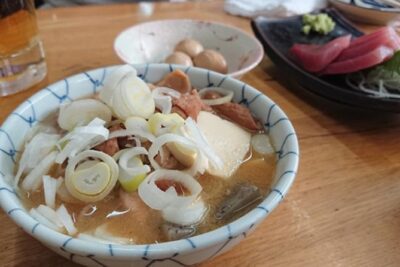
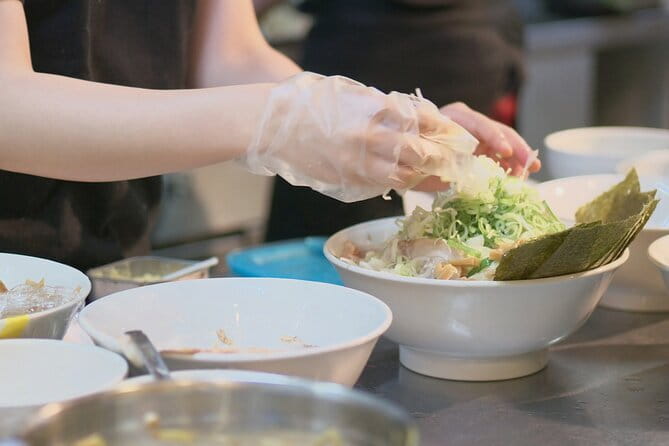
The tour includes an optional Japanese brunch after the experience. The idea is simple: you finish sumo on time, then you eat without having to plan a full second activity.
Brunch works well here because your energy is still “travel morning” energy, not “late lunch” energy. And if you’re not sure where to go nearby, having a guided meal option reduces that decision fatigue.
One review note to take seriously: brunch can run more like lunch in the European sense. You might find yourself paying around 1,000 to 2,000 yen depending on what you order. If you go hungry, plan for the higher end. If you’re a light eater, you’ll likely do fine closer to the lower end.
Price and Value: Is $95.77 a Fair Deal?
At $95.77 per person, this is not a bargain. So the real question isn’t whether you’ll pay it. It’s whether the experience justifies the cost.
Here’s why many people feel it does:
- You pay for an English-speaking guide and the sumo morning practice viewing fee.
- You get a structured explanation before you watch.
- You get interaction time with wrestlers, including Q&A and photos.
- You receive an official sumo souvenir set (banzuke + special folder).
What you’re buying is access plus understanding. That combination is rarer than it sounds. Many sumo experiences stop at a viewing, or they stay too far back to really feel the intensity. This one is built around getting closer and learning the why.
Now the honest part. A couple of comments call out value concerns. One says the experience ran shorter than advertised. Another suggests the guide’s role felt more like translating questions than delivering additional explanation. Those aren’t the majority, but they are worth noticing.
My advice if you choose this: go in with realistic expectations. It’s a working stable schedule, not a scripted show. If it turns out to be shorter than you hoped, you’ll still have the close practice viewing and the interaction time. If you’re paying for a long lecture and constant presentation, you might feel impatient.
Logistics That Matter: Transport, Group Size, and Timing
This experience runs about 2 hours 30 minutes to 3 hours. That’s a strong length for a morning activity because it doesn’t choke your entire day.
Also, it’s a near public transportation kind of plan, which helps if you don’t want to depend on taxis. One practical tip from previous guests: if you’re starting from areas like Shinjuku and your slot is early (some mention an 8am start), you may want to use Uber or similar to avoid late-arrival stress.
Double-check the meeting point address and how it’s presented. A guest noted that a ticket location was incorrect in their materials, causing confusion. The tour itself is fixed at Narihira Park near the multipurpose restroom, so treat that as your anchor.
Group size can affect your experience. The tour cap is 45, but some groups have reported intimate situations with a small number of people. When the group is smaller, the Q&A often feels more personal.
Who This Tour Suits Best (and Who Should Think Twice)
This is an excellent choice if you:
- want a real training look at sumo rather than just a tournament snapshot
- like traditional ritual context and not only sports action
- value structured Q&A and photos with athletes
- enjoy early mornings and want time to see more of Tokyo afterward
It may be a harder match if you:
- need hands-on ring access to be guaranteed (tradition limits who can step into the ring)
- have very young kids who can’t sit quietly for extended viewing time
- are sensitive to experiences that feel shorter than stated (a small number of comments raised this)
If you’re a sumo-curious traveler, this tour is one of the best ways to convert interest into understanding.
Should You Book This Tokyo Sumo Morning Practice Tour?
Yes—with your eyes open.
Book it if you want the best “behind the scenes” feel you can get in Tokyo without waiting for tournament dates. The biggest payoff is the close morning practice viewing plus the Q&A and photo time, capped with an official banzuke souvenir you can take home and actually use as a memory anchor.
Skip or reconsider if ring access is your main goal, especially if you’re hoping to step into the ring yourself. Also reconsider if you dislike early mornings or you know your group struggles with quiet museum-style time.
If you’re flexible, respectful, and curious, this tour delivers exactly what it promises: a working sumo morning, explained clearly, experienced up close, and finished with a satisfying cultural souvenir.
FAQ
How long is the Tokyo sumo morning practice tour?
The tour runs about 2 hours 30 minutes to 3 hours.
How much does the experience cost?
It’s $95.77 per person.
What’s included in the tour?
You get an English-speaking guide, sumo morning practice viewing, and an official sumo souvenir set that includes a banzuke and an original folder.
Where do we meet for the tour?
You meet at Narihira Park in Sumida City, Tokyo (near the multipurpose restroom). The meeting point address is 2-chōme-3-番 Narihira, Sumida City, Tokyo 130-0002, Japan.
Is there an optional brunch after the sumo practice?
Yes. There is an optional Japanese brunch after your experience.
Can I take photos and ask questions with the wrestlers?
Yes. The tour includes an interaction session with exclusive Q&A and a photo session with the wrestlers.
What is the cancellation policy?
Free cancellation is available up to 24 hours in advance for a full refund.