REVIEW · TOKYO
Tokyo: Open Top Sightseeing Bus with Audio Guide
Book on Viator →Operated by VIP Japan Tours · Bookable on Viator
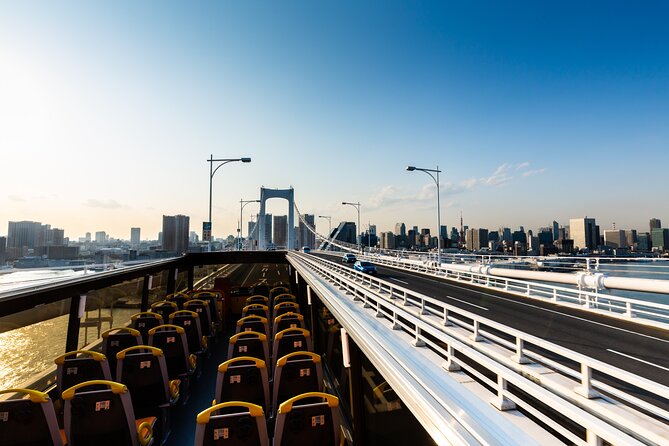
That first roll-out on an open-top bus hits fast. This ride is a practical way to see major Tokyo sights without fighting transit changes, and the GPS-enabled audio guide helps you track what you’re passing. I also like how the route mixes sea views and downtown icons, and that the not hop-on, hop-off setup keeps the schedule straightforward. One thing to consider up front: you stay on the bus the whole time, so you’re mostly getting roadside views rather than timed stops.
The meeting area feels easy to manage, and the staff support plus multilingual audio make it low-stress if you’re jet-lagged. With a small max group size (40), you get a calmer ride than the big-city herd. If rain shows up, the open-top part may be closed, but the tour still runs.
In This Review
- Key things I’d zero in on
- First ride on the open-top bus: what 70 minutes really delivers
- GPS audio in multiple languages: how the guide experience works
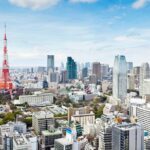
- Bay Course highlights: Rainbow Bridge, Tokyo Tower, and Odaiba views
- City Course highlights: Imperial Palace area, Midtown, Roppongi, and Ginza
- Entering the right mindset: what you can photograph (and what you can’t)
- Meeting point at Tokyo VIP Lounge (Yaesu): make waiting part of the plan
- Price and logistics: why $11.71 can make sense in Tokyo
- Practical tips for a smoother ride
- Who this tour fits best (and who should skip it)
- Should you book this open-top bus tour?
- FAQ
- How long is the Tokyo open-top bus tour?
- Is this a hop-on, hop-off bus tour?
- What languages are available for the audio guide?
- Does the audio guide work with GPS?
- Do I need headphones, and what plug type is supported?
- Is there a live guide on the bus?
- What happens if it rains?
- What luggage is allowed?
Key things I’d zero in on
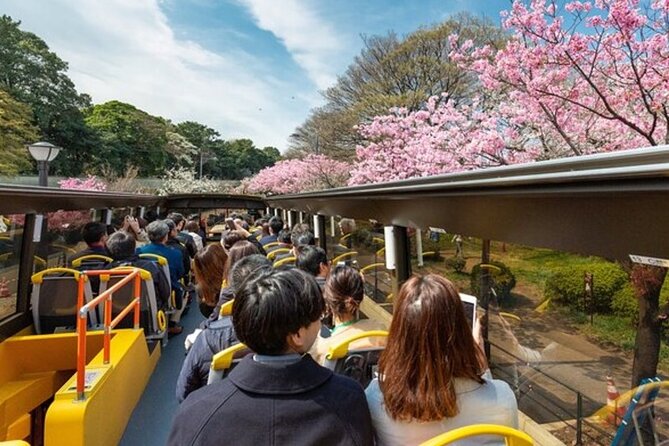
- GPS-triggered audio that follows the bus location and road conditions
- Two route styles: a Bay route with Rainbow Bridge and Odaiba, plus a City route focused on core districts
- Great value at $11.71 for a ~70-minute landmark loop
- Practical rules (no food, no selfie sticks, no umbrellas) that keep the bus pleasant
- Headphones matter: the jack supports 3.5mm mini plugs
First ride on the open-top bus: what 70 minutes really delivers
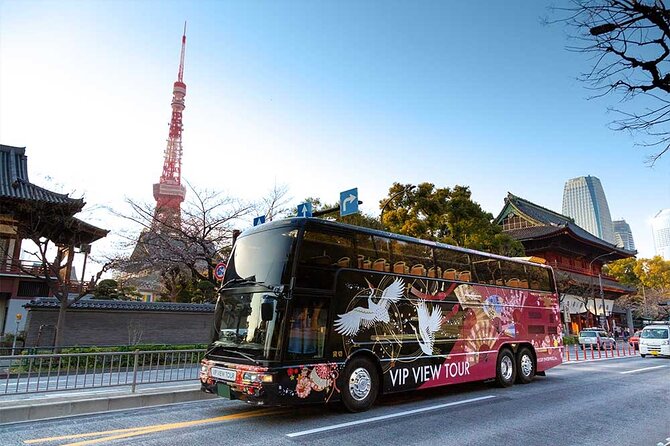
Tokyo can feel like a video game until you learn the shape of the city. This open-top bus format is one of the quickest ways to get that mental map. The trip runs about 1 hour 10 minutes, with the route designed to show big-name landmarks in a compact loop.
What I like most is the rhythm. You don’t have to plan transfers or decide which train line goes where. You just settle in, and the audio keeps talking as the bus moves through different areas. It’s a good choice on a first day, after a long flight, or anytime you want to see a lot without working up a sweat.
The main trade-off is also simple: this is not hop-on, hop-off. The bus passes famous sights, but you won’t step out to explore during the ride. If your travel style is “I want to get photos and then immediately walk around,” you’ll likely want another option later. Think of this as your orientation pass, not your whole sightseeing day.
You can also read our reviews of more guided tours in Tokyo
GPS audio in multiple languages: how the guide experience works
The audio guide is a big part of the value. It’s available in Japanese, English, Chinese, French, Korean, Vietnamese, and Thai, and the system uses GPS tracking so the content matches where the bus is on the route. The guide is designed to adjust to changes in road conditions like traffic, so the narration stays aligned with what you’re seeing outside.
That matters more than it sounds. Tokyo has constant detours, and a classic phone-audio tour can get you stuck hearing the wrong thing at the wrong time. Here, the system is built around location, so you spend less time wondering what you’re looking at.
You do need to plan for audio output:
- The bus audio uses a 3.5mm mini-plug (so your standard wired headphone should usually work)
- Optional earphones are sold for 100 Yen
- A live guide is not included, so you’re relying on the recorded audio plus on-site staff for questions
One practical tip: if you’re picky about sound quality, bring your own headphones with that 3.5mm plug. It’s the easiest way to avoid hunting for compatible gear on the day.
Bay Course highlights: Rainbow Bridge, Tokyo Tower, and Odaiba views
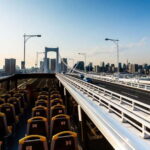
The Bay Course is the route I’d pick if you want Tokyo’s “ocean-meets-city” feeling. You’ll ride through areas that mix sea views with downtown landmarks, and the open-top setup helps you actually see the skyline instead of only catching it through windows.
The Bay Course moves through a classic set of photo magnets:
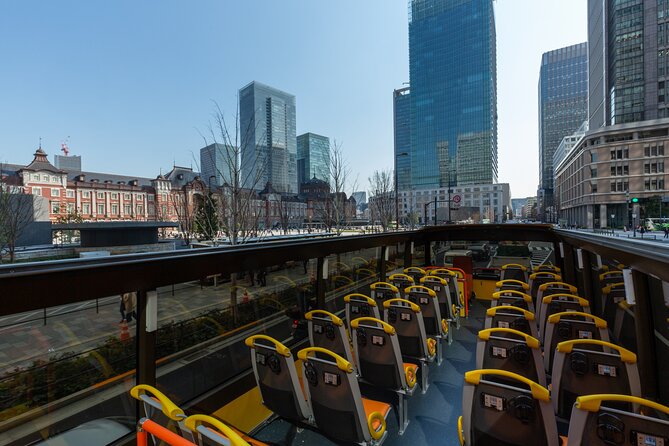
- Tokyo Station Red Brick Building → a strong “Tokyo origin story” stop on the route
- Marunouchi → the central business core you’ll recognize from countless photos
- Zojoji Temple → a standout cultural anchor while you’re still moving fast
- Tokyo Tower → one of the easiest landmarks to spot, especially from the streets near the route
- Shibaura / Rainbow Bridge (1st Level) → the “big crossing” moment
- Fuji TV Building → a pop-culture landmark that reads instantly from the road
- Statue of Liberty → the famous replica area near Odaiba
- Odaiba Seaside Park → sea-forward scenery and a different Tokyo mood
- Rainbow Bridge (2nd Level) → you see more of the bridge angles
- Shiodome → modern office-area views
- Ginza → the famous shopping/dining district approach at city pace
What makes this route feel rewarding is the contrast. You get religious-culture visuals like Zojoji, skyline icons like Tokyo Tower, and then the whole Bay/Odaiba environment. Even if you can’t step off the bus, the succession of views gives you a sense of how Tokyo’s districts connect.
If you’re traveling with kids, this Bay Course often works well because the landmarks are obvious from the street. Adults tend to like it for orientation too: after this, your later train rides to Odaiba or the Rainbow Bridge area feel less random.
City Course highlights: Imperial Palace area, Midtown, Roppongi, and Ginza
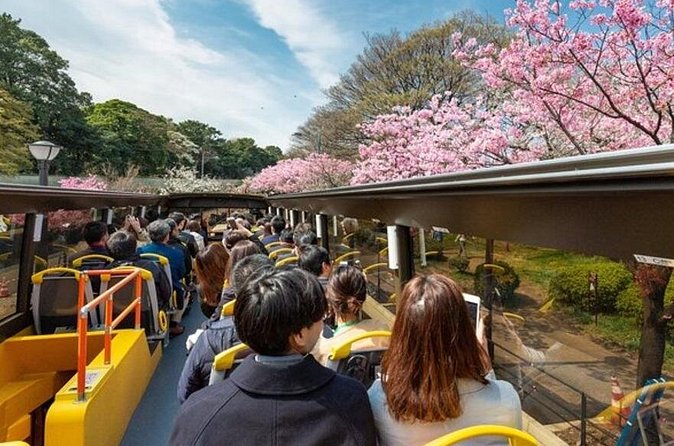
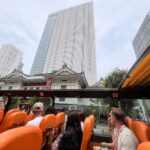
The City Course focuses more on Tokyo’s core districts and the “downtown skyline” vibe. You’ll cruise past major areas such as:
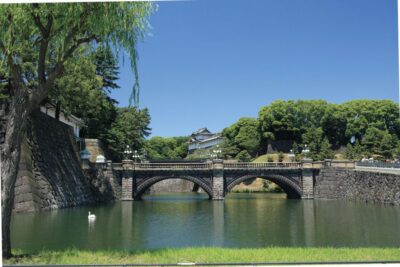
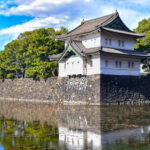
- the Imperial Palace area
- Tokyo Midtown
- Roppongi
- Tokyo Tower again (seen from a different angle and timing)
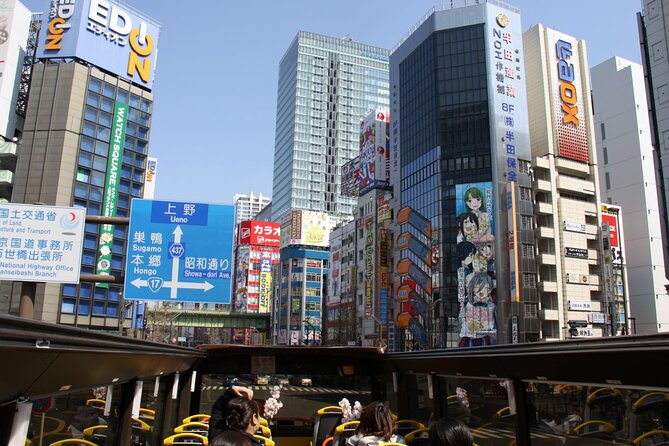
- Ginza
This is the route I’d choose if you already know you’ll spend time shopping, dining, or exploring neighborhoods like Ginza and Roppongi later. The City Course is basically your preview reel for central Tokyo.
Because this course is built around passing key hubs, it’s less about sea views and more about city form: wide streets, tall building clusters, and the way neighborhoods shift block to block. If you’ve only got limited time and want the “greatest hits,” it’s a clean way to get your bearings fast.
One thing to watch: if your audio is coming through but you can’t match it visually, that’s normal in a moving bus situation. Tokyo streets are dense, and some landmarks are easier to spot than others. In those moments, I’d treat the bus as background context, then come back later for a targeted walk.
Entering the right mindset: what you can photograph (and what you can’t)

This tour is all about seeing from the road. You’re sitting on an open-top bus, so your photos are your main output. Still, plan for reality:
- Some views are partly blocked depending on where you’re seated and the street angle.
- Some landmarks can be hard to identify instantly while moving.
- You’re not getting staged time outside to capture perfect photos.
The good news: Tokyo’s landmarks are famous for a reason. Even when you can’t frame everything perfectly, you usually recognize major shapes—Tokyo Tower, the Rainbow Bridge profile, big shopping districts.
For a better photo experience, do this in your own head before you start:
- Pick a priority list of 3 to 5 sights you care about most.
- Assume you’ll get “passing shots,” not “stand-and-explore” shots.
- Save your deep-dive time for later when you can slow down.
You can also read our reviews of more tours and experiences in Tokyo


Meeting point at Tokyo VIP Lounge (Yaesu): make waiting part of the plan

The tour starts at Tokyo VIP Lounge, located in Chuo City, Yaesu: 1-chōme 5 2・3階 (Tokyo 103-0028). It’s a paid facility, but bus customers can use the facilities for free starting 40 minutes before departure. If you arrive earlier, you may need to pay the facility fee.
This matters because you might get tempted to arrive way too early. In a busy Tokyo schedule, arriving early can turn into wasted time. I’d aim to get there with a buffer inside that 40-minute window so you can settle in without stress.
Also note the ride rules that keep things comfortable. You can’t smoke, and you can’t eat on the vehicle. Selfie sticks are not allowed, and umbrellas are also not allowed. If it’s raining, that’s important: you’ll want a plan for getting to the bus and keeping dry without using an umbrella on board.
One detail that makes the meeting point experience more pleasant: people have mentioned it feels comfortable while you wait, including drinks during the pre-departure time. That kind of small comfort can matter when you’re arriving right off a plane.
Price and logistics: why $11.71 can make sense in Tokyo
At $11.71 per person, this is priced for people who want maximum seeing power per yen/dollar. For that money, you’re not buying a private car or a walking tour. You’re buying:
- a structured loop of key districts
- an audio guide with GPS support
- open-top sightseeing (weather permitting)
- staff assistance at the start
The biggest “value math” point is time. When your day is tight, spending 70 minutes on a landmark circuit can be worth more than spending two hours stitching together train rides, then walking without context.
The biggest “cost” is also time-based. Because it’s not hop-on, hop-off, you don’t get to turn a stop into a neighborhood visit. If you’re expecting a flexible bus hop-around, you may end up feeling under-served.
So I’d match this tour to your travel stage:
- Great for first-day orientation
- Solid after a flight
- Good when you want a big-picture day plan
- Not ideal if you want to disembark repeatedly
Practical tips for a smoother ride
If you want to make this bus day feel effortless, these are the details that help most:
- Bring 3.5mm mini-plug headphones (or plan for the optional 100 Yen earphones)
- Keep valuables with you because luggage goes to the trunk and is not accessible between stops
- Expect rain-or-shine touring; if it rains, the open top may be closed
- Pack like you’re bringing one manageable bag: you’re allowed one piece of luggage per person, with trunk size max 155cm total (height + width + depth)
The luggage rule is a real limiter in Tokyo sightseeing. If your bag is bulky, you might struggle to fit it comfortably. Also remember: trunk items aren’t reachable mid-route, so don’t store your phone charger or snacks there.
Finally, keep an eye on your seat timing at departure. The tour departs promptly, and late arrivals (or arriving at the wrong place) don’t get rolled forward.
Who this tour fits best (and who should skip it)
This open-top bus tour fits best if you want a simple, guided loop through Tokyo’s landmarks with multilingual GPS audio. It’s a strong “get your bearings” tool for:
- first-timers
- people short on time
- visitors who don’t want to wrestle with transit planning
- anyone who enjoys landmark viewing from the street
It’s less ideal if your travel style is neighborhood exploring during the ride. Since it’s not hop-on, hop-off, you’re doing the sightseeing by watching out the window and listening for context.
If you’re a detail hunter and love learning on foot, you might use this tour as your first layer of context, then plan your walking day around whatever stood out most: Ginza, Roppongi, Odaiba, or the Rainbow Bridge area.
Should you book this open-top bus tour?
Yes—if you want an easy first look at Tokyo’s big icons in about 70 minutes, with GPS-based audio and minimal effort. I’d especially recommend it when you’re arriving from out of town, because the audio helps you connect what you see with what it means.
If you’re hoping for flexible stop-and-go sightseeing during the ride, you should think twice. This one stays in motion and keeps you on board, so you’ll do your real exploring after you’ve built your mental map.
FAQ
How long is the Tokyo open-top bus tour?
It’s approximately 1 hour 10 minutes.
Is this a hop-on, hop-off bus tour?
No. This is not a hop-on, hop-off tour, and the bus does not allow getting off at the attractions during the ride.
What languages are available for the audio guide?
The audio guide system is available in Japanese, English, Chinese, French, Korean, Vietnamese, and Thai.
Does the audio guide work with GPS?
Yes. The system uses GPS to track the bus location and provide sightseeing information based on where the bus is.
Do I need headphones, and what plug type is supported?
The earphone jack supports 3.5mm mini plugs. Optional earphones are available for 100 Yen.
Is there a live guide on the bus?
No. Live guide is not included; you’ll use the audio guide plus staff assistance for help.
What happens if it rains?
The tour operates rain or shine, but the open top may be closed if it rains. Cancellations happen only in extreme weather conditions such as typhoons.
What luggage is allowed?
You can bring one piece of luggage per person. The maximum size for trunk storage should not exceed a total of 155cm (combined height, width, and depth). Items stored in the trunk can’t be accessed between stops.