REVIEW · TOKYO
Tokyo: Sumo Keiko Training Tour with Audio Guide & Photo
Book on GetYourGuide →Operated by NexSpark Co., Ltd. · Bookable on GetYourGuide
Sumo training is louder than you expect. This Nakamura-beya Sumo Stable visit pairs a live keiko practice with a 10-language audio guide, so you’re not just watching—you’re understanding. I also love that the venue has aircon plus free Wi‑Fi and charging, which makes the whole experience feel smoother. The main drawback to plan around: photography is allowed, but no flash, and you also can’t wear sunglasses or go barefoot.
You’ll start right by JR Ryogoku Station (about a 2-minute walk) in the same Ryogoku area as the National Sumo Arena. Afterward, you can keep walking to the Sumo Museum and even toward the Tokyo waterfront without needing extra transit. One more thing to consider is sitting: you’ll be on cushions for about 1.5 hours unless you qualify for a limited number of bench chairs.
If you like hands-on cultural experiences, this is a strong pick. You get an explanation pamphlet for the keiko, plus a live guide who speaks English, Japanese, and Korean to help you get your bearings. Just bring your own earphones (or borrow a pair) so you can actually hear the audio on your phone.
In This Review
- Key things I think you’ll enjoy most
- Ryogoku’s sumo setting: finding Nakamura-beya fast
- Watching keiko training close up (and why the rules matter)
- What to know before you sit
- The audio guide and pamphlet: making sense of what you’re seeing
- Earphones are the little make-or-break item
- Photo time with the wrestlers: a souvenir that feels earned
- Comfort perks: aircon, Wi‑Fi, and charging in a working stable
- What happens after the practice: Ryogoku Museum and the Tokyo waterfront on foot
- A practical way to plan
- Price and value: is $85 worth it?
- Who this tour suits best (and who should skip it)
- Should you book Nakamura-beya sumo keiko with audio?
- FAQ
- Where is the tour meeting point?
- How long does the tour last?
- Is the audio guide included, and what languages are available?
- What languages does the live guide speak?
- Is a photo with sumo wrestlers included?
- Are there restrictions on photography?
- Are sunglasses or bare feet allowed?
- Do I need earphones for the audio guide?
- Is this suitable for children?
Key things I think you’ll enjoy most
- Live keiko practice at Nakamura-beya in Tokyo’s Ryogoku sumo neighborhood
- 10-language audio guide covering history, ranks, and training ideas
- A wrestlers photo that turns a quick visit into something you can keep
- Comfort upgrades: aircon, free Wi‑Fi, and charging stations
- Easy on-foot add-ons nearby, like the Sumo Museum and Tokyo waterfront
Ryogoku’s sumo setting: finding Nakamura-beya fast
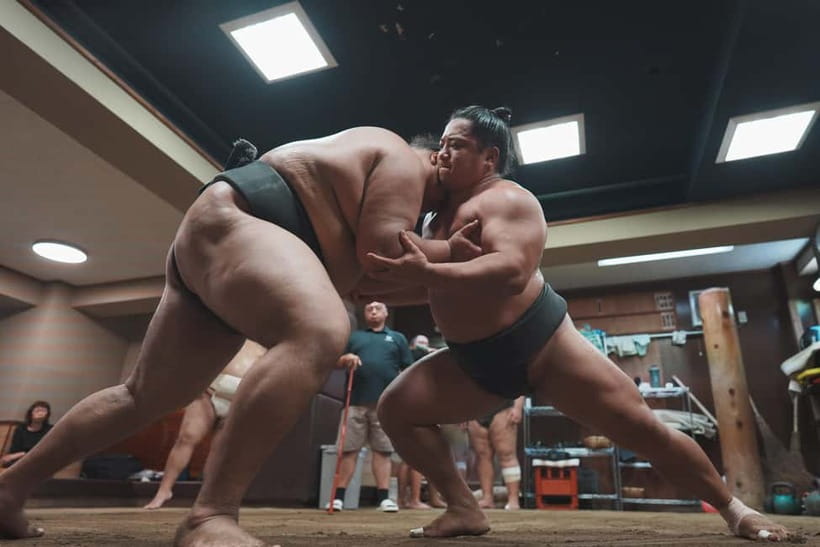
This tour’s location is a big deal. Nakamura-beya Sumo Stable is just a couple minutes from JR Ryogoku Station and also right by Ryogoku Kokugikan (the National Sumo Arena). In plain terms: you can do this without stress, even if you’re bouncing between Tokyo neighborhoods that day.
I like that the meeting point is in the same sumo cluster where the museums and arenas already are. It means you’re not squeezing this into a long transit day just to see something that lasts under two hours.
You can also read our reviews of more guided tours in Tokyo



Watching keiko training close up (and why the rules matter)
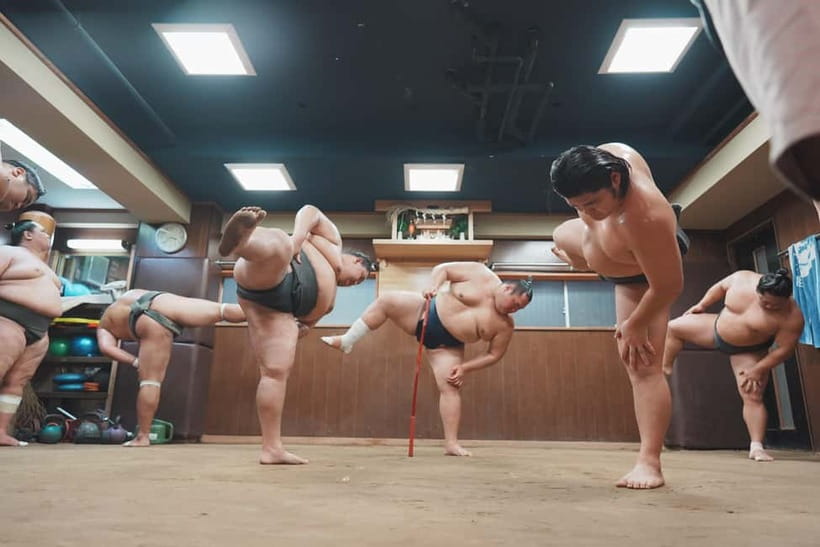
The heart of the experience is a live sumo training session at the stable. You’re close enough to feel the pace shift as practice happens, and that’s where sumo becomes more than a sport you’ve seen on TV. Keiko is the daily grind: repeating movements, working technique, and building rhythm. Even if you know the basics, being there in person can change what you notice—timing, effort, and how the wrestlers move as a team during practice.
You’ll spend about 1.5 hours in the viewing area as part of the visit window. The key is how quiet and respectful the environment is meant to be. You’re asked to refrain from speaking and watch quietly during practice. That’s not just politeness. It keeps things comfortable for the stable and helps the whole experience feel focused rather than like a show for phones.
What to know before you sit
Not everything is totally flexible, and that affects how you should plan your day:
- Bench chairs are limited. Priority goes to visitors with disabilities, and others sit on cushions.
- If you arrive late, the viewing time gets shortened with no extensions.
- Restrooms should be used before joining.
If you tend to run late, build in extra buffer around Ryogoku Station. The walking is short, but the tour still runs on a schedule, and you’ll feel that if you’re not there on time.
The audio guide and pamphlet: making sense of what you’re seeing
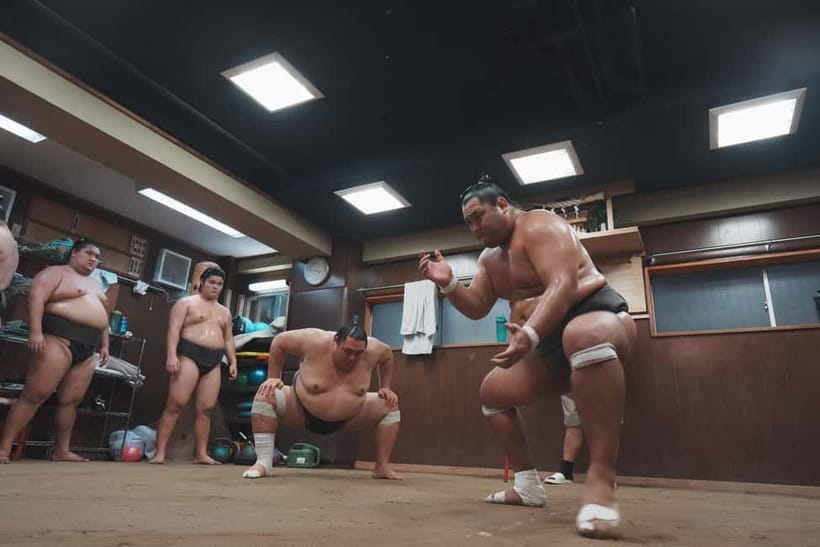
A major value point here is context. You get an audio guide in 10 languages, and it’s designed to explain sumo history, ranks, and training techniques. That means you can follow along while you watch rather than trying to guess what’s happening during each portion of practice.
The live guide also helps. The guide speaking English, Japanese, and Korean is there to support your visit and keep things clear. And you’ll receive a sumo keiko explanation pamphlet, which is useful as a quick reference while you’re there.
Earphones are the little make-or-break item
You’ll need to listen through your phone using earphones. If you don’t have any, the team can lend you a pair, but it’s still best to bring your own so you’re not scrambling at the start. This is one of those small details that can completely change your experience because without the audio, the visit becomes just a silent viewing with fewer points of understanding.
You can also read our reviews of more tours and experiences in Tokyo



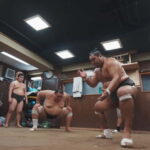
Photo time with the wrestlers: a souvenir that feels earned
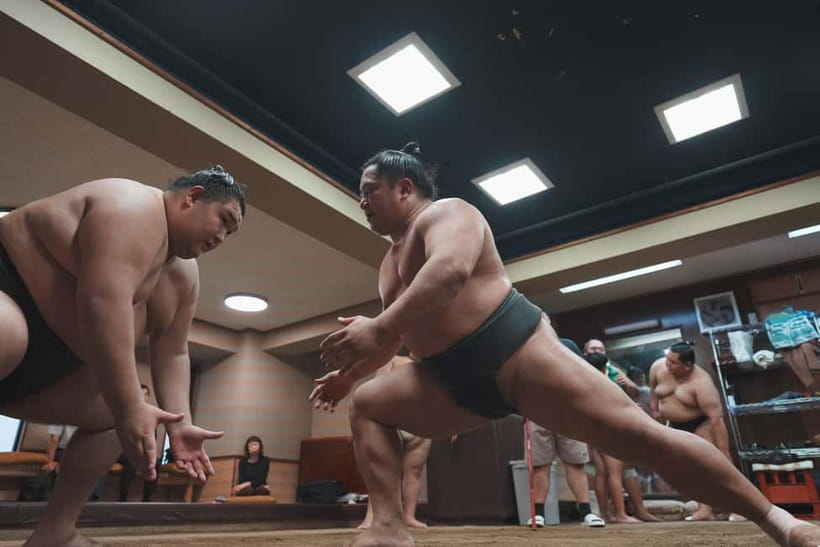
One of the most memorable parts is included: a photo with sumo wrestlers. This is the kind of add-on that turns a quick cultural stop into something personal you can look back on later.
Just know the photography rules:
- Photography is available, but no flash.
- You’re allowed to take photos during the appropriate times, as directed.
Also, the clothing rules can catch people off guard. Sunglasses aren’t allowed, and bare feet aren’t allowed. If you’re the type who wears sunglasses while traveling, swap to regular eyewear or skip them for this stop.
Comfort perks: aircon, Wi‑Fi, and charging in a working stable
Tokyo can swing from mild to muggy fast, so I’m genuinely grateful for the comfort setup here. The venue is air-conditioned and includes free Wi‑Fi plus charging stations. That’s not a luxury detail—it helps you relax instead of rushing.
It also matters if you’re traveling with a phone that has your audio guide loaded and ready to go. Being able to recharge and stay connected makes it easier to keep the audio going smoothly and avoid that end-of-day battery panic.
What happens after the practice: Ryogoku Museum and the Tokyo waterfront on foot
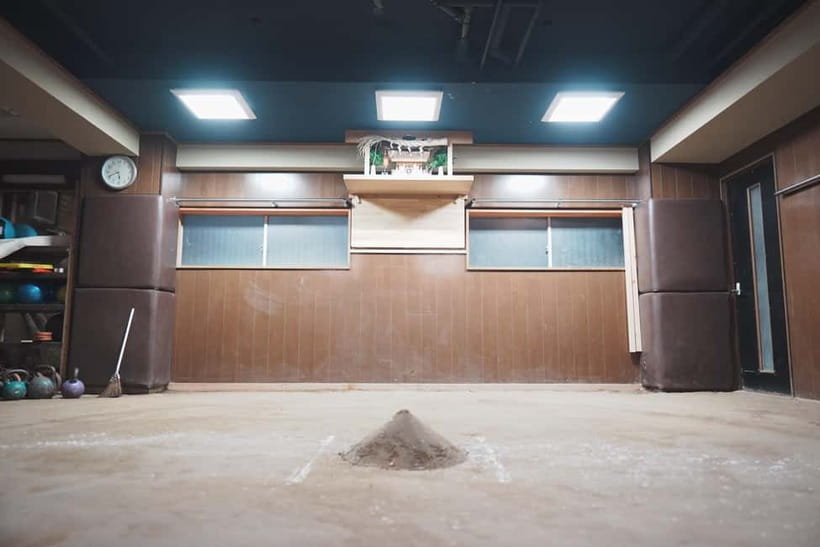
After the tour, you can keep exploring around Ryogoku without adding complicated transit. You’re in an area where the Sumo Museum is nearby, and you can also reach the Tokyo waterfront by walking.
This is a smart layout for your day because the tour doesn’t swallow your whole schedule. You get a focused 40–90 minute experience window (availability depends on start times), then you still have time to roam. If you like pairing one anchor experience with light wandering, this works well.
A practical way to plan
I suggest treating this as your morning or early afternoon anchor, then giving yourself space to walk off the excitement. You’ll get more out of the neighborhood if you’re not immediately rushing to the next thing.
Price and value: is $85 worth it?
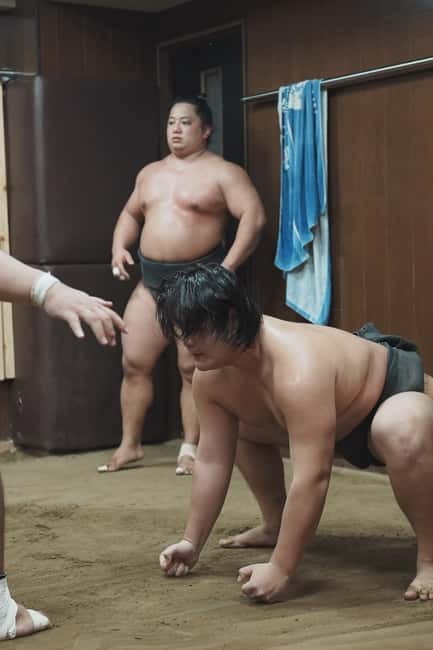
At $85 per person, this isn’t the cheapest activity in Tokyo—but it’s also not pretending to be. You’re paying for several things at once:
- Access to a live professional practice at a sumo stable
- A 10-language audio guide plus a keiko explanation pamphlet
- A photo with sumo wrestlers
- Comfort features like aircon, free Wi‑Fi, and charging stations
- A live guide on-site who speaks English, Japanese, and Korean
Here’s how I think about value: the price becomes easier to justify when you want more than watching. The audio guide and pamphlet help you read the scene in real time. Add the photo, and you get a tangible payoff beyond memory.
If your goal is only a quick look with no interest in learning ranks or what keiko practice is like, then you might decide the cost is more than you need. But if you’re the type who likes to understand what you’re seeing, this is a strong use of money.
Who this tour suits best (and who should skip it)
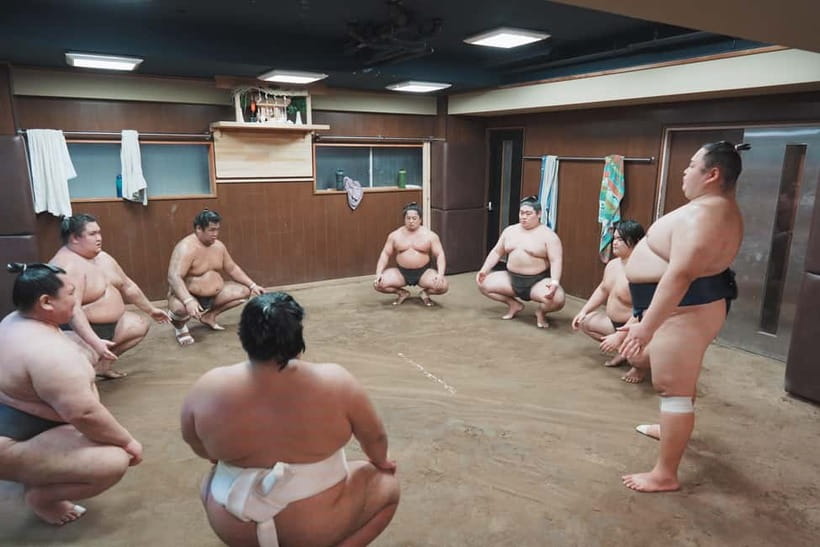
This tour is a great fit if you:
- Want an up-close, real training session rather than a distant performance
- Like guided context and prefer audio support in your language
- Plan to spend time in the Ryogoku area and want easy walking add-ons afterward
- Are comfortable sitting for about 1.5 hours
It’s not suitable for children under 6 years old, and the rules around quiet viewing and seating make it more work for very young kids. The minimum age is 6, so families with older kids will have a much smoother time than those with younger toddlers.
Also, if you rely heavily on sunglasses for comfort, you’ll need to plan around the no-sunglasses rule. And if you have trouble keeping quiet for extended moments, the viewing etiquette could feel restrictive.
Should you book Nakamura-beya sumo keiko with audio?
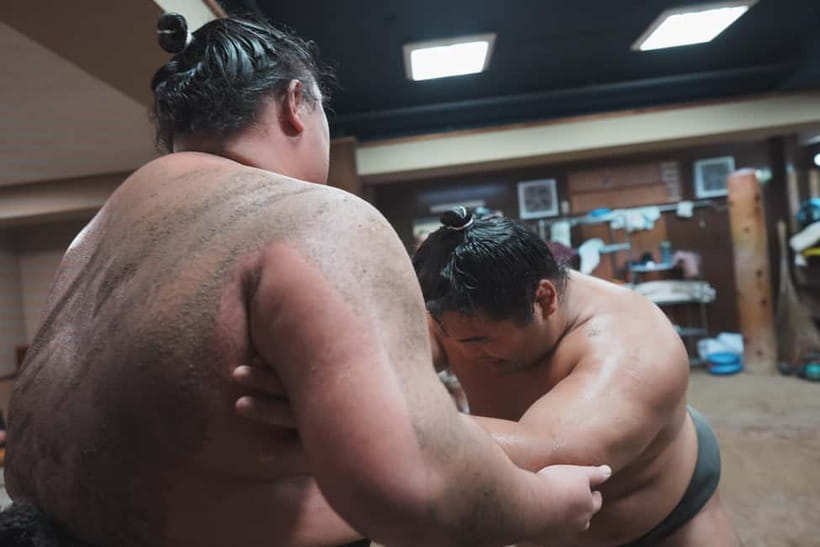
I’d book it if you want something authentic and structured: a live stable practice you can understand, with comfort perks and a real souvenir photo. The value improves especially if you care about the explanations behind history, ranks, and training ideas—because the audio guide is there to make the viewing click.
I’d think twice if you show up late often, hate following rules during performances, or don’t want to use earphones or sit for roughly 1.5 hours. Also, if you’re traveling with a child under 6, this won’t work.
If those fit, go. This is the kind of Tokyo experience where the room stays quiet, the action stays real, and you leave with a clearer sense of what sumo practice actually looks like.
FAQ
Where is the tour meeting point?
The tour starts at Nakamura-beya Sumo Stable, about 2 minutes from JR Ryogoku Station and next to Ryogoku Kokugikan National Sumo Arena.
How long does the tour last?
The duration is listed as 40 to 90 minutes, depending on available starting times.
Is the audio guide included, and what languages are available?
Yes. The audio guide is included and available in 10 languages: Chinese, English, French, German, Hindi, Italian, Japanese, Korean, Polish, Spanish, and Portuguese.
What languages does the live guide speak?
The live guide speaks English, Japanese, and Korean.
Is a photo with sumo wrestlers included?
Yes, a photo with sumo wrestlers is included.
Are there restrictions on photography?
Photography is allowed, but flash photography is not allowed.
Are sunglasses or bare feet allowed?
No. Sunglasses are not allowed, and bare feet are not allowed.
Do I need earphones for the audio guide?
Yes, you should bring your own earphones to listen to the audio guide on your phone. If you don’t have any, the tour can lend you a pair.
Is this suitable for children?
The minimum age is 6 years old, and it’s not suitable for children under 6.