REVIEW · TOKYO
Tokyo Self-Guided Audio Tour
Book on Viator →Operated by Uvamai Niche Tourism · Bookable on Viator
Four hours, 22 Tokyo stops, your pace. I like that this self-guided audio tour lets you start and stop whenever you want, so you spend more time where you actually care and less time waiting for other people. I also like the two-link setup: an audio playlist and an interactive map point-by-point, so you can keep moving without constantly guessing what to do next.
One thing to keep in mind: this experience depends on you using the links correctly. A few past buyers complained the audio felt hard to follow or didn’t match their exact spot, so I’d plan to test the links before you leave your hotel and use the map at each stop.
In This Review
- Key points worth knowing before you walk
- Price and time: how the $9 model works in Tokyo
- Getting your audio links to work smoothly (SoundCloud + Google My Maps)
- Stop-by-stop: what each Tokyo moment adds (and what can slow you down)
- Tokyo Central Railway Station: start with the city’s rail brain
- Imperial East Gardens and Edo Castle ruins: calm ground, big names
- Chidorigafuchi moat: spring-famous, feudal-flavored
- Yasukuni-jinja Shrine: you’ll want to be ready for complexity
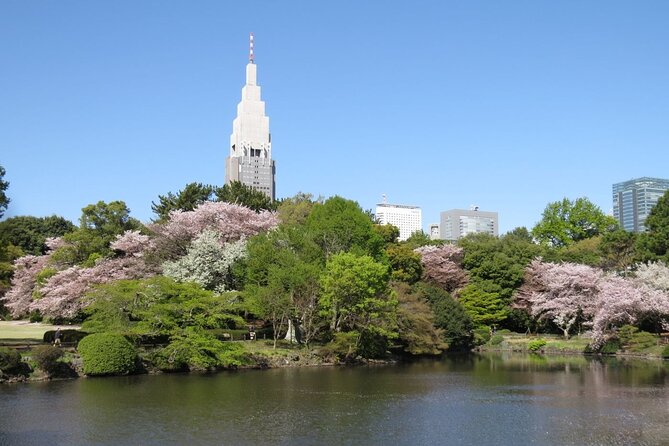
- Shinjuku Gyoen National Garden: a garden style mixer
- Tokyo Metropolitan Government Buildings: a practical city-view lesson
- Meiji Jingu Shrine: forest air and Shinto basics
- Shibuya Crossing: from neighborhoods to fashion hub
- National Art Center, Tokyo: the design idea behind the exhibits
- Mori Art Museum: city views plus contemporary art
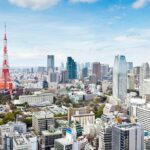
- Tokyo Tower and Zojoji Temple: modern icon meets ancient faith
- Hama Rikyu Gardens: feudal-lord residence turned into a walk
- Rainbow Bridge: Tokyo Bay with nightly illumination
- Odaiba: futuristic fun zone built on artificial islands
- Tokyo Skytree: design inspired by tradition
- Senso-ji Temple and Asakusa: old Tokyo still holding hands with crowds
- Tokyo National Museum and the science stop: art and facts on the same route
- Ueno Park: the park that holds museums together
- What I like most about this format (and how you can use it well)
- Should you book the Tokyo self-guided audio tour for $9?
- FAQ
- How do I access the audio guides?
- Do I need to be online to use the audio tour?
- How long is the tour, and can I split it up?
- Are entrance fees included for the attractions?
- Is transportation included?
- What is the refund policy if I cancel?
Key points worth knowing before you walk
- Start when you want: The tour is designed for flexible timing instead of a strict group schedule.
- No online pressure while touring: It’s marketed as not needing to be online to use the audio tour, which helps when data is spotty.
- Interactive map ties audio to locations: Each attraction point on the Google My Maps page connects to its audio guide.
- Many stops are free: Several key sights in the route list admission as free, which boosts value at $9.
- Some stops cost extra: Chidorigafuchi, Shinjuku Gyoen, Mori Art Museum, Tokyo Tower, Hama Rikyu Gardens, Odaiba, Tokyo Skytree, and multiple major museums are marked as not included.
- Plan for link access early: Access links are sent by email before your starting time, and validity lasts up to 6 days, so don’t wait until the last minute.
Price and time: how the $9 model works in Tokyo
At $9.00 per person for about 4 hours, this Tokyo self-guided audio tour is built around one simple idea: you pay for the guidance, not for admissions or transport. That matters in Tokyo, because the city is packed with great sights, and group tours often waste time.
What makes the price feel reasonable is the structure: you get audio for 22 attractions, with each stop suggested around 10 minutes. Some will take longer once you’re there, and that’s the point—you can linger at a shrine, skim a museum, or cut a stop if you’re not feeling it.
Now the catch. The tour lists that entry fees are not included where required, and a bunch of the most famous photo targets also fall into that paid bucket (like Tokyo Tower, Tokyo Skytree, and several national museums). If you go into this expecting everything to be free once you buy the audio, you’ll be disappointed.
You can also read our reviews of more guided tours in Tokyo
Getting your audio links to work smoothly (SoundCloud + Google My Maps)
Before you head out, you’re emailed two links for the tour on your selected date of travel:
1) A secure SoundCloud link for the audio guides (you can listen to individual stops or the whole playlist).
2) A secure Google My Maps link with an interactive map of the 22 points, where each point links directly to the audio for that stop.
This setup is the backbone of the experience. Here’s how to use it without stress:
- Open the audio link and the map link before you start walking, not after. If anything doesn’t load, you’ll have time to fix it.
- Use the map point at each stop. The tour is built so you click the correct attraction point and play the matching audio.
- Decide your pacing. The itinerary gives a suggested order, but since it’s self-guided, you can skip a stop or reorder if you want.
Also note the tour is sold as no need to be online to use the audio tour, but your initial access to those links still happens through your device. My practical advice: when you’re set up at the start, make sure your phone can actually play the audio reliably.
If you’re the type who hates tech chores on vacation, treat this like a museum ticket you have to “activate.” Do it once, up front, and your walk will feel effortless.
Stop-by-stop: what each Tokyo moment adds (and what can slow you down)
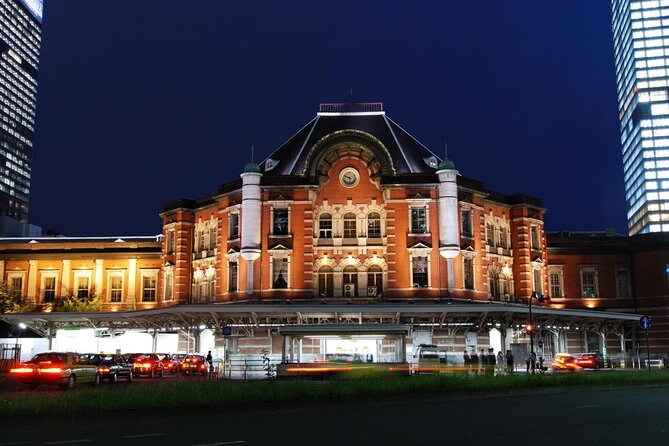
Tokyo Central Railway Station: start with the city’s rail brain
You kick off at Tokyo Central Railway Station, framed as a historic hub and tied to Japan’s modernization. This is a smart first stop because it gives you a mental model for Tokyo: trains here are not just transport—they’re how the city breathes.
Value for you: you get an architectural and historical lens before you hop areas.
Potential drawback: if you’re in a hurry, this one can get visually overwhelming. Use the audio here to focus your eyes, then move on.
Imperial East Gardens and Edo Castle ruins: calm ground, big names
Next is the East Gardens of the Imperial Palace, described as part of Edo Castle long ago. Even if you don’t care about palace history, the audio is useful because it sets a mood: landscaped grounds with imperial significance.
Value for you: a quiet break early in the day.
Potential drawback: this stop runs about 10 minutes in the plan; if you want photos and slow walking, you may need extra time and can extend since you control pacing.
You can also read our reviews of more tours and experiences in Tokyo


Chidorigafuchi moat: spring-famous, feudal-flavored
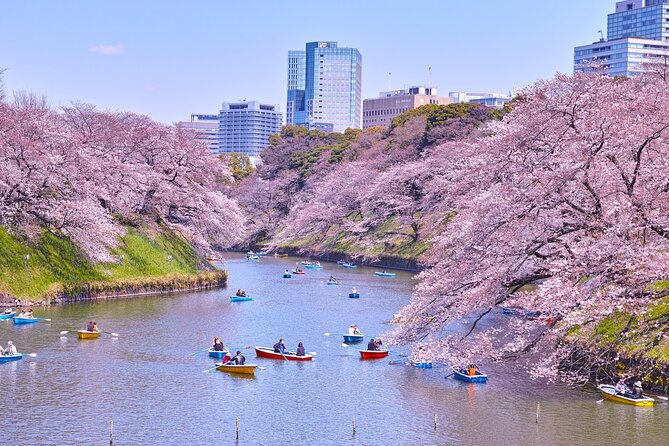
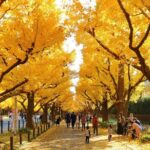
Chidorigafuchi is presented as a scenic moat area known for cherry blossoms in spring, plus a defensive role in feudal Japan. That mix—beauty plus purpose—helps you look past just the pretty views.
Important: this stop is marked admission not included.
Value for you: you’ll get context while looking at the same water-and-trees scene everyone photographs.
Potential drawback: because it’s not included, factor in the extra cost if you want to treat this as a full stop, not a quick glance.
Yasukuni-jinja Shrine: you’ll want to be ready for complexity
Yasukuni-jinja Shrine is described as controversial, dedicated to Japan’s war dead. The audio focus here is cultural significance and complex history.
Value for you: Tokyo is full of ceremonies and memorials, and this is one that forces you to think—not just look.
Potential drawback: if you want a day with zero heavy themes, this is the stop most likely to shift the tone. You still control how long you stay.
Shinjuku Gyoen National Garden: a garden style mixer
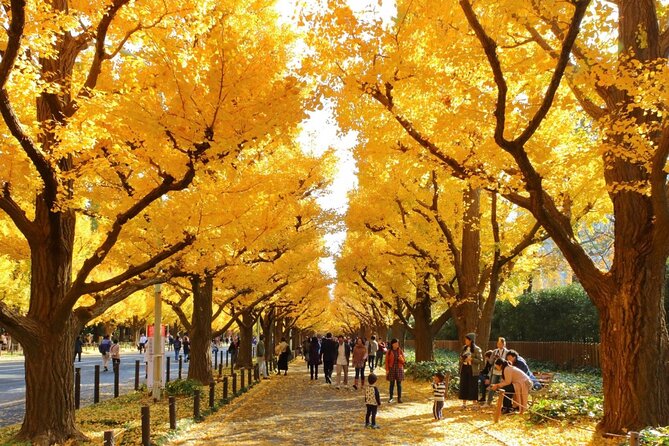
Then you move to Shinjuku Gyoen National Garden, highlighted as a blend of Japanese, French, and English garden styles. The audio also frames it with imperial roots and postwar transformation.
This stop is marked admission not included.
Value for you: a structured way to understand what you’re seeing. Garden design can feel random if you don’t know what to look for.
Potential drawback: like Chidorigafuchi, it can cost extra, so be sure it’s a priority.
Tokyo Metropolitan Government Buildings: a practical city-view lesson
At the Tokyo Metropolitan Government Buildings, the tour suggests ascending for panoramic views, tied to Tokyo governance and modern architecture. If you’ve ever felt lost in Tokyo’s scale, a top-down view helps.
Value for you: a quick “map in the sky” moment without guessing.
Potential drawback: the audio guide time is about 10 minutes, so don’t plan it as a long sit-down unless you’re okay extending the route.
Meiji Jingu Shrine: forest air and Shinto basics
Next is Meiji Jingu Shrine, described as forested grounds dedicated to Emperor Meiji and Empress Shoken, with Shinto traditions and imperial history. This stop is free, so it’s a good place to slow down.
Value for you: Tokyo noise fades fast here, and the audio gives you a framework for what you’re observing.
Potential drawback: because it’s popular and peaceful, it can still feel busy. Keep your expectations flexible and accept that some waits are part of the vibe.
Shibuya Crossing: from neighborhoods to fashion hub
You’re then at Shibuya Crossing, framed as the world’s busiest intersection and tied to how the area evolved from residential district to fashion hub. This is where Tokyo feels like Tokyo.
Value for you: the audio explains how today’s scene grew up over time.
Potential drawback: it’s easy to treat this like a photo stop only. If you want more than clicks, give the audio the full time at the start of the crossing.
National Art Center, Tokyo: the design idea behind the exhibits
The National Art Center, Tokyo is described as an unusual “empty museum,” with temporary exhibitions and an innovative design focus. Even if you don’t know a lot about art, the audio helps you understand the building and why it’s different.
Value for you: context makes art spaces less intimidating.
Potential drawback: because it’s built around temporary exhibits, you might not match your expectations if your interest is specific to long-permanent collections.
Mori Art Museum: city views plus contemporary art
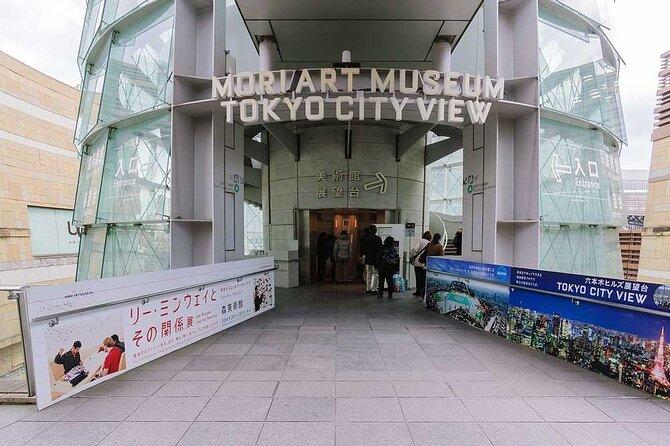
In Mori Art Museum (Roppongi Hills), the tour emphasizes a sky-high contemporary art museum and spectacular views, plus its role in Tokyo’s art scene. This is not included on the admission list.
Value for you: views plus cultural content in one stop.
Potential drawback: extra cost. If you’re watching your budget, decide if the art or the view is what you want.
Tokyo Tower and Zojoji Temple: modern icon meets ancient faith
You get Tokyo Tower, described as inspired by the Eiffel Tower and tied to post-war Japan’s construction, then Zojoji Temple, an ancient Buddhist temple connected to the Tokugawa shogunate, sitting alongside Tokyo Tower.
Tokyo Tower is not included for admission, while Zojoji is free.
Value for you: it’s a neat pairing—industrial-era symbolism next to older religious roots.
Potential drawback: Tokyo Tower can eat time and money. If you only want one of the tower experiences, you can spend more time on Zojoji and treat the tower as a photo exterior moment.
Hama Rikyu Gardens: feudal-lord residence turned into a walk
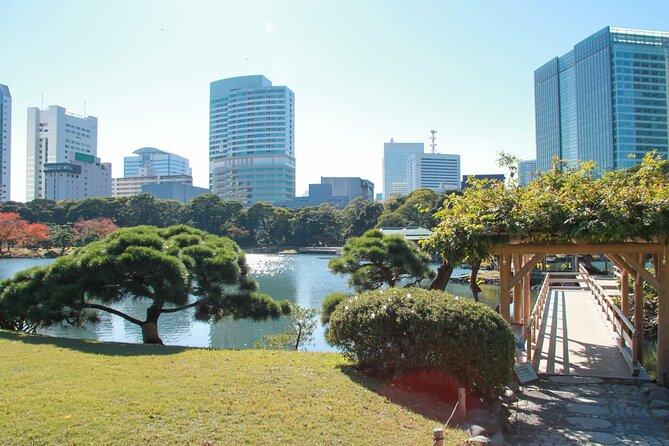
Hama Rikyu Gardens is presented as historic gardens once a feudal lord’s residence, now shaped by centuries of Tokyo’s development. Admission is marked not included.
Value for you: another scenic reset, with historical framing.
Potential drawback: paid garden stops add up fast if you also plan Mori Art Museum and national museums.
Rainbow Bridge: Tokyo Bay with nightly illumination
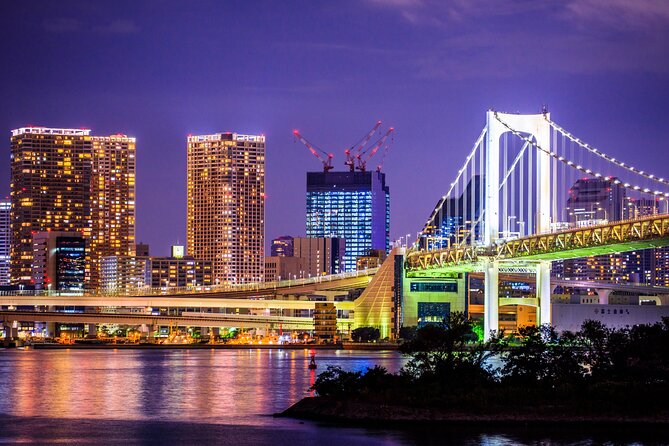
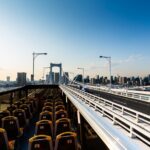
Then comes Rainbow Bridge, spanning Tokyo Bay. The audio includes construction and mentions nightly illumination.
Value for you: it’s a fun “look across water” moment to break up dense city blocks.
Potential drawback: illumination timing can be an issue with a 4-hour plan. You control the route, but you may need to adjust your pacing if you want the lights.
Odaiba: futuristic fun zone built on artificial islands
You move into Odaiba District, described as a futuristic entertainment area built on artificial islands, with a history of shifting from fortress to leisure destination. Admission is marked not included.
Value for you: you’ll see another Tokyo style—less shrine-and-temple, more entertainment-and-future.
Potential drawback: since this is a broad district, you’ll want to be intentional. Use the audio to focus on what you’re walking past, or you can burn time without feeling like you learned anything.
Tokyo Skytree: design inspired by tradition
At Tokyo Skytree, the audio focuses on it being the world’s tallest tower and design inspired by traditional Japanese aesthetics. Admission is not included.
Value for you: it gives you something to notice besides height—design intent.
Potential drawback: if your schedule is tight, this is one paid stop that can become a long detour.
Senso-ji Temple and Asakusa: old Tokyo still holding hands with crowds
Next is Senso-ji Temple, described as Tokyo’s oldest temple with a founding legend and importance during Edo period life. After that you’re in Asakusa, where the audio covers how old Tokyo’s atmosphere lingers and how Asakusa evolved from entertainment district to cultural center.
Both Senso-ji and Asakusa are free stops.
Value for you: you end up with a classic Tokyo history arc without needing museum tickets.
Potential drawback: these are major icons. Even when the audio is great, you’ll likely deal with crowds, so keep your time flexible.
Tokyo National Museum and the science stop: art and facts on the same route
Then you hit the museum-heavy stretch:
- Tokyo National Museum: described as Japan’s oldest and largest museum with a wide collection of Japanese art and antiquities. Admission is not included.
- National Museum of Nature and Science: aimed at natural world and technological advancements. Also not included.
- National Museum of Western Art: described as a Le Corbusier-designed building and noted as UNESCO World Heritage. Admission is not included.
Value for you: you get big museum energy with a short suggested stop length, so you can sample instead of committing all day.
Potential drawback: three major museums back-to-back can feel rushed if you actually want to see the exhibits, not just skim.
Ueno Park: the park that holds museums together
Finally, Ueno Park ties the museum theme together. It’s described as Tokyo’s most popular public park, with museums and seasonal significance during cherry blossom season. Admission is listed as free.
Value for you: a lighter ending that still connects to the cultural side of Tokyo.
Potential drawback: in peak season, crowding can change how peaceful the walk feels, so plan to move a bit slower.
What I like most about this format (and how you can use it well)
This Tokyo self-guided audio tour works best when you treat it like a set of guided ideas, not a strict route.
Here’s the practical upside:
- You can skip stops. If you hate crowds, you can shorten places that tend to be busy and keep your day comfortable.
- You can stretch stops. If a shrine hits you more than you expected, you can linger without feeling like you’re breaking a group pace.
- You get context while walking. The audio descriptions give you reasons to look at buildings, gardens, bridges, and museums beyond basic sightseeing.
And here’s the fair warning, based on common pain points tied to self-guided tours:
- Test the links early. Some people have reported issues with audio access and with matching commentary to their location. Fixing that before you leave beats struggling mid-walk.
- Don’t depend on transport being included. The tour explicitly doesn’t include transportation. Build your transit plan before you start.
If you want a simple day in Tokyo without tour-bus pressure, this fits well. If you hate tech setup or want everything handed to you in person, look elsewhere.
Should you book the Tokyo self-guided audio tour for $9?
Book it if you want:
- Low-cost guidance across a lot of top Tokyo sights
- Flexibility to pause, skip, and reorder at your pace
- A plan that mixes shrines, views, art, gardens, and museums without forcing one long guided group schedule
Skip it if:
- You need in-person help on the street if something doesn’t load
- You’re buying mainly for paid admission—because many of the big-ticket stops are marked not included
- You’re the type who gets frustrated with audio playback and map clicks
If you’re organized—open the links first, use the map points at each stop, and decide your budget for paid entries—this tour can be a smart value way to see a lot of Tokyo while staying in control of your day.
FAQ
How do I access the audio guides?
You receive an email before your starting time with two links: a secure SoundCloud link for the audio guides and a secure Google My Maps link with the interactive map.
Do I need to be online to use the audio tour?
The tour information says you do not need to be online to use the audio tour.
How long is the tour, and can I split it up?
The tour is listed at about 4 hours (approx.). The experience also says you can take breaks and even split the tour across multiple days.
Are entrance fees included for the attractions?
No. Entry fees are not included where required. Many stops are listed as free, but several are marked as admission ticket not included.
Is transportation included?
No. Transportation (pick-up and drop-off) is not included.
What is the refund policy if I cancel?
The experience is non-refundable and cannot be changed for any reason.