REVIEW · TOKYO
Tokyo: Meiji Shrine Walking Tour — Shintoism & Imperial System
Book on Viator →Operated by Local Guide Stars · Bookable on Viator
Tokyo slows down at Meiji Shrine. This walk is special because a guide connects Shinto traditions and the Imperial system to what you’re seeing, step by step, right near Harajuku.
I love the small-group pace, and guides like Yuuki A, Nana, Keiko, and Nonoka bring the place to life with clear English and lots of patience for questions. I also love the “do it with guidance” parts, like purification practices and trying things such as omikuji and ema.
One possible drawback: it’s only about 1 hour 30 minutes, so if you want a long, unguided wander or extra time to browse Harajuku afterward, plan to add time on your own.
In This Review
- Key highlights worth caring about
- Why this Meiji Shrine walk slows down your Tokyo day
- Price and timing: getting value in 90 minutes
- From Harajuku Gate to the forest torii: what you’ll see first
- Shinto manners at Meiji Jingu: purification, prayers, and context
- The Imperial system explained through shrine details
- Omikuji, ema, omamori: doing it right (and what to do after)
- Garden time and why admission is part of the plan
- Café Mori no Terrace: a calm finish and smart souvenirs
- Who this tour suits best (and who might skip it)
- Should you book this Meiji Shrine walking tour?
- FAQ
- How long is the Meiji Shrine walking tour?
- Where does the tour start?
- What time flexibility do I have?
- What’s the group size?
- Do I need a paper ticket?
- Is there an entry fee included for the garden?
- What can I do at the shrine during the tour?
- Can I cancel and get a refund?
Key highlights worth caring about
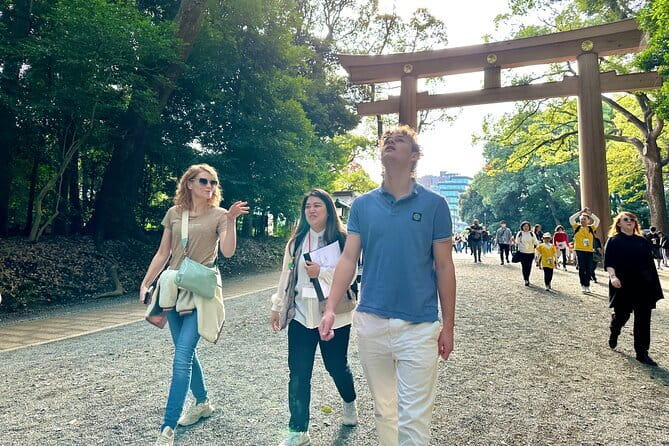
- Big wooden torii, made of cypress from Taiwan: one of the biggest you’ll see, with a calm, unforgettable presence.
- A guide who explains what you’re looking at: you’ll understand the why behind rituals instead of just snapping photos.
- Shrine traditions you can actually try: prayer, fortune (omikuji), ema wishes, and charm shopping without feeling lost.
- Garden entry included: the tour price covers admission to the Meiji Shrine Garden area.
- A quiet forest café finish: you end near Mori no Terrace for light food and drinks, plus shrine goods.
- Small group (max 15): easier questions, fewer crowds to push through, and a more natural rhythm.
Why this Meiji Shrine walk slows down your Tokyo day
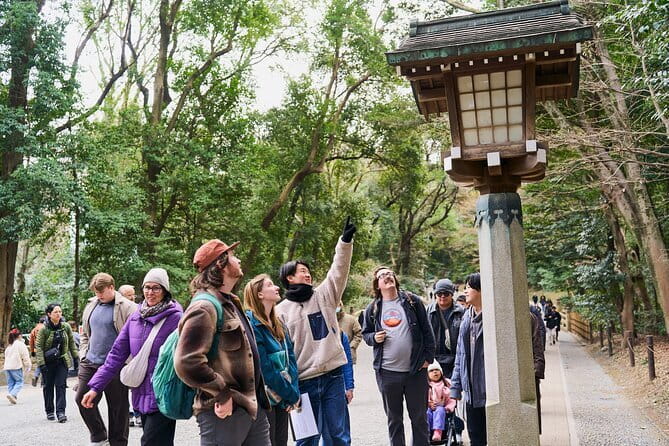
Meiji Shrine is famous, but it doesn’t feel like a theme park when you do it with a guide. You start in the Harajuku area, then the setting gently changes as you move away from the noise and into the forested approach. The whole point is that context matters: when you know what a ritual is for, the shrine stops being just scenery and starts feeling meaningful.
I also like that this tour is structured. You’re not left to figure out everything on your own, especially if you’re new to Shinto ways or you’re curious about Japan’s Imperial background. A guide helps connect those ideas to concrete things you’ll see: torii gates, purification practices, and the way visitors make wishes.
And yes, it’s visually stunning in a quiet, not-trying-too-hard way. The huge wooden torii and the tree-lined paths do a lot of the work for you, but the guide helps you notice details you’d otherwise miss—like what people do before approaching the main shrine, and what the charms and fortunes are meant to do.
You can also read our reviews of more walking tours in Tokyo



Price and timing: getting value in 90 minutes
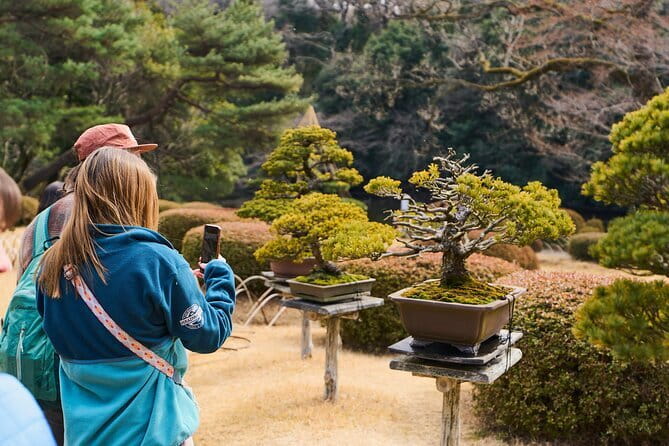
This tour costs $21.22 per person, lasts about 1 hour 30 minutes, and uses a mobile ticket. That’s a solid value for Tokyo because you’re paying for more than entry—you’re paying for interpretation, pacing, and access to the garden portion through included admission fees.
Here’s how I’d think about the math: the Meiji Shrine Garden entry is covered, the guide leads the route, and you still get time to participate in shrine customs (like omikuji and ema) instead of only looking. In Tokyo, that combination is usually what turns a “quick stop” into an experience you remember.
You can also choose from two tour times, which helps if you’re balancing other plans around Harajuku. Since the tour ends back at the meeting point, it’s easy to stitch into a day that already includes Takeshita Street energy or nearby shopping streets.
Group size matters too. With a maximum of 15 people, you’re less likely to feel like you’re in a moving crowd. If you like asking questions, this format makes it easier.
From Harajuku Gate to the forest torii: what you’ll see first
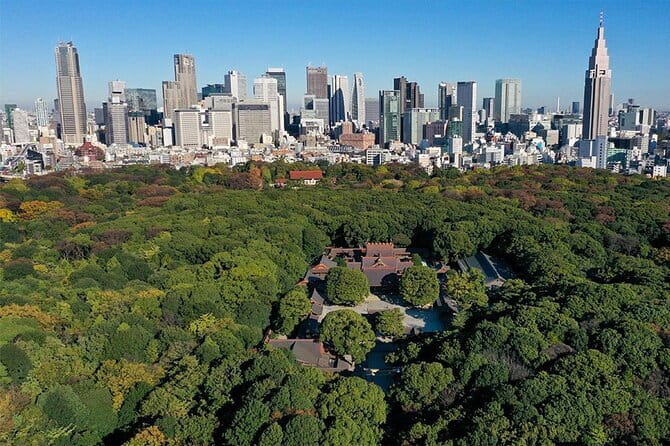
The walk begins at Harajuku Station, with the meeting point listed near 1 Chome-18 Jingumae, Shibuya. From there, the tour heads toward the shrine through the approach path, commonly described as entering from the Harajuku gate area.
The first stretch is about atmosphere and orientation. You’ll move along a wide path under tall trees, and the guide helps you understand what you’re seeing as you go. Early highlights include passing through giant torii gates and seeing displays related to sake barrels, which give the shrine approach a very “Japanese ceremony” feel instead of a generic monument vibe.
Then you reach one of the tour’s standout moments: the Big Torii. This is a large wooden torii gate made from ancient cypress brought from Taiwan. The construction story matters. When you know where the wood came from and how the gate fits into the shrine landscape, it hits harder than just seeing a big structure.
If you’re sensitive to crowds, this route is a good choice. Even though Meiji Shrine is popular, the guided timing and the focus on the path helps you avoid feeling like you’re constantly trapped in a photo line.
Shinto manners at Meiji Jingu: purification, prayers, and context
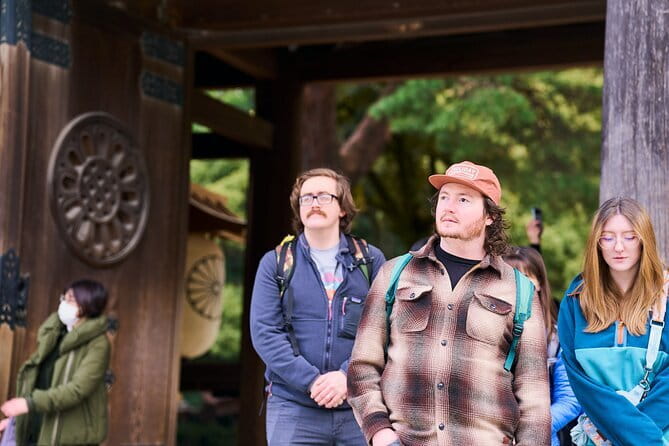
At Meiji Jingu, the tour shifts from “walk and look” into “understand and participate.” One reason I like guided shrine visits is that etiquette can feel intimidating when you don’t know what’s expected. Here, you’re taught what’s going on as you go—especially around purification practices.
The itinerary mentions stopping at the main area where purification is part of the visitor routine. If you’ve seen people around you quietly follow steps and weren’t sure what to do, this kind of guidance is exactly what you want. You’ll get the logic behind the gesture, not just a checklist.
From there, you move to the main shrine area. At the shrine, the guide shows you how to make an offering and where visitors typically focus. You’ll also have time to try common shrine activities, including drawing a fortune called omikuji and writing your wish on an ema (a wooden plaque). The tour also covers omamori, the charms people buy for specific intentions.
A practical tip for you: treat this part like a calm ritual moment, not a performance. Even if you’re traveling fast elsewhere in Tokyo, this is one of those places where slowing down makes everything better.
The Imperial system explained through shrine details

Meiji Shrine isn’t only about nature or architecture. This walk specifically includes explanations of Shintoism and Japan’s Imperial system, and that adds a layer that a self-guided stroll often misses.
As you move through the shrine grounds, you’re effectively learning how belief systems and national history intersect. A Shinto shrine is more than a building—it’s tied to worship practices, symbolic objects, and how visitors show respect.
The structure of the tour helps with understanding. You don’t get a lecture that stops the walking. You learn in the same order that you see things: torii gates first, then the approach and purification, then the main shrine actions, and finally the garden and rest area.
It also helps that the guide is native Japanese and communicates in English clearly. In my view, that matters because shrine terms and ritual steps can get lost when translation is weak. Clear explanations make the symbols stick.





Omikuji, ema, omamori: doing it right (and what to do after)
One of the best reasons to book this Meiji Shrine walking tour is that it gives you time for the visitor customs that most people sort of rush through. Here, you can offer a prayer, draw omikuji, write a wish on ema, and explore omamori.
If you’ve never done these, don’t worry. The guide’s job is to make the steps feel doable. That’s also why the small-group format helps: you’re not stuck waiting behind someone who’s figuring it out from scratch.
Here’s how to make it feel personal without turning it into stress:
- Decide what you want your omikuji to reflect before you draw it.
- Write your ema wish clearly enough that it reads well to you later.
- If you buy omamori, think of it as a reminder for a specific intention, not a random souvenir.
Even if you don’t follow all the symbolism exactly, taking part in these traditions is one of the most authentic things you can do at Meiji Jingu because you’re using the shrine the way it’s used.
Garden time and why admission is part of the plan

The tour includes admission fees for the Meiji Shrine Garden, which is a big deal if you’re trying to keep the day efficient. Garden entry often becomes a “maybe later” item for people who are already planning too much. Here, it’s built into the experience.
What you get from including the garden is variety in how the grounds feel. A forest approach gives you shade and scale, while garden paths offer a calmer, more open rhythm. With a guide walking you through Shinto context, the garden doesn’t feel like a separate attraction. It feels like part of the same peaceful purpose.
Since the tour is about 1.5 hours, the garden stop also keeps you from spending the whole day only on the main shrine area. You get a balanced taste of the place instead of just one piece.
Café Mori no Terrace: a calm finish and smart souvenirs

The walk ends near CAFÉ Mori no Terrace, plus a nearby gift shop. That matters because the tour doesn’t dump you back into crowds with no plan.
The café offers light meals and drinks in a quiet forest setting, so it works well as a decompression moment. If you’re hungry, you’ll appreciate having an easy option without crossing the city first.
The gift shop is also practical. You can look for charms, traditional goods, and Meiji Jingu–exclusive items. That’s the kind of shopping that makes sense after the ritual part—now you actually understand what you’re buying and why.
If you’re planning to continue exploring after, this is a good place to slow down, refuel, and then head back toward Harajuku on your own schedule.
Who this tour suits best (and who might skip it)
This is a great fit if you want a small-group experience that explains what you’re seeing. It’s also ideal if you’re curious about Shintoism and how the Imperial system connects to the shrine’s meaning. If you like the idea of doing omikuji and writing an ema without feeling lost, this tour does that work for you.
You might skip it if you already know what you want to do at Meiji Shrine and you prefer total freedom with no scheduled structure. Also, if you’re the type who wants to spend hours wandering with no guided pacing, the short duration may feel limiting.
But for most people who have one day in Tokyo and want an experience that feels genuine rather than rushed, this one checks the right boxes.
Should you book this Meiji Shrine walking tour?
If your goal is to see Meiji Shrine and understand the rituals behind the photos, I’d book it. The price is reasonable for Tokyo, especially because it includes Meiji Shrine Garden admission and guided explanations at key moments like purification and the shrine customs.
The other big reason to book: you get a guided path through the best “photo moments” like the big torii, while still having time to do the visitor activities like omikuji and ema properly. With a maximum of 15 people, it’s not a stampede.
If your schedule is tight, choose one of the two tour times and treat the rest of your day as flexible buffer for Harajuku shopping or a nearby meal. This tour is built to give you a calm, meaningful slice of Tokyo without taking over your whole day.
FAQ
How long is the Meiji Shrine walking tour?
The tour runs for about 1 hour 30 minutes.
Where does the tour start?
The meeting point is at Harajuku Station, listed as 1 Chome-18 Jingumae, Shibuya, Tokyo 150-0001, Japan.
What time flexibility do I have?
You can choose from two tour times.
What’s the group size?
The tour has a maximum of 15 travelers.
Do I need a paper ticket?
No. This activity uses a mobile ticket.
Is there an entry fee included for the garden?
Yes. The tour includes admission fees for the Meiji Shrine Garden.
What can I do at the shrine during the tour?
You can offer a prayer, draw omikuji, write your wish on an ema, and explore omamori (charms).
Can I cancel and get a refund?
You can cancel for free up to 24 hours in advance for a full refund. If you cancel within 24 hours, the amount paid is not refunded.