REVIEW · TOKYO
Tokyo: Meiji Jingu Shrine and Shinto Culture Walking Tour
Book on GetYourGuide →Operated by Traveling Tokyo · Bookable on GetYourGuide
Two hours, and Tokyo slows down. This Meiji Jingu Shinto walk takes you from a busy corner of Harajuku into a calm world of ritual, nature, and simple etiquette that actually makes sense once someone explains it. I like how the guide connects each landmark to what Shinto practice is trying to do.
I also really love the setting: the Imperial Garden of Meiji Jingu gives you quiet beauty right away, and the sacred approach through the grounds feels like a reset button. The one thing to plan for is that most of the tour is outdoors, so you’ll want comfortable shoes and a backup layer if weather turns.
You’ll meet at Starbucks near Meiji Jingu, then follow a tight route with photo stops, guided explanations, and time for questions. Even guides named in past bookings, like Maya, Minori, Hoshi, Naruto, and Yota, show the same pattern: they keep you moving, explain what you’re seeing, and give you enough context to enjoy it instead of just walking past it.
In This Review
- Key Things You’ll Notice Right Away
- Why Meiji Jingu Feels Like a Spiritual Switch in Tokyo
- Starbucks Near Harajuku: Finding the Start Without Stress
- Meiji Jingu Gyoen and the Imperial Garden Photo Stop
- The Big Torii: The Moment You Shift From Street Mode to Shrine Mode
- Consecrated Sake Barrels: Why This Stop Isn’t Just a Photo Op
- Meiji Jingu’s Consecrated Wine Barrels: A Distinct Follow-Up
- Meiji Shrine Core: Guided Sightseeing in the Main Grounds
- The Photo Plan: Included Pictures That Don’t Feel Like a Checklist
- Price and Value: Is $19 Fair for Two Hours at Meiji Jingu?
- Who Should Book This Shinto Culture Walking Tour
- Should You Book This Meiji Jingu Tour?
- FAQ
- How long is the Meiji Jingu Shrine and Shinto Culture Walking Tour?
- What does the tour cost?
- Where do I meet the tour?
- What’s the tour language?
- Is entry to Meiji Jingu included?
- Are photos included?
- Is the tour wheelchair accessible?
- What’s the cancellation policy?
- Are there any options to pay later?
Key Things You’ll Notice Right Away
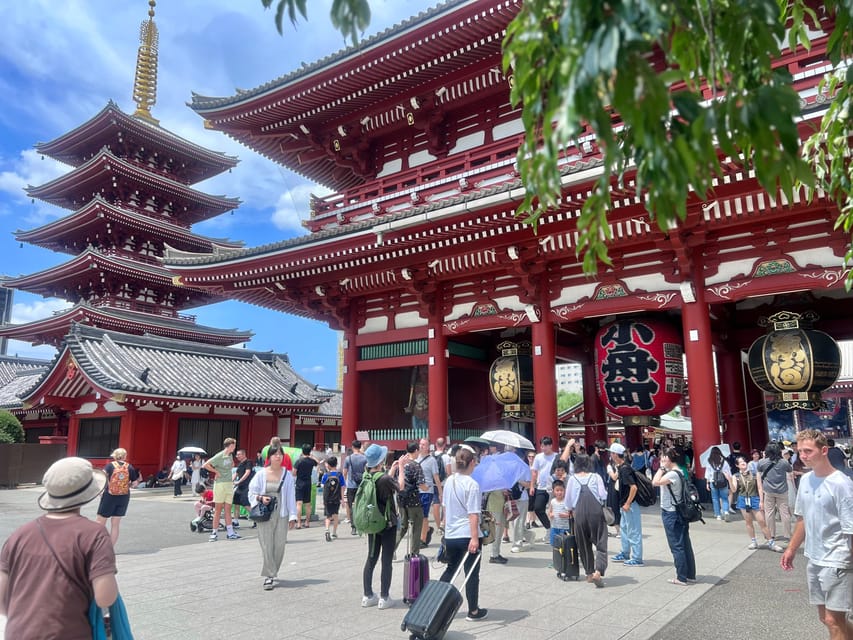
- The Imperial Garden intro: a calm photo stop that sets the tone before the main shrine area
- Big Torii orientation: you learn what that gate marks and how to shift your mindset as you pass through
- Offerings you can actually read: consecrated sake barrels and wine barrels are explained as part of worship
- A forest walk with meaning: the grounds are described through the idea of nature and spirit in Shinto
- Small-group Q&A: you can ask practical questions about shrine etiquette and customs
- Photos included: the guide takes pictures at key points so you’re not stuck multitasking your camera
Why Meiji Jingu Feels Like a Spiritual Switch in Tokyo
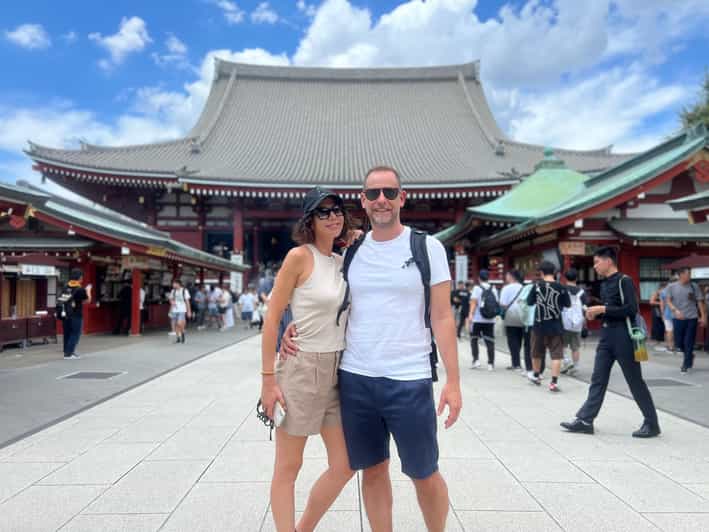
Meiji Jingu isn’t just famous because it’s photogenic. It works because it feels like a boundary between city noise and something quieter. When you’re inside the shrine grounds, Tokyo becomes background sound. That atmosphere is the whole point, and a good guide helps you understand what you’re looking at instead of treating it like a theme park.
The tour leans hard into Shinto culture: how rituals function, why nature matters, and why people act a certain way at specific spots. You’ll also notice the choreography. At Meiji Jingu, you’re not only sightseeing—you’re observing a living place of practice. That’s why having a guide matters. Without context, you can still enjoy the grounds, but you’ll miss the meaning behind the steps and objects.
And yes, the visuals are top-tier: the big torii, the ceremonial barrels, and the deep wooded feel of the approach. But what makes this experience worth your time is the translation layer. You come away understanding what you saw, not just that you took pictures.
You can also read our reviews of more walking tours in Tokyo


Starbucks Near Harajuku: Finding the Start Without Stress
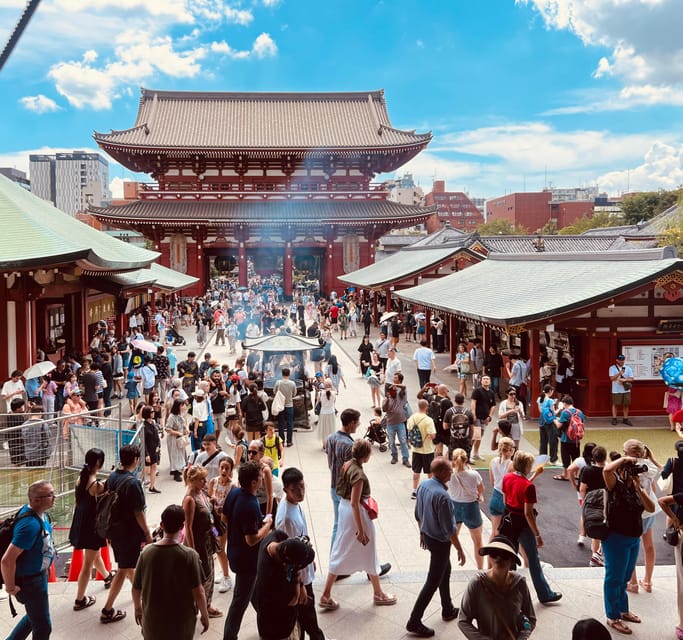
Your meeting point is simple and practical: you’ll meet in front of the Starbucks closest to Meiji Shrine. The provided coordinates are 35.6705208, 139.7031067, which helps if you’re using a map app.
Why I like this kind of meeting point: Starbucks is easy to spot, easy to navigate to by transit, and it’s a familiar landmark if you’re arriving in Tokyo for the first time. Also, starting near Harajuku keeps the opening leg efficient. You’re not spending the first 20 minutes figuring out where “the tour” starts.
Timing-wise, you’re in a 2-hour loop that’s short enough to fit neatly into a busy day. It also means you’ll be out walking with a plan, rather than wandering and accidentally missing the best parts.
Meiji Jingu Gyoen and the Imperial Garden Photo Stop
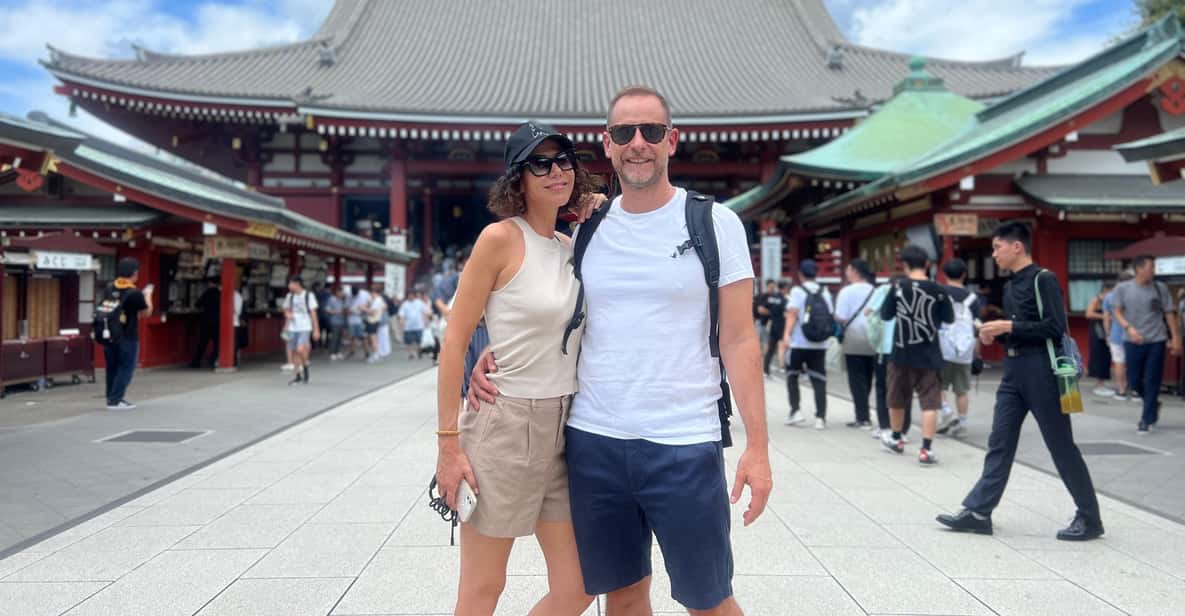
The tour begins with a Meiji Jingu Gyoen stop, including a photo moment and guided time (about 30 minutes). This is a smart move. You ease in to the site rather than jumping straight into the most crowded-looking areas.
In the Imperial Garden area, you’ll get that “Tokyo turned off” feeling quickly. The garden setting helps you notice details you might otherwise ignore: the rhythm of paths, the careful layout of space, and how the scenery frames religious architecture rather than competing with it.
This part also matters for pacing. If you’re the type who likes to understand a place before you sprint through it, the garden intro gives you a foundation. When you move toward the main shrine, you’re not starting from zero—you already understand that the grounds aren’t random. They’re designed to guide your attention.
A small caution: keep an eye on your camera settings and your hands. This is a photo-friendly area, but you’re also walking through calm terrain where stopping too long can disrupt your flow with the group.
The Big Torii: The Moment You Shift From Street Mode to Shrine Mode
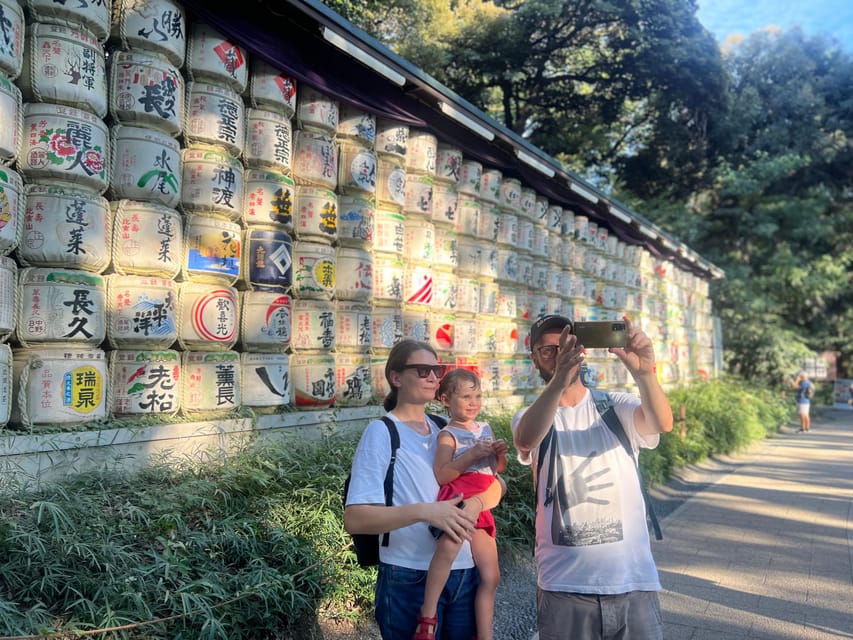
Next up is the Big Torii, a guided stop of about 10 minutes. The torii is more than a giant gate. It signals a transition into a sacred space. With guidance, you’ll learn how people treat that transition—what it means to slow down, pay attention, and behave respectfully as you approach the inner areas.
This stop is short, but it’s high-impact. Think of it like the tour’s mental reset. Once you understand what the torii marks, the rest of Meiji Jingu reads differently. You’ll start seeing the space as a sequence of worship points rather than separate photo locations.
If you’ve been to other shrines in Japan, you might recognize the overall style, but Meiji Jingu’s scale can still surprise you. That’s why orientation matters. A quick explanation here prevents you from treating the sequence like a checklist.
Consecrated Sake Barrels: Why This Stop Isn’t Just a Photo Op
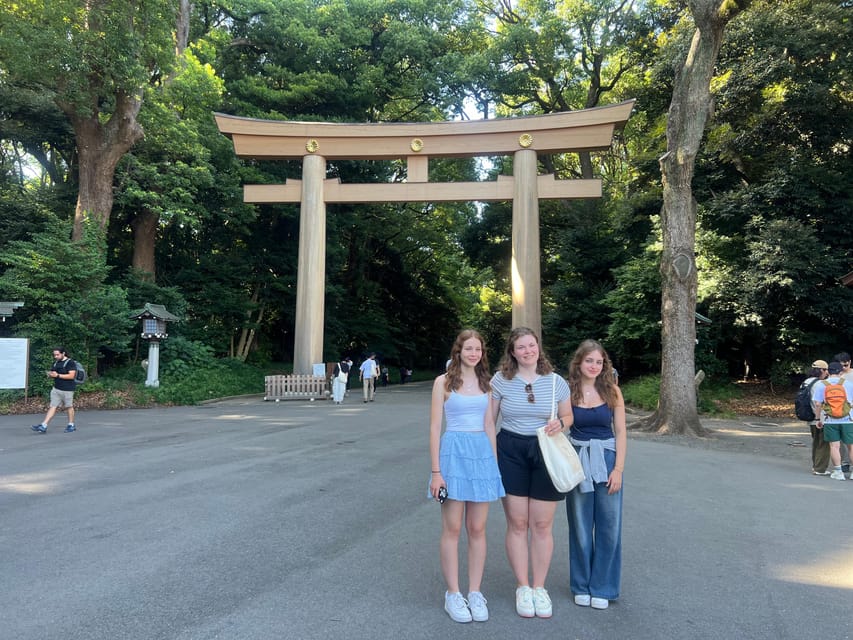
Then you’ll hit the consecrated sake barrels (about 10 minutes). This is one of those places where the object is visible, but the meaning isn’t automatic. The guide helps you connect it to worship—how offerings fit into Shinto practice and how visitors participate in that tradition.
What I like about including this kind of stop: it trains your eye. Once you understand what offerings represent, you’ll notice other small cues across the grounds that you’d otherwise skip. You’ll also feel more comfortable with the idea of ritual without needing to memorize every detail.
A practical point: barrels and other ceremonial items can be busy at times, depending on the day. Keep your attention on what the guide is explaining and let your camera timing follow your pace, not the other way around.






Meiji Jingu’s Consecrated Wine Barrels: A Distinct Follow-Up
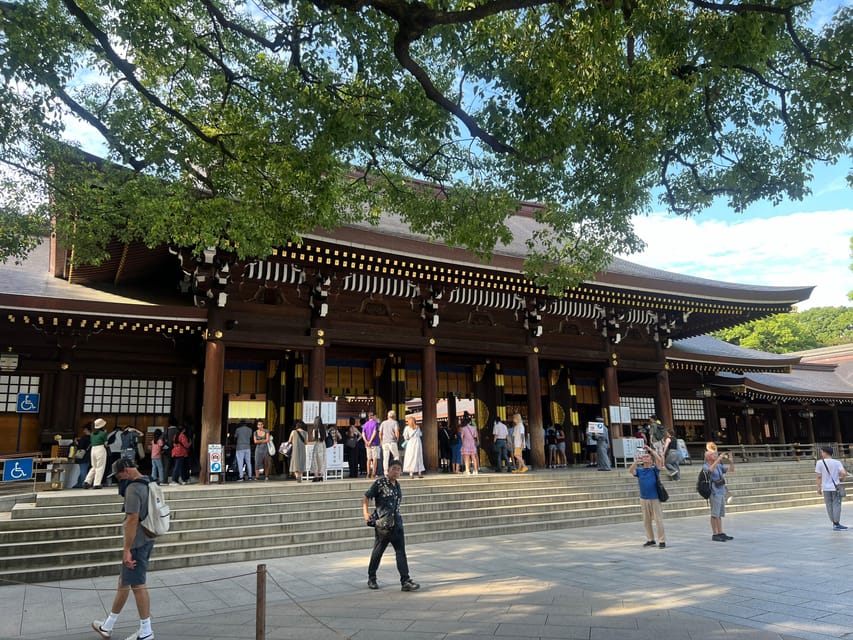
The tour continues to the Meiji Jingu consecrated wine barrels (another guided stop of about 10 minutes). Having a second offering stop back-to-back is clever because it gives you contrast. Instead of leaving you with one explanation, the guide shows how different elements work within the same worship framework.
Again, the value here isn’t the object by itself. It’s what it teaches you about how Shinto practice is presented and understood at Meiji Jingu. You finish this section feeling like you can interpret the site with more confidence.
This is also a good time to ask questions. The group is still in the early-to-middle part of the route, so the guide has energy and attention for clarifying anything you’re unsure about.
Meiji Shrine Core: Guided Sightseeing in the Main Grounds
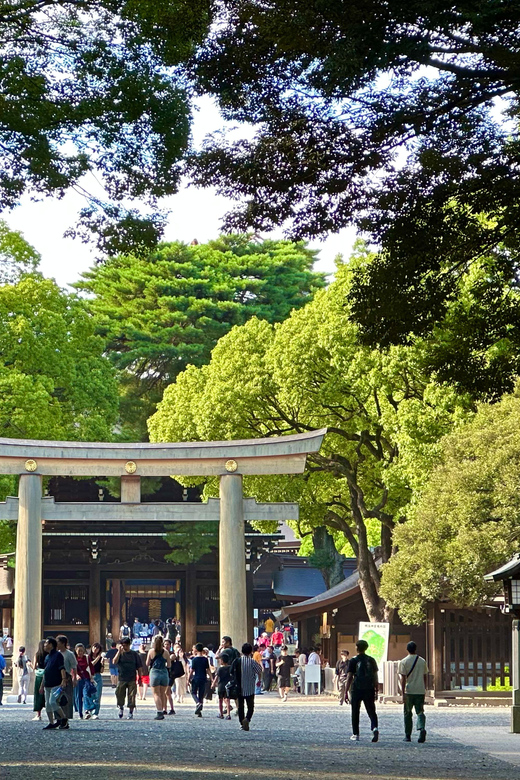
The main portion is about 1 hour at Meiji Shrine, with guided sightseeing. This is where the tour becomes more than a string of landmarks. You’ll connect the story to how the space works, and you’ll get more time to understand the practical etiquette behind shrine visits.
This is also the part where small-group format pays off. When you’re in a group, questions can be hard. Here, the setup is designed for interaction—so you’re not stuck waiting for the one moment where the guide might notice you.
In past bookings, guides such as Minori and Nicholas have been praised for clear explanation, and guides like Hoshi and Naruto have been called out for answering questions directly. You don’t need their exact wording to benefit; you do need the kind of guidance that helps you follow the flow of worship without feeling lost.
Expect a mix of quiet attention and sightseeing. You’ll be walking, but you’ll also have moments where you’re encouraged to slow down and actually look.
The Photo Plan: Included Pictures That Don’t Feel Like a Checklist
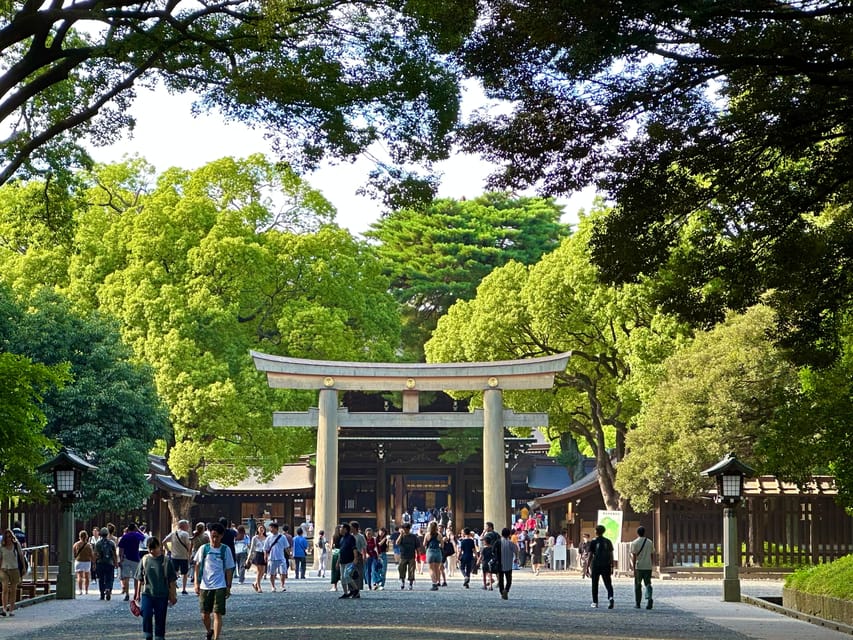
Photos are included, and that matters more than you’d think. In many walking tours, the guide points and you scramble. Here, the tour is designed so someone is taking the photos while you’re enjoying the view.
That frees you up to do two things:
1) look around instead of constantly composing shots, and
2) ask questions without stopping your whole group rhythm.
You’ll likely take pictures at the garden area, the torii, and the ceremonial barrels—places where it’s genuinely hard to get good photos while you’re also trying to read what’s happening around you.
Also, because the tour is short (2 hours), you don’t have time for multiple “photo breaks.” The included plan makes the whole outing feel efficient without feeling rushed.
Price and Value: Is $19 Fair for Two Hours at Meiji Jingu?
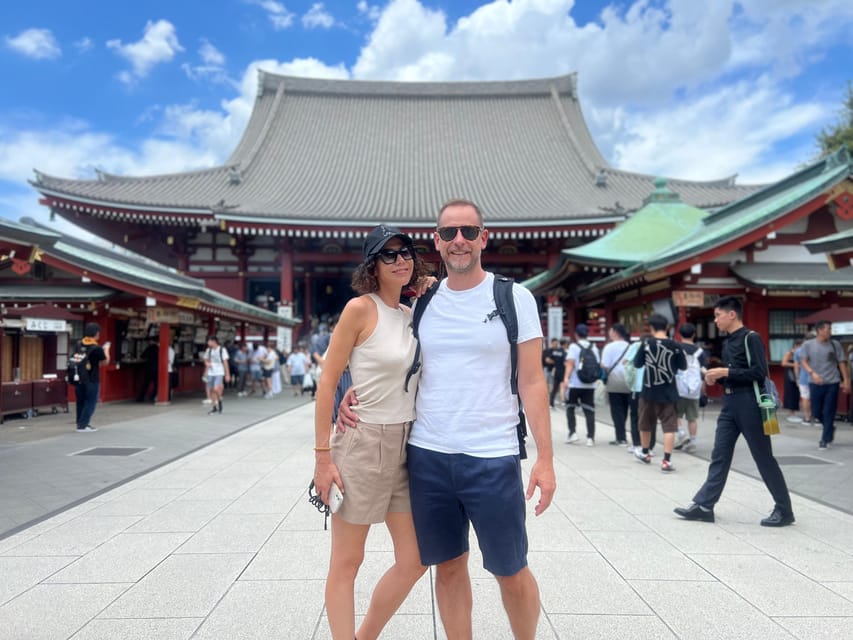
At $19 per person for about 2 hours, the value is strongest because the tour includes more than a guide walk. You also get entry/admission to Meiji Shrine and Meiji Shrine Imperial Garden, plus a professional English-speaking guide and historical insights into the districts. Photos are also included.
So what are you really paying for?
- context you can’t easily pick up on your own quickly
- an efficient route that hits the signature ritual points
- admission that’s bundled into the cost
- help with how to behave and what to notice
If you’re the kind of visitor who likes to “do the site” and then move on, this might feel like too much structure. If you’re the kind who wants meaning—why people do what they do, why nature is part of the story—then $19 is a pretty reasonable deal for the amount of guidance you receive.
One more value note: shrine sites can be visually rich, but your enjoyment jumps when someone helps you interpret it. This tour is built for that jump.
Who Should Book This Shinto Culture Walking Tour
This tour fits especially well if:
- it’s your first Tokyo shrine experience and you want etiquette and context early
- you want a calmer pace than self-guided wandering through a huge site
- you care about the Shinto side of Japan, not only the architecture
- you prefer a small group setup where you can ask questions
It’s also a nice option if you’re traveling with kids, because the tour structure gives clear stopping points and guides can keep attention on what you’re seeing (not just long continuous walking).
If you’re a hardcore shrine-nerd who already knows the rituals well, you might still enjoy it for the setting and the guided route—but you may want more time on your own after. The tour gives you the frame; you’ll likely want to step back into the grounds afterward at your own pace.
Should You Book This Meiji Jingu Tour?
Book it if you want your visit to feel understandable and respectful, not random. The biggest reasons are the guided Shinto explanations, the efficient set of stops (torii, consecrated barrels, main shrine grounds), and the bundled value that includes admission and photos. At $19 for two hours, you’re buying clarity and good pacing.
Skip it only if you strongly prefer unguided freedom and already feel confident about shrine etiquette and what you’re looking at. If that’s you, you might prefer to wander the grounds on your own and spend extra time lingering where you want.
For most people, though, this is one of those Tokyo experiences that turns a famous landmark into a real cultural moment—fast, friendly, and focused on what makes Meiji Jingu special.
FAQ
How long is the Meiji Jingu Shrine and Shinto Culture Walking Tour?
The tour lasts about 2 hours.
What does the tour cost?
The price is $19 per person.
Where do I meet the tour?
Meet in front of the Starbucks closest to Meiji Shrine. The coordinates provided are 35.6705208, 139.7031067.
What’s the tour language?
The live tour guide is available in English.
Is entry to Meiji Jingu included?
Yes. Entry/admission to Meiji Shrine and the Meiji Shrine Imperial Garden are included.
Are photos included?
Yes. Photos are taken during the tour.
Is the tour wheelchair accessible?
Yes, the tour is listed as wheelchair accessible.
What’s the cancellation policy?
You can cancel up to 24 hours in advance for a full refund.
Are there any options to pay later?
Yes. You can reserve now and pay later, with the option to keep travel plans flexible.