REVIEW · TOKYO
Tokyo: Meiji Shrine Walking Tour — Shinto & Imperial System
Book on GetYourGuide →Operated by Local Guide Stars · Bookable on GetYourGuide
Noise fades fast in Tokyo’s sacred forest. This Meiji Jingu tour is interesting because it pairs Shinto shrine etiquette with Japan’s imperial story, so the walk feels more like meaning than sightseeing. I love the way the path goes quiet under about 100,000 trees, and I especially like the awe factor of the 12-meter wooden torii made from a 1,500-year-old Taiwanese cypress. One consideration: the schedule is tight, and you’ll get roughly 45 minutes of free time at the shrine, so it’s not the best choice if you want hours of wandering on your own.
You’ll meet at Harajuku Station and follow an English-speaking guide through major photo stops, consecrated barrels, and the main shrine area. The guide keeps you on the right path for respectful visiting—like where to stand and how to pass under the torii—plus you’ll have time for omamori and an English-friendly omikuji called Omigokoro. Also note: this tour is English only, so if you need Japanese support, plan to rely on the guide’s explanations.
In This Review
- Key things that make this tour worth your time
- Meeting at Harajuku Station and getting oriented fast
- The Meiji Jingu forest: where Tokyo quiet actually happens
- The 12-meter torii gate: what to notice besides the photo
- Passing under the torii the right way (and why seichu matters)
- Consecrated barrels: the story behind the sake and wine
- Emperor Meiji and the imperial system you can actually connect to
- Meiji Shrine main area: prayers, omamori, and Omigokoro
- Café Mori no Terrace: tea, snacks, and a calm reset
- What makes the pacing work (up to 10 people)
- Price and value: why $23 feels fair for Meiji Jingu
- Who should book this tour, and who might skip it
- Should you book the Meiji Shrine Shinto & Imperial System walking tour?
- FAQ
- How long is the Tokyo Meiji Shrine Walking Tour?
- Is this tour available in English only?
- Where do we meet and where do we get dropped off?
- What are the main stops on the route?
- What is included in the tour price?
- Can I cancel for a refund?
Key things that make this tour worth your time
- Small group size (up to 10) keeps questions moving and the pace comfortable.
- City noise disappears as soon as you enter the grounds of Meiji Jingu.
- The giant torii gate is a real focal point, not just a photo stop.
- Shinto etiquette coaching helps you avoid common tourist missteps.
- Emperor Meiji’s poetry (with English) adds a deeper layer beyond shrine basics.
- Tea and light snacks at Café Mori no Terrace gives you a calm break mid-visit.
Meeting at Harajuku Station and getting oriented fast
Most people start this outing at Harajuku Station (原宿駅), and you’ll also finish back near Harajuku Station. That’s convenient, because you can tack this onto a first-day Japan plan without fighting transit logistics afterward.
The tour time runs about 90 to 135 minutes, which is long enough to feel like you saw the essentials but short enough to keep you from getting shrine-weary. Your guide will lead the group between key points, with guided time plus quick photo stops. If you’re arriving early, use the nearby area to gather yourself—then show up when the guide says, so you’re not scrambling at the entrance.
The meeting point can vary depending on the option booked, but the activity lists coordinates at 35.6700901, 139.7024662. That can help you confirm you’re in the right general zone if you’re using a map app.
You can also read our reviews of more walking tours in Tokyo



The Meiji Jingu forest: where Tokyo quiet actually happens
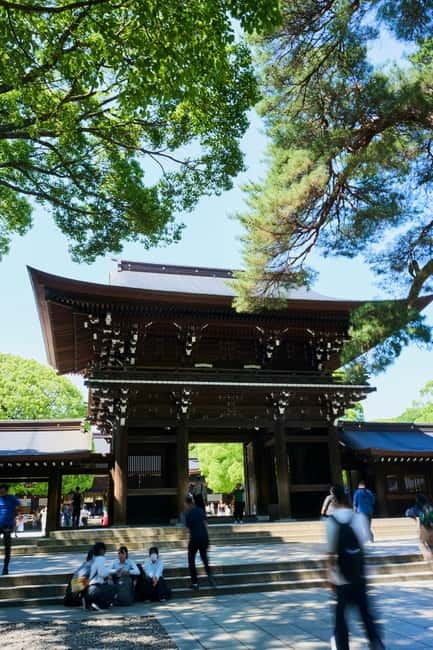
Meiji Shrine’s biggest trick is also its simplest. You don’t just walk through a park. You walk into a forested sanctuary where the street sound drops away.
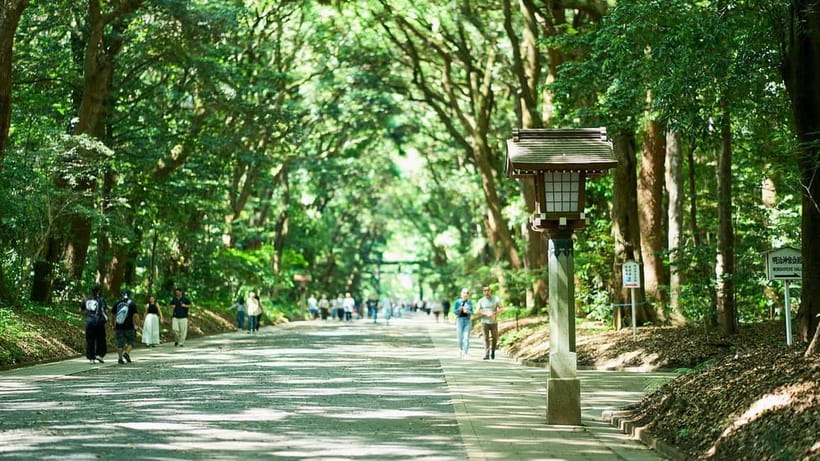
You’ll move along shaded paths under roughly 100,000 trees, and you’ll notice how the pace slows. Birdsong becomes a soundtrack. The air feels cooler. This matters because Shinto is rooted in respect for nature and harmony with the divine, and the setting reinforces that in a way you can’t fake with words.
I like that the guide doesn’t treat the forest as background scenery. Instead, you’ll connect what you’re seeing to Shinto meaning: why this calm space is part of how worship works here. It’s also a great way to start Tokyo with a different vibe than temples-with-billboards or shopping-streets.
Pro tip: Wear shoes you can walk in without thinking. You’re outdoors the whole time, and the route is active even though it’s not a long hike.
The 12-meter torii gate: what to notice besides the photo
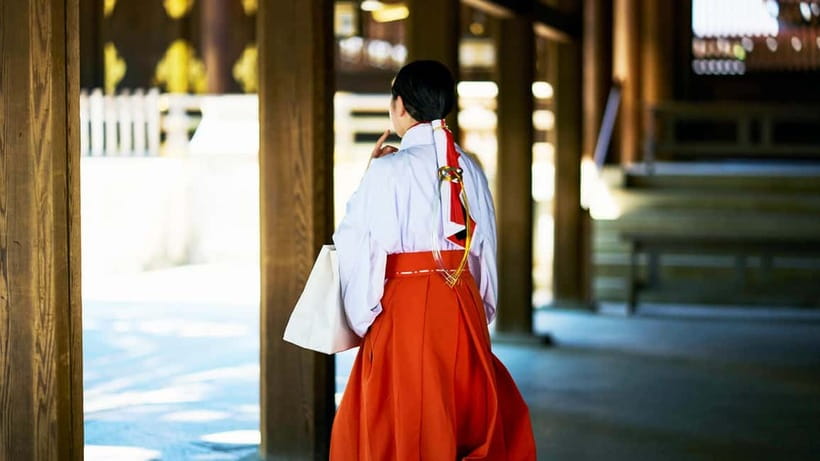
The first big wow moment is the shrine’s torii gates—especially the large one. This is where your tour earns its “walk” label.
You’ll encounter Japan’s largest wooden torii gate, standing at about 12 meters tall. The wood is described as coming from a 1,500-year-old Taiwanese cypress, and the structure has real presence. It doesn’t feel like a prop. It feels like a statement.
You also stop at the Meiji Jingu Ichino Torii, then you’ll work your way through additional torii highlights as you move deeper in. The tour builds in those little “pauses with purpose,” so you don’t just rush past landmarks.
What to look for:
- The scale: the gate makes you adjust your posture automatically.
- The material: the wood feels warm and grounded, not polished and modern.
- The approach: you’re guided to enter the shrine space the right way.
If you’re the type who loves symbolism, this section will satisfy you. If you’re more practical, it still works because the guide helps you know where to stand and what’s meaningful.
Passing under the torii the right way (and why seichu matters)
There’s one etiquette point here that I think every first-timer should learn. When you pass through the torii, it’s customary to walk along the edges of the path.
Why? Because the center route is called seichu, and it’s reserved for the deities. This isn’t just “don’t step there.” It’s part of a larger respect pattern for Shinto spaces.
Your guide explains this clearly, so you’re not guessing in front of other visitors. That’s a big deal in Meiji Jingu, where it’s popular and people are paying attention. You’ll also learn what to do when you reach the main shrine area—how to handle prayers and offerings respectfully.
Even if you’re not religious, this training changes the whole experience. You’re participating correctly, not accidentally acting like you’re in a theme park.
Consecrated barrels: the story behind the sake and wine
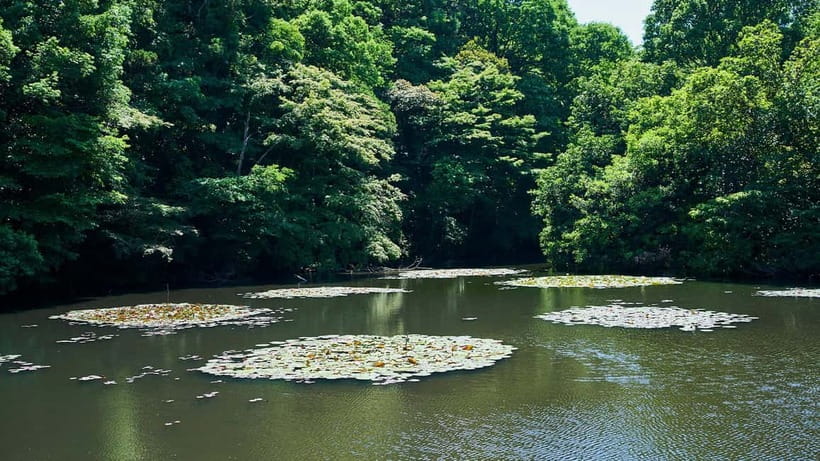
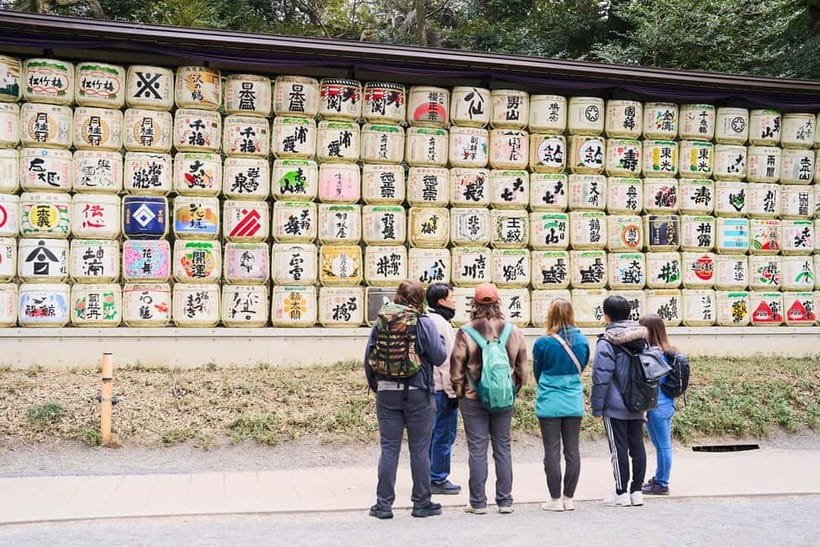
Between torii gates, the tour includes stops at the shrine’s consecrated barrel areas. You’ll see the Meiji Jingu Consecrated Wine Barrels, then later the Consecrated Sake Barrels.
These spots are short, but they’re not random. In Shinto tradition, offerings connect worshippers to the shrine through ritualized gestures. Here, the guide ties what you’re seeing to the way Meiji Jingu honors tradition and continuity.
What I like is that these stops are framed as “look closely” moments rather than just “snap a picture.” You’ll get guided explanation during each stop, which helps you understand why these barrels matter in a shrine setting.
A small drawback: if you hate structured stops (photo stop, guided time, walk again), this part can feel a bit segmented. But the advantage is that the route doesn’t waste time—you’re learning while moving.






Emperor Meiji and the imperial system you can actually connect to
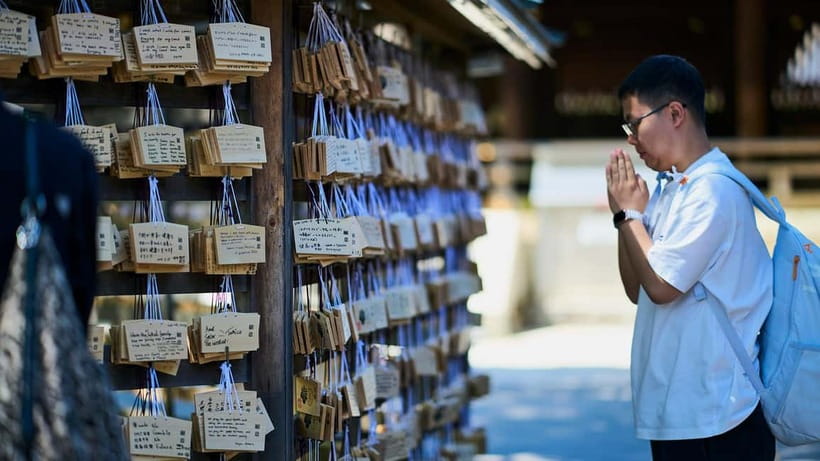
This tour doesn’t only teach shrine etiquette. It also connects Meiji Jingu to Japan’s imperial system, described here as a tradition spanning about 2,600 years.
A major stop is the section focused on Imperial Poetry of Emperor Meiji. You’ll pause to hear what’s written and how it ties to the Meiji legacy. This is where the “Shinto & Imperial System” title becomes real, not marketing.
Then the tour helps you understand the transition story too—how Japan went from the samurai era into the modern age. Even if you’ve studied Japan before, guides tend to make the timeline feel more human, like you’re seeing why changes happened and what people valued during the shift.
The strongest “take it home” element here is the omikuji experience linked to Emperor Meiji. You’ll have an option called Omigokoro, with poems written by Emperor Meiji and Empress Shoken. The poems come with English translations, so you can engage without guessing.
Meiji Shrine main area: prayers, omamori, and Omigokoro
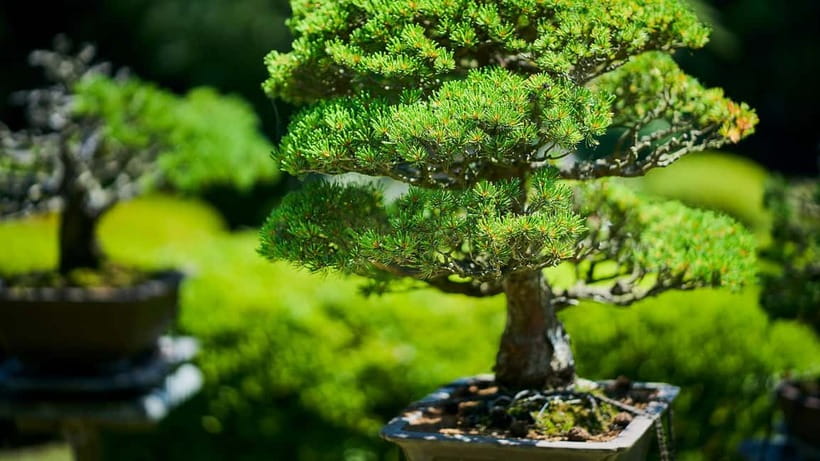
At the main shrine, you’ll get about 45 minutes for visiting and shrine activities. That free time is important, because it lets you slow down for yourself after the guided route sets the tone.
Your guide will help you navigate the etiquette so you can:
- Pay respects properly at the shrine
- Choose from protective omamori charms
- Try a unique fortune format called Omigokoro
What makes Omigokoro especially tourist-friendly is the presence of English translations with the poems. That turns a random souvenir purchase into something you can actually read and reflect on.
You’ll also be encouraged to shop at the gift area afterward. The shrine gift shop includes thoughtful options like eco-blocks made from fragrant Japanese camphor and miniature barrels of sacred sake. These are small, easy-to-pack souvenirs that also reflect the shrine theme, rather than generic Tokyo mass-market items.
One practical note: you’ll likely want to bring a bit of cash just in case. And if you don’t have coins, past guests have mentioned their guides helped them with offering coins—so you won’t be totally stuck, but come prepared if you can.
Café Mori no Terrace: tea, snacks, and a calm reset

After the shrine stops, you’ll unwind at Forest Terrace Meiji Jingu, then stop at Café Mori no Terrace. This is a simple but smart inclusion.
You’ll enjoy Japanese tea and light snacks while you take in the scenery. It’s not a long food break, but it gives your feet a reset and gives your brain a breather after ritual and rules.
If your Tokyo day is packed, this stop helps you avoid the late-day “I’m only sightseeing because I paid” feeling. Instead, it brings the outing back to a human rhythm: walk, learn, pray, then pause.
What makes the pacing work (up to 10 people)
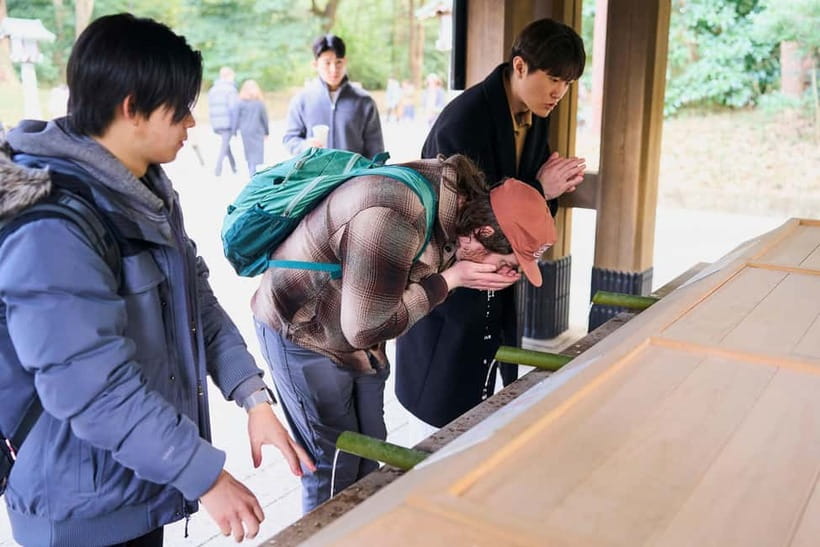
This is small group touring, limited to 10 participants. In practice, that usually means:
- You can hear the guide without standing five layers deep.
- Questions don’t get lost.
- The guide can keep the group moving without rushing you through everything.
The itinerary structure is guided, with photo stops and short walking segments between main sights. That design matters because Meiji Jingu can be easy to navigate on your own, but it’s hard to understand quickly without explanations. This tour gives you the “why” behind the “what.”
If you want a private, no-schedule experience, this may feel a bit organized. But if you want a fast path to getting the meaning right, the small group format is a strong match.
Price and value: why $23 feels fair for Meiji Jingu
At about $23 per person for 90 to 135 minutes, you’re paying for an English guide plus guided interpretation at multiple shrine-relevant points. That’s the real value here.
If you visited Meiji Shrine solo, you could still see the torii gates, the forest, and the main grounds. But you’d likely miss key etiquette cues (like walking the edges under the torii) and the deeper connections between the imperial system and shrine culture. You’d also spend more time figuring out what’s worth your effort.
What makes this one feel like good value is the combination:
- A meaningful setting (the forest and torii gates)
- Multiple guided stops (not just one)
- Time for actual shrine activities (not only photos)
- Omikuji/poetry features with English translations
- Tea and light snacks to round it out
In short: you’re not just buying access. You’re buying clarity.
Who should book this tour, and who might skip it
This tour is a strong fit if you:
- Want Shinto etiquette explained in plain language
- Enjoy symbolism and short, guided context at major points
- Appreciate seeing how Japan’s imperial story connects to cultural spaces
- Like group tours but prefer small groups
You might choose differently if you:
- Want a long, self-paced shrine day
- Need Japanese language support beyond the guide’s English explanations
- Prefer a food-focused tour (this includes tea and light snacks, not a full meal)
Should you book the Meiji Shrine Shinto & Imperial System walking tour?
If you’re short on time in Tokyo, this is an easy yes. The tour hits the big landmarks—torii gates and shrine grounds—then adds the stuff that makes you understand what you’re seeing. The forest quiet alone is worth the outing, and the guided etiquette keeps your experience respectful without making it stressful.
The small-group size is another reason to book. You’ll get enough structure to feel confident at the shrine, and enough breathing room to shop and try Omigokoro.
If you’re the type who likes to start Japan with context, this is also a smart first cultural step.
Book it—then show up ready to slow down and notice what changes when the city noise disappears.
FAQ
How long is the Tokyo Meiji Shrine Walking Tour?
The tour lasts about 90 to 135 minutes, depending on the starting time and group flow.
Is this tour available in English only?
Yes. The tour is conducted in English only, and Japanese language support is not available.
Where do we meet and where do we get dropped off?
Meeting point options include Harajuku Station (原宿駅), and the drop-off options also include Harajuku Station (原宿駅). The exact meeting point may vary depending on the option booked.
What are the main stops on the route?
You’ll visit major Meiji Jingu highlights including torii gates (including the big 12-meter torii), consecrated barrels (wine and sake), and the main shrine area, plus a tea break at Café Mori no Terrace.
What is included in the tour price?
Included items are an English guide, sightseeing tour, and the guide. You’ll also have time for shrine activities and a break with Japanese tea and light snacks at Café Mori no Terrace.
Can I cancel for a refund?
You can cancel up to 24 hours in advance for a full refund.