REVIEW · TOKYO
Tokyo: Knife Making Workshop (Sharpening, Engraving)
Book on GetYourGuide →Operated by BUB Activity Center · Bookable on GetYourGuide
Your hands learn Japanese steel fast. In Asakusa, I love the mix of practical sharpening with Japanese knife and sword context, and then finishing with custom Japanese lettering on your knife handle. The only drawback: the work asks for real focus, and bigger knife upgrades can add cost.
The class is run in English, with staff like Mori and Agata (and often Lisa and Joe) keeping things friendly and moving. You’ll get close guidance as you sharpen and hammer on the handle, so it feels hands-on rather than showroom-only.
In This Review
- Key highlights worth your time
- Tokyo Knife Making Workshop: Where it Fits in Your Japan Plan
- Finding BUB Activity Center in Asakusa (Heiwa Building, 5th Floor)
- Your First 10 Minutes: Haori, a Japanese-name badge, and tea
- Knife and Sword Basics: Why the history part isn’t filler
- Choosing Your Knife: Up to 5 options (and smart upgrade choices)
- Sharpening Workshop Time: The meditative part you can feel
- Engraving Your Name in Japanese: The part that turns a knife into art
- From Workshop to Kitchen: What you take home (and how to travel with it)
- Price and Value: Is $161 reasonable for a Tokyo workshop?
- Who this Tokyo Knife Making Workshop is best for
- Quick practical tips before you go
- Should you book the Tokyo knife making workshop?
- FAQ
- How long is the Tokyo knife making workshop?
- Where is the meeting point?
- Do I need prior experience to sharpen a knife?
- What is included in the price of $161 per person?
- Can I choose different types of knives?
- Is there extra cost for larger knife types like usuba or deba?
- Can friends or family watch without participating?
- Is the instruction available in English?
- What should I do with the knife box when transporting my knife home?
Key highlights worth your time
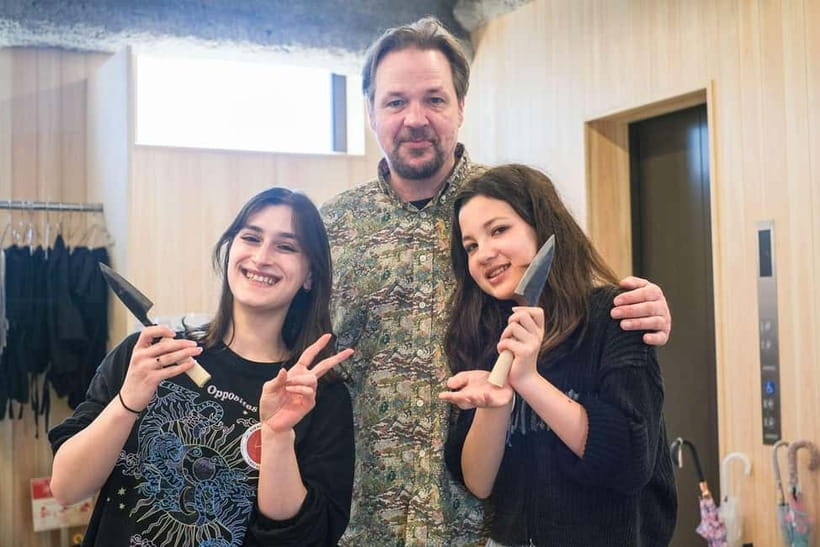
- Choose your knife style from up to 5 options, with some larger styles costing extra
- Sharpening that feels meditative, with instructors correcting your technique
- Name engraving in Japanese letters on the handle, plus optional extra designs
- History and care lessons on Japanese knives and swords, tied to what you’re doing
- Take-home presentation, including aesthetic packaging and snacks/drinks during the class
Tokyo Knife Making Workshop: Where it Fits in Your Japan Plan
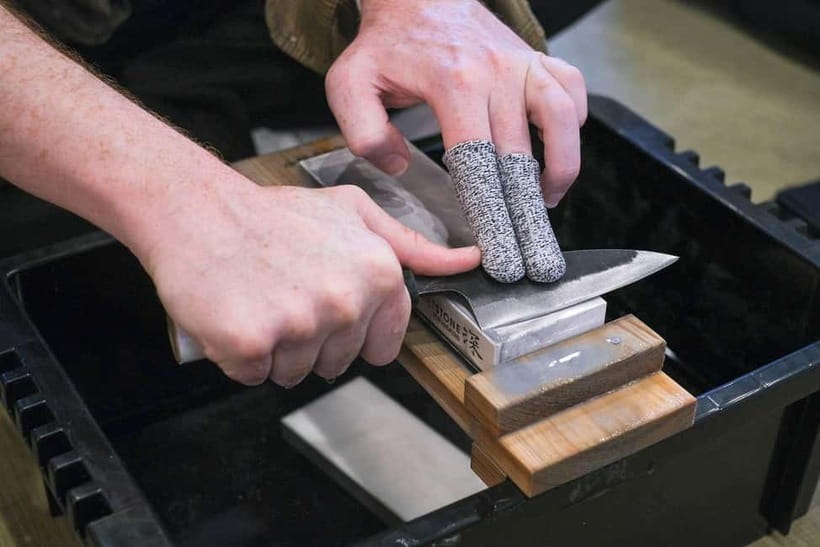
This is the kind of Tokyo experience that breaks up the usual sightseeing rhythm. Instead of just looking at tools, you make one step-by-step: pick a knife, sharpen it, assemble the handle, then personalize it. It’s also a great match for food-focused travelers, because Japanese knives are not just “cool souvenirs.” They’re real tools with real differences.
The workshop runs about 90 minutes. That timing matters. It’s long enough to learn a process, but short enough that you can still do an evening in Asakusa afterward without your whole day getting swallowed.
You’ll be working with blades (safely, with guidance), which means the vibe is concentrated. It’s not a party. It’s more like you’re sitting with a craft teacher while your hands learn a technique.
You can also read our reviews of more tours and experiences in Tokyo


Finding BUB Activity Center in Asakusa (Heiwa Building, 5th Floor)
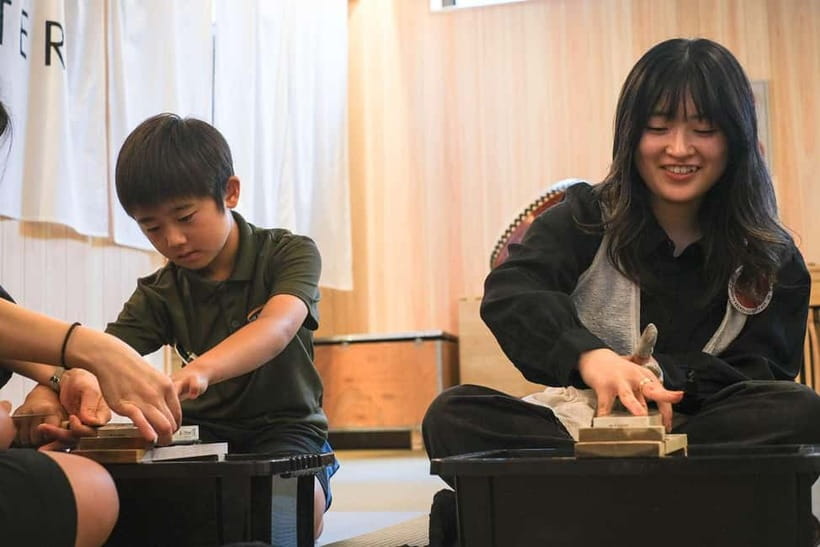
Meeting point is BUB ACTIVITY CENTER, in Tokyo, Taito-ku, Asakusa, at 2 Chome 6-11, Heiwa Building. Plan to take the elevator up to the 5th floor.
If you’re arriving by train, Asakusa is a practical base because it’s easy to reach by public transport. Once you’re there, the most important “logistics detail” is the elevator. Heiwa Building has multiple floors, so don’t waste time wandering when you can just go straight up.
Also note the class provides protective clothing (a light haori jacket). That’s useful in a city where you’ll probably be wearing something you don’t want covered in workshop dust.
Your First 10 Minutes: Haori, a Japanese-name badge, and tea
Before you touch any tools, you’ll get set up. You put on the light haori-style jacket they provide to help protect your clothes from accidental stains. Then you receive a unique badge with your name written in Japanese letters.
This is a small thing, but it helps the whole experience feel intentional. You’re not just booking a class; you’re stepping into a workshop culture that starts with small respectful details.
Then you’ll settle in with tea or juice, plus snacks. It’s a nice “pause” before the hands-on portion. And it gives staff time to explain what you’ll be doing and what to watch for.
Knife and Sword Basics: Why the history part isn’t filler
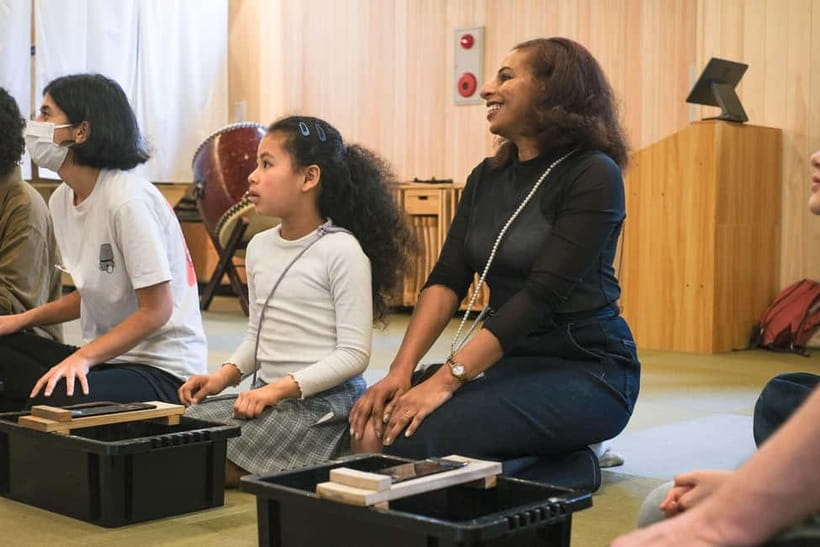
You’ll start with an explanation of Japanese knives and swords—how they differ, where the ideas came from, and why the edges and shapes matter. Even if you’re not a blade nerd, this matters because the sharpening technique you practice will make more sense once you know what you’re trying to achieve.
The class frames Japanese knives in a cultural way, not just as metal objects. That’s why it feels more meaningful than a generic souvenir workshop. When the instructor references swords alongside kitchen knives, they’re helping you connect craftsmanship and design decisions, not just telling stories for fun.
A big plus: there are bilingual staff members and the instruction is in English. Staff are there to keep the process clear at your level and to make sure you’re not guessing what you should do next.
Choosing Your Knife: Up to 5 options (and smart upgrade choices)
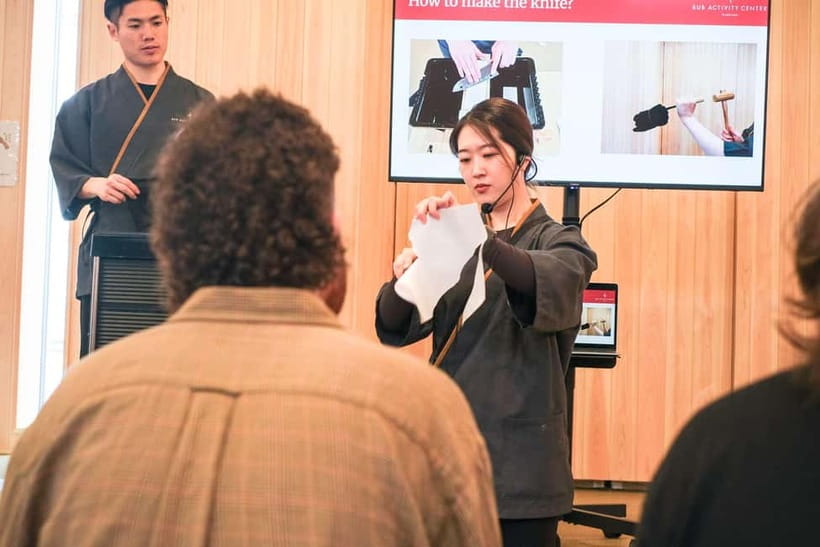
One of the best parts here is that you get to choose what you’ll sharpen. You can select from up to 5 knife types, and some larger options come with a small additional charge.
The key practical idea is this: the “right” knife depends on how you cook. If you do everyday prep, you’ll probably want something versatile. If you already have a Japanese knife at home, you might want a different style rather than duplicating what you own.
You don’t have to be an expert to make this call. The workshop staff help you choose based on what they teach about kitchen uses. That’s valuable because many workshops skip the “so what do I actually use this for?” question.






Sharpening Workshop Time: The meditative part you can feel
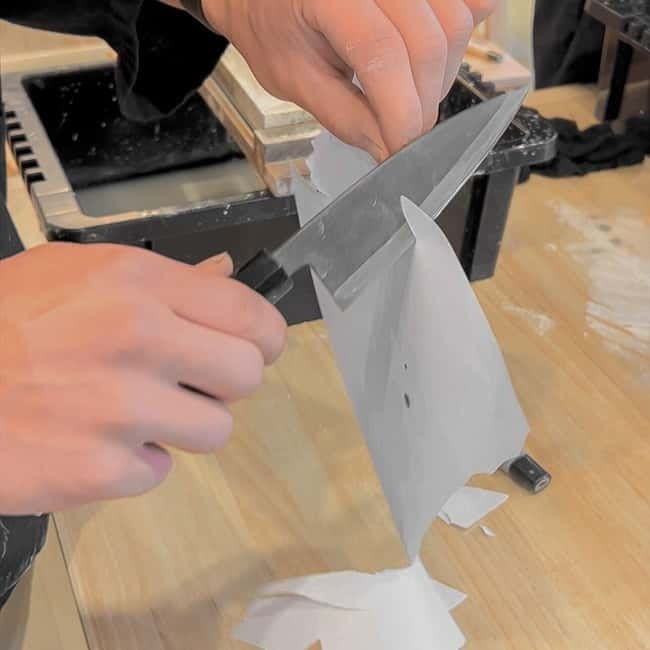
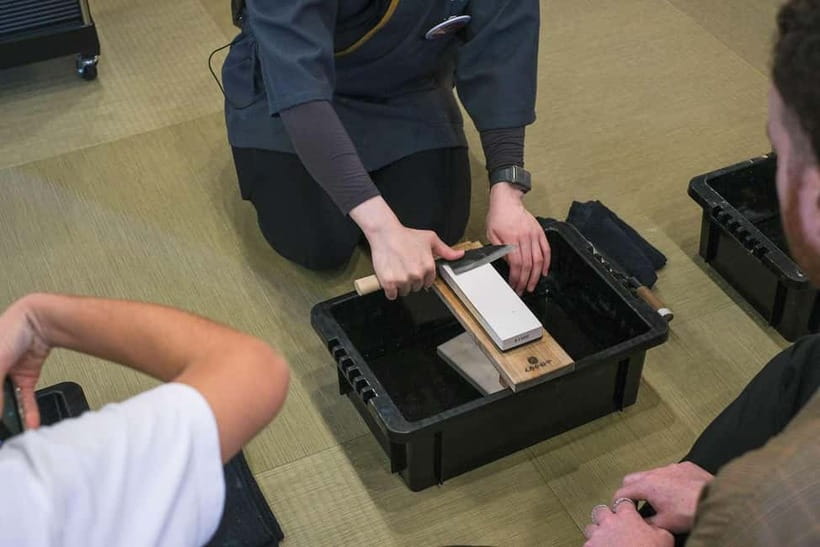
Now the hands-on part. You’ll sharpen the blade as a focused, step-by-step process. It’s described as meditative, and you’ll feel why: sharpening is repetitive in a good way, and the work forces you to slow down and pay attention to technique.
What makes it better than “try it yourself” is the supervision. English-speaking crew members stay close to support you, and they correct movements when needed. This helps prevent the common beginner problem of working hard but not changing the edge the way you think you are.
Expect you’ll be:
- learning how to hold and guide the sharpening process
- getting feedback on your motions
- polishing and refining the result until the blade is ready for assembly
If you like tactile tasks—making something with your hands—this is the moment you’ll remember.
Engraving Your Name in Japanese: The part that turns a knife into art
Once the blade work is done, the experience shifts toward personalization. You’ll engrave your name in Japanese letters on the handle. You can also engrave a picture or other design ideas, depending on what you want to attempt.
The hammer step is a highlight. You attach the handle using a traditional hammer method, and it’s the kind of craft detail that feels “real” rather than staged.
Also, don’t assume engraving will be effortless. Writing characters neatly takes practice, even with help. Plan to treat it like part of the fun, not a test. If your characters are slightly imperfect, you’ll still end up with a one-of-a-kind piece that you helped create.
This is also where the workshop pacing becomes important. You need enough attention to finish the handle work cleanly, because the personalization is a big part of the souvenir value.
From Workshop to Kitchen: What you take home (and how to travel with it)
Included in the experience is a standard size knife (multi-tasking) that you take home, plus the customized crafting experience itself.
You’ll also receive:
- a customized key-holder with a unique design
- aesthetic packaging
- Japanese snacks and drinks during the class
Knife souvenirs can be tricky for travel. This workshop makes that easier by telling you what to do with the knife box: you should put your knife box into your check-in luggage, or you can ask staff to ship it.
One more detail to keep in mind: some upgrades for larger knife types may cost extra. If you’re budget-conscious, you can still get a great take-home knife through the standard option. If you’re the type who will research and use knives at home, then paying for an upgraded type can feel more “worth it.”
Price and Value: Is $161 reasonable for a Tokyo workshop?
$161 per person sounds specific, and it is. The real question is whether you’re paying for a nice photo op or for skill and a usable product.
Here’s why it tends to feel like good value:
- You’re taking home a real knife, not a replica.
- The workshop teaches a process: sharpening method plus assembly and care context.
- You get personalization with Japanese engraving, plus thoughtful packaging and a key-holder.
- You’re not doing it alone: staff are actively correcting and assisting in English.
Where the value can wobble is if you add expensive knife upgrades. If you go for larger styles like usuba, deba, or petit yanagiba, there are additional fees mentioned for bigger types. Still, even with upsells, you’re paying for a guided craft experience that ends with a tool you can use.
Who this Tokyo Knife Making Workshop is best for
I think this fits best if you want one of these outcomes:
- a hands-on craft you can’t replicate easily at home
- a food-related souvenir that’s actually useful
- a meaningful gift for someone who cooks, collects tools, or appreciates Japanese design
It’s also a solid choice for beginners. You don’t need prior experience, and the staff correct you as you go. One reason I like it for first-timers is that the course doesn’t treat beginners as a problem. It treats guidance as part of the craft.
If you hate any kind of careful manual work, or if you want a purely casual, chat-heavy activity, this might feel too focused. Sharpening takes attention.
Quick practical tips before you go
- Wear something you’re okay with working in, even with the protective haori.
- Expect concentration. Your hands will be busy, so don’t plan a tightly packed appointment right after.
- If you’re bringing someone to observe, there’s an observation fee paid on site for non-participants.
- If you’re thinking about an upgrade, ask staff what type fits your cooking before you commit.
Should you book the Tokyo knife making workshop?
If you want a Tokyo souvenir with a story you can actually use, this is a strong yes. The class blends sharpening skill, knife culture context, and personalization that goes beyond generic “write your name” crafts. The guidance in English and support from staff like Mori and Agata (and other crew members such as Lisa and Joe) make it feel approachable rather than intimidating.
I’d consider skipping or at least adjusting expectations if you mainly want something light and effortless. Engraving and sharpening take effort, and you may feel the work is challenging if you’re hoping for a quick DIY moment. Also, if you’re traveling with a strict budget, remember that larger knife types come with additional fees.
In short: book it if you want a hands-on Tokyo experience tied to real kitchen function. Don’t book it if you want a low-focus activity.
FAQ
How long is the Tokyo knife making workshop?
It lasts about 90 minutes (about 1.5 hours).
Where is the meeting point?
The meeting point is BUB ACTIVITY CENTER in Tokyo, Taito-ku, Asakusa, at 2 Chome 6-11, Heiwa Building. You should take the elevator to the 5th floor.
Do I need prior experience to sharpen a knife?
No. It’s suitable for beginners, and no prior experience is required.
What is included in the price of $161 per person?
The workshop includes a standard size knife (multi-tasking) to take home, the customized knife crafting experience, Japanese snacks and drinks, bilingual staff assistance, aesthetic packaging, and a customized key-holder with a unique design.
Can I choose different types of knives?
Yes. You can choose the type of blade you’d like to sharpen, with up to 5 types available. Some of the bigger types have a small additional charge.
Is there extra cost for larger knife types like usuba or deba?
Yes. The information states that there’s an additional fee for bigger types such as usuba, deba, and petit yanagiba.
Can friends or family watch without participating?
Yes, they can observe, but there is an observation fee paid on site if they are not participating.
Is the instruction available in English?
Yes. The instructor and staff assistance are English.
What should I do with the knife box when transporting my knife home?
The guidance says you should put your knife box into your check-in luggage or ask the staff to ship it.