REVIEW · TOKYO
Tokyo: Japanese Cooking Class – Bring the flavors of Japan to France
Book on GetYourGuide →Operated by Yumiko Mizutani · Bookable on GetYourGuide
You can learn real Japanese cooking fast. This small workshop in Futako-Tamagawa puts you in a family kitchen run by Yumiko and supported by her daughter Yuri for French help. You cook everyday Japanese comfort food, not just restaurant showpieces.
I really like two things here. First, the class stays small (max 3 people), so Yuri can answer your questions without rushing you. Second, the recipes focus on ingredients and techniques you can repeat at home, even in France, including karaage and classic basics like miso soup and rice onigiri.
One thing to consider: the house has cats. They’re kept away during cooking, but if you have animal allergies, this is probably not the right fit.
In This Review
- Key things you should know before you go
- Finding The Futako-Tamagawa kitchen: the meeting point matters
- Warm welcome, tea, and French guidance from Yuri
- The 150-minute cooking flow: karaage, miso soup, and onigiri
- Main dish: karaage (Japanese fried chicken)
- Side dishes and sauce work
- Soup: miso soup with pork and vegetables
- Rice or onigiri: the daily-food finish
- Cooking stages and participation
- Why this menu teaches more than ramen and sushi
- Plating on Japanese ceramics: the meal part is part of the lesson
- Recipes you can repeat in France (not just read)
- Price and value: $89 for 150 minutes that includes dinner
- Who should book this Japanese cooking class in Tokyo
- Should you book this cooking class?
- FAQ
- Where is the meeting point?
- How long is the class?
- What dishes will I cook?
- Is the class beginner-friendly?
- Do they provide ingredients, utensils, and aprons?
- Can vegetarians join?
- Is this suitable for kids or allergy concerns?
Key things you should know before you go
- Family team in a small group: Yumiko cooks with you, while Yuri handles French communication throughout.
- Recipes built for real home kitchens: ingredients are described as easy to find in France.
- Karaage is the headline dish: Japanese fried chicken that also makes sense to French tastes.
- Daily-food approach: you learn dishes Japanese people eat often, not only famous ramen or sushi.
- Japanese ceramics for plating: you cook, then serve your food on traditional tableware.
- A warm, low-pressure pace: beginners are welcome, and you can take the skills back and cook again.
Finding The Futako-Tamagawa kitchen: the meeting point matters
This class is in Honshu, Tokyo, near Futako-Tamagawa Station. Meet in front of the McDonald’s just outside the East exit, on the Den-en-toshi and Ōimachi lines. It’s a simple meet-up point, and that matters because you’re heading to someone’s home kitchen, not a big restaurant with a line and a loud host station.
The time window is 150 minutes. That’s long enough to shop at the right rhythm (no chaos), cook in stages, and still sit down to eat the results. You’ll also have the chance to ask questions as you go, especially with Yuri translating in French.
You can also read our reviews of more cooking classes in Tokyo


Warm welcome, tea, and French guidance from Yuri
You’re not thrown into Japanese cooking with zero support. The workshop runs in French, and an assistant is present to facilitate communication during the experience. Yuri, Yumiko’s daughter, is involved throughout and is the key link between the Japanese household way of cooking and your French-language understanding.
A nice touch: you get a welcome tea right away, plus a free tea during the experience. At the end, Yumiko serves a seasonal tea that she carefully selects. It’s not a formal lecture. It’s part of the rhythm of the meal, the kind of detail that makes this feel like a dinner in a home, not a class that ends the moment you finish frying.
One practical note: aprons, towels, and slippers are provided. So you can arrive in normal clothes and focus on cooking rather than logistics.
The 150-minute cooking flow: karaage, miso soup, and onigiri
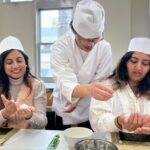
Think of the workshop as a set of hands-on stations that move at a comfortable pace. You’ll cook and then taste what you made, served in Japanese ceramics in a warm atmosphere.
Main dish: karaage (Japanese fried chicken)
Karaage is the big one. You’ll learn how to prepare the chicken and handle the frying process to get that crispy result. The reason karaage works so well for a mixed audience (Japanese-food curious and French-food curious) is simple: it’s flavorful, crunchy, and familiar in the general sense of fried chicken, while still being distinctly Japanese in seasoning and texture.
If you’re the type who loves getting the method right—then tasting right away—this is a good class for you. Reviews mention the way the hosts explain ideas like umami, which is especially relevant for karaage-style seasoning, where small choices make a big difference.
Side dishes and sauce work
Alongside karaage, the sample menu includes teriyaki salmon and sesame vegetables plus an additional side dish. Even if your exact menu varies a bit by session, the skill focus is consistent: build balanced flavor using sauces and seasonings that aren’t complicated, then practice control over timing and heat.
Some classes may also include dishes like tonjiru (pork and vegetable miso soup), based on what’s been cooked in past sessions. Either way, you’ll spend time on the kind of flavor-building that makes Japanese food feel clean and deep at the same time.
You can also read our reviews of more tours and experiences in Tokyo



Soup: miso soup with pork and vegetables
Miso soup is the practical comfort-food lesson. You learn how to handle miso and build a bowl that tastes rounded rather than flat. In a French kitchen, miso can feel like a specialty ingredient. Here, you get the basic technique so you can understand what you’re tasting and why it works.
If you’re new to Japanese cooking, miso soup is also a confidence boost. It’s not about fancy tools. It’s about ratios, heat control, and not rushing.
Rice or onigiri: the daily-food finish
You’ll either make rice or onigiri (rice balls). Onigiri is a perfect example of Japanese everyday food: portable, satisfying, and surprisingly easy once someone shows you the shape-and-fill logic.
Even if you don’t fall in love with onigiri on day one, you’ll come away knowing how to handle rice in a Japanese way, and that’s a foundation you can reuse for lots of meals.
Cooking stages and participation
The hosts encourage you to participate throughout. That’s not just feel-good. It affects the learning. If you mostly watch, you’ll forget details later. In this class, you do the steps, so the memory is tied to muscle and timing, not just information.
Why this menu teaches more than ramen and sushi
Tokyo is famous for ramen and sushi, but Japanese home cooking is different. This workshop is designed around the basics Japanese people eat more often, which is a smart way to learn. You’re not hunting for rare ingredients or advanced techniques that only show up in restaurants.
The “France connection” is also a real value point. The class is built around recipes that use ingredients described as easy to find in France. That means your takeaway isn’t a one-off experience. It’s a blueprint for meals you can make again without hunting for hard-to-find items.
And because the menu includes fried, grilled, sauced, and soup-based components, you cover multiple cooking styles in one session:
- frying (karaage)
- sauce finishing (teriyaki)
- vegetable seasoning (sesame vegetables)
- broth-based comfort (miso soup)
- rice handling (rice or onigiri)
You leave with variety, which helps you keep cooking at home instead of letting the class become a memory only.
Plating on Japanese ceramics: the meal part is part of the lesson
You don’t just cook and leave. You plate your food using Japanese ceramics and then eat together in a warm atmosphere. That detail matters because Japanese dining culture is visual. Presentation is part of how flavors feel.
It also gives you a natural moment to slow down. After you’ve worked with your hands for the full 150 minutes, eating what you made helps you connect technique to taste.
Reviews also note that the atmosphere is convivial and welcoming, with the mother-daughter duo making people comfortable from the start. You get more than a recipe list. You get a sense of daily kitchen care.
Recipes you can repeat in France (not just read)
One of the best promises here is practicality: the recipes are presented as easy to make at home with ingredients you can find in France.
You’ll receive the recipe as part of the included experience, along with all ingredients and utensils. That reduces the “prep tax” that so many cooking classes hide. The result is that when you’re back in France, you can actually cook the dishes without re-creating the shopping list from scratch.
A bonus angle from past participants: the hosts don’t just hand you steps; they share tips. One review mentions learning how to reveal Japanese umami, and that’s the kind of advice that helps you adjust when your ingredients aren’t identical to what you used in Tokyo.
Price and value: $89 for 150 minutes that includes dinner
At $89 per person for 150 minutes, this is priced like a guided cooking experience, not like a quick tasting. The value comes from what’s included:
- meals (you cook and eat what you make)
- recipe documentation
- all ingredients and utensils
- apron loan
- welcome tea and free tea
On top of that, it’s a small group (maximum 3) with a household host team and French facilitation. In practice, that means more time asking questions and getting corrections while you cook.
If you compare it to a typical food tour where you mostly eat and walk, you’re paying for skills. That’s the difference. You’re not only collecting memories; you’re collecting methods you can use on a weeknight.
Who should book this Japanese cooking class in Tokyo
This works especially well if you:
- want an authentic Japanese home-kitchen experience
- are more interested in learning techniques than chasing famous tourist meals
- want French-language guidance
- like small-group instruction where you can ask questions
- are a beginner who still wants to cook real dishes
It’s also a good choice if you’re a foodie who thinks karaage and miso soup sound approachable and want to understand the “why” behind the flavors.
It may not fit if you:
- have animal allergies (cats are in the house, even if kept away during cooking)
- have food allergies (people with food allergies aren’t suitable)
- need child-friendly programming (not suitable for children under 6)
Should you book this cooking class?
Book it if you want a focused, friendly Japanese cooking lesson in a real home setting, with French support and a menu that you can reproduce in France. The small group size and the Yumiko–Yuri team are the standout reasons, and the included meals and utensils make it feel like a complete experience, not a pay-and-wait workshop.
Skip it if cats are an allergy concern or if you have food allergies and need a class that can guarantee safe substitutions. Also, if your French is basic and you strongly rely on full English support, you should keep in mind the workshop is listed as French-language, with help from the hosts.
FAQ
Where is the meeting point?
Meet in front of the McDonald’s just outside the East exit of Futako-Tamagawa station (Den-en-toshi and Ōimachi lines).
How long is the class?
The experience lasts 150 minutes.
What dishes will I cook?
You’ll learn a menu that includes karaage as the main course, plus dishes such as miso soup and onigiri or rice. Teriyaki salmon and sesame vegetables are listed in the sample menu, and vegetarian menus can be adapted.
Is the class beginner-friendly?
Yes. Beginners are welcome, and the workshop is designed for easy recipes you can make at home.
Do they provide ingredients, utensils, and aprons?
Yes. All ingredients and utensils are included, and aprons are loaned. Towels and slippers are also provided.
Can vegetarians join?
Vegetarians are welcome. You should message in advance so the menu can be adapted.
Is this suitable for kids or allergy concerns?
It’s not suitable for children under 6. It’s also not suitable for people with animal allergies or people with food allergies. Smoking is not allowed, including indoors.