REVIEW · TOKYO
Private Omiya Bonsai Village Tour with Licensed Guide
Book on Viator →Operated by Japan Guide Agency · Bookable on Viator
One train ride away from quiet art. This private Omiya Bonsai Village tour is a great way to see six bonsai gardens in one half-day, without hunting around on your own. I also like the way your licensed English guide turns the visit into something you can ask about—plants, techniques, and the story behind this place. One consideration: the Omiya Bonsai Art Museum has scheduled closures (Nov 5, 2024 to Mar 20, 2025), so your timing may decide what you get most from the day.
You’ll start in Tokyo with a meet-up at your hotel or another chosen spot, then head toward the Omiya Bonsai district. The tour is built around a simple flow: gardens for atmosphere and photos, then a museum stop for context, with time to look at the plants up close.
At $107.50 per person for about 4 hours, it’s priced for people who value convenience and good explanations—especially since it’s private (only your group). If you’re traveling solo, it can still feel fair because a licensed guide is included, but the best value usually comes when you’re traveling with a small group (group discounts are offered).
In This Review
- Key Things I’d Prioritize on This Tour
- Bonsai Village Near Tokyo: Why This Half-Day Fits
- Private Licensed Guide in Tokyo: Less Stress, More Answers
- Tokyo to Omiya Bonsai District: The Ride That Sets the Tone
- Omiya Bonsai Village: Six Gardens for Variety and Serious Looking
- Omiya Bonsai Art Museum: Context, Techniques, and Timing Check
- Price and Logistics: What $107.50 Buys (and What It Doesn’t)
- Who This Tour Is Best For (and Who Might Skip It)
- Quick Booking Advice: How to Get the Day You Want
- Should You Book This Private Omiya Bonsai Village Tour?
- FAQ
- How long is the private Omiya Bonsai Village tour?
- What’s included in the price of $107.50 per person?
- Do I get pickup in Tokyo?
- What will I see during the tour?
- Is the museum admission included?
- Is there free cancellation?
Key Things I’d Prioritize on This Tour
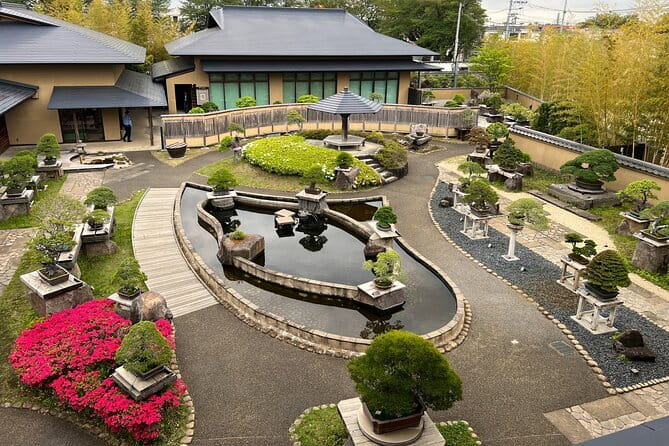
- Six distinct gardens in the Omiya Bonsai Village area, so you’re not stuck with just one view
- Licensed English-speaking guide who answers questions and helps connect the dots
- Photo-friendly garden time, with plenty of chances to capture unique souvenir-style shots
- Museum context, to understand bonsai as an art form (with closure dates to check)
- Opportunity to buy a souvenir bonsai plant, if you want a take-home memory
Bonsai Village Near Tokyo: Why This Half-Day Fits
Omiya Bonsai Village is the kind of place that makes sense even if you only have a little time. You’re not trying to squeeze “everything in Tokyo” into a day; you’re heading to a concentrated bonsai district where the walking is mostly about slowing down, looking carefully, and letting the shapes do their work.
This tour is also nicely structured for first-timers. You get garden time, then you get the museum stop, so you can go from seeing the trees to understanding why they’re arranged the way they are. If you’re the type who likes a few good details instead of a long lecture, this format is a win.
And since it’s private, you can pace it. Want more time at one garden because a particular tree form catches your eye? You can usually work that out with your guide rather than feeling rushed.
You can also read our reviews of more guided tours in Tokyo
Private Licensed Guide in Tokyo: Less Stress, More Answers
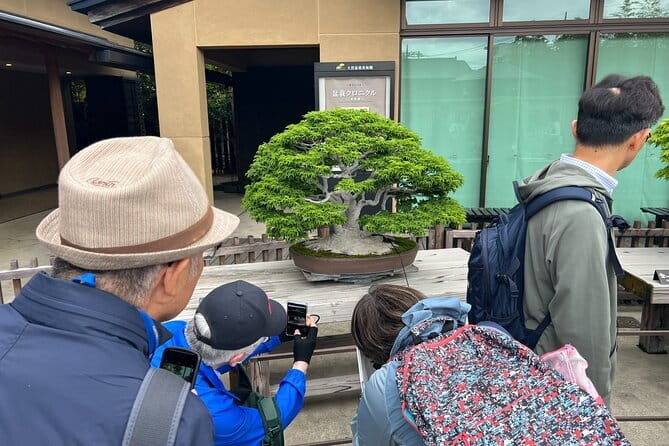
The biggest reason I like private tours here is practical: you don’t have to figure out how to get yourselves from Tokyo to the Omiya Bonsai area and then back again while also trying to read maps in between.
You’ll meet a licensed English-speaking guide in Tokyo at your hotel or your preferred meeting point. From there, the guide helps you handle the in-between logistics so you can focus on the experience.
I also appreciate that the guide is there to talk. In one account connected with this tour, the guide Kahori was described as patient and took the time to explain plant-related points. Another guide, Miyuki, was noted for being accommodating and for sharing bonsai history and general bonsai info. That kind of back-and-forth matters because bonsai isn’t just “small trees.” The interest is in the decisions—how the tree is shaped, trained, and presented over time.
One helpful touch: on the way, the guide even used downtime for something fun like origami. That kind of moment may sound small, but it keeps the day feeling relaxed instead of purely transactional.
Tokyo to Omiya Bonsai District: The Ride That Sets the Tone
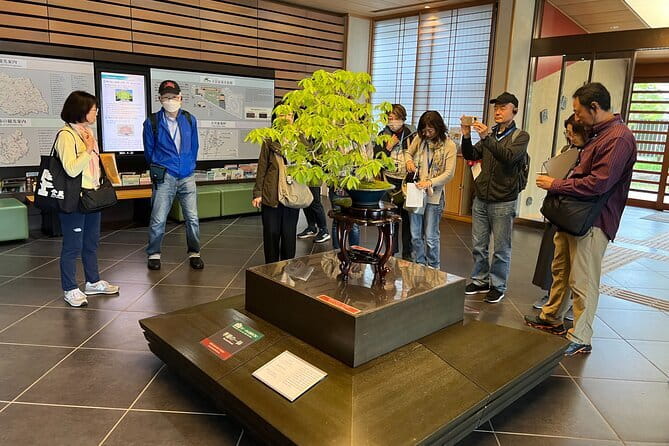
Your day starts in Tokyo, with a meet-up and then travel toward Omiya Bonsai District. Plan on about 1 hour each way, which adds up to roughly 2 hours of round-trip travel time.
The good news: you’re not spending the entire half-day just commuting without purpose. The time functions like a buffer. You get a chance to ask questions before you reach the gardens, and you’re also less likely to arrive stressed, rushing, or confused about what you’re supposed to see first.
There’s a small planning consideration though. The tour includes the guide, but it does not list a private car and it also notes that transportation fees aren’t included. So you’ll want to budget for your actual ride(s) to and from the district based on what the guide recommends and what’s feasible from your meeting point.
Omiya Bonsai Village: Six Gardens for Variety and Serious Looking
This is the heart of the experience. The Omiya area has a strong connection to bonsai pioneers who relocated there about 100 years ago. That background gives the village a sense of continuity—you’re not just looking at pretty plants, you’re seeing a horticultural tradition built and maintained in a specific place.
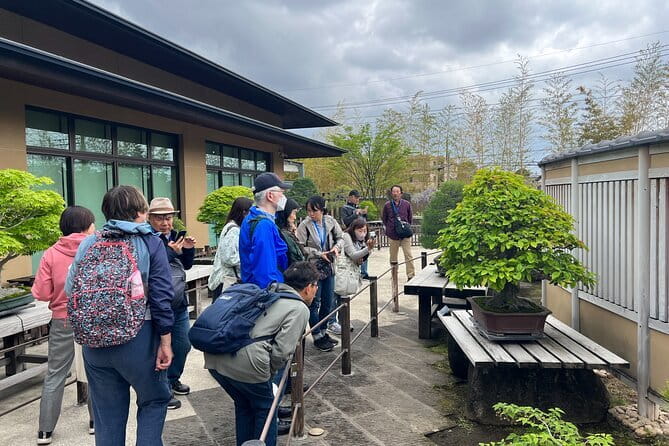
You’ll visit the Bonsai Village section with six distinguished gardens. The garden time is about 1 hour 30 minutes. That’s enough to move through multiple spaces without feeling like you’re sprinting, but still short enough that you’ll be paying attention to what’s right in front of you.
Why I think six gardens is such a smart setup:
- Each garden can show a different arrangement style and visual mood.
- You get variety in what you’ll photograph, instead of repeating the same composition over and over.
- It helps you compare presentation choices—how the trees relate to the surrounding space.
Also, the tour is built for photos. The gardens are repeatedly described as a great spot for unique souvenir-style photos, which makes sense: bonsai encourages close viewing, clean lines, and interesting angles. If you like taking pictures but also want to enjoy what you’re seeing (not just snap and run), this portion hits the sweet spot.
If you buy bonsai as a souvenir, this is typically where the chance comes up. The tour includes a chance to purchase a souvenir bonsai plant, which can be a meaningful memento—because bonsai is literally living art. Just remember admission for gardens isn’t included in the price, so there may be small on-site fees depending on what’s required for access.
Omiya Bonsai Art Museum: Context, Techniques, and Timing Check
Right after the gardens, you’ll head to the Omiya Bonsai Art Museum, located on the edge of the bonsai village. The museum stop is about 30 minutes.
This is where you switch from scenic looking to understanding. Even in a short visit, the museum format usually helps you connect what you noticed in the gardens to broader bonsai ideas: why certain trees are trained a certain way, how display and presentation work, and how bonsai is approached as an art form in Japan.
One detail that stands out from a guide-related note connected with this tour: the museum has a thousand-year-old ezo spruce. That’s the kind of specimen that makes a quick stop feel more worthwhile, because it gives you a clear “scale of time” perspective. Bonsai isn’t a quick craft—this is about long-term care and design.
The major caution is timing. The museum is listed as closed for renewal from Nov 5, 2024 to Mar 20, 2025. If your trip falls within those dates, your tour day may feel more garden-heavy than museum-focused. If you’re traveling specifically for the museum collection, double-check your dates before booking.
You can also read our reviews of more private tours in Tokyo


Price and Logistics: What $107.50 Buys (and What It Doesn’t)
Here’s the honest value check. For $107.50 per person, you’re buying:
- A private experience
- A licensed English-speaking guide
- Tokyo meet-up and guide support for getting to the district
- Garden and museum visit time within a structured half-day flow
- The convenience layer (your guide handles the plan, you enjoy the day)
What you’re not buying:
- Admission fees (listed as not included)
- Transportation fees (listed as not included)
- Lunch and personal expenses
- A private car (not included)
So the tour makes the most sense if you want to avoid DIY planning friction. If you’re comfortable taking transit on your own and navigating ticketing without help, you might compare costs and decide you can do it cheaper. But if you want your time to be guided—explained, paced, and simplified—then this price is easier to justify.
Also consider timing. The tour is often booked about 52 days in advance on average, so if you’re traveling in a busy season, earlier booking can help you lock in availability.
Finally, this is offered with pickup and a mobile ticket, and group discounts are mentioned. Those details matter if you’re coordinating with family or friends and want fewer moving parts.
Who This Tour Is Best For (and Who Might Skip It)
This tour is ideal if you fit at least one of these:
- You like nature and plant culture, and you want explanations that aren’t just visual
- You want a quieter, calmer day away from central sightseeing crowds
- You’re traveling with someone who appreciates detail—bonsai is all detail
- You want photo-friendly garden time with guidance on what to look for
It can also be a good fit for casual visitors. You don’t need to know anything about bonsai going in. The guide’s role is to translate the why behind the shapes, so your visit becomes more than walking past trees.
I’d consider skipping or adjusting expectations if:
- The museum closure dates hit your exact travel window and museum specimens are your main draw
- You’re allergic to paying on-site admission and want everything fully bundled in the upfront price (here, admissions are not included)
Quick Booking Advice: How to Get the Day You Want
Before you book, I’d do two things:
- Check whether your travel dates fall during the museum renewal closure.
- Plan for on-site costs like garden/museum admissions since they aren’t included.
Once you’re on the day, wear shoes you can walk in comfortably, bring a camera (you’ll want it here), and come ready with questions. The tour is set up for that. Private guides are at their best when you ask about the things you notice: styling choices, tree shapes, and how displays affect what you see.
And if you’re tempted by the souvenir bonsai plant option, treat it as a memory with weight—something you’re taking home as well as looking at.
Should You Book This Private Omiya Bonsai Village Tour?
If you want a calm half-day that trades big-city stress for focused garden time—and you value having a licensed English guide to explain what you’re seeing—then yes, I’d book it. The combination of six gardens, a museum context stop, and the chance to buy a bonsai makes it feel like a complete themed outing, not just a quick photo stop.
But check your dates first. If the museum is closed during your visit, you’ll still get strong garden time, yet you might miss the part of the day that includes standout specimens like the ezo spruce. If that museum piece is a must for you, align your trip outside the renewal window.
In short: book this when you want bonsai culture with fewer hassles and better interpretation.
FAQ
How long is the private Omiya Bonsai Village tour?
It’s about 4 hours (approx.).
What’s included in the price of $107.50 per person?
The tour includes a licensed English-speaking guide and meeting the guide in Tokyo on foot. It does not include admission fees, lunch, or transportation fees.
Do I get pickup in Tokyo?
Yes. Pickup is offered, and you’ll meet your guide at your hotel or another desired place in Tokyo.
What will I see during the tour?
You’ll visit Omiya Bonsai Village (six different bonsai gardens) and the Omiya Bonsai Art Museum.
Is the museum admission included?
No. The museum admission is listed as not included, and the museum also has a closure period from Nov. 5th, 2024 to March 20th, 2025.
Is there free cancellation?
Yes. You can cancel for a full refund up to 24 hours in advance of the experience’s start time.