REVIEW · TOKYO
Tokyo Day Tour in Mt. Fuji, Lake Ashi Cruise and Owakudani Cable
Book on Viator →Operated by Hotel Takitei · Bookable on Viator
Fuji day trips need good planning. This route gives you Hakone Shrine views and the Hakone Ropeway experience in one long, well-paced day, with pickup and drop-off from central Tokyo. I also like that the guides handle multiple languages (English, Japanese, Chinese), so you’re not stuck guessing what you’re looking at. The catch is weather: Mount Fuji visibility isn’t guaranteed, and clouds can change the payoff.
This is a shared group tour (up to 45 people) built for people who want a lot of sights without doing multiple tickets and train transfers. One more practical thing: lunch and the Lake Ashi pirate ship cost extra, so plan your budget before you get hungry.
In This Review
- Key Points You Should Know Before You Go
- Tokyo to Hakone in One Day: What the Full-Day Format Really Means
- Hakone Shrine and the Lake Ashi Torii: A Good Start for Early Views
- Togendai to Lake Ashi: The Pirate Ship Adds Magic (and Costs Extra)
- Hakone Ropeway to Owakudani: Where the Views Get Real
- Owakudani Valley and Black Eggs: The Volcanic Stop You Can’t Skip
- Lake Yamanaka (Swan Lake) and Oshino Hakkai: Two Classic Fuji-Area Photos
- Timing, Traffic, and Why Your Day May Feel Tight
- Price and Value: What $67.39 Gets You (and What You Pay Separately)
- Photo Tips for a Weather-Dependent Mount Fuji Day
- Who This Tour Fits Best
- Should You Book This Mt Fuji and Hakone Day Tour?
- FAQ
- How long is the tour?
- Is the Hakone Ropeway ticket included?
- Do I need to pay extra for the Lake Ashi cruise?
- What languages do the guides speak?
- Is lunch included in the price?
- Where are pickup and drop-off?
- Will I definitely see Mount Fuji?
- Can I cancel for free?
Key Points You Should Know Before You Go
- Hakone Ropeway ticket is included, which saves time and hassle.
- Lake Ashi pirate ship costs extra (USD $12 per person), but it’s a standout lake moment.
- Owakudani is the volcanic centerpiece, with steaming vents and the famous black sulfur eggs.
- Guides can speak English, Japanese, and Chinese, and many focus on clear timing and safety.
- Bring cash (yen) since some places may not take credit cards.
- Mount Fuji visibility is weather-dependent, so you’ll want a plan B mindset.
Tokyo to Hakone in One Day: What the Full-Day Format Really Means
A 10-hour day sounds like a lot. In practice, it’s exactly why this tour works. You’ll spend the day moving between iconic Fuji-area stops instead of spending half your time figuring out connections.
Pickup and drop-off are from central Tokyo at a designated meeting point. The vehicle is air-conditioned, and the group stays together with a single guide. That’s a big deal when you’re tired, jet-lagged, or just don’t want to wrestle with train schedules.
The rhythm here is: ride for scenic transitions, then short-to-medium stops where you get photos, sights, and a bit of context. Several guide names in the feedback stand out for doing this well, like Jake, Kousei, Jack, Peter, Andrew, and Tom. Across those experiences, the common theme is clear guidance on what to do, where to stand for views, and when to regroup.
You can also read our reviews of more boat tours in Tokyo


Hakone Shrine and the Lake Ashi Torii: A Good Start for Early Views
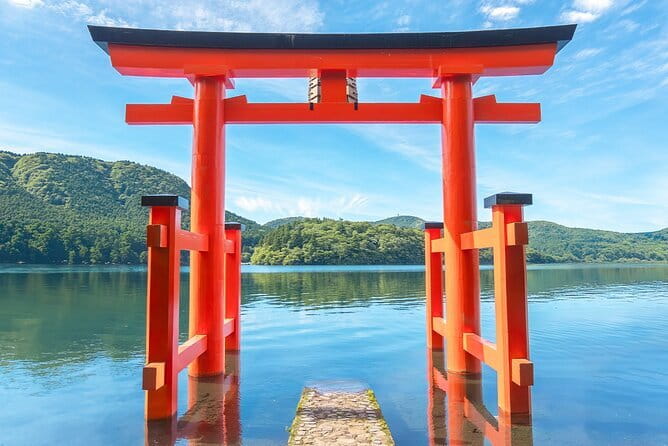
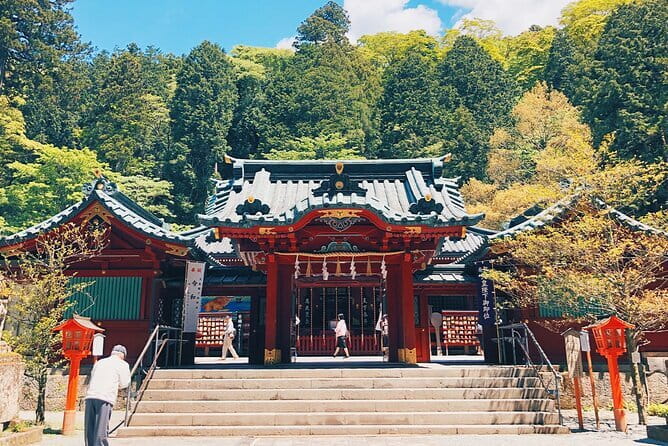
Your first meaningful stop is Hakone Shrine, with about 50 minutes on site (and admission free). This is one of those places that works even if the light is changing, because the scene combines shrine atmosphere with the water view setup.
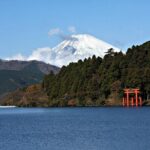
From there, you’re heading toward the Hakone Shrine and Lake Ashi torii area—perfect for quick photos and that classic Japan water-gate vibe. If Mount Fuji is visible that day, this is a strong early chance. If it isn’t, you’re still getting a cultural start that feels like you’ve arrived in Hakone rather than just passing through.
One practical note: you’re in a shared group. So even though you have nearly an hour, don’t plan on roaming forever. Focus on the spots the guide points out, then take your time after the group moves.
Togendai to Lake Ashi: The Pirate Ship Adds Magic (and Costs Extra)
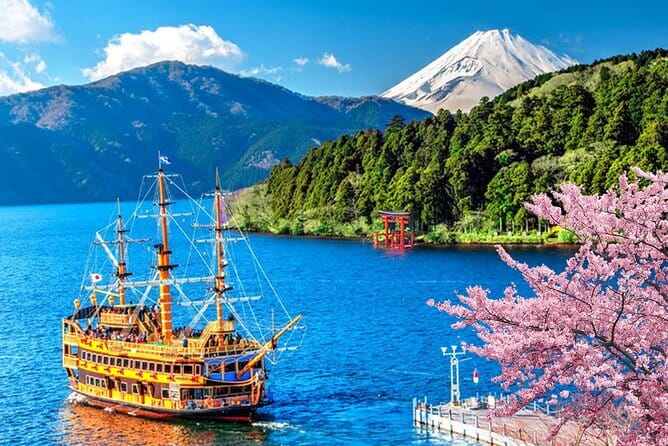
At Togendai, you’ll have a Lake Ashi Pirate Ship cruise (about 25 minutes). This part is not included in the base price, and it’s listed at USD $12 per person.
Why include it in your day? Because Lake Ashi is the visual glue of the whole trip. The cruise gives you a different angle on the torii gate and Mount Fuji when visibility is good. Even when Fuji is hiding, the lake itself still gives you a slower, scenic reset from the road.
Timing can be tight. One downside that showed up in feedback: if the cruise is delayed, it can compress the rest of the schedule, and you may end up with less time at other stops. If your day is weather-sensitive (or you hate waiting), build in patience at Togendai.
If you’re the type who dislikes missing out, budget the pirate ship cost up front. It’s one of the most memorable parts of the itinerary, and it breaks up the long transport day nicely.
Hakone Ropeway to Owakudani: Where the Views Get Real
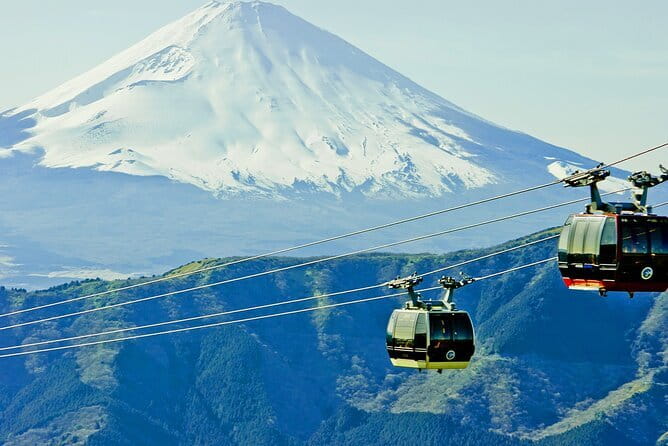
Next up is the Hakone Ropeway from Togendai Station. Here’s the best value point for many people: the ropeway ticket is included.
You’ll have around 30 minutes for the ropeway segment. What you’re buying is elevation and perspective—specifically, views of the volcanic Owakudani valley and Mount Fuji if the weather cooperates. This is often where the day’s best “wow” moment happens because you’re high enough to see the terrain shape rather than only looking at it from street level.
The ropeway ride is also a strong photo stop because the views change as you move. If Fuji is present, you’ll likely get multiple angles from the system. If Fuji is absent, don’t treat it as a loss: the volcanic terrain still reads clearly, and you still get that Hakone “geology day” feel.
Owakudani Valley and Black Eggs: The Volcanic Stop You Can’t Skip
Owakudani Valley is the volcanic centerpiece, with about 50 minutes here. Admission is free, but the experience is very specific: you’re surrounded by active sulfuric conditions, steaming vents, and that raw, industrial nature feeling.
This is where the famous black eggs come in. They’re boiled in sulfuric waters, and the whole “eating one for longevity” tradition is tied to the volcanic theme of the area. If you like food that matches the setting, this is one of the most on-brand stops you’ll do in Japan.
What to watch for:
- You’ll likely smell sulfur. If that’s a trigger, take a deep breath, get your photos early, and don’t linger too long near vents.
- Steam and vent areas can be slippery. Wear shoes you trust.
- Don’t assume Fuji will be visible from every viewpoint. The mountain can clear up later, or clouds can roll in quickly.
One practical travel move: treat Owakudani as your “Fuji or no Fuji” zone. If you do get mountain views here, great. If not, you still get the volcanic atmosphere you came for.




Lake Yamanaka (Swan Lake) and Oshino Hakkai: Two Classic Fuji-Area Photos
After Owakudani, the day pivots to two calmer, photo-friendly stops.
First is Lake Yamanaka, also known as Swan Lake, with about 20 minutes. This is part of the Five Lakes of Mount Fuji. If you time it right, you can catch swans on the water with Mount Fuji in the background when visibility allows. It’s a shorter stop, so keep your expectations simple: photos, a stroll, and move on.
Then you finish at Oshino Hakkai, with about 40 minutes. This is a village-like area with eight crystal-clear ponds fed by Mount Fuji’s snowmelt. The reflections here are the reason it’s famous: when the light is right, the water looks like it’s doing most of the work for you.
Oshino Hakkai is a nice ending because it shifts from volcanic steam to clean spring-fed water. It also helps you close the day with a quieter, scenic memory before the long ride back to Tokyo.
Timing, Traffic, and Why Your Day May Feel Tight
This tour is efficient, but it’s still Japan road time. Japan traffic can slow down fast, especially on weekends and holidays, and the return time can run past 8 p.m. The tour provider notes that visiting times at attractions may be shortened or adjusted due to traffic.
So yes, the day can feel busy. Some reviews praised guides like Kousei and Jack for managing the schedule smoothly and getting everyone to the best photo locations first. That matters because it reduces the “waiting around” feeling.
Here’s how to make it feel easier for you:
- Bring water and small snacks. A few people have noted the day is long and food time can be short.
- Wear comfy shoes. Moderate walking is part of the mix.
- If your biggest goal is Mount Fuji photos, aim to do your careful viewing early. If clouds roll in later, you might not get a second chance.
And if you’re sensitive to bus conditions: one feedback item mentioned strong odors on the vehicle. That’s not guaranteed, but if you’re picky, choose a seat where you can stay comfortable, and consider bringing a mask or small towel.
Price and Value: What $67.39 Gets You (and What You Pay Separately)
At $67.39 per person, the value depends on what you care about most.
Included in the tour:
- Air-conditioned vehicle
- Ropeway ticket
- Driver and tour guide (English, Japanese, Chinese)
- Pickup and drop-off from central Tokyo
Not included:
- Lunch
- Hakone Pirate Ship on Lake Ashi (USD $12 per person)
So what are you really paying for? You’re paying for a full-day transport solution plus guided routing across a big geographic area, and you’re not paying extra for the Hakone Ropeway ticket. For many visitors, that’s the sweet spot: the day becomes straightforward, and you avoid ticket juggling.
The pirate ship extra is worth considering because the lake cruise gives you one of the most iconic “Hakone from the water” moments. But if you’re trying to keep costs down, you could skip it and just be more focused on the ropeway and Owakudani portions, which are the core of the volcanic viewing.
Photo Tips for a Weather-Dependent Mount Fuji Day
Mount Fuji visibility is unpredictable. The tour explicitly notes that visibility cannot be guaranteed, and this matters for how you plan your photo time.
Your best approach:
- Treat the ropeway and Owakudani as your primary Fuji photo zones.
- Don’t get emotionally stuck at one stop. Clouds can move, and a clear window can appear later.
- If it’s clear early, don’t “save it for later.” Do your careful framing when you have it.
Also bring yen. The tour info says some areas of Mount Fuji do not accept credit cards. A few minutes of extra cash prep can save you from standing in line while everyone else pays.
Who This Tour Fits Best
This day trip is a strong fit if you:
- Want a guided Mt Fuji + Hakone hit without planning train routes
- Like a structured schedule with multiple photo points
- Are excited about Owakudani’s volcanic atmosphere and black eggs
- Prefer not to coordinate separate tickets across distant areas
It’s less ideal if you:
- Hate long road days and traffic variability
- Need a relaxed pace with lots of free time at each stop
- Are extremely sensitive to waits or last-minute schedule shifts
Group size is capped at 45, so it’s not a tiny private tour. Still, feedback tends to praise the guides for keeping the group together and using time well.
Should You Book This Mt Fuji and Hakone Day Tour?
I’d book it if your top priority is maximizing your chances of seeing a lot of Fuji-area icons in one day, especially the Hakone Ropeway and Owakudani volcanic valley. The included ropeway ticket plus the guided routing from Tokyo makes the price feel practical, and the added Lake Ashi cruise is a good “yes” when you want the lake views.
I’d think twice if your entire trip hinges on a perfect Mount Fuji backdrop with no clouds. This tour can deliver amazing views on clear days, but weather control isn’t in your hands. If you’re flexible and you’re excited about the volcanic and cultural stops either way, you’ll likely be happy you went.
FAQ
How long is the tour?
It runs for about 10 hours.
Is the Hakone Ropeway ticket included?
Yes. Your Hakone Ropeway ticket is included.
Do I need to pay extra for the Lake Ashi cruise?
Yes. The Hakone Pirate Ship (Lake Ashi cruise) costs USD $12 per person and is not included.
What languages do the guides speak?
The tour guide can speak English, Japanese, and Chinese.
Is lunch included in the price?
No. Lunch is not included.
Where are pickup and drop-off?
There is pickup and drop-off from a designated point in central Tokyo.
Will I definitely see Mount Fuji?
No. Weather conditions are unpredictable, and visibility of Mount Fuji cannot be guaranteed.
Can I cancel for free?
Yes. Free cancellation is available up to 24 hours in advance for a full refund.