REVIEW · TOKYO
Sumida River: Japanese Traditional Yakatabune Dinner Cruise
Book on GetYourGuide →Operated by Yakatabune Amitatsu · Bookable on GetYourGuide
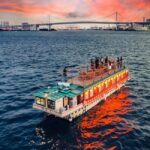
Dinner on a river boat hits different in Tokyo. You’ll cruise the Sumida River in a traditional yakatabune, eating a full Japanese dinner while the city lights come alive. My favorite part is the chance to see Tokyo Skytree up close on the route, plus the rooftop photo stops for skyline shots. One thing to plan around: the inside cabin lighting can be bright, so night-sky photos from your seat won’t be its strongest point.
I also love how the night is paced for both sightseeing and food. The staff stays attentive, the meal keeps coming in courses, and the all-you-can-drink setup makes it easy to keep the evening rolling. Still, if you hate sitting close to strangers or you need a lot of window time, the lower, floor-level seating can feel tight.
If you want a fun, classic Tokyo evening that’s not just standing in crowds, this is a smart pick.
In This Review
- Key points
- A Yakatabune Dinner Cruise That Feels Like Tokyo After Dark
- Asakusa to Azumabashi: Your Start Point and First Timing Tips
- Tatami-Style, Full-Course Japanese Dinner: More Than a Token Meal
- What All-You-Can-Drink Really Means (and How You Use It)
- Night Views on the Sumida River: Where the Scenery Hits
- Tokyo Bay, Rainbow Bridge, and Odaiba: The Illuminated City Moment
- Skytree Stop: Why This Cruise Feels Like a Tokyo Highlight, Not Just a Ride
- Comfort, Seating, and Service: The Stuff That Makes or Breaks the Night
- Price and Value: How $103 Makes Sense for What You Get
- Who Should Book This (and Who Might Want Another Plan)
- Should You Book the Yakatabune Amitatsu Dinner Cruise?
- FAQ
- How long is the Sumida River yakatabune dinner cruise?
- Where does the cruise depart from?
- What dinner is included?
- Are drinks included, and what types are available?
- Is there an English guide on board?
- Can the cruise accommodate dietary restrictions?
- What sightseeing and photo stops are part of the cruise?
- What happens if weather is severe?
Key points
- Traditional yakatabune dinner setting with tatami-style seating and a full-course menu (about 14 dishes)
- Free-flow drinks including beer, sake, whiskey, wine, plum wine, tea, and soft drinks
- Roof photo stops for panoramic views of bridges, Tokyo Bay, and the skyline
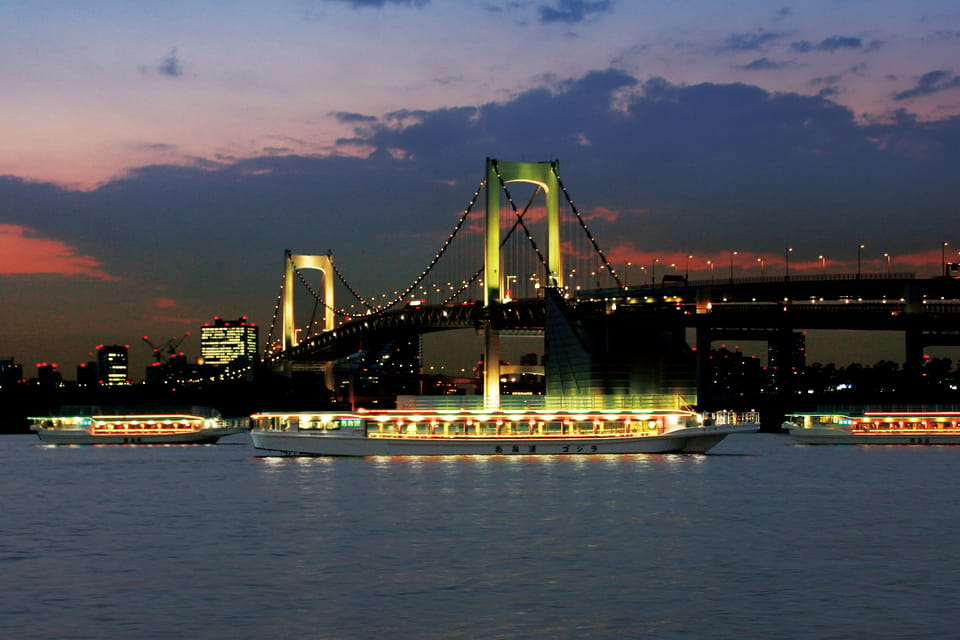
- Tokyo Bay + Rainbow Bridge and Odaiba scenery during the night run
- Skytree-focused moments later in the cruise so the tower becomes part of your meal experience
- Good value if you want food and photos in one ticket, not two separate activities
A Yakatabune Dinner Cruise That Feels Like Tokyo After Dark
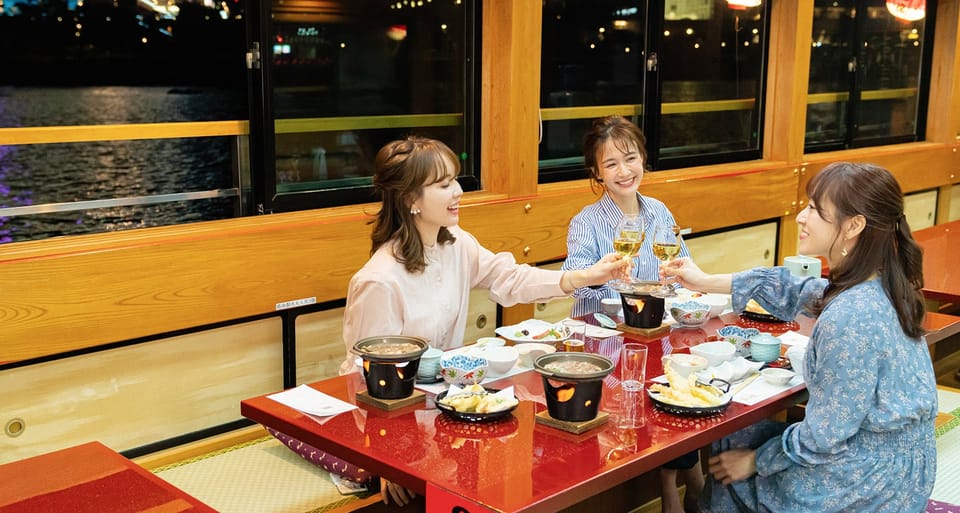
A yakatabune cruise is one of those Tokyo activities that makes sense fast. Instead of rushing between attractions, you get a moving viewpoint plus dinner in one smooth block of time. The boat travels through familiar parts of the city at night, and the lighting on the water does the heavy lifting for memorable photos.
What makes this one especially appealing is the mix: you’re not just eating. You’re watching the skyline roll by, then stepping up for roof views when the boat stops. That “eat, look, eat, look” rhythm turns the evening into more than a meal.
You can also read our reviews of more boat tours in Tokyo


Asakusa to Azumabashi: Your Start Point and First Timing Tips
The cruise departs from Azumabashi, right in the heart of Asakusa. Practically, that’s good for you because you’re starting near one of Tokyo’s easiest areas to navigate, with lots of transit options and plenty of pre-cruise dinner choices if you want to arrive with a little hunger.
Do give yourself extra time to find the dock area. Several diners noted that signage can be hard to spot when you’re looking for the correct place at the last minute. Your best strategy: check Google Maps ahead of time, then head over early so you’re not sprinting in the dark.
Once you arrive, boarding is usually straightforward and quick—some people said the boat was already docked and waiting a short time before departure. Still, show up early so you can get settled, use the restroom, and decide where you want to sit for the best views.
Tatami-Style, Full-Course Japanese Dinner: More Than a Token Meal
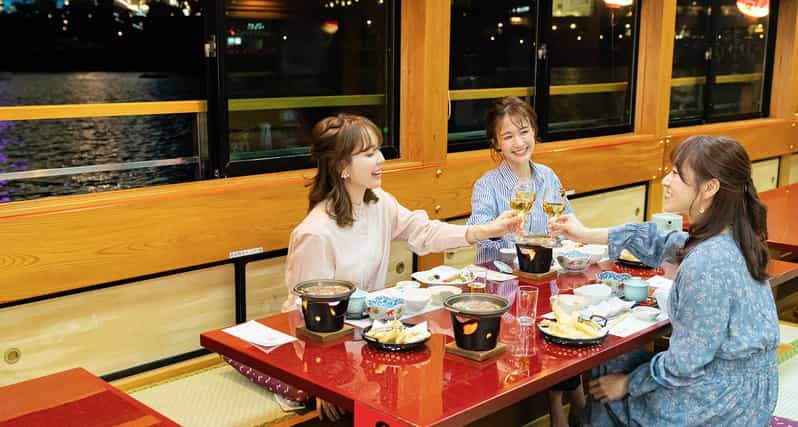
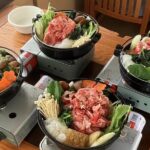
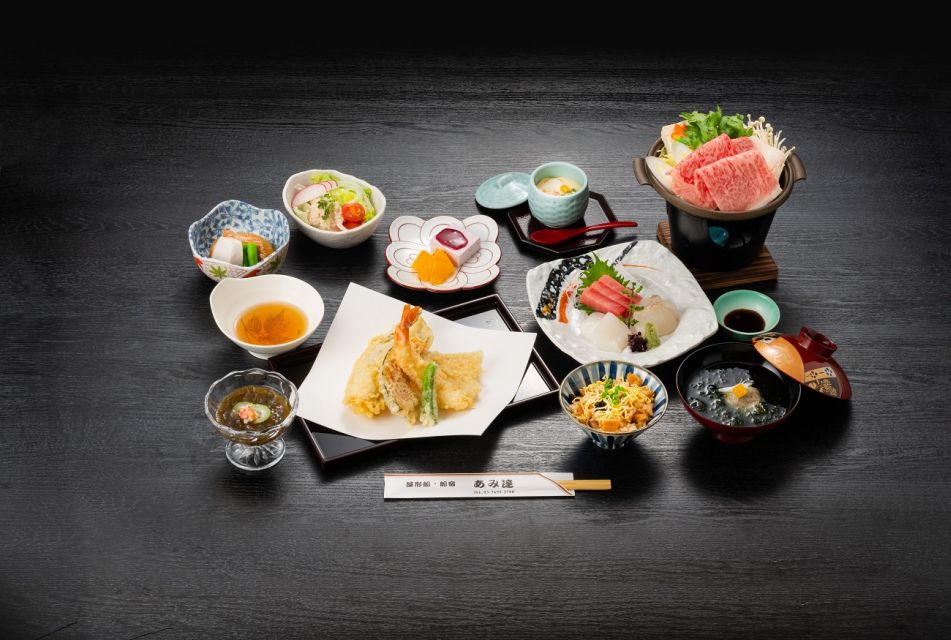
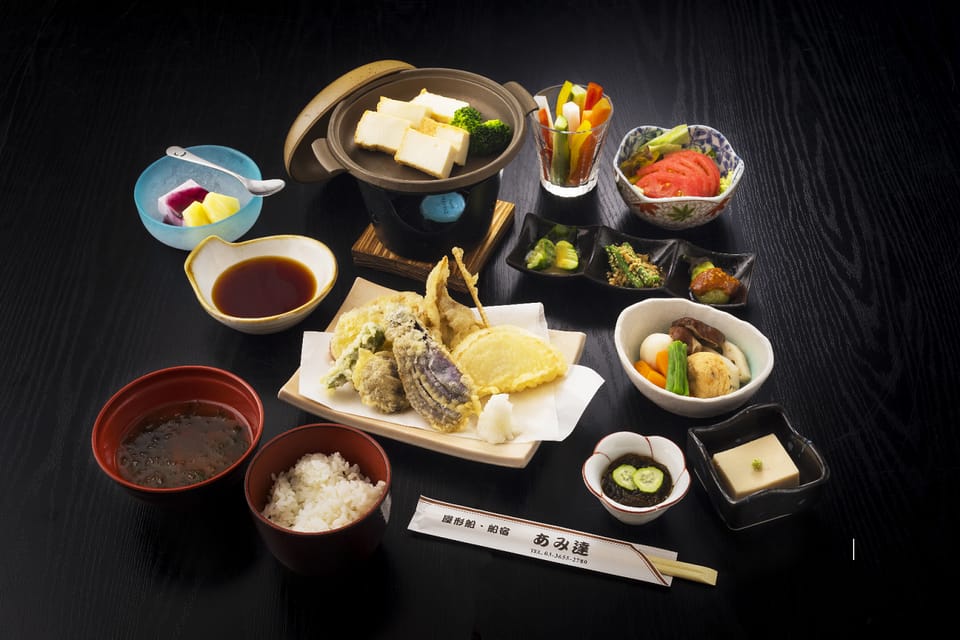
This isn’t a small platter dinner. You’re served a full Japanese course dinner—about 14 dishes—with a steady flow of food rather than one big plate and done. The format matters because it changes how you experience the cruise: you’re not “waiting for the main event.” You’re eating while the scenery changes.
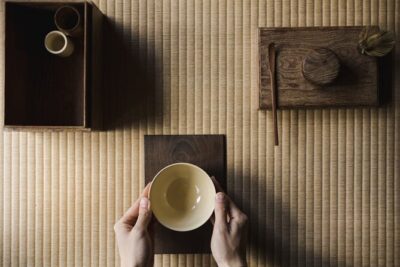
You’ll sit in a traditional style setting. Multiple reviews mentioned tatami seating and shoes-off dining, which is a fun cultural touch if you like doing things the traditional way. Seats are on the floor, and tables are set up for groups, so it’s cozy—sometimes very close to other diners.
Food quality seems to be one of the biggest strengths here. People specifically called out that the meal was excellent, varied, and plentiful. Some also mentioned tempura made fresh on board, which is a great detail because it means the dinner isn’t just reheated and forgotten.
If you have dietary needs, plan ahead. Requests for dietary restrictions or meal changes must be submitted at least two days before your cruise date, and same-day changes aren’t accommodated. There’s also a ¥1,000 fee per guest for changes related to dietary restrictions or meal selections.
What All-You-Can-Drink Really Means (and How You Use It)
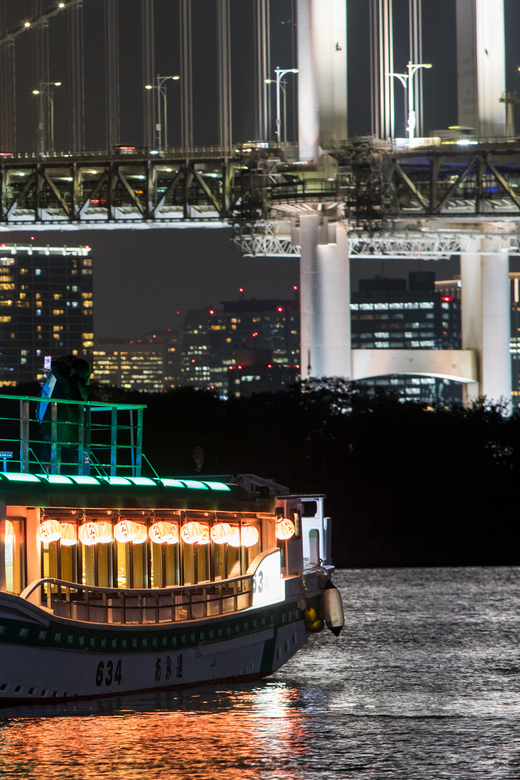
The drinks aren’t an add-on. They’re part of the ticket: free-flow drinks include beer, sake, whiskey, wine, plum wine, tea, and soft drinks. For most people, this is a big part of the perceived value because you’re not stuck paying drink-by-drink on a boat where prices usually rise.
The night has a fun pace because orders are handled through a QR code system at your table. That means less waiting and fewer trips to a bar. Reviews also mention that staff can help if you don’t have data for the QR ordering, which is handy because it can happen on the water.
One practical note: drinks and food together mean you may feel full faster than you expect. Several diners warned that it’s a lot of food, so go with a lighter lunch—or at least don’t overstuff yourself beforehand.
Night Views on the Sumida River: Where the Scenery Hits
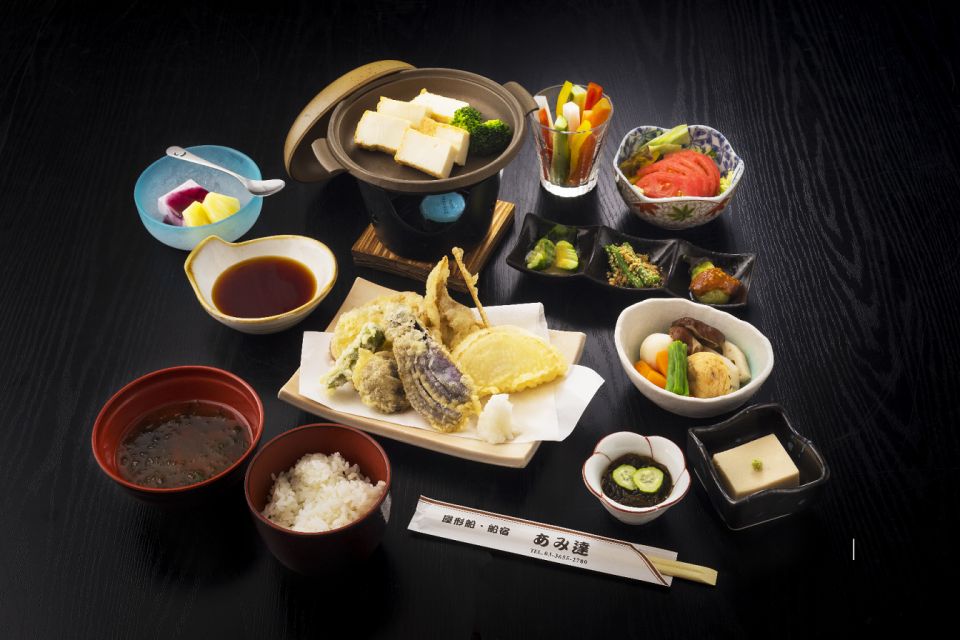
The core sightseeing here is the Sumida River run at night. The river gives you that “Tokyo, but softer” feeling—less street traffic energy and more reflections on the water. From the boat, you can see the city’s illuminated skyline and bridges as you move through the night.
But don’t assume you’ll always have perfect views from your seat. Some reviewers noted it can be hard to see out the windows for the true river view from inside. The key is the photo timing: when the boat stops, you can go up top.
The rooftop access changes the whole experience. It’s where you get the clearest angles for photos and where you feel the movement of the boat with open air. If you care about images, treat rooftop time as part of the itinerary, not an optional extra.
You can also read our reviews of more tours and experiences in Tokyo

Tokyo Bay, Rainbow Bridge, and Odaiba: The Illuminated City Moment
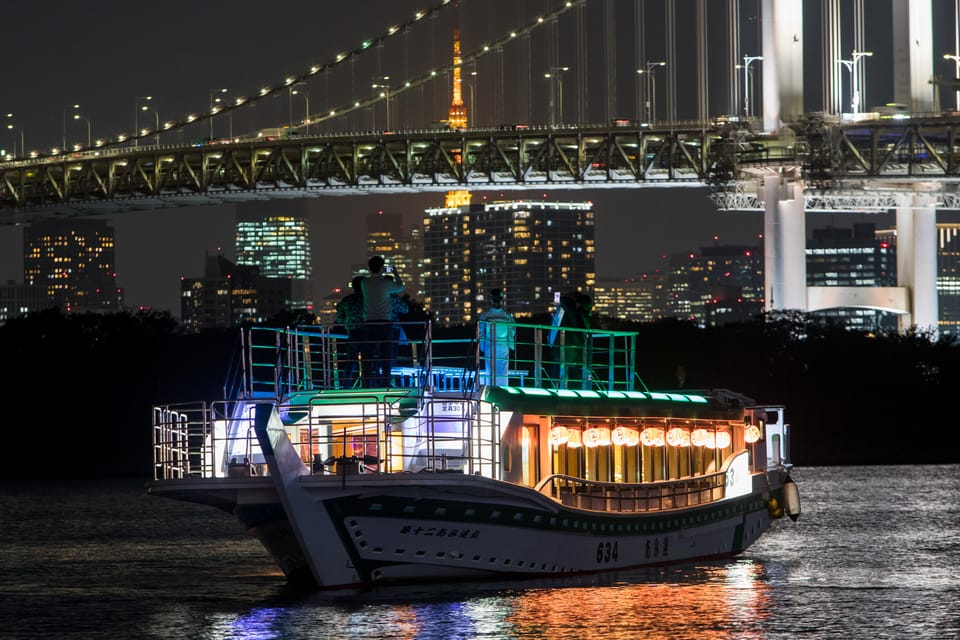
As the cruise continues, you reach Tokyo Bay, where you’ll see the skyline light up across the water. This is the moment people seem to look forward to most because it combines big landmarks with a dramatic night setting.
On the bay portion, you can spot the Rainbow Bridge and Odaiba. Those details matter because they’re instantly recognizable even if you’re not a hardcore architecture buff. The bridges and waterfront areas are exactly the kind of scene that photographs well because lights stretch across the water and create depth.
There’s also a stop where you can climb up to the roof for panoramic views and take photos. If you want a simple game plan: bring a jacket for the deck because night air on the water can feel cooler than you expect, and take your photos during the stop rather than trying to guess the best moment while moving.
Skytree Stop: Why This Cruise Feels Like a Tokyo Highlight, Not Just a Ride
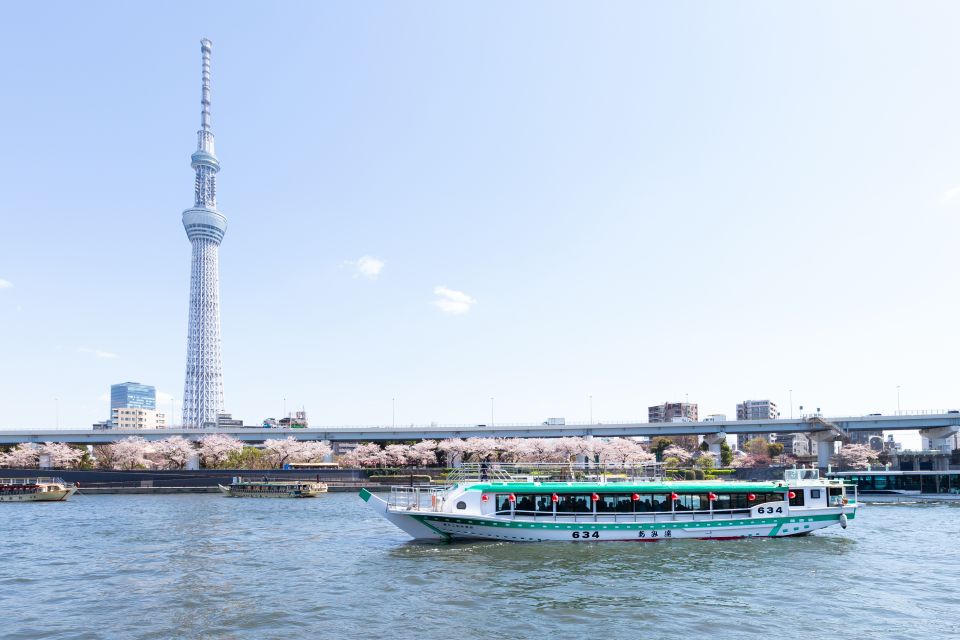
The evening continues with your meal later and a second major viewpoint: Tokyo Skytree. This is one of the best reasons to book, because Skytree isn’t just something you passively look at from a distance. The cruise format makes the tower part of your night, since it connects scenery and dinner timing.
The boat also includes another opportunity for views and photos around this Skytree portion. Reviews mention roof access for the skyline and that the stops are well-timed for taking pictures. The result is that you don’t need to sprint to a viewpoint right after dinner. You can simply enjoy the moment as the lights come alive.
And yes, it’s a bit of a premium feature. You’re paying for the combination: a traditional boat ride, a full meal, and multiple iconic skyline backdrops. Skytree is a strong anchor for that whole package.
Comfort, Seating, and Service: The Stuff That Makes or Breaks the Night
Overall comfort gets good marks. Reviews describe the boat as cozy, with clean toilets and an atmosphere that feels festive but not overwhelming. Some even mentioned AC helping during hot weather, which is useful if you’re going in summer.
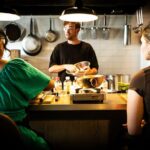
Service is another major highlight. People repeatedly describe attentive, professional staff who keep the meal and drinks moving. There’s also a helpful social vibe on board—table placements can be mixed (groups of 6 are common), and some diners liked that it encouraged conversation with other guests.
Still, seating is the main physical consideration. The dining setup is floor-based, so standing up to use facilities can feel awkward if you’re not used to that style. If you’re traveling with limited mobility or you hate cramped shared seating, this is the part that might feel challenging.
Lighting is the other practical downside. One review called out that interior lights are too bright for enjoying the night sky from inside. The workaround is simple: lean into the roof stops for night photos and let the cabin be for eating, not star-gazing.
Price and Value: How $103 Makes Sense for What You Get
At around $103 per person for a 150-minute cruise, you’re not buying just a boat ride. You’re buying a full-course dinner plus free-flow drinks and multiple skyline viewing moments. That’s why the value can feel strong, especially compared to doing dinner and paid attractions separately.
Here’s how I’d think about it:
- If you’d otherwise spend a similar amount on dinner plus drinks, the included beverage package matters.
- If you want Skytree views at night without navigating to viewpoints after a late meal, the cruise timing saves effort.
- If you like unique settings, the yakatabune format gives you a different Tokyo experience than a rooftop restaurant.
It’s a splurge, but the reviews lean heavily toward the idea that it’s worth it—mostly because the food quality is better than what people fear from “tour dinner” situations.
Who Should Book This (and Who Might Want Another Plan)
This cruise fits best if you want an easy, self-contained Tokyo night. It’s great for couples looking for a romantic-feeling outing, and it works for small groups too. If you enjoy trying many Japanese dishes in one sitting, the multi-course meal is a real plus.
It’s also a good option if you’re tired after sightseeing days. You get structured time: you eat, you watch the city, you take photos during stops, and you’re done without extra planning.
If you strongly prioritize quiet, personal space, you may feel boxed in by the shared floor-table setup. And if your main goal is photographing the night sky from indoors, the cabin lighting can limit what you capture. In those cases, the rooftop stops help, but it won’t change the seating style.
Should You Book the Yakatabune Amitatsu Dinner Cruise?
Yes, if you want a classic Tokyo night where food and views move together. The combination of a full-course dinner (about 14 dishes), free-flow drinks, and photo stops around Tokyo Bay and Tokyo Skytree creates a complete experience without extra coordination.
I’d book it especially if you value variety: Japanese food, multiple illuminated landmarks, and a traditional setting you can’t replicate at home. Just go in knowing the cabin is cozy and the best photos happen when you get up on deck.
If you want a low-key night with minimal crowd energy, consider whether floor seating and shared tables will suit you. For most people, that trade-off is part of the fun—and the payoff is a genuinely memorable way to see Tokyo after dark.
FAQ
How long is the Sumida River yakatabune dinner cruise?
The duration is 150 minutes.
Where does the cruise depart from?
The boat departs from Azumabashi in the Asakusa area. The exact meeting point can vary depending on the option booked.
What dinner is included?
You’ll get a full Japanese-style course dinner with about 14 dishes.
Are drinks included, and what types are available?
Yes. Drinks are included as free-flow and cover beer, sake, whiskey, wine, plum wine, tea, and soft drinks (alcoholic and non-alcoholic).
Is there an English guide on board?
An English guide is not included. Staff use a translator.
Can the cruise accommodate dietary restrictions?
Dietary restriction or meal change requests must be submitted at least two days before your reservation date. Changes on the day of the cruise aren’t accommodated, and a ¥1,000 fee per guest applies for changes related to dietary restrictions or meal selections.
What sightseeing and photo stops are part of the cruise?
You’ll enjoy night views along the Sumida River and Tokyo Bay, including views of Rainbow Bridge and Odaiba. There are also stops where you can go up to the roof for panoramic photos, plus a stop connected with Tokyo Skytree.
What happens if weather is severe?
The cruise may be canceled in cases of severe weather such as typhoons.