REVIEW · TOKYO
Tokyo: Calligraphy Workshop & Original T-Shirt Creation
Book on GetYourGuide →Operated by Local Guide Stars · Bookable on GetYourGuide
Ink, brush, and your name in kanji. This Shinjuku workshop turns a noisy Tokyo moment into a calm, hands-on lesson, with real guidance from a professional calligrapher and English support from hosts such as Hiromi or Mayuko-san. I love the step-by-step feel of making ink from an inkstick and practicing kanji strokes with patience and feedback. One thing to consider: the class itself doesn’t include the original T-shirt, so if you want the finished wearable souvenir, plan for an extra purchase.
You’ll meet at FamilyMart near Okubo Station and spend about 2 hours in a small group (up to 10). I also like how the experience works for first-timers, including kids, because it’s designed to keep moving while still feeling thoughtful. The only real drawback is that calligraphy can be harder than it looks, so expect some wobbly first attempts before you find your rhythm.
In This Review
- Key things that make this workshop worth your time
- Shinjuku Calligraphy Starts with Workwear and Real Ink
- The 2-Hour Flow: From Brush Basics to Your Final Piece
- Turning Your Name into Kanji: Personal, Practical, and Thoughtful
- Paper Artwork and the T-Shirt Option: What You Can Take Home
- English Hosting in a Small Group: The Part That Makes It Click
- Price and Value: Why $30 Can Feel Like More Than a Souvenir
- Who Should Book This Workshop (and Who Might Skip It)
- Should You Book This Shinjuku Calligraphy Class?
- FAQ
- What is the duration of the Tokyo calligraphy workshop?
- Where do I meet the guide in Shinjuku?
- Is the workshop taught in English?
- What will I create during the class?
- Is the T-shirt included in the price?
- How big is the group?
- Can I get a refund if my plans change?
Key things that make this workshop worth your time
- Ink-making first: you grind the inkstick into authentic ink, not just pre-made stuff
- Name-to-kanji focus: you’ll transform your own name into Japanese characters and then write them
- Stroke order coaching: you learn how to place characters and brush in the right sequence
- Real tools and workwear: you switch into traditional-style clothing and use professional materials
- English support that actually helps: hosts like Hiromi and Mayuko-san guide you through what the sensei says
- Small group attention: limited to 10 participants, so you get more help than in big classes
Shinjuku Calligraphy Starts with Workwear and Real Ink
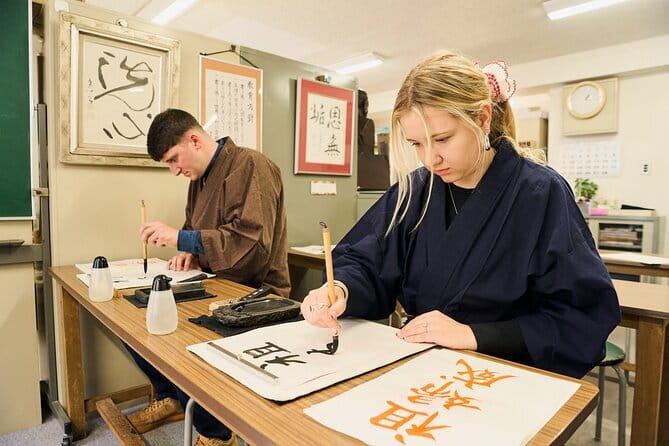
Tokyo can be loud in every direction. This class gives you a different kind of focus fast: you show up in Shinjuku, meet your guide at FamilyMart Okubo Station South Exit Store, then you change into traditional Japanese workwear. It sounds simple, but it matters. Clothes and routine help your brain switch from sightseeing mode into making mode.
The session begins with something you can’t fake: grinding a solid inkstick. You’ll work the stick to create ink, and that first minute or two has a strangely calming effect. The smell is different from bottled ink, and the slow motion makes you pay attention. If you’ve been running around Tokyo, this is one of the rare activities that feels like a breather without turning into a lecture.
You’re in good hands with a professional calligrapher, and the English hosting is built into the experience. Reviews often highlight that the hosts’ English is excellent and the explanations are clear—so you don’t spend two hours guessing what to do with your brush.
You can also read our reviews of more tours and experiences in Tokyo



The 2-Hour Flow: From Brush Basics to Your Final Piece
This workshop has a clean rhythm. You don’t bounce randomly between activities. You follow a path that builds skill without requiring you to be an artist already.
First comes preparation: you learn basic brush techniques to get comfortable with how ink moves on the page. Brush calligraphy isn’t “paint and hope.” It’s pressure, angle, and stroke direction. The teacher shows you what a good stroke looks like, then you practice right away so you can correct early.
Then you move to the part most people remember: transforming your name into kanji. You’re not copying random characters. You’re creating something personal. That “my name in kanji” moment makes the class feel less like an art souvenir workshop and more like a mini cultural lesson.
By the time you reach your final piece, you’re writing your chosen kanji with guidance on how to position characters. You’ll also get feedback designed for beginners. Many past participants described the teaching as patient and detailed, including help with how to improve the strokes.
One more practical point: the process includes time for each step, not just a quick demo. That’s why the whole experience works well even when you’re traveling with kids. The pace stays manageable, and you still get a finished result you can take home.
Turning Your Name into Kanji: Personal, Practical, and Thoughtful
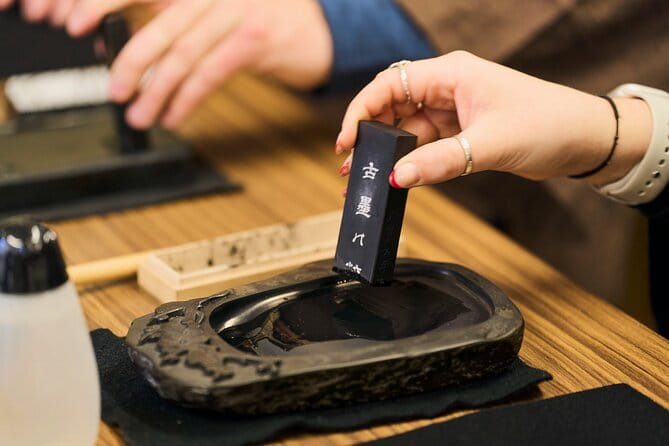
Here’s what makes this part interesting: kanji isn’t just shapes you memorize. Your name becomes characters tied to Japanese writing history and how names are represented. Even if you don’t become a kanji expert in two hours, you leave with a stronger sense of how the writing system works and why stroke order and placement matter.
In practice, you’ll transform your name into kanji and then choose how you want your final calligraphy to look. Some people love this because it gives a bit of control; others like it because it turns the lesson into something you actually care about.
You also learn the order of writing and positioning of characters next to each other. That’s the stuff you’d never pick up just by watching short videos. When your strokes start to click—when the first character feels balanced and the second doesn’t look like it’s falling over—that’s when the workshop stops being challenging and starts feeling satisfying.
And yes, your first attempts may look funny. That’s normal. Brush calligraphy has a learning curve. The point isn’t perfection. The point is spending time making something deliberate in a city that mostly rewards speed.
Paper Artwork and the T-Shirt Option: What You Can Take Home

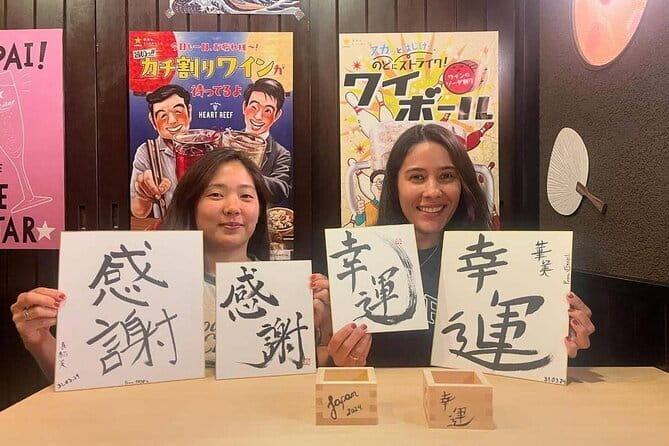
You’ll take home your own artwork. In other words, you aren’t leaving with just a memory photo. You’ll create something physical during the workshop, and that keepsake is the core value here.
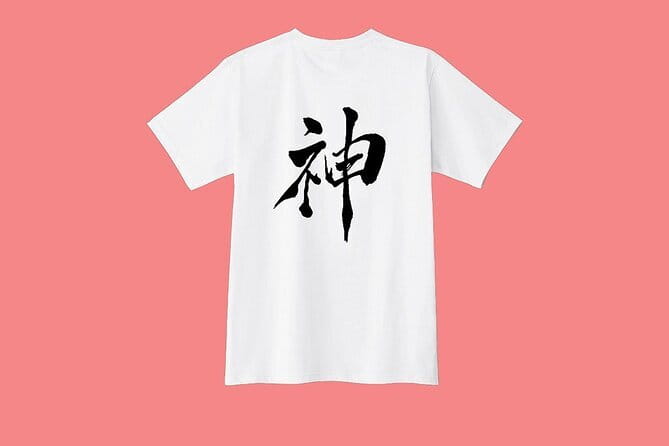
The T-shirt part is a popular highlight, but it has a key detail: the original T-shirt is not included in the class price. The good news is the workshop is still worth doing even if you skip the shirt. You’ll still leave with your kanji calligraphy work.
If you do want the wearable version, the process is straightforward: you write your kanji directly onto the shirt and design an original piece. But because the shirt isn’t included, treat this as an optional extra you may pay for separately. Some participants also mentioned the shirt can be pricey, so it’s smart to decide based on your budget and how badly you want a wearable souvenir.
If you’re the type who likes giftable travel items, this is a solid choice. Your piece isn’t mass-produced. It’s tied to your own name and your own brush strokes.
English Hosting in a Small Group: The Part That Makes It Click
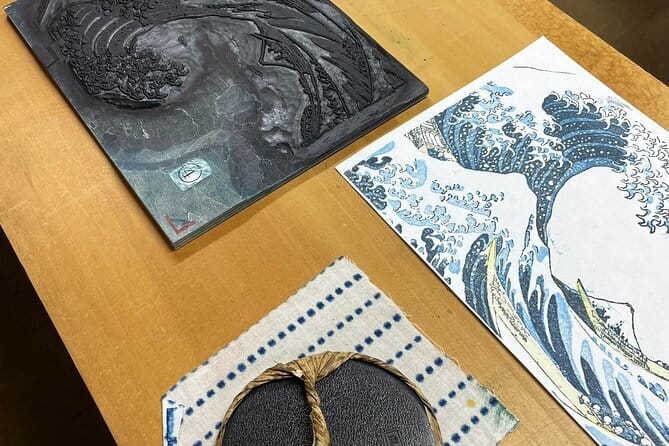
Calligraphy classes can be intimidating when you don’t speak the language. This workshop fixes that with an English guide and a small group setup—limited to 10 participants.
The hosting role is more than translation. The guides—people like Hiromi, Mayuko-san, Nono, and Aki were mentioned by name in past classes—help you understand the teacher’s instructions and also give supportive context. That’s important because calligraphy includes technique words that don’t translate neatly. Without good hosting, you might understand the gist but still miss crucial details.
The small group format also affects the experience. You can ask questions. You get help when your strokes are too light, too heavy, or not landing the way you practiced. One participant even described a day with very few students where the teacher took extra time—so the class naturally supports more attention, not just a fast run-through.
If you want a calm activity where you can focus, not keep hunting for information, the English support is a big deal.






Price and Value: Why $30 Can Feel Like More Than a Souvenir
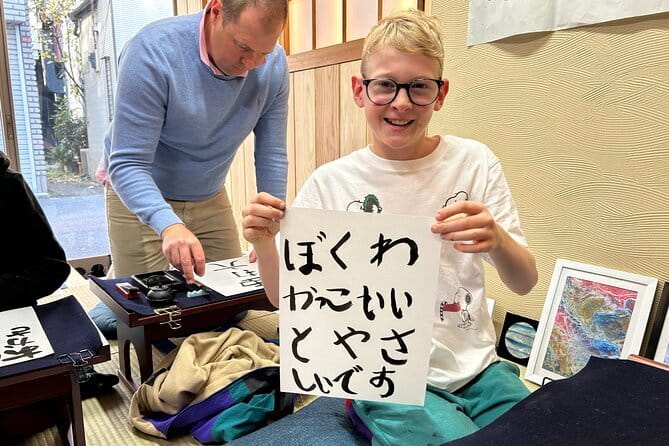
At $30 per person for a 2-hour workshop, this is priced like an accessible cultural class. Where the value comes from is in what you actually do during that time.
You’re not only watching a demo. You’re making ink yourself. You’re practicing brush techniques. You’re transforming your name into kanji. And you’re producing a take-home piece you made with professional tools.
You are also paying for skilled instruction. A real calligrapher is teaching stroke basics, order, and positioning, while the English host keeps everything understandable. That combination is hard to replicate on your own, especially in Tokyo where self-guided activities often feel like they’re missing key steps.
The only cost consideration is the T-shirt. Since it’s not included, you should budget extra if the shirt is a must for you. If you skip the shirt, you still get a souvenir and the full mindfulness-style process.
For me, the best value angle is the “reset.” You leave Shinjuku with less mental clutter. You spent time making something, not just collecting locations.
Who Should Book This Workshop (and Who Might Skip It)
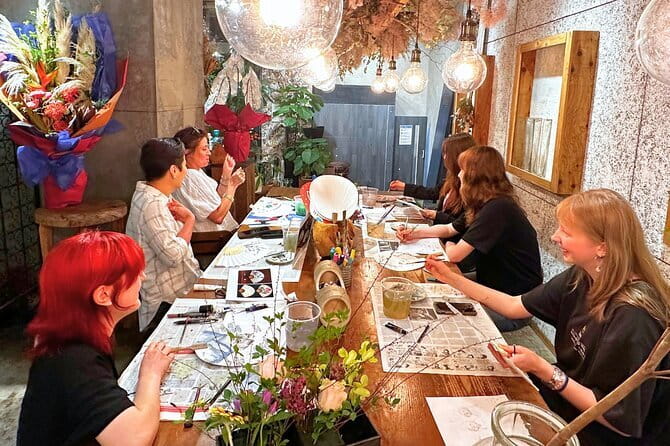
This workshop is a great fit if you want an authentic Japanese skill lesson without needing prior experience. It’s also ideal if you like activities that feel meditative. Grinding ink and practicing strokes creates a kind of quiet focus that’s rare in a place like Tokyo.
It also suits families. The format is designed to be enjoyable even for children, which helps if you’re traveling with little ones who get restless at museums or long walking tours.
You might consider skipping the T-shirt add-on if you’re budget-tight or just want the core artwork. You’ll still take something home, and you won’t lose the best part of the lesson.
If you’re the type who needs instant results, calligraphy might test your patience. The strokes take practice. But if you can enjoy learning in public for two hours, you’ll probably find it rewarding.
Should You Book This Shinjuku Calligraphy Class?
Yes, you should book it if you want a structured, calming break that still feels genuinely Japanese. The combination of ink-making, name-to-kanji, and hands-on brush coaching is the real winning formula, especially with English support and a small group size.
Book it now if:
- you want a take-home souvenir made from your own writing
- you like mindful activities you can finish in one sitting
- you want something cultural that’s not just watching and snapping photos
You might skip or scale back if:
- you only want a cheap souvenir and don’t care about the process
- you’re not interested in the idea of learning stroke basics (even briefly)
- you don’t want any extra costs for the shirt, since the original T-shirt isn’t included
If you’re in Shinjuku and you’ve been craving something quieter, this is one of the best ways to slow down without sitting still.
FAQ
What is the duration of the Tokyo calligraphy workshop?
The workshop runs for 2 hours.
Where do I meet the guide in Shinjuku?
Meet at FamilyMart Okubo Station South Exit Store, 1-23-21 Hyakunincho, Shinjuku-ku, Tokyo, Japan. The guide will hold a sign that says Local Guide Stars.
Is the workshop taught in English?
Yes. The guide provides an English experience.
What will I create during the class?
You’ll transform your name into kanji and create your own original calligraphy artwork. Writing directly on a T-shirt is part of the optional souvenir process.
Is the T-shirt included in the price?
No. Original T-shirts are not included, so you’ll need an additional option if you want your calligraphy on a T-shirt.
How big is the group?
The workshop is limited to a small group, capped at 10 participants.
Can I get a refund if my plans change?
Yes. You can cancel up to 24 hours in advance for a full refund.

![[Private]Shinjuku Golden Gai Bar Hopping w/ Japanese Local Guide - Omoide Yokocho (Memory Lane): the first pour and the right mindset](https://e.thetokyoexplorer.com/wp-content/uploads/privateshinjuku-golden-gai-bar-hopping-w-japanese-local-guide-400x267.jpg)