REVIEW · TOKYO
Mt Fuji Day Trip from Tokyo by Car with Photographer Guide
Book on Viator →Operated by Travel Assist Japan LLC · Bookable on Viator
A day that starts with a viewpoint ritual. This private Mt Fuji outing is built around the north side of the mountain: countryside drives, classic photo stops, and a guide who helps you get the shots without fussing over transport. You get hotel pickup and drop-off, so you’re not spending your morning Googling train times.
I especially like two things. First, the day is private (up to 6), so the itinerary can flex to your pace instead of marching everyone through like a theme park line. Second, having a photographer-style guide changes how you experience the stops—less guessing angles, more time enjoying the scenery.
One caution: Mt Fuji can hide behind clouds. When it’s cold and gray, you may still enjoy the villages and views, but the main payoff is weather-dependent—and the pricing is steep enough that I’d plan carefully.
In This Review
- Key things to know before you go
- Why a private Mt Fuji drive beats wrestling trains
- How the photo-first approach actually helps your day
- Stop 1: Arakurayama Sengen Park and the 400-step viewpoint
- Stop 2: Oshino Hakkai for crystal-clear water and old-house views
- Stop 3: Saiko Iyashi no Sato Nemba for traditional roofs and Fuji behind them
- Stop 4: Kitaguchi Hongu Fuji Sengen Jinja and a shrine-path to the mountain
- Getting the north-side Fuji Five Lakes feel—without the hassle
- Price and value: when $1,150 can make sense
- What to pack for a Fuji day when the sky is undecided
- Who this tour suits best
- Should you book this Mt. Fuji day trip from Tokyo by car?
- FAQ
- How long is the Mt Fuji day trip?
- What time does the tour start?
- Is this a private tour?
- What’s included in the price?
- Are admission fees included?
- Is lunch included?
- Do I need to arrange transportation from Tokyo?
- Is vegetarian food available?
- What if the weather is bad?
- What is the cancellation policy?
Key things to know before you go
- Private car from your hotel keeps the schedule sane and cuts out Tokyo transit stress
- Photographer guide support helps you time shots and get out of the way for better photos
- Four distinct countryside stops cover viewpoints, ponds, traditional houses, and a shrine path
- Short but real walking includes a 400-step climb at your first viewpoint
- Admission fees vary by stop; some places are free while one village ticket is not included
- Mt Fuji visibility depends on weather, so be ready for a backup plan
Why a private Mt Fuji drive beats wrestling trains
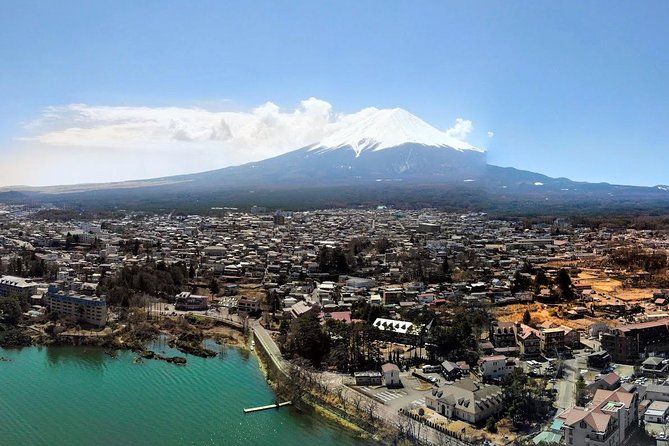
Tokyo to Mt Fuji can be one of those trips where the logistics quietly eat your whole day. This is the opposite. You start around 8:00 am with pickup, then head out by private vehicle for about 9 hours total. It’s a straightforward way to get out of the city and into the Fuji region without transferring, waiting, or crowd navigation.
I also like that the group is small—up to 6—which keeps the car ride comfortable and the stops less chaotic. And because it’s a private tour, you’re not locked into the same pace as strangers. If someone needs a longer look, you’re less likely to feel rushed.
One more practical touch: you’ll get a mobile ticket, and you should receive confirmation within about 48 hours of booking (as long as dates are available). For a weather-sensitive day trip, having everything lined up early matters.
You can also read our reviews of more guided tours in Tokyo
How the photo-first approach actually helps your day
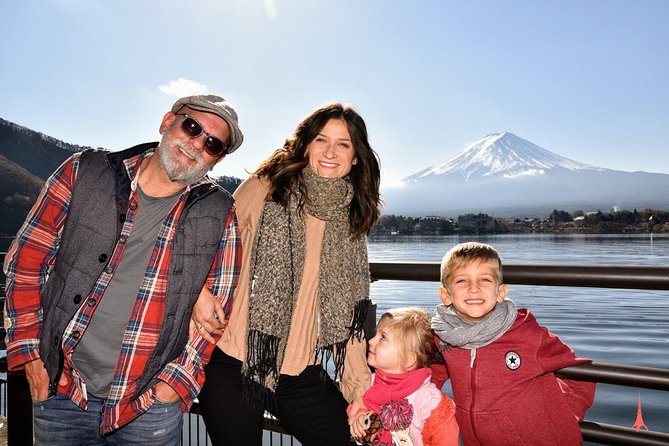
A Mt Fuji day can turn into a grab-and-go checklist: stop, snap, move on. The point here is different. The guide’s focus includes taking photos during the tour, which reduces the awkward moments of juggling a camera, finding the right spot, and worrying that you’ll block others.
I find that matters most at viewpoints where timing and composition count. You’ll be working against real-world constraints—crowds, wind, light, and the fact that Mt Fuji can go from visible to invisible quickly. A guide who’s watching the scene and positioning you saves time and helps you get better results with less stress.
It also makes the stops more enjoyable. Instead of spending the day scanning for selfie locations, you can actually look around. That’s where you start noticing the little details: lantern-lined paths, clear water you can taste, and traditional-roof homes framed against the mountain.
Stop 1: Arakurayama Sengen Park and the 400-step viewpoint
Your first major photo stop is Arakurayama Sengen Park. Plan on about 40 minutes there, and the admission is free. The first thing to know is the climb: after 400 steps, you reach a viewpoint that’s famous for a reason.
This is a classic “work a little, see a lot” moment. You’ll want to wear shoes you’re happy to walk in. Even though it’s not a long hike by Japanese standards, it’s still a steady climb—especially if you’re doing it in cool morning air.
If Mt Fuji is out, this is where you’ll try to catch that clean “mountain on its own” feeling. If it’s not, the park still offers layered views and the shrine-side atmosphere that makes the area worth visiting. Either way, it’s a good start because you’re moving early—before the day’s crowds really pack in.
Stop 2: Oshino Hakkai for crystal-clear water and old-house views
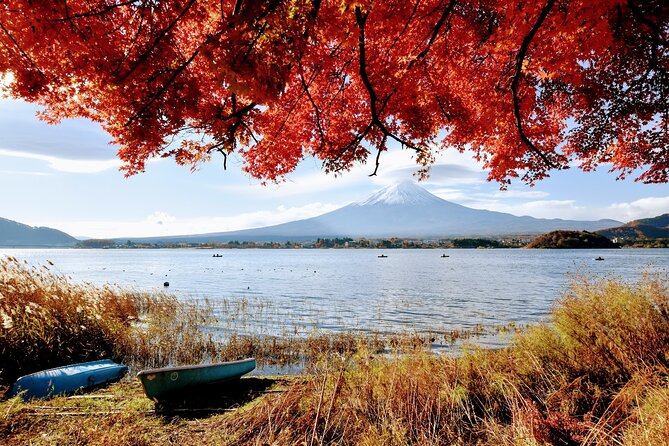
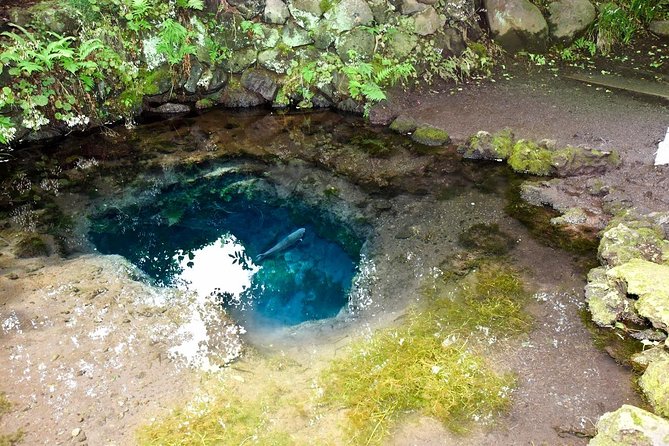
Next up is Oshino Hakkai, where the centerpiece is the area’s famous spring water—called out as water you can taste. You’ll spend about 30 minutes here, and entrance is free.
What I like about Oshino Hakkai is how quickly it becomes sensory. You’re not just looking; you’re standing near clear water sources, noticing the way the ponds sit in a natural setting, and catching glimpses of local Japanese houses in the background. It’s a calmer contrast to the viewpoint climb.
Photo-wise, this stop rewards good positioning. You’ll likely find yourself choosing between the water details and the wider context. A guide who helps with timing and where to stand makes a difference because you don’t want to spend your whole time relocating.
One practical tip: this is a “small time window” stop. Go in knowing you’re doing a quick circuit, tasting if you want, and getting your best shots without lingering so long that the rest of the day gets tight.
Stop 3: Saiko Iyashi no Sato Nemba for traditional roofs and Fuji behind them
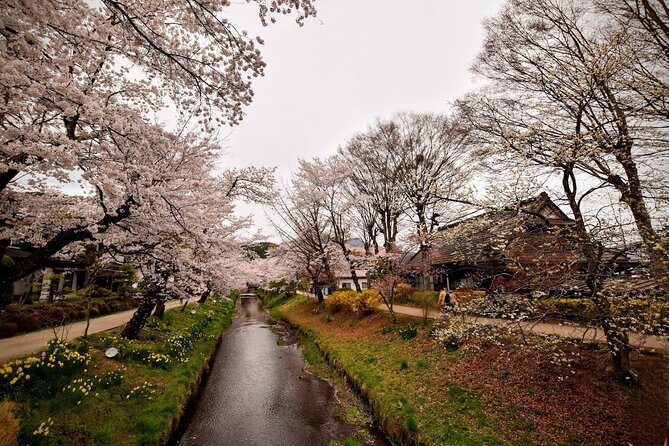
For a more cultural pause, you’ll visit Saiko Iyashi no Sato Nemba, with about 40 minutes on-site. Here, the focus is a recreated/kept village scene of 100-year-old detached-roof houses. The big visual payoff is the chance to see Mt Fuji behind the houses—a framing that’s hard to recreate elsewhere.
This is a strong photo spot, and it’s also a place where you can slow down. Even if you’re not a history buff, it’s an easy way to understand how people built and lived in the Fuji region. The houses give you scale: you start seeing the region not just as a mountain view, but as a lived-in landscape of homes and routes.
Important detail: the admission ticket here is not included, so check what you’ll need to pay onsite. If you’re budgeting tightly, that’s one cost to expect beyond the “free” stops.
You can also read our reviews of more photography tours in Tokyo






Stop 4: Kitaguchi Hongu Fuji Sengen Jinja and a shrine-path to the mountain
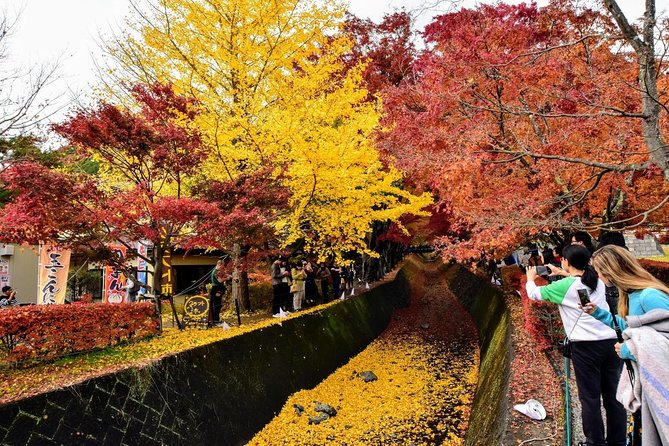
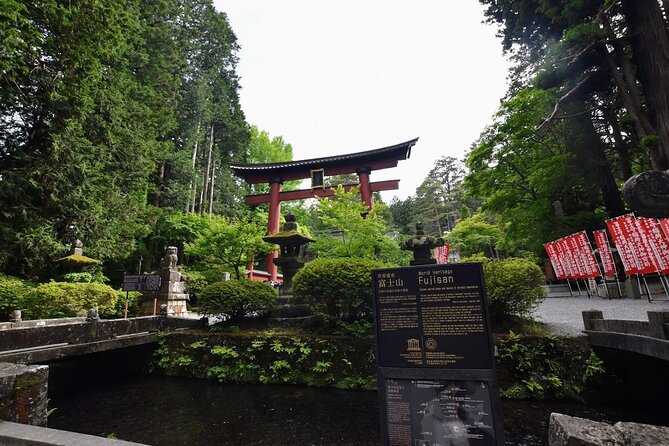
Your final featured stop is Kitaguchi Hongu Fuji Sengen Jinja. You’ll have around 40 minutes and admission is free.
The standout visual is the stone lanterns lining the path leading toward the main area. It’s a simple scene, but it photographs well because the path pulls your eye forward. If you’re traveling for images, this is one of the better “clean lines” moments of the day.
There’s also an important context note: there’s an entrance behind the main area for a trail to Mt Fuji. You won’t be doing a full trek as part of this day trip, but seeing the access point helps you understand how the mountain is approached spiritually and practically, not only as a sightseeing object.
Getting the north-side Fuji Five Lakes feel—without the hassle
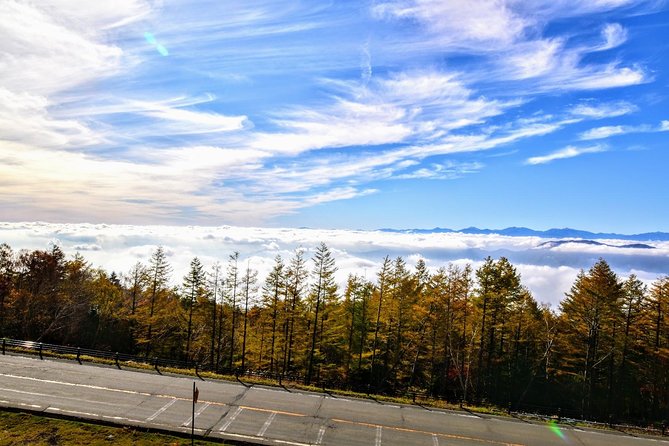
Even though your day is built around specific stops, the bigger value is the drive through the Fuji region’s north side. That’s where you get that “Tokyo is far away” feeling—villages, ponds, and countryside roads rather than an endless city loop.
The tour is designed around dispersed natural beauty areas tied to the broader Fuji Five Lakes region. One reason that matters: these spots aren’t all right next to each other. Doing them efficiently requires local routing and a vehicle that can handle the day without constant schedule anxiety.
I also like that the day is structured enough to cover multiple “moods” of Fuji:
- a step-up viewpoint
- clear-water ponds
- traditional houses framing the mountain
- a shrine path tied to the idea of climbing
It’s more satisfying than doing one big photo location and calling it a day.
Price and value: when $1,150 can make sense
The price is $1,150 per group (up to 6). That’s the kind of cost that makes you ask: is this really worth it?
Here’s how I’d think about value. If you’re traveling as a small group and would otherwise spend real money on taxis, private drivers, or multiple transit headaches, the bundle starts to look reasonable. You’re paying for:
- hotel pickup and drop-off
- private transport across multiple dispersed stops
- a driver/guide who can handle routing
- a photo-assist style guide component
The price also bakes in time-saving. On a day trip that depends on weather, losing hours to transfers can turn into a very expensive disappointment.
The downside is simple: for solo travelers or couples, the per-person cost can feel heavy—especially if clouds roll in and Mt Fuji stays hidden. I’d only book if either you’re splitting the group cost or you truly want a guided, photo-supported circuit that doesn’t require you to plan transport all day.
What to pack for a Fuji day when the sky is undecided
This experience is described as requiring good weather. That doesn’t mean it’s ruined if it’s cloudy—it means the main payoff (Mt Fuji visibility) may be reduced.
So I’d pack for “cold and changeable.” Bring layers, something wind-resistant, and comfortable walking shoes. You’ll do a noticeable climb early on (those 400 steps), and you may stand still for photos more than you expect.
If you want to eat without problems, plan ahead too. Lunch isn’t included, and vegetarian options are mentioned as available if you advise at booking—so if dietary needs matter to you, tell them early rather than hoping a solution appears once you’re on the road.
Who this tour suits best
This tour fits best if you want:
- a private day with a small group (up to 6)
- a guide who helps you with photos, not just directions
- an efficient north-side circuit instead of a DIY hop between areas
- hotel pickup that makes the 8:00 am start feel painless
It may be less ideal if:
- you’re traveling alone and the total price feels too high to absorb
- you hate stepping climbs, since one stop includes a serious set of stairs
- you’re okay with a plan that’s heavily influenced by weather
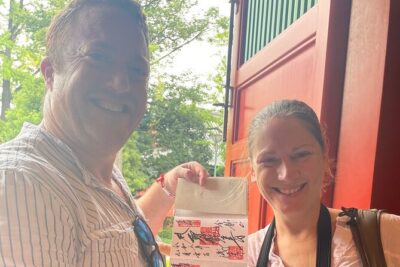
In reviews, guides such as Fumi are described as friendly and helpful, with a warm storytelling vibe, and Tony is also referenced in a positive way. That human factor matters on a long day—when the mountain is moody, the guide’s tone can turn the day from frustrating to enjoyable.
Should you book this Mt. Fuji day trip from Tokyo by car?
If you’re going with a small group and you want a smooth, guided, photo-supported day, I’d lean yes. The combination of private pickup, a photo-assist guide, and a tight route through key Fuji-area spots is exactly what makes Mt Fuji days work when you only have one chance.
Book with realism, though. If you’re coming during a cloudy stretch, you might still enjoy the countryside stops, but the signature Mt Fuji moment can be out of your control. If that risk makes you nervous, consider timing your trip with your best weather window.
If you want the easiest path to a classic Fuji day—without transit planning stress—this is the kind of tour that delivers.
FAQ
How long is the Mt Fuji day trip?
The tour lasts about 9 hours.
What time does the tour start?
The start time is 8:00 am.
Is this a private tour?
Yes. It’s a private tour, and only your group participates (up to 6).
What’s included in the price?
Included are the driver/guide, hotel pickup and drop-off, and transport by private vehicle.
Are admission fees included?
No. Admission fees are not included. Some stops list free entry, while at least one stop (Saiko Iyashi no Sato Nemba) requires a ticket.
Is lunch included?
No, lunch is not included.
Do I need to arrange transportation from Tokyo?
No. Hotel pickup and drop-off are included, with travel by private vehicle.
Is vegetarian food available?
A vegetarian option is available. You should advise at the time of booking if you need it.
What if the weather is bad?
The experience requires good weather. If it’s canceled due to poor weather, you’ll be offered a different date or a full refund.
What is the cancellation policy?
You can cancel for a full refund up to 24 hours in advance of the experience’s start time. If you cancel less than 24 hours before, the amount paid is not refunded.