REVIEW · TOKYO
Ramen Making from Scratch with Tokyo Mom(Vegan Option Available)
Book on Viator →Operated by Tokyo Mom's Kitchen · Bookable on Viator
Ramen lessons in Shinjuku beat a cookbook. In this small class with Aki, you make ramen and gyoza from scratch using fresh ingredients, with MSG-free broth building and real noodle kneading. I like the way Aki’s teaching stays patient and clear in English, even when families come with kids. One thing to weigh: you’ll need to get to the venue yourself, since transportation isn’t included.
The kitchen sits on a top floor about a 5-minute walk from Shinjuku Gyoenmae Station, between Shinjuku and Shinjuku Gyoen Park. I also like the max of 6 group size, which keeps the pace relaxed and the feedback personal.
In This Review
- Key highlights I’d plan around
- Why This Ramen Class Feels Like Dinner at Home
- Price and Logistics: Getting to Shinjuku Mom’s Kitchen
- Entering the Top-Floor Kitchen With Aki and Kanna
- From Flour to Noodles: Learning Ramen Texture Control
- Building MSG-Free Broth With Kombu, Katsuobushi, and Shiitake
- Gyoza From Scratch: Wrapping, Cooking, and Timing
- What You’ll Eat (and Why It Matters)
- Vegan Options, Halal, and Allergy Requests: What You Can Plan For
- Small Group Size: The Pace and Comfort Factor
- Where This Fits in Your Tokyo Plan
- Should You Book This Ramen Making Class?
- FAQ
- Is this class hands-on or mostly watching?
- How long does the class last?
- Is vegan ramen available?
- Does the class use MSG or artificial flavorings?
- What’s included in the ticket price?
- Where do I meet for the experience?
- Is transportation provided?
- How big is the group?
- Can I cancel and get a refund?
Key highlights I’d plan around
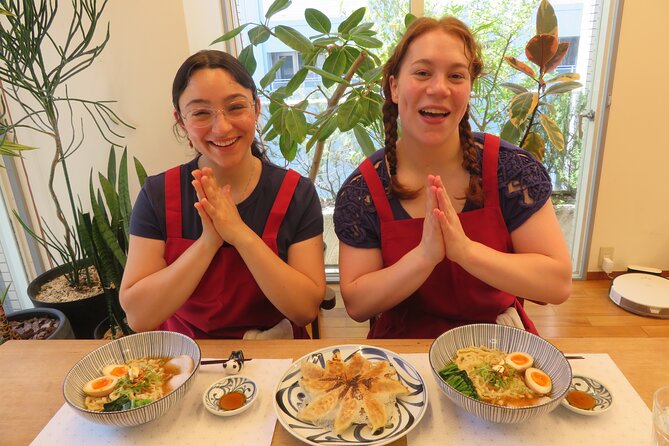
- From-scratch ramen noodles: knead and craft your own noodle dough and texture.
- UMAMI built naturally: kombu, katsuobushi, and shiitake mushrooms, no MSG or artificial flavorings.
- Hands-on gyoza: you’ll make dumplings along with the ramen.
- Small group energy: a maximum of 6 travelers makes it feel less like a show and more like a meal with skills.
- Aki and Kanna’s warm hosting: friendly, family-friendly vibe that makes it easier to try cooking step-by-step.
Why This Ramen Class Feels Like Dinner at Home
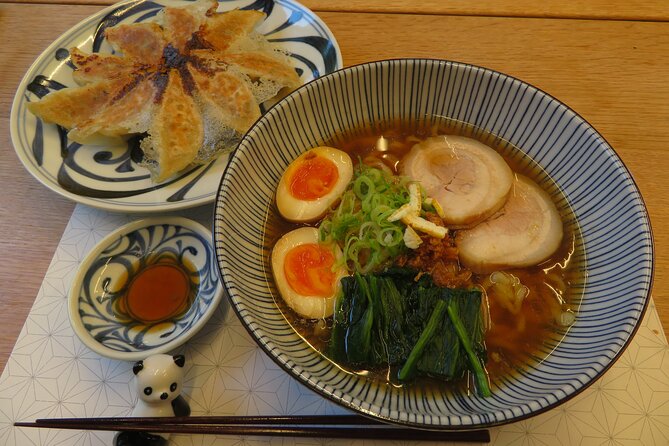
If your Tokyo trip is mostly about walking streets and reading menus, this class offers a different kind of souvenir: skills you can use after you go home. You’re not just tasting ramen. You’re making the noodles, learning the flavor logic behind the broth, and folding gyoza with your own hands.
Aki runs the experience in a warm, personal way—think “Tokyo mom,” not “chef show.” She’s Japanese, a mother of three, and you can feel that teaching style in how the instructions are paced. I like that you’re given a real framework for the flavors, not just a list of steps to copy.
Two details are especially practical. First, the class explicitly avoids MSG and artificial flavorings. That matters because it forces you to understand how the broth gets depth from ingredients like kombu and katsuobushi. Second, you get a digital recipe sheet (PDF), so you’re not stuck trying to recreate the ramen from memory later.
You can also read our reviews of more tours and experiences in Tokyo



Price and Logistics: Getting to Shinjuku Mom’s Kitchen
It costs $120 per person for about 2 to 2.5 hours of hands-on cooking. For Tokyo, that’s not “cheap,” but it’s also not only a meal ticket. You’re paying for ingredients, tool access, apron rental, an English-speaking host, and the recipe PDF.
You’ll also want to plan around location. The meeting point is:
ブライダルユニゾンユニゾン1-chōme-24-7 Shinjuku, Shinjuku City, Tokyo 160-0022, Japan
The kitchen is described as a short walk—about 5 minutes—from Shinjuku Gyoenmae Station.
A key consideration: transportation is not included. If you’re coming from elsewhere in Tokyo, give yourself enough time to reach the exact meeting point without rushing. The upside is that this area is convenient for pre- or post-class plans. Shinjuku Gyoen Park is nearby, and Shinjuku’s shops and entertainment options are close too.
Group size is capped at 6 travelers. That helps with logistics inside the kitchen. There’s room to get questions answered and for the cooking to stay moving at a human pace.
Entering the Top-Floor Kitchen With Aki and Kanna
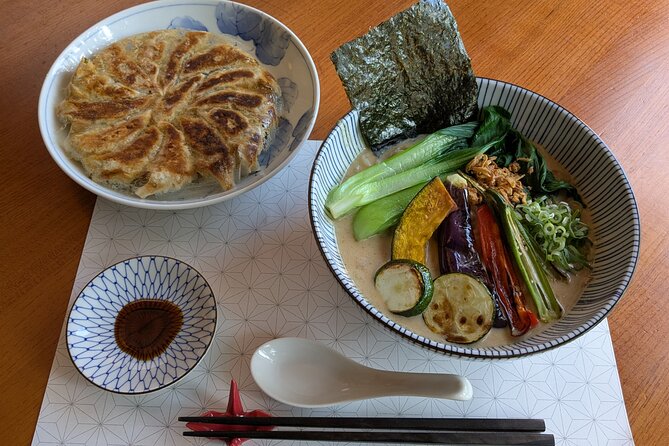
The class takes place on a top floor space with natural light and airflow, described as relaxed and spacious. That sounds like comfort for a reason. Cooking gets easier when you’re not packed into a tiny room, and when you can move around tools and ingredients without bumping elbows.
Before you start, you’ll get a hands-on welcome: apron rental and full access to kitchen tools. That’s a small detail, but it removes friction. You don’t have to figure out what to bring or whether the class provides basic gear.
Inside, the teaching style matters. Aki’s approach is described as patient and kind, with an ability to explain steps clearly enough that kids and families can handle it. If you’ve ever felt intimidated by cooking classes, this is the kind of environment that lowers the stress.
Also, note the “Japanese mom” concept isn’t just marketing language. You’re given guidance and room to try, not just watch. You’ll actively shape noodles and make dumplings, which means you’ll understand the process instead of only tasting the result.
From Flour to Noodles: Learning Ramen Texture Control
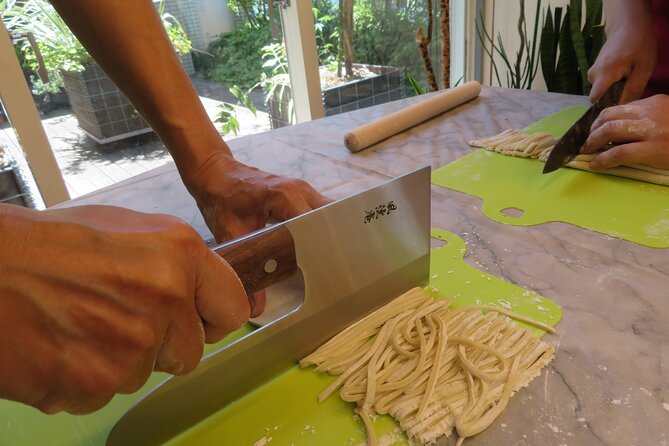
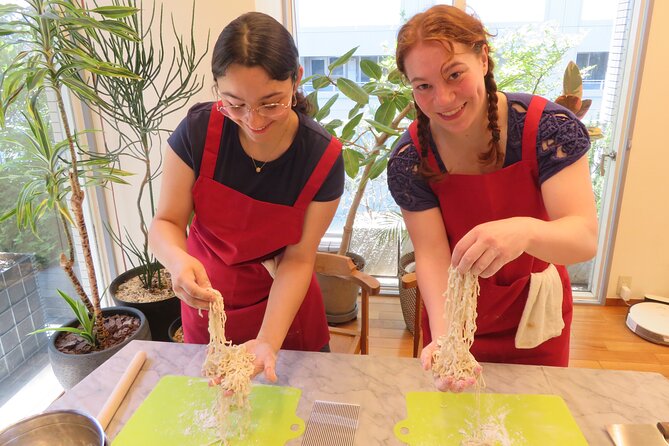
Ramen can feel mysterious until you do it once. This class is designed to take the mystery out of noodles by getting you into the physical work: kneading, shaping, and paying attention to how dough behaves.
You’ll learn to craft noodles from scratch using fresh ingredients and follow easy-to-replicate guidance. You’ll hear explanations tied to texture and taste, not just timing. The goal is simple: if your noodles come out too soft or too firm at home, you’ll know what to adjust next time.
One detail that stands out for practicality: the class doesn’t treat noodle-making as purely theoretical. You’ll actually cut and work with the dough. That hands-on part is what turns this from a one-time activity into a skill you can repeat later.
Why this matters for you: Japanese ramen texture is a big part of the experience. Most people in Tokyo will eat it and forget the method. If you take this class, you’ll start connecting noodle feel to technique. Next time you slurp ramen, you’ll have a new way to notice springiness, thickness, and bite.
Building MSG-Free Broth With Kombu, Katsuobushi, and Shiitake
Now the real flavor lesson: the broth.
The class focuses on balancing flavors using Japanese umami-rich ingredients—katsuobushi (bonito flakes), kombu (kelp), and shiitake mushrooms. It also emphasizes no MSG or artificial flavorings. That’s a big deal because it forces you to treat umami as an ingredient-driven outcome.
You’ll prepare a broth as part of the class and use it for your ramen. The teaching style aims to help you understand what each ingredient contributes, so you’re not only copying a recipe but learning the logic.
The class notes that chicken and pork are used to create a rich, satisfying ramen broth. If you’re thinking vegan, don’t assume it’s identical. The experience states a vegan option is available and dietary needs can be mentioned when booking. Aki will do her best to adjust ingredients, but she also warns she can’t guarantee every request will be accommodated.
For non-vegan participants, the experience gives you the standard ramen “foundation” and then shows you how to build around it. If you’ve only had ramen that arrives ready-made, this helps you understand how broth taste develops from ingredients rather than bottled seasoning.





Gyoza From Scratch: Wrapping, Cooking, and Timing
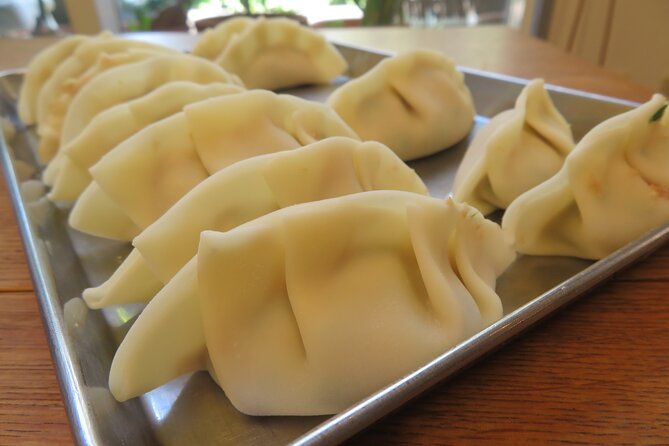
Ramen is half the story here. The other half is gyoza.
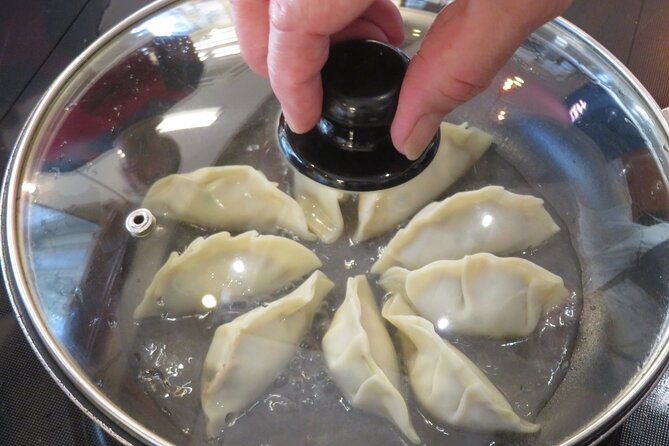
You’ll make gyoza from scratch in the same session, using an approach that fits the class format: clear steps, hands-on participation, and a focus on how things should feel and look as you go. Expect to work with dumpling dough and assemble dumplings while the ramen components are also progressing.
Gyoza teaches a different set of instincts than ramen. Ramen is about texture and broth balance. Gyoza is about form and timing: wrapping neatly and cooking them so you get that contrast between crisp exterior and tender filling.
This is also where the class can feel extra satisfying. When your dumplings hit the pan, you get instant feedback. Even if you’re new to cooking, you can see progress quickly.
What You’ll Eat (and Why It Matters)
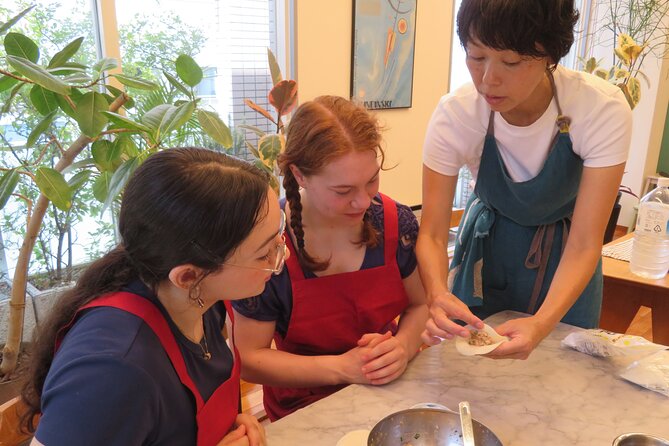
At the end, you eat what you made: ramen and gyoza. That might sound obvious, but it’s a big reason cooking classes feel worth it.
In this case, the value isn’t only the taste of homemade dishes. It’s the fact that the food is tied to skills you practiced. You’ll be able to connect what you did—kneading, mixing, broth building, shaping—to what’s on your plate.
The class also includes a digital recipe sheet (PDF) to take home. So instead of treating the meal as a one-off, you can recreate ramen and gyoza later and compare your results.
If you like learning through doing, this meal format is a win. You’ll walk away with a practical home-cooking plan rather than just a memory of being fed.
Vegan Options, Halal, and Allergy Requests: What You Can Plan For
The class clearly invites dietary requests at booking—food allergies, vegan, and halal preferences. The important wording is that Aki will do her best to adjust, but there may be limits based on ingredients and how the class is structured.
Here’s how I’d approach this as a planner. If you’re vegan, expect some kind of plant-based adjustment rather than an assumption that everything is naturally vegan. If you’re halal, ask for confirmation during booking so you’re not surprised by meat-based broth components.
Also, it’s useful to know the class commonly includes both meat and vegetarian approaches in the experience design—meaning in mixed groups, you might see different ramen versions handled within the session. Still, the safest path is to message your needs at booking and be specific.
If you have severe allergies, treat this like any cooking class: confirm what’s possible before you show up. The class is friendly and flexible, but it also sets the boundary that not every request can be accommodated.
Small Group Size: The Pace and Comfort Factor
With a maximum of 6 travelers, you’ll likely spend less time waiting and more time actively cooking. That matters for two reasons.
First, ramen and gyoza have different timing needs. When the group is small, it’s easier for the host to help you manage steps without rushing you through.
Second, learning feels safer when it’s not chaotic. Multiple comments highlight patience and a warm, welcoming atmosphere. Kids are mentioned as being able to join and feel comfortable, which tells you the energy stays supportive instead of strict.
If you travel with family, this class is a good match because it doesn’t assume everyone is confident in the kitchen. You’ll be guided step-by-step, and you’re encouraged to participate rather than only observe.
Where This Fits in Your Tokyo Plan
This class is in Shinjuku, near Shinjuku Gyoen Park. That gives you a nice rhythm for the day.
Before class, you can do a low-stress walk in the park area. After class, you can head back into Shinjuku for shopping or nightlife without needing a complex commute. The kitchen’s top-floor setting and relaxed pace also make it a good choice if the weather is bad. Cooking indoors tends to feel like a reset.
Timing-wise, plan for about 2 to 2.5 hours total. That’s long enough to learn the process and actually enjoy the meal. If you have a tight flight day, still aim to arrive early. You’re responsible for getting to the meeting point on time, and you’ll want a calm start.
Should You Book This Ramen Making Class?
If you want a Tokyo experience that’s practical—not just a photo—you should book this.
I’d especially recommend it if:
- you’re tired of only eating your way through Tokyo and want skills you can repeat at home
- you care about flavor made with ingredients like kombu, katsuobushi, and shiitake
- you travel with kids or someone who learns better with step-by-step help in a small group
- you want an MSG-free approach and a recipe PDF you can use later
I’d think twice if:
- you rely on included transportation and can’t manage getting to Shinjuku on your own
- you have strict allergy rules and need guaranteed accommodations beyond what the host can confirm
- you only want a quick snack experience; this is a real hands-on cooking session
If your goal is to leave Tokyo with something you can cook again, this class gives you that. You’ll eat ramen and gyoza you made yourself, and you’ll understand the ingredients and technique well enough to try again long after you’re back home.
FAQ
Is this class hands-on or mostly watching?
It’s hands-on. You’ll make ramen and gyoza from scratch, including noodle preparation and broth work, with full use of kitchen tools and apron rental.
How long does the class last?
The session runs about 2 hours 30 minutes (approximately), with a stated time range of 2 to 2.5 hours.
Is vegan ramen available?
A vegan option is available. When you book, you should mention your vegan needs (and any other dietary requirements). The host notes she will do her best to adjust ingredients, but may not be able to accommodate every request.
Does the class use MSG or artificial flavorings?
No. The class specifically states there are no MSG or artificial flavorings.
What’s included in the ticket price?
Included are all ingredients for making ramen and gyoza, full use of kitchen tools, apron rental, a digital recipe sheet (PDF), and an English-speaking Japanese host.
Where do I meet for the experience?
Meet at ブライダルユニゾンユニゾン1-chōme-24-7 Shinjuku, Shinjuku City, Tokyo 160-0022, Japan. The activity ends back at the meeting point.
Is transportation provided?
No. Transportation is not included, and you are required to come directly to the venue.
How big is the group?
The experience has a maximum of 6 travelers.
Can I cancel and get a refund?
Yes. Free cancellation is available up to 24 hours in advance for a full refund. Changes within 24 hours aren’t accepted, and late cancellations aren’t refunded.