REVIEW · TOKYO
Shibuya All You Can Eat Best Food Tour The Original One in Tokyo
Book on Viator →Operated by The Washoku Club Culture and Food Tours · Bookable on Viator
Shibuya looks loud. This tour turns it into real food time. In about 4 hours, you’ll walk through well-known spots and quieter side streets while your guide sets up a sequence of included tastings and explains how locals actually eat and spend an evening.
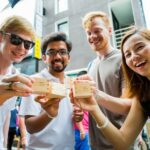
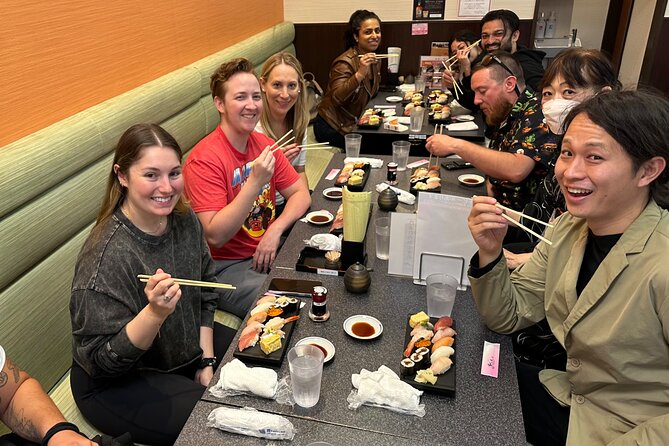
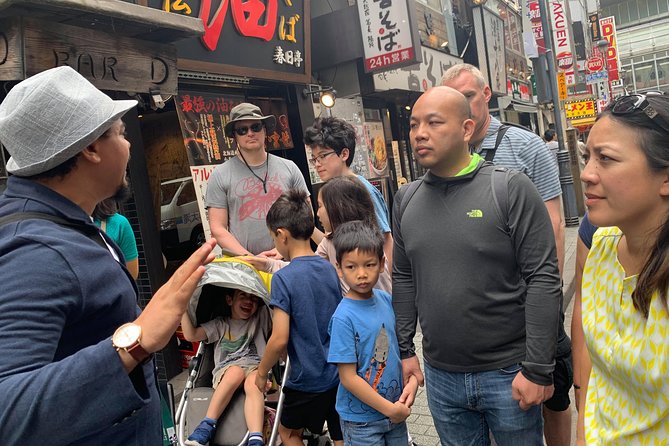
What I like most is the small-group format (max 10). It keeps the pace sane in one of Tokyo’s busiest areas, and it gives guides room to slow down when you ask questions. I also like the variety of food packed into the walk: sushi, yakitori, yakiniku, takoyaki, plus desserts.
One consideration: the route includes major Shibuya landmarks like Shibuya Crossing and the big shopping areas, so if you’re only in it for restaurant time, you may wish there were a bit more sitting and less sightseeing-shopping.
In This Review
- Key things to know before you go
- Why Shibuya works so well for a food tour
- Price and what you’re really paying for at $205
- Meeting at Hachiko and how the pacing stays workable
- Stop 1: Shibuya 109 street eats and izakaya street energy
- Stop 2: Nonbei Yokocho and the night-alley feel locals choose
- Stop 3: Shibuya Crossing for the quick picture moment
- Stop 4: MEGA Don Quijote and the 24-hour convenience mindset
- The food lineup: what you’ll eat and why the mix works
- Guides you might get: what to look for in how they lead
- Who this tour suits best (and who should think twice)
- Smart tips to get more from the 4-hour loop
- Should you book the Shibuya All You Can Eat Best Food Tour?
- FAQ
- How long is the Shibuya food tour?
- What food is included in the tour?
- Is alcohol included?
- What group size should I expect?
- Where does the tour start?
- Where does the tour end?
- Can I cancel for a full refund?
Key things to know before you go
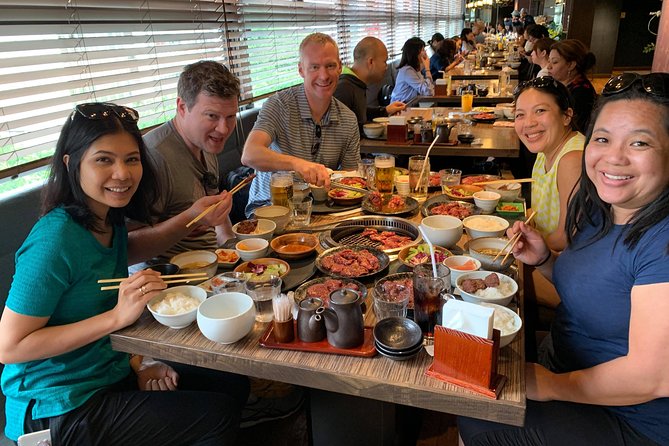
- Max 10 people keeps the tour from feeling like a conveyor belt
- Food stops are guide-chosen, so you get options that fit the night and the crowd
- You’ll cover both busy street energy and a tight alley bar scene (Nonbei Yokocho)
- All-you-can-eat style is built into the experience with multiple tasting stops and desserts
- Includes soft drinks and water, with alcohol available to buy
- Guides often add small human touches, like helping with an errand or pointing you to a favorite after-hours spot
Why Shibuya works so well for a food tour
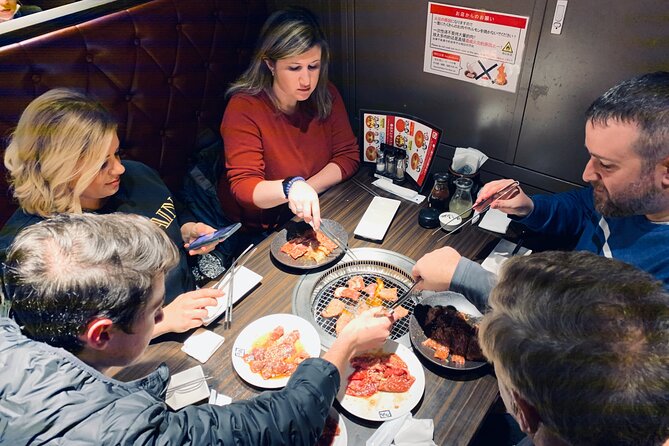
Shibuya is not a quiet neighborhood, and that’s exactly why this tour makes sense. You get a concentrated look at modern Tokyo street life without needing multiple train lines or long transfers. In one afternoon/evening window, you see the commercial side (big storefronts, bright crossings) and the “people are actually eating right now” side (tiny counter meals and alley bars).
The value here is the way the guide connects food to place. Instead of treating each dish like a random tasting, you walk to different types of eating spots—some open and loud, some tucked into narrow lanes—so the flavors make sense in context. That’s also why the small group matters. With fewer people, your guide can keep things moving but still handle the usual moments: menus you can’t read, timing questions, or dietary questions.
You can also read our reviews of more food & drink experiences in Tokyo

Price and what you’re really paying for at $205
At $205 per person for about 4 hours, you’re paying for three things at once: guided routing, multiple paid food stops, and a “don’t get lost” factor in a tough maze of streets. The tour also includes soft drinks and water, plus desserts, which is where a lot of DIY food crawls quietly fall apart cost-wise.
Is it cheap? No. But if your goal is to eat a lot in one go and avoid the guesswork—where to stand, what to order, when to move on—this kind of guided structure usually feels fair. One downside shows up in the real world with pricing: if you expected a tour that teaches nothing and only acts like a restaurant delivery service, you’ll probably feel the cost more than the food value.
My practical advice: go in hungry, plan to walk, and let the guide do the ordering and pacing.
Meeting at Hachiko and how the pacing stays workable
The tour starts at the Hachiko Statue area in Shibuya (2 Chome-1 Dogenzaka). It ends back near the same meeting point, so you’re not spending your evening navigating transit after your last bite.
You’re given a mobile ticket, and the meeting point is near public transportation. That matters because Shibuya is easier when you’re already near the right exits and you don’t have to cross the whole district just to find your group.
The stop durations are tight but realistic: 45 minutes at the first street food stop, then 30 minutes at Nonbei Yokocho, 15 minutes for Shibuya Crossing, and 30 minutes at MEGA Don Quijote. That adds up to a busy-feeling loop that still works within the 4-hour mark.
Stop 1: Shibuya 109 street eats and izakaya street energy
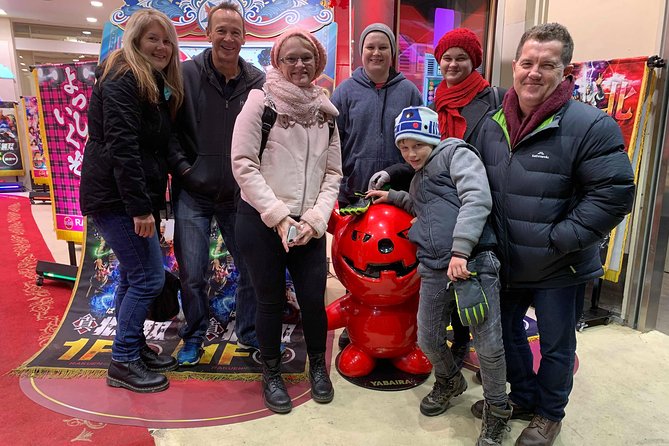
Your first stop is the Shibuya 109 area, a local street that gets heavy use from people looking for quick bites and evening snacks. This is a useful start because it tells you what “easy eating” in Shibuya looks like: fast choices, casual pacing, and lots of places built for people who are out shopping and want food now.
In tours like this, the opening stop often sets expectations. You’ll usually get to see how the guide thinks about timing and hunger—what to eat early, how to keep you full without making you too sleepy for later alley meals. You also get a quick sense of the neighborhood’s rhythm before you step into tighter, darker lanes later.
Potential drawback: this area can be crowded. If you’re not comfortable with big pedestrian flows, give yourself permission to move slowly and keep your focus on the guide’s instructions.
Stop 2: Nonbei Yokocho and the night-alley feel locals choose
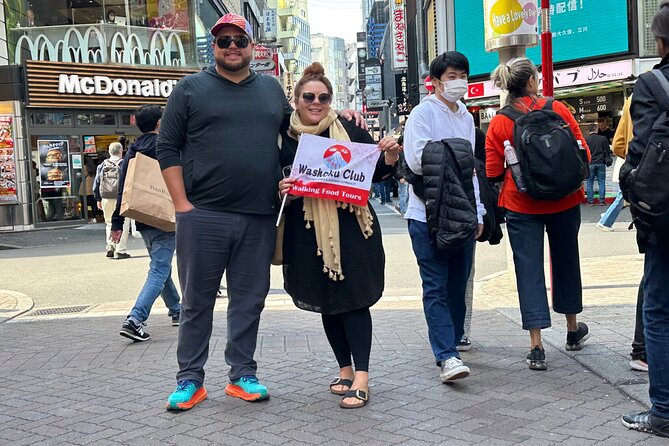
Next up is Shibuya Nonbei Yokocho, described as a hidden-style alley where Japanese people spend their night. This is where the tour becomes more than a list of dishes.
Nonbei Yokocho is famous for its compact bar layout. Think tiny spots where a small group fits in close, lots of atmosphere, and a very different feel from the open shopping streets. One helpful detail from past tours: the alley can feel like a series of micro-bars—spaces that hold only a few people—so your guide’s timing and grouping matter. You don’t just eat; you learn why the area works for night hangouts.
Why this stop is valuable: it gives your food meaning. Takoyaki or yakitori tastes better when you understand the setting people chose for it.
What to consider: it’s an evening-alley environment. Wear shoes that work on crowded sidewalks, and expect short walks between tight areas.
You can also read our reviews of more tours and experiences in Tokyo

Stop 3: Shibuya Crossing for the quick picture moment
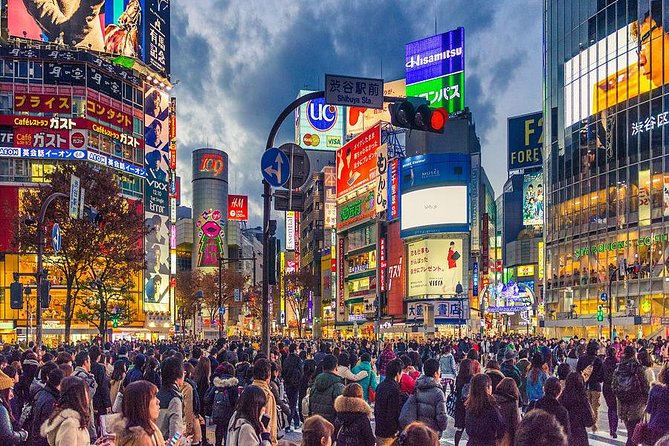
Then you get the Shibuya Crossing stop. This is the iconic junction where more than 2,000 people cross every single minute. The tour doesn’t treat it like a long sightseeing lecture. It’s more like a quick reset: you get oriented, grab a happy photo, and then you’re back to eating and moving.
This is also a practical stop. Shibuya Crossing is a landmark that makes the rest of the walk feel easier to navigate later. Even if you never return to this exact corner, you’ll remember the structure of the district.
A possible drawback: if you came for only food and you hate tourist-photo zones, this 15-minute stop might feel like filler. For most people, though, it’s a short, efficient way to get a sense of the neighborhood.
Stop 4: MEGA Don Quijote and the 24-hour convenience mindset
Your last main waypoint is MEGA Don Quijote, a big shopping complex known for being open 24 hours and selling everything from snacks to cosmetics and even electronics. This stop is not just about shopping. It’s about seeing how convenience culture shows up in everyday life.
A lot of Japanese food trips end with tasting, but the practical part is what you do after. Don Quijote is the kind of place where you can restock snacks, grab desserts, or buy a small souvenir without planning your whole trip around it.
One nice bonus: some guides go beyond the listed stops when there’s time for an errand. For example, Hamada helped a guest with a purchase at BIC Camera during the tour flow. That kind of flexibility can make your evening feel less rigid.
Consideration: if you’re not in the mood for shopping, treat this as a quick exploration stop. You’re still on a food-and-walk schedule, not a mall marathon.
The food lineup: what you’ll eat and why the mix works
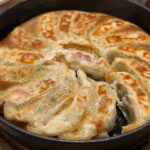
The included food is designed to cover multiple Japanese “modes of eating,” not just one category.
You can expect tastings that include:
- Sushi
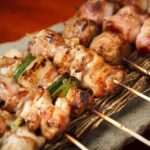
- Yakitori
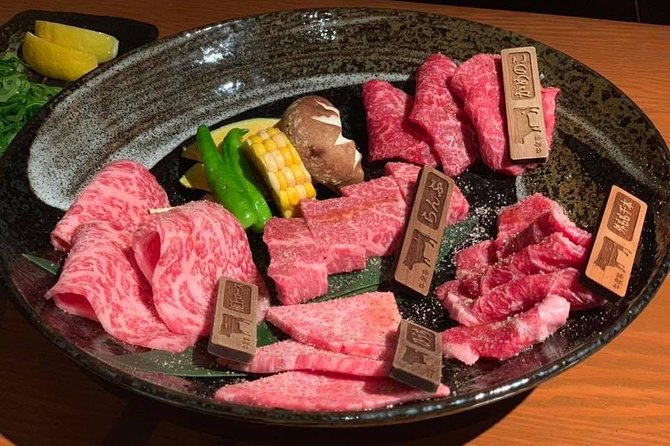
- Yakiniku
- Takoyaki
- Desserts
- Plus 2 soft drinks and water
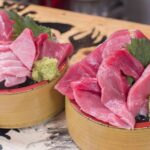
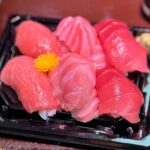
This mix is a smart choice for a first Tokyo food crawl. Sushi gives you the clean, seafood-forward start. Yakitori brings smoky, grilled comfort. Yakiniku adds the grilled meat experience that many people associate with Japanese yakiniku culture. Takoyaki gives you street-food texture and a fun handheld moment. Desserts close the loop so you don’t miss the sweet side.
One thing to keep in mind: the tour is set up as 4 to 5 food stops chosen by your guide. That means the exact timing and ordering can vary based on the night’s flow and the guide’s plan. In practice, what you should count on is the overall structure: multiple dishes, not a single long restaurant meal that you wait for.
If you get full easily, pace yourself. If you’re a big eater, you’ll probably love how the stops keep coming.
Guides you might get: what to look for in how they lead
This tour runs with professional guides, and the guide quality is repeatedly the reason the experience lands so high. You’ll see names like Kato, Hamada, Amber, Samir, Hiromi, Tanaka, Suzuki, Islam, Ryu, and Adam in past tours.
What matters is the way the guide handles three areas:
- Communication before and after so you find the start on time
- Pacing and attention so you don’t feel rushed or left behind
- Food explanations and cultural context, especially in places like Nonbei Yokocho
Example of what good leadership feels like: Hamada was described as caring and attentive, and also willing to help with an errand (like BIC Camera). Another guide, Hiromi, pointed guests toward after-hours ideas like Tir Na Nog, a speakeasy-style option, after the tour. That doesn’t mean the tour turns into a bar crawl—it means the guide sees the bigger picture of your Tokyo evening.
My advice for you: come with curiosity, and ask one follow-up question in each area you visit. That’s usually when the tour turns from eating into actual understanding.
Who this tour suits best (and who should think twice)
This works best if you want:
- A one-night plan for Shibuya that doesn’t require restaurant research
- Multiple Japanese dishes in a single small-group walk
- A mix of modern Shibuya sights and the alley-night vibe
- A guide who helps you order and explains what you’re eating
It’s also a great “first Tokyo food plan” if you’re new to ordering in Japan. The guide handles the awkward parts, like choosing menu items and getting you into places that fit the night.
Think twice if:
- You dislike crowds and big pedestrian zones, since Shibuya 109 and the crossing can be busy
- You want only sit-down dining and hate walking between short stops
- You feel strongly that a tour should be cheaper than typical paid food experiences
Smart tips to get more from the 4-hour loop
- Come hungry, then pace your bites. Even with smaller tasting portions, the total amount adds up fast.
- Wear shoes that handle crowded sidewalks and short transitions.
- If you drink alcohol, remember alcohol isn’t included. You can buy it if you want, but budget your add-ons.
- Bring a few questions about the dishes. If your guide is Kato, Hamada, Amber, or any of the other frequent leaders, you’ll usually get clear answers.
- If you’re the planner type, save time later: you’ll come out knowing the Shibuya layout better than if you just wandered.
Should you book the Shibuya All You Can Eat Best Food Tour?
I’d book it if your top priority is a guided Shibuya evening built around real food variety, a small group, and easy navigation through a district that can overwhelm you. The price isn’t the lowest, but you’re buying structure: multiple stops, included drinks and desserts, and a guide who helps the night flow.
If your priority is only strict restaurant time with minimal sightseeing, or if you hate shopping malls and iconic photo zones, you might feel the schedule has too much “Shibuya scene” between bites. In that case, you’d probably enjoy a more food-only, less landmark-heavy plan.
My bottom line: if you want to eat a lot, walk a little, and come away knowing Shibuya’s night culture, this tour is an easy yes.
FAQ
How long is the Shibuya food tour?
It runs for about 4 hours (approximately).
What food is included in the tour?
You’ll get tastings that include sushi, yakitori, yakiniku, takoyaki, and desserts, plus 2 soft drinks and water.
Is alcohol included?
Alcoholic beverages are available to purchase, but they are not included.
What group size should I expect?
The tour is small-group, with a maximum of 10 travelers.
Where does the tour start?
It starts at the Hachiko Statue (2 Chome-1 Dogenzaka, Shibuya, Tokyo).
Where does the tour end?
The tour ends back at the meeting point.
Can I cancel for a full refund?
Yes. You can cancel up to 24 hours in advance for a full refund. Within 24 hours, the amount paid is not refunded.