REVIEW · TOKYO
Luxury van Ride to famous car meet up spot Daikoku
Book on Viator →Operated by Team Open Tours · Bookable on Viator
Daikoku starts with a great ride. This is a small-group luxury van trip that trades taxi hassle for big Tokyo views, with stops that make the drive part of the fun. I love the personal attention that comes with a max of 6 people, so you can ask questions without feeling like you’re being shipped around.
My favorite part is what happens once you reach Daikoku Parking Area. You get time to walk the lot and look at rare Japanese cars and supercars, and the driver/organizer (often Jeremy) keeps things moving with clear explanations and answers along the way.
One thing to plan for: car turnout can vary. If the weather is rough or it’s a slower day, the number of cars may not match your best-case imagination, and the time on-site can feel tight for hardcore enthusiasts.
In This Review
- Key highlights worth planning around
- Getting from Shinjuku to Daikoku without city chaos
- The drive route: elevated highways and big Tokyo geometry
- Rainbow Bridge at night: the stop that makes the whole trip feel special
- Odaiba break and the futuristic Fuji building view
- The heart of it: Daikoku Parking Area and what to expect
- How long you get
- Why it’s exciting
- Time planning reality check
- What the guide does (and why it affects the whole vibe)
- Vehicle surprises: van ride, but sometimes not always only a van
- Price and value: what $72.67 really buys you
- Who this tour is best for (and who should skip it)
- Practical tips before you go
- Should you book the Luxury Van Ride to Daikoku?
- FAQ
- FAQ
- How long is the Luxury Van Ride to Daikoku?
- What is the group size?
- Where do you meet and where do you return?
- Is the Daikoku Parking Area admission included?
- What do you see on the drive besides Daikoku?
- How does the Rainbow Bridge stop work?
- Do you get a break at Odaiba?
- What’s included for ticketing?
- Is there a cancellation policy if weather affects the tour?
- Are service animals allowed?
Key highlights worth planning around
- Small group (max 6): less waiting, more conversation, and a calmer vibe than big buses.
- Rainbow Bridge to Odaiba: the skyline views from the bridge are the kind you remember, not the kind you snap and forget.
- A break on Odaiba: you’ll stop briefly on the artificial island area with the futuristic Fuji building view.
- Daikoku time is the payoff: you’ll have about 1 hour 30 minutes in the parking area, and admission there is free.
- Flexible car experience, not just one script: in some cases, the vehicle can differ day-to-day (like a GT86 or a tuned Toyota instead of only the van), depending on what’s booked.
- Communication and logistics are designed to be easy: meet in Shinjuku, return to the same spot, and get moving without complicated transfers.
Getting from Shinjuku to Daikoku without city chaos
You meet in Shinjuku at 5-8 Funamachi, Shinjuku City, Tokyo 160-0006. The location is set up so you’re near public transportation, which matters in Tokyo, where every “simple” plan can turn into a maze if you’re relying on multiple connections.
Then you go. The tour is built around the idea that Daikoku isn’t a place you casually stumble into by train. The big win here is direct, comfortable access—especially since getting there by typical taxi/public transit routes isn’t straightforward for some visitors. Instead, you’re in a family-friendly luxury vehicle that handles the tricky parts.
The trip runs about 2 to 3 hours, and that time is split between road views and the actual car meet. There’s also a mobile ticket, so you’re not hunting for paper confirmations like it’s 2007.
You can also read our reviews of more tours and experiences in Tokyo

The drive route: elevated highways and big Tokyo geometry
Between pickup and the main sights, you’ll ride through Tokyo on elevated highways. This isn’t just “transport.” You’re literally watching the city stack itself: skyscrapers, bridges, and monorails slide by, and the route gives you angles you usually don’t get unless you go out of your way.
If you like cities at night, this part becomes more than background. It’s your warm-up act for the bridge and Odaiba stops. And if you’re traveling with people who might not want a full day of sightseeing, the drive acts like a shared activity: everyone gets something, even if one person is mostly focused on the cars later.
Rainbow Bridge at night: the stop that makes the whole trip feel special
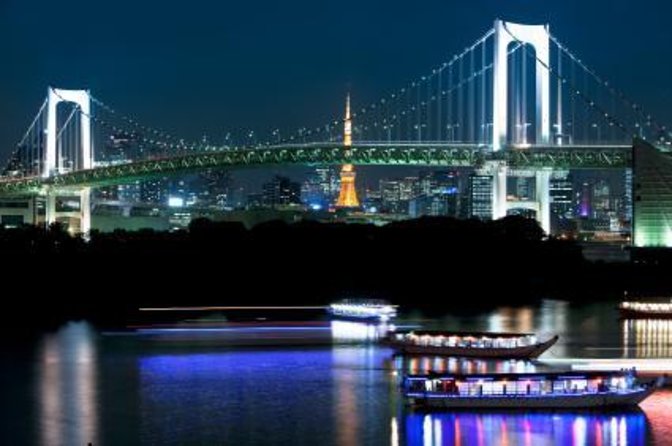
This is one of the most talked-about moments. You’ll drive over the Rainbow Bridge, and the view of the Tokyo night skyline from the bridge is the kind of visual payoff that makes the ride feel worth it even before you reach Daikoku.
Why it matters: the bridge stop is where the tour stops being purely practical. It’s the moment you get that classic Tokyo feeling—dense lights, sweeping water-side scenery, and a real sense of scale. It also sets expectations for timing: you’re riding there while Tokyo is awake, and the tour is designed for an evening atmosphere.
If you care about photos, be ready for quick chances. The tour moves, so you’re not going to have a long wandering period here. But you also don’t need it. The views are built into the drive.
Odaiba break and the futuristic Fuji building view
After the bridge, you continue into the Odaiba area for a short break. The tour is timed so you can step out briefly, stretch your legs, and look at the skyline with Odaiba’s futuristic vibe in the mix.
You’ll also see the futuristic Fuji building during this stop. It’s a strange, memorable landmark style that fits Odaiba’s techy, built-for-the-camera identity.
A practical note: this isn’t an all-day Odaiba outing. If you want museums or deep shopping time, this isn’t that tour. But if you want a quick taste of the area plus the bridge views, it’s a strong add-on.
The heart of it: Daikoku Parking Area and what to expect
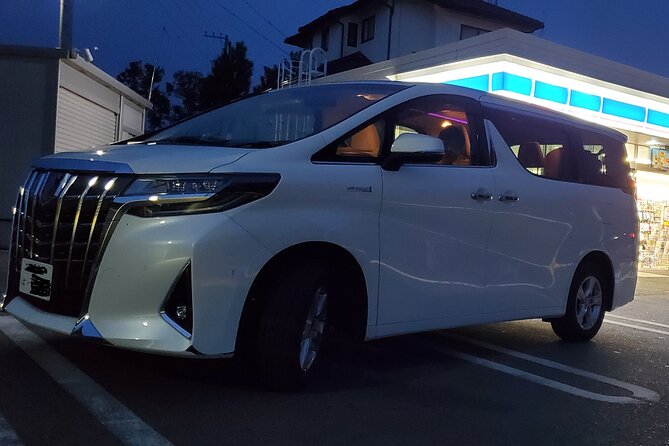
Daikoku Parking Area is the reason you book. The structure is simple: you arrive, you walk, you look, you take in the car culture, and you do it at a time when Tokyo feels like Tokyo.



How long you get
You’ll have about 1 hour 30 minutes on-site, with admission free at the parking area. That amount of time is usually comfortable for most people: enough to browse multiple lanes, slow down for a few favorite cars, and still not feel rushed back into the van.
Why it’s exciting
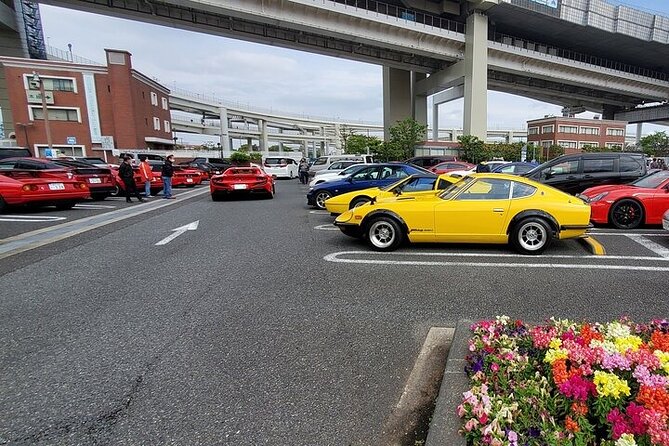
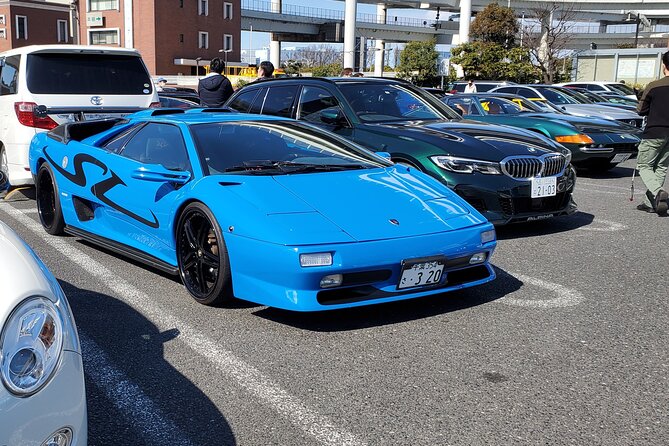
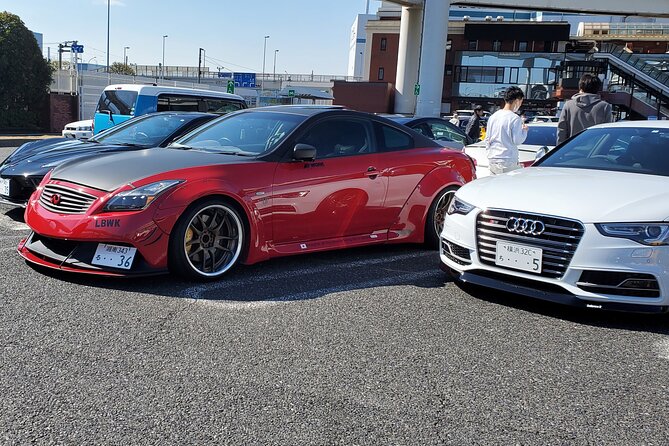
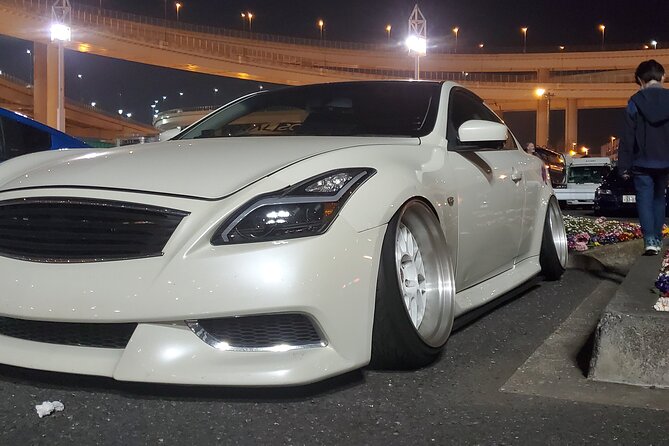
This is where you can see rare Japanese cars, collectibles, and JDM builds, plus supercars that you may not spot elsewhere on the same trip. The car mix can change depending on the day, which is both part of the fun and part of the risk.
From the way the experience is described by people who do this regularly, the lineup can range from “nice selection” to “wow, this is nuts.” Weather matters too. The tour itself requires good weather, but even with acceptable weather, turnout can still vary.
Time planning reality check
If you’re the type who wants to inspect every sticker, wheel, and engine bay detail, you might want more than an hour and a half. Some folks found that tight—especially if the day was slow when they arrived, or if they arrived when there were fewer cars and then later wished they could stay longer once the crowd picked up.
My advice: treat the Daikoku stop as the main event, but don’t plan your whole evening around a perfect count of cars. Plan for an authentic, sometimes unpredictable car meet.
What the guide does (and why it affects the whole vibe)
A big part of the satisfaction here is how the organizer runs the experience. Many people single out Jeremy and his team for being friendly and easy to talk to, plus for answering questions about car culture and Tokyo driving.
In practice, that means the ride isn’t just silent sitting. You can talk about what you’re seeing, ask how car culture works in Japan, and get context while you pass through the city. That turns a “transport only” service into something more memorable.
There’s also a theme in the feedback that the experience stays focused—no extra stops shoehorned in for unrelated shopping or big detours. You’re there for Daikoku, with Tokyo views as the supporting act.
Vehicle surprises: van ride, but sometimes not always only a van
The description centers on a luxury van ride. But a couple of experiences point to a real-world detail: on certain days or booking situations, the actual vehicle used can differ.
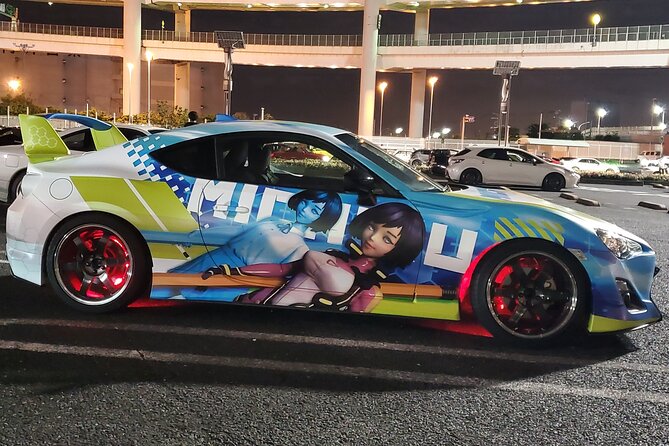
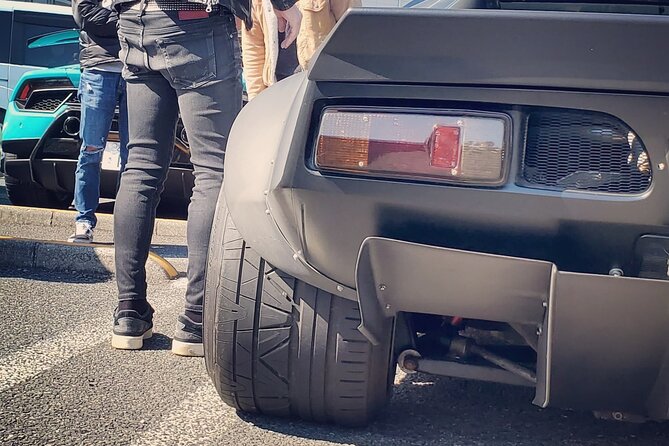
Some people report being upgraded to a specific sports car experience (including mentions like an R35 GTR upgrade), while others describe being taken in something like a GT86 or a tuned Toyota rather than a van.
That doesn’t mean anything is promised beyond what you booked. It does mean you should expect the tour to prioritize getting you to Daikoku comfortably, and you may get a bonus if the operator can swap in a better car setup.
If you’re traveling with someone who has a strong preference about the vehicle model, I’d suggest double-checking your confirmation details right after booking.
Price and value: what $72.67 really buys you
At $72.67 per person, you’re paying for convenience and access. A taxi-only plan can get expensive fast in Tokyo, and some transport options aren’t practical for reaching Daikoku in the straightforward way this tour does.
Here’s the value equation that makes sense for most travelers:
- You’re avoiding complicated transfers.
- You’re getting a comfortable ride through major Tokyo sights.
- You’re getting a meaningful chunk of time on-site (about 1 hour 30 minutes).
- You’re returning to the same meeting point, without figuring out late-night transport.
Is it “worth it” if Daikoku has fewer cars that night? Sometimes that’s where people feel disappointed. But if you’re mainly after the car-meet experience plus a smooth ride there, the pricing tends to land as fair compared with other structured options.
For car fans, it’s the kind of day-trip cost that feels less like paying for a ride and more like paying for access.
Who this tour is best for (and who should skip it)
This works best if you:
- Love JDM and supercars and want an organized way to reach Daikoku.
- Want a comfortable ride with built-in Tokyo views like Rainbow Bridge and Odaiba.
- Prefer a small group over crowded tours.
- Are okay with the fact that Daikoku turnout can vary by day.
You might hesitate if you:
- Are planning to time-box your evening tightly and can’t handle possible delays from road traffic.
- Have extremely high expectations for a massive number of cars every single time.
- Need more than about 90 minutes to satisfy a “serious inspection” mindset.
Practical tips before you go
- Wear comfortable shoes. Daikoku is a walking experience.
- Bring patience for Tokyo roads. Elevated routes are cool, but Tokyo traffic is Tokyo traffic.
- Use the timing to your advantage. If you’re able to, plan your dinner and transit buffer so you’re not sprinting to catch the last connection.
- If you’re picky about vehicle type, confirm your specifics. Vehicle swaps can happen based on booking conditions.
One extra planning note from real-world experience: late-night transport can be limited in Japan. If you’re taking trains back, build in cushion so you’re not stuck thinking about what comes after last service.
Should you book the Luxury Van Ride to Daikoku?
If your goal is a smooth, high-comfort way to experience Daikoku car culture—and you also want Tokyo skyline views—you should book. The best parts line up with what matters most: small-group attention, the Rainbow Bridge payoff, and meaningful time at Daikoku Parking Area.
I’d especially recommend it for car enthusiasts who don’t want to gamble on logistics. You’re paying to reduce friction, and that tends to be where this tour shines.
Just go in with one clear expectation: Daikoku’s lineup changes. Some days are legendary. Some days are calmer. The tour itself is designed to deliver a great overall experience either way.
FAQ
FAQ
How long is the Luxury Van Ride to Daikoku?
The tour is about 2 to 3 hours total.
What is the group size?
The tour has a maximum of 6 travelers.
Where do you meet and where do you return?
You start at 5-8 Funamachi, Shinjuku City, Tokyo 160-0006, Japan, and the activity ends back at the meeting point.
Is the Daikoku Parking Area admission included?
Yes. Admission at Daikoku Parking Area is free, and you’ll spend about 1 hour 30 minutes there.
What do you see on the drive besides Daikoku?
You’ll see Rainbow Bridge and Odaiba en route, plus views from Tokyo’s elevated highways.
How does the Rainbow Bridge stop work?
You drive over the Rainbow Bridge, and you’ll get the Tokyo night skyline views from there as a major highlight.
Do you get a break at Odaiba?
Yes. You’ll have a small break on the artificial island of Odaiba and see the futuristic Fuji building.
What’s included for ticketing?
You’ll receive a mobile ticket, and confirmation is received at booking time.
Is there a cancellation policy if weather affects the tour?
Yes. The experience requires good weather. If it’s canceled due to poor weather, you’ll be offered a different date or a full refund.
Are service animals allowed?
Yes, service animals are allowed.