REVIEW · TOKYO
Private Workshop for Making Paper Last 1,000 years in Ueno
Book on GetYourGuide →Operated by Washi labo TOKYO · Bookable on GetYourGuide
Paper making feels slow until you’re doing it. In this private workshop in Ueno, you’ll go step-by-step through traditional washi production, from peeling bark to beating kozo fibers into pulp. I love that it’s hands-on and you leave with finished, personal paper items, not just photos. I also like the relaxed pacing: you make four things, and while your sheets dry, you get kozo-leaf tea plus local sweets.
The main thing to consider is the small workshop setup—there’s a cat in the room, so if allergies are an issue, you’ll want to flag it ahead of time. Also, the location can take a minute to find if the nearby rail lines are having problems, so give yourself a little buffer.
In This Review
- Key things to know before you go
- Your seat at the washi-making table in Ueno
- The practical flow: from kozo to postcards (without rushing)
- 1) Start with a clear overview
- 2) Hyouhitor: peeling the outer bark
- 3) Dakai: beating the tree fibers
- 4) Mix, pour, and form your sheet with mold and deckle
- 5) Build your final products: postcards + two types of paper
- 6) While your paper dries: kozo tea and sweets
- What you’ll actually notice in your hands (not just your photos)
- The cozy details: instructor care, work clothes, and Kami-chan the cat
- Price and value: is $130 worth it?
- Who this workshop is best for
- Getting there in Ueno: give yourself a little wiggle room
- Should you book this washi workshop?
- FAQ
- How long is the private workshop?
- What will I make during the session?
- Will I be taught the full washi process?
- Is tea included?
- What languages does the instructor speak?
- Is this a private group?
- Is there a cat in the workshop?
- What’s the cancellation policy and payment option?
Key things to know before you go
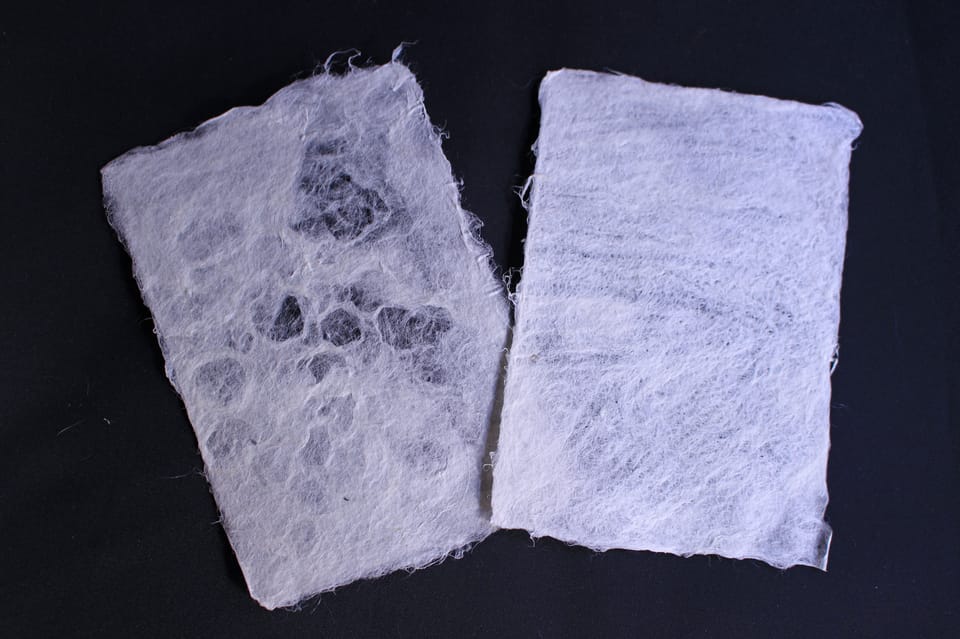
- You’ll make 4 paper products: 2 postcard designs, Rakusu i paper, and an A5 sheet
- You’ll practice the core steps: peeling off outer bark (Hyouhitor) and beating fibers (Dakai)
- You control the sheet-making with a mold, deckle, and sifting for an even result
- Tea time is built in, made from kozo leaves, plus local Japanese sweets
- It’s private and small, with instruction in Japanese and English
Your seat at the washi-making table in Ueno
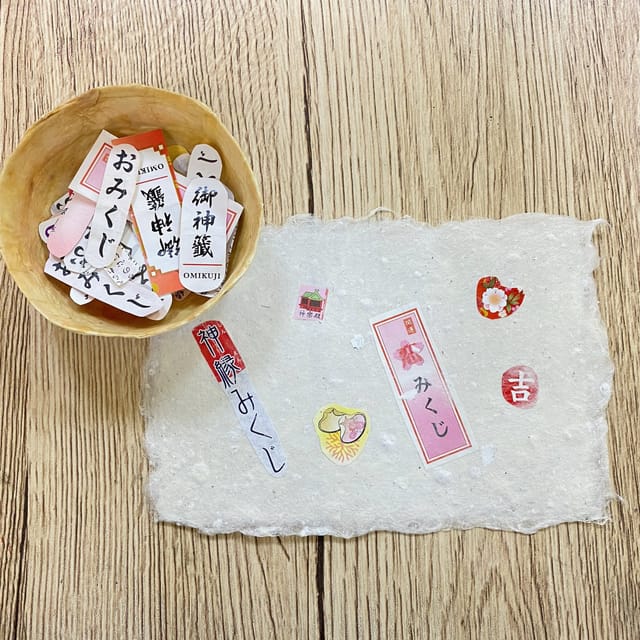
Ueno is a great base for curious day plans, and this workshop turns that curiosity into your hands. You’re paying for an experienced teacher, a guided process, and the materials to produce finished paper you can actually use or keep. At $130 for 150 minutes, it’s not a throwaway activity—it’s more like a focused craft class where you learn by doing.
What makes it work for first-timers is the structure. You start with a general explanation, then jump into the physical steps that make washi different from modern paper. You’re not memorizing a lecture—you’re learning what each action changes in the pulp and how that affects the sheet.
This is also one of those experiences where the time feels short. When the work is hands-on—peeling, beating, mixing, forming a sheet—your brain stops waiting for instructions. In the reviews, people specifically called out how the session passed quickly, which makes sense. When the craft clicks, you’re busy.
You can also read our reviews of more private tours in Tokyo



The practical flow: from kozo to postcards (without rushing)
Plan for a full 150 minutes of active crafting. The workshop is designed so you experience the full arc of traditional papermaking, not just the fun part at the end. Here’s the order of what you can expect.
1) Start with a clear overview
Before anything gets messy, you’ll get a general explanation of what washi is and what the key steps do. That intro matters because it helps you connect the dots later when you’re kneading fibers and managing the mold. If you don’t speak Japanese perfectly, don’t worry—this workshop runs in Japanese and English, and demonstrations carry the meaning.
2) Hyouhitor: peeling the outer bark
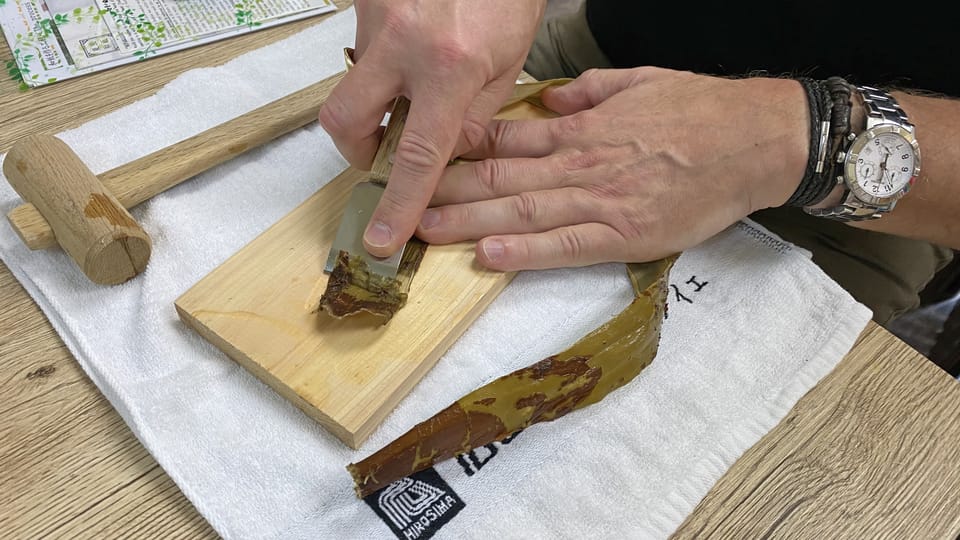
One of the earliest and most important steps you’ll experience is Hyouhitor, peeling off the outer bark. This is the moment where you’re introduced to the “why” behind the process. You’re handling the raw material in a way that prepares the fibers for what comes next.
It’s also surprisingly tactile. Even if you’ve never worked with plant fibers, you’ll quickly understand that washi isn’t made from a factory sheet. It starts as something fibrous and physical, and you’re treating it as such.
3) Dakai: beating the tree fibers
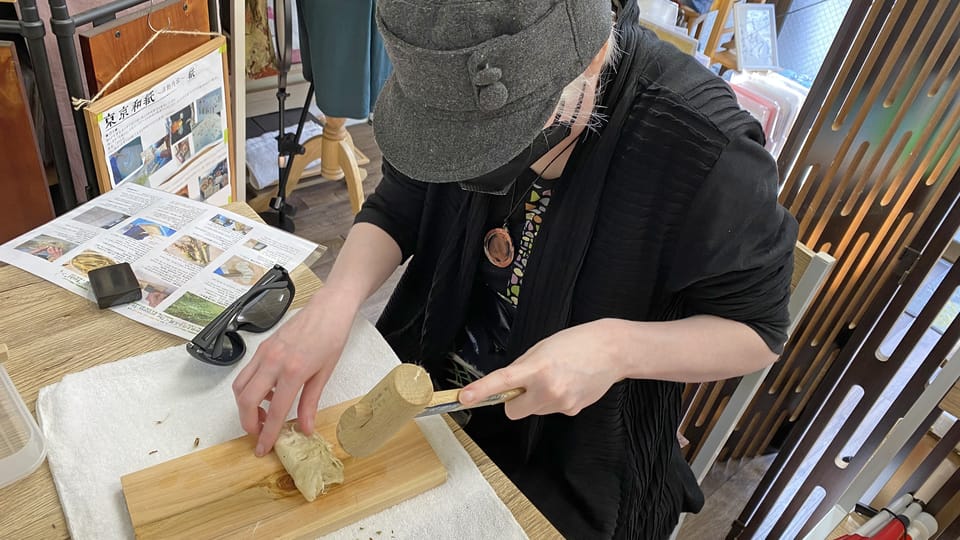
Next is Dakai, beating the tree fibers. In a workshop like this, beating isn’t just drama—it’s about breaking down fibers and helping them behave like a pulp. Your hands learn the rhythm, and you’ll notice how the texture shifts as you work.
This step is often the most memorable, because it feels like you’re transforming something from rough to workable. If you enjoy craft work where physical effort leads to a clear result, you’ll like this.
You can also read our reviews of more tours and experiences in Tokyo



4) Mix, pour, and form your sheet with mold and deckle
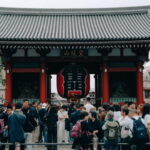
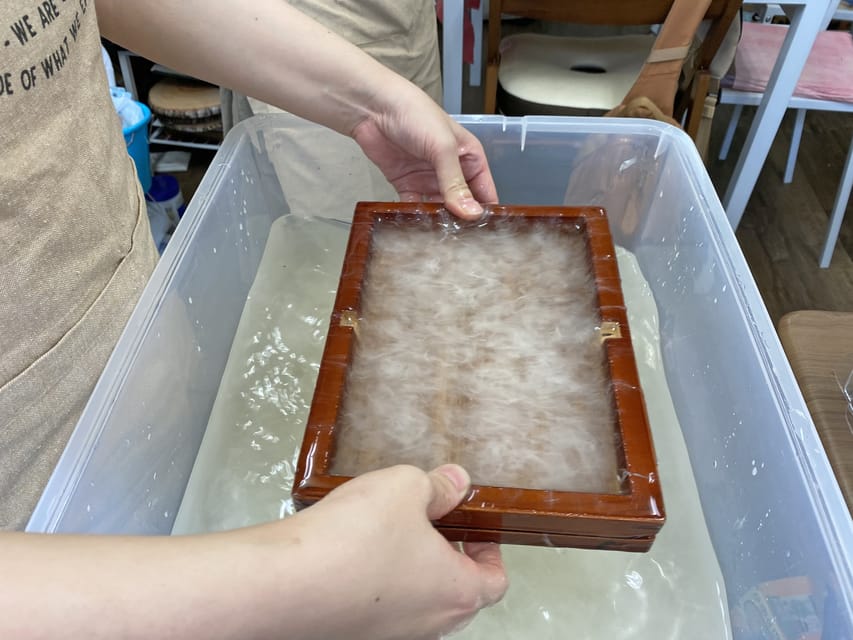
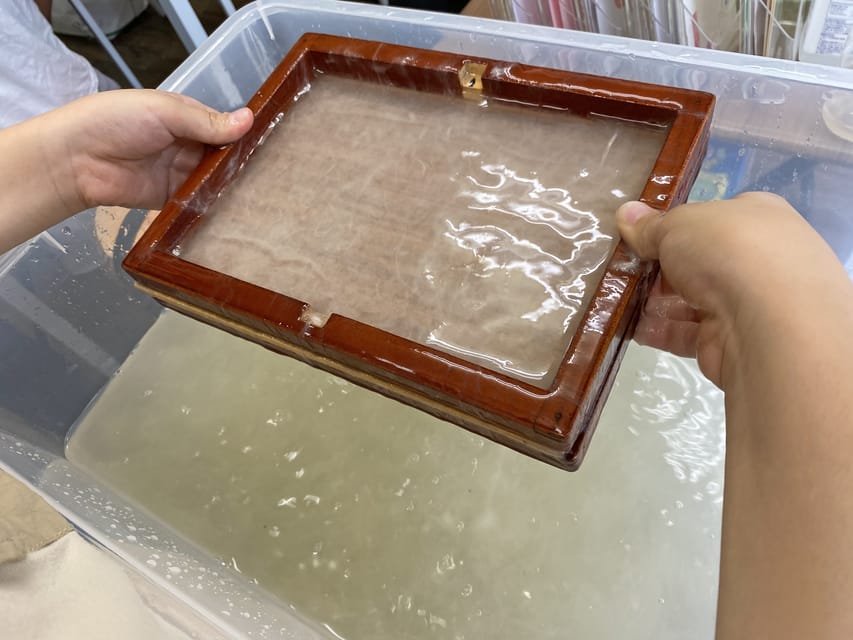
After fibers are ready, you’ll pour the raw material into a paper-making mold and set a deckle to define the sheet’s edges. Then comes the sifting stage, where you spread the solution evenly so the sheet dries flat and consistent.
This part is where you get to slow down and be careful. Small adjustments—how evenly you distribute, how you handle the mix—affect the final sheet quality. The teacher’s guidance here is key, especially when you’re managing a mold while also learning the process.
5) Build your final products: postcards + two types of paper
You’ll make four items total by the end:
- Two postcard designs made by you
- Rakusu i paper (a separate finished item)
- An A5 paper sheet
It’s a nice mix of formats: postcards are fun because they’re practical keepsakes and potential gifts, while the A5 sheet is great if you want something closer to a usable writing surface or a display piece.
The big advantage of having multiple finished products is that you don’t leave with only one result. Even if one item isn’t perfect (and it usually isn’t perfect on a first try), you still end up with a set of things you personally made.
6) While your paper dries: kozo tea and sweets
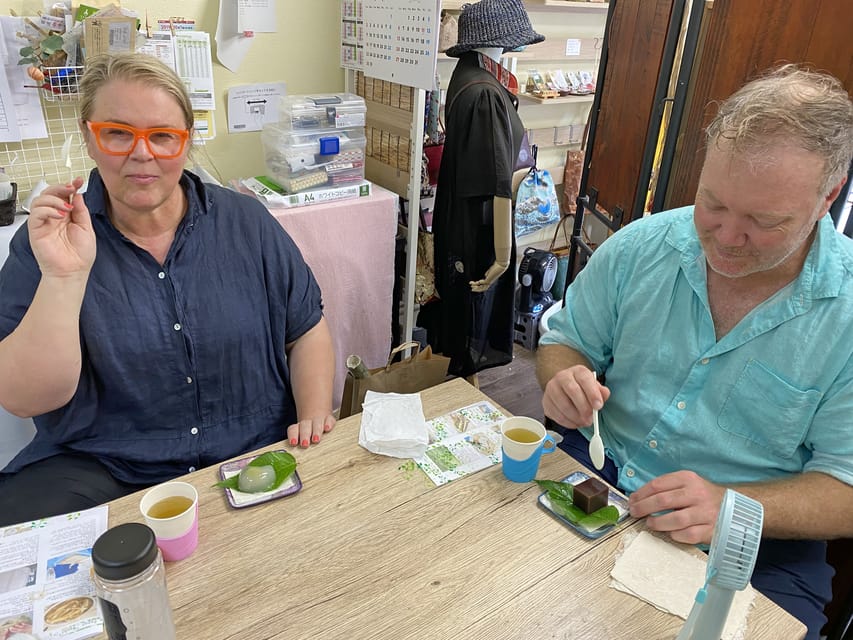
Paper dries at its own pace, so the workshop includes a pause that doesn’t feel like downtime. You’ll enjoy the provider’s original Japanese paper tea made from kozo leaves, plus local Japanese sweets sourced from a beloved local shop.
This is more than a snack break. It ties the experience together: you learned how kozo becomes paper, and then you taste a product made from the same starting material. It also gives you a chance to sit down, look at what you’ve made, and reset.
What you’ll actually notice in your hands (not just your photos)
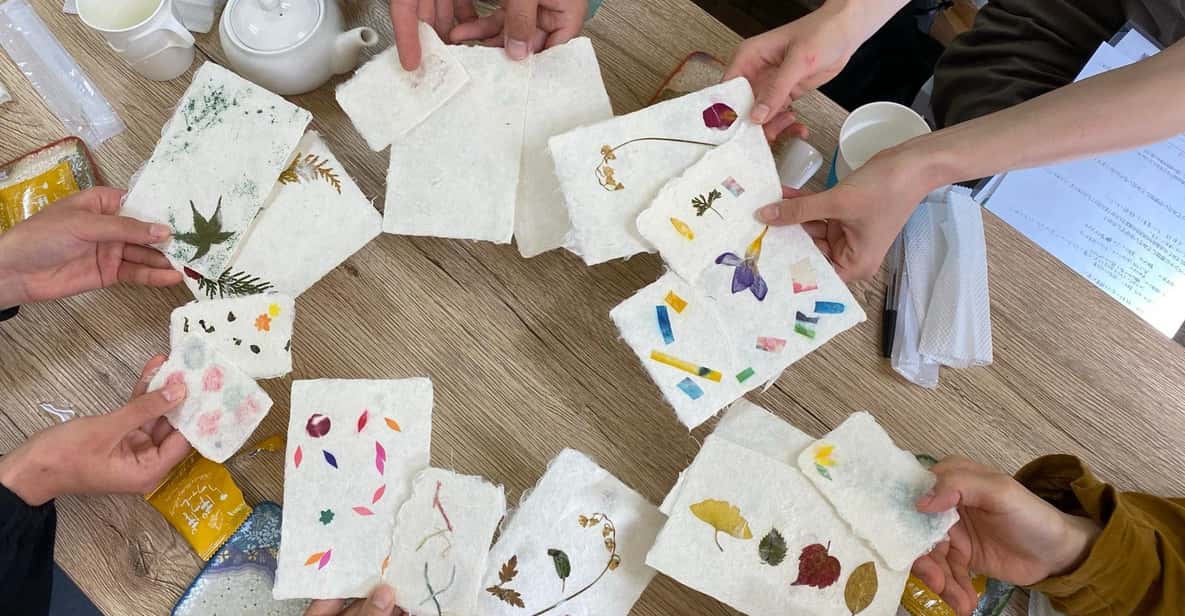
I like workshops where the “learning” is visible on your skin and in your work. Here, you’ll notice the fibers, the mixture, and the sheet formation as real, physical stages—not just steps on a sign.
When you’re peeling and beating, you’re training your hands to think in textures. When you’re pouring into the mold and using the deckle, you’re learning how shape comes from boundaries. And during the sifting stage, you’ll see how even distribution affects the surface you’ll eventually hold.
This is also where private instruction helps. Since it’s a private group, you’re not fighting for attention while other people move at different speeds. Reviews specifically praised how organized the session felt, and some people were the only participant during their time slot—so if you value personal coaching, this setup is a plus.
The cozy details: instructor care, work clothes, and Kami-chan the cat
Beyond the craft steps, the atmosphere matters. One review described a beautiful space and an amazing teacher, and another mentioned the host being accommodating and attentive. That attention is important in papermaking, because it’s easy to overwork something if you don’t understand what the step is trying to achieve.
You’ll also get work clothes provided. That’s a small thing that makes a big difference. It lowers the stress of whether you’ll ruin your outfit or whether the process will be too messy for you. You can focus on learning.
One more detail you should know before you go: there’s a cat in the workshop, and in at least one review the mascot was named Kami-chan. The cat is described as well behaved and part of what makes the space feel cozy. Still, the provider includes a reminder to tell them if you have allergies—so do that early, not last minute.
Price and value: is $130 worth it?
At $130 per person for 150 minutes, you’re paying for more than “a quick activity.” You’re buying:
- guided instruction in Japanese and English
- materials needed for making multiple finished items
- coffee or tea (and in practice, the kozo paper tea experience plus sweets during the drying time)
- a private setting where you can actually focus on the craft
If all you wanted was a souvenir photo, it would be overpriced. But if you want a real skill-based craft session—one that ends with items you can keep—this price starts to make sense.
A fair way to think about it: you’re paying for the teacher’s time and for everything needed to transform plant fibers into finished paper. That takes preparation, tools (mold and deckle), and cleanup. And since you make four products, you’re getting multiple outcomes for your money.
The one value risk is the private session format: it’s a good deal when the schedule is set and you get full attention, but if you’re comparing to larger group classes elsewhere, your per-person cost may feel higher. Still, in this workshop, the small scale and hand-by-hand instruction are part of the payoff.
Who this workshop is best for
You’ll get the most from this if you’re the type of traveler who likes practical making, not just sightseeing. This is especially good for:
- couples or small friend groups who want a shared hands-on activity
- solo travelers who enjoy learning with focused attention
- people who want something more memorable than another museum stop
- anyone curious about how paper starts from a tree
If you’re traveling with kids, the data here doesn’t spell out age suitability. So you might want to check directly with the provider before booking, especially with the cat and the hands-on steps.
If you have a cat allergy, treat this as a must-ask item. The workshop explicitly flags that there’s a cat in the room.
Getting there in Ueno: give yourself a little wiggle room
Ueno is easy to reach in general, but one review mentioned a challenge finding the place due to a metro line problem on the route to the nearest station. The takeaway: don’t treat your arrival like a perfect clock mission.
Use maps, yes, but also build in buffer time. If transit is glitchy, you’ll still arrive calm enough to enjoy the intro and avoid rushing into the messy steps.
Should you book this washi workshop?
I’d book it if you want a short, focused experience that ends with real paper products you made yourself. The mix of two postcard designs, Rakusu i paper, and A5 paper makes it feel worth it, and the craft steps—Hyouhitor and Dakai—give you the full story of how washi is formed.
Skip it or reconsider if you’re highly sensitive to cats, or if you don’t enjoy hands-on work and prefer passive activities. Otherwise, this is the kind of workshop you’ll remember because it lives in your hands, not just in your camera roll.
FAQ
How long is the private workshop?
The workshop lasts 150 minutes.
What will I make during the session?
You’ll create four paper products: two postcard designs, Rakusu i paper, and an A5 paper.
Will I be taught the full washi process?
Yes. You’ll experience the process stages including Hyouhitor (peeling off the outer bark) and Dakai (beating tree fibers), then form sheets using a mold and deckle and sift the solution.
Is tea included?
Coffee or tea is included, and the workshop also offers Japanese paper tea made from kozo leaves, along with local Japanese sweets.
What languages does the instructor speak?
The instructor uses Japanese and English.
Is this a private group?
Yes, it’s a private group workshop.
Is there a cat in the workshop?
Yes, there is a cat in the workshop. You should inform the provider if you have any allergies.
What’s the cancellation policy and payment option?
You can cancel up to 24 hours in advance for a full refund. The booking also offers a reserve now & pay later option.