REVIEW · TOKYO
Hands-On Japanese Craft in Tokyo with Mochi Wagashi & Matcha
Book on Viator →Operated by Patia's Japanese Cooking Class · Bookable on Viator
A good souvenir doesn’t have to be expensive. This small Tokyo workshop pairs a hands-on uchiwa (Japanese fan) craft with matcha latte and two distinct wagashi, so you leave with both something to take home and something to taste. I like how the activity feels creative but not intimidating, thanks to prepared materials and guided steps.
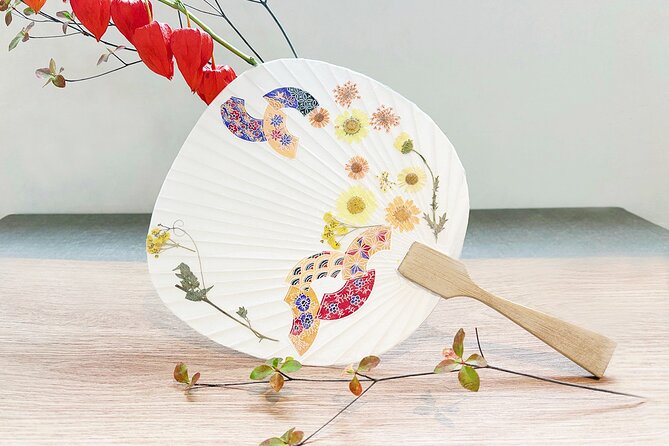
My favorite part is the mix of nature and design: you’ll decorate a round fan using pressed flowers and patterned origami-style elements, then finish it so you can bring your handmade fan home. After crafting, you get a creamy cup of matcha latte plus two Japanese sweets, including a modern twist on monaka and a cute Kokedama-inspired dessert.
One thing to consider: there’s no hotel pickup, so you’ll want to plan how you’ll get to the meeting point in Tokyo. Also, since the drinks and desserts revolve around matcha, it may help to like green tea flavor at least a little.
In This Review
- Key Highlights You’ll Care About
- Uchiwa Craft in Tokyo: A Fan You Actually Made
- The Uchiwa-Making Process: Materials, Design Choices, and an Iron Step
- Matcha Latte After the Craft: Creamy, Mild, and Easy to Like
- Wagashi Pair-Up: Modern Monaka and a Kokedama Moss-Ball Sweet
- Modern Monaka: Crispy, Filled, and Topped
- Kokedama-Inspired Sweet: A Moss-Ball That You Can Eat
- What This 90 Minutes Feels Like (And Why the Small Group Matters)
- Price and Value: $78.69 for a Craft + a Tea Break + Two Sweets
- Location and Logistics That Matter in Tokyo
- Who Should Book This Workshop
- Should You Book This Uchiwa and Mochi Wagashi Matcha Class?
- FAQ
- How long is the experience?
- What’s included in the price?
- Do I get to take the uchiwa home?
- Is there hotel pickup or drop-off?
- How many people are in the group?
- What if the weather is bad?
- Can I cancel for a full refund?
- Is this matcha for first-timers?
Key Highlights You’ll Care About
- Press flowers + paper folding: You’ll design your own round uchiwa using nature-inspired materials and Japanese-style paper.
- Small group feel (max 15): It stays personal enough for support without feeling like a factory line.
- Matcha latte that’s beginner-friendly: It’s smoother and less bitter than plain matcha, especially since it’s mixed with milk.
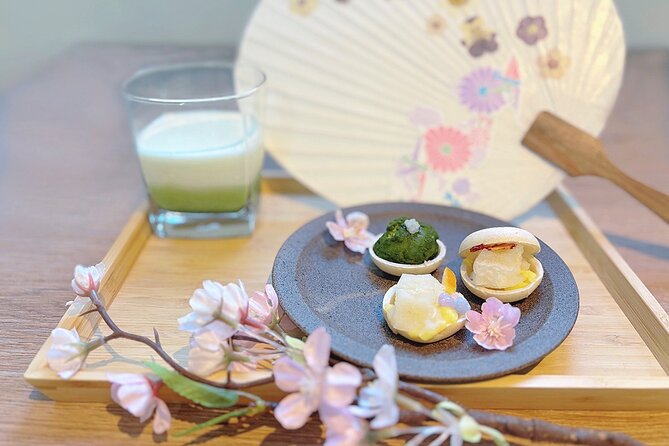
- Two wagashi with different textures: Crispy monaka with custard cream and mochi, plus a moss-ball style sweet that’s all about the look.
- You take the craft home: Your fan isn’t just a photo prop; it’s a usable keepsake for summer breezes.
Uchiwa Craft in Tokyo: A Fan You Actually Made
In Japan, the uchiwa isn’t just decoration. It’s the kind of summer accessory people use for a light breeze, and making one feels oddly satisfying because you understand its purpose the moment you finish it.
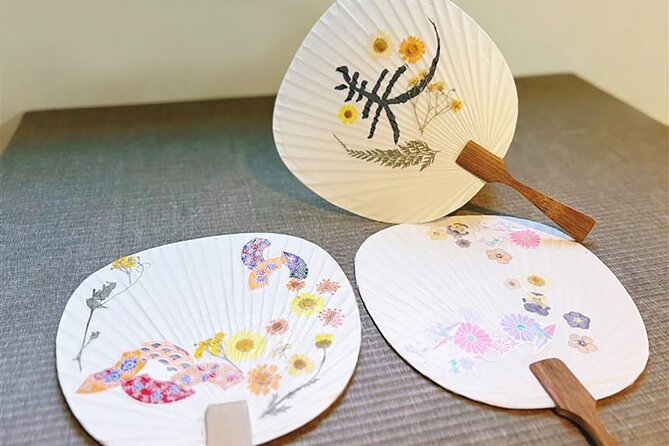
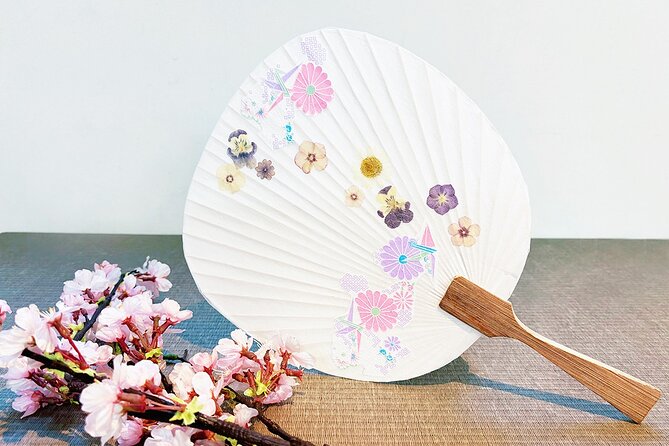
In this class, your uchiwa starts as a craft project with prepared components. You’re not piecing together a complicated kit from scratch; you’re building a design: round paper fan + pressed botanical pieces + Japanese-style paper elements that help your fan look like it belongs in Japan. The result is personal. Even if your drawing skills are not your thing, you can still create something that looks intentional.
The most practical value here is that you get a souvenir that’s more than a purchase. You can show it to people later and explain it in one sentence: I made this fan with nature-inspired decorations in Tokyo. That kind of memory lasts longer than most things you’ll carry home.
You can also read our reviews of more tours and experiences in Tokyo



The Uchiwa-Making Process: Materials, Design Choices, and an Iron Step
This is a true hands-on session, not just watching someone else do it. Your job is to design and decorate your own round uchiwa. You’ll work with pressed flowers and Japanese-patterned paper, then arrange and attach your chosen pieces to create a look that’s yours.
One detail worth knowing: you’ll use an iron step as part of the finishing process, so you’re not just gluing and hoping it holds. The class is designed so you can complete the craft even on your first try. That matters because some workshops teach technique but don’t reduce the pressure. Here, the steps feel guided and supportive, so you can focus on enjoying the design rather than wrestling with instructions.
What you’ll end up with:
- A round uchiwa you can take home
- A design that reflects your choices (flower placement, color feel, pattern accents)
- A souvenir that’s tied to Japanese seasonal culture, not generic “Tokyo-themed” art
If you care about photos, you’re set up well for that too. The activity is relaxed enough that you can pause for quick snapshots while you work, then show your final fan at the end.
Matcha Latte After the Craft: Creamy, Mild, and Easy to Like
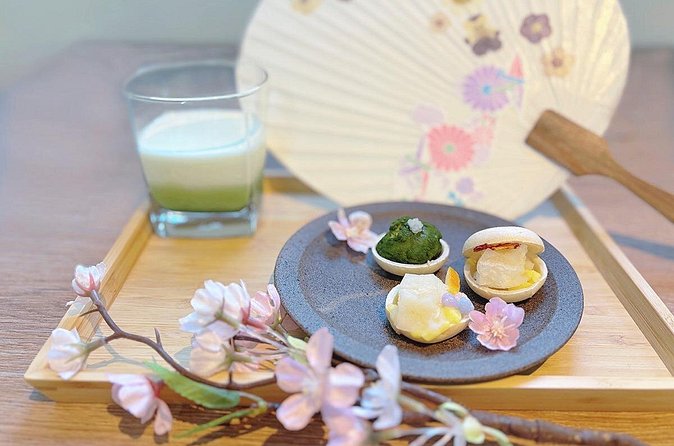
After you finish your uchiwa, the pace shifts from hands-on to taste. You’ll get a cup of matcha latte, made by mixing powdered matcha with milk. This is the smart version of matcha for first-timers because milk smooths out the flavor and reduces the bitterness you can get with plain matcha.
I like that the class doesn’t pretend matcha is a universal favorite. It’s positioned as approachable, which is great if you’re doing this as a couple activity, a solo break, or something to do with kids who are curious but not ready for strong flavors.
Think of it like this:
- Plain matcha can be grassy and sharp
- Matcha latte is creamy and gentler
- The result is a drink that still tastes like green tea, but feels less intense
So if you’re not sure you’ll enjoy matcha, you’re not walking into a harsh surprise. The workshop’s approach is specifically aimed at making matcha feel friendly. That also makes the experience more balanced—craftwork first, then a reward that fits what you just learned about Japanese nature and calm seasonal vibes.
Wagashi Pair-Up: Modern Monaka and a Kokedama Moss-Ball Sweet
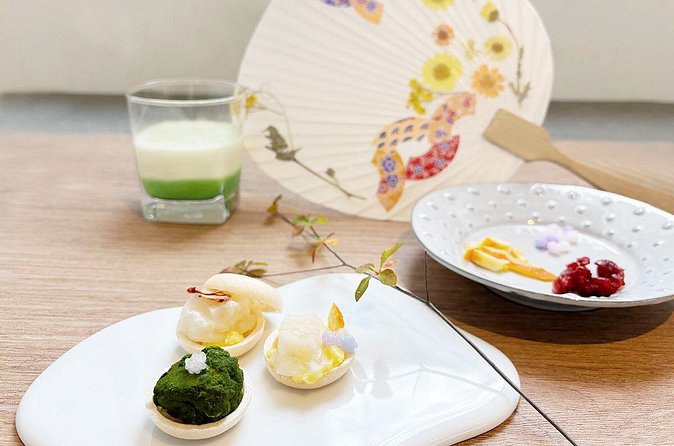
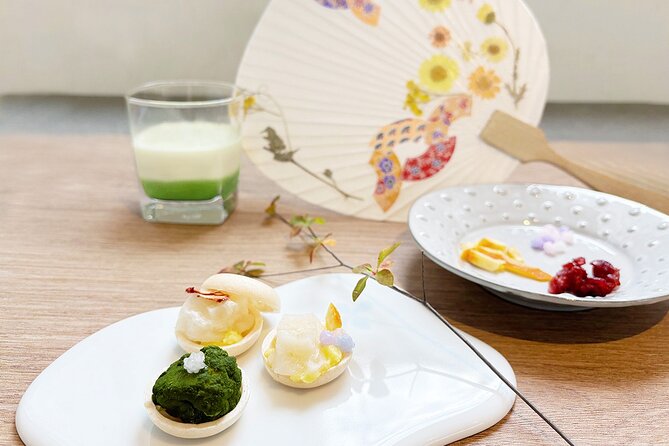
Then come the two wagashi. You’re tasting sweets that connect to classic Japanese flavors, but with modern shapes and textures.
Modern Monaka: Crispy, Filled, and Topped
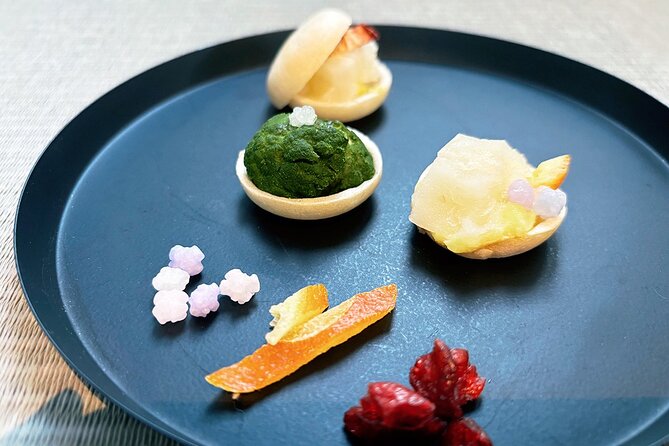
Monaka is traditionally known for a crisp wafer. In this class, it’s treated like a modern build: the wafer is filled and layered with custard cream and mochi, then topped with dried fruit.
The practical win: this version can be easier to enjoy if you don’t like sweet red bean paste. The sweet structure here gives you options in the flavor and texture profile—crisp shell, creamy filling, chewy mochi, and a fruity crunch on top. That combination makes it less one-note than plain monaka, which can be great if you’re picky.






Kokedama-Inspired Sweet: A Moss-Ball That You Can Eat
Kokedama refers to the moss-ball style of Japanese plant growing—soil wrapped and covered with moss, shaped like a little sphere. Your dessert takes that concept and turns it into something you can photograph and eat.
The value isn’t just cuteness, though it is cute. It also changes the experience because you’re not only tasting; you’re noticing the design idea behind Japanese everyday aesthetics—nature turned into something miniature and charming.
If you’re the type who likes food that looks like a craft project, this sweet makes sense. You’ll likely remember it longer than a basic cookie or packaged snack.
What This 90 Minutes Feels Like (And Why the Small Group Matters)
The class runs about 1 hour 30 minutes, and the group size is capped at 15 travelers. That small ceiling changes the feel of the workshop in a good way.
In larger groups, you often spend half your time waiting. Here, it’s easier to get help if you’re stuck. It also keeps the atmosphere calm. Several people highlight that the support is patient and step-by-step, including for those who don’t consider themselves creative. That’s exactly what you want from a craft experience: you should leave with something finished, not frustrated.
Another plus: you’re not rushed through the craft and then left hungry. The snacks are included, and they arrive after the making part. That gives you a clean flow:
1) Make and decorate your uchiwa
2) Finish the process
3) Relax with matcha latte
4) Eat two wagashi types
If you like experiences that feel friendly and approachable, this pacing supports that.
Price and Value: $78.69 for a Craft + a Tea Break + Two Sweets
At $78.69 per person for about 90 minutes, you’re paying for more than a drink and dessert. You’re paying for:
- A guided craft session with materials
- A finishing process for your uchiwa (including that iron step)
- The right to take your uchiwa home
- A matcha latte
- Two wagashi tastings
So you’re not doing a “cheap snack stop.” This is closer to buying an experience that bundles the souvenir and the food.
Is it a bargain? It can be, depending on your travel style. If you normally spend a lot on museum tickets or shopping without a story, this gives you a tangible souvenir and a taste memory in one stop. If you only want food, it’s pricier than a café. But if you want something you can bring home and talk about, the value makes more sense.
Also, the class runs in Tokyo with a small group. When a workshop keeps the group limited, you usually get more attention and less waiting, which helps justify the price.
Location and Logistics That Matter in Tokyo
The experience starts in Tokyo, Japan, and ends back at the same meeting point. There’s no hotel pickup and drop-off, so you’ll need to plan your transit like a local: take train/subway, walk a bit, and arrive early enough to settle in.
You also get a mobile ticket, which is simple and modern. If you’re the type who hates paper tickets and last-minute printing, this is a good sign.
Finally, the experience requires good weather. That usually matters because some activities or pathways may not run as planned in bad conditions. The good news is you’re not left guessing for weeks—if it’s canceled due to weather, you’ll be offered a different date or a full refund.
Who Should Book This Workshop
This is a strong choice if:
- You want a hands-on Tokyo experience that’s not overly complex
- You like matcha at least a little, or you want a beginner-friendly introduction
- You’re shopping for a keepsake that isn’t mass-produced
- You want a calm, supported activity with a small group size
It’s especially good for couples and friends who want something interactive, not just sightseeing. It can also work for families, since matcha latte is described as smooth and mild, and the experience is set up to be approachable.
If you’re someone who hates matcha, you might still enjoy the craft, but the food part may not be the highlight. The good compromise is that the uchiwa is the main event and you get to take it home.
Should You Book This Uchiwa and Mochi Wagashi Matcha Class?
If you like craft souvenirs and you enjoy tea, I’d book it. The best part is the balance: you make something you can use and show off, then you unwind with a matcha latte that’s designed to be friendly plus two distinct wagashi with different textures and styles.
Skip it only if:
- You absolutely need hotel pickup (because there isn’t any)
- You dislike matcha strongly and don’t want it to be part of your experience
- You’re traveling with a tight schedule and can’t easily get to a central meeting point
Otherwise, this is the kind of Tokyo activity that feels personal without being difficult. You’ll leave with a fan that connects to Japanese seasonal culture, and you’ll end with sweets that taste like a thoughtful mix of classic and modern.
FAQ
How long is the experience?
It takes about 1 hour 30 minutes (approximately).
What’s included in the price?
You get a matcha latte and two types of wagashi as snacks.
Do I get to take the uchiwa home?
Yes. You’ll bring your handmade uchiwa (Japanese fan) home as a souvenir.
Is there hotel pickup or drop-off?
No. Hotel pickup and drop-off are not included.
How many people are in the group?
The class has a maximum of 15 travelers.
What if the weather is bad?
The experience requires good weather. If it’s canceled due to poor weather, you’ll be offered a different date or a full refund.
Can I cancel for a full refund?
Yes, free cancellation is available. You can cancel up to 24 hours in advance of the start time for a full refund.
Is this matcha for first-timers?
It’s made as a matcha latte with milk, described as smooth, creamy, and less bitter than plain matcha, which makes it a good first-timer option.