REVIEW · TOKYO
Kimono Art Workshop in Tokyo
Book on Viator →Operated by Beauty of Japan · Bookable on Viator
Your souvenir comes with a lesson.
This Tokyo kimono art workshop turns vintage kimono textiles into a finished wall panel, while you learn how styles and patterns vary by region of Japan. You’ll choose fabric, follow simple techniques, and leave with a keepsake that feels personal instead of store-bought.
What I like most is the combo of hands-on making and actual cultural context. You’re not just cutting and pasting; you learn the history and meaning behind kimono designs, and instructors guide you step by step.
One thing to plan for: there’s no hotel pickup, so you’ll want to handle getting to Hatchobori on your own.
In This Review
- Key highlights you’ll care about
- Why a kimono art panel beats another souvenir in Tokyo
- The 90 minutes: from kimono basics to your finished wall panel
- Picking your fabric: Bingata, Oshima Tsumugi, Kaga Yuzen, and Kyo Yuzen
- Sustainable souvenir, without the performance
- Yuki-san and Kasumi: clear teaching that keeps beginners on track
- Price and logistics: is $58.79 a good deal?
- Who this workshop suits best (and who might skip it)
- Should you book this Kimono Art Workshop?
- FAQ
- How long is the kimono art workshop?
- Where does the workshop meet, and where does it end?
- Is hotel pickup or drop-off included?
- What’s included in the price?
- Do I need to arrange anything for tickets?
- How large is the group?
- Can I cancel if my plans change?
Key highlights you’ll care about
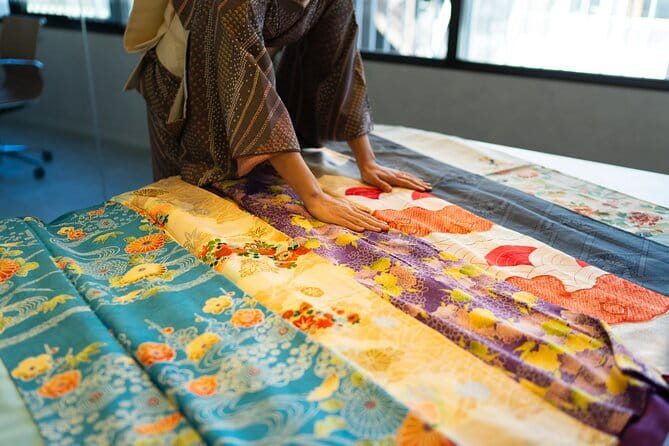
- Vintage kimono fabric becomes your art panel: You choose the textile, then repurpose it into a finished keepsake.
- Regional styles in plain English: Bingata (Okinawa), Oshima Tsumugi (Amami), Kaga Yuzen (Kanazawa), and Kyo Yuzen (Kyoto) are part of the lesson.
- Small group size: The class caps at 6 travelers, so you get real guidance rather than a quick demo.
- English support from Yuki and Kasumi: Reviews highlight clear instruction and friendly help from the team.
- Materials are included: You don’t show up empty-handed—everything needed for the panel is provided.
Why a kimono art panel beats another souvenir in Tokyo
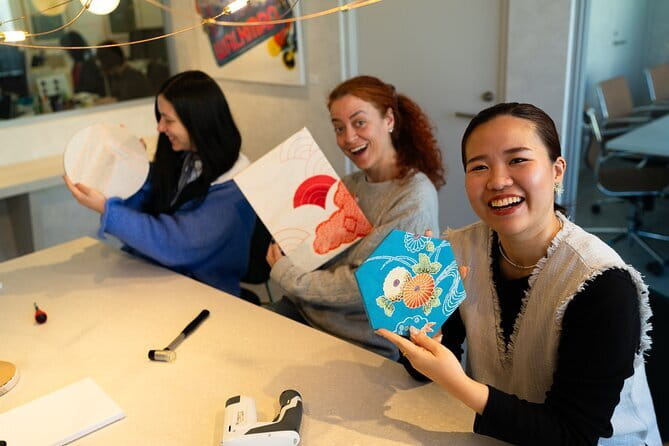
Tokyo has plenty of gift shops. They’re fun. But a lot of what you bring home is still just… stuff. This workshop gives you something you made, with a story you can explain later without sounding like a brochure.
You’ll work with authentic vintage kimono fabrics and patterns. That means your final panel isn’t generic. It’s tied to the specific look and tradition of places across Japan, from island style to mountain craft to Kyoto finesse. And because you’re repurposing textiles that already had a life, you’re getting a more thoughtful souvenir than yet another keychain.
Best of all, the format is relaxed. It’s not a high-stress art class. The goal is to help beginners create something beautiful and take it home.
You can also read our reviews of more tours and experiences in Tokyo



The 90 minutes: from kimono basics to your finished wall panel
The workshop runs about 1 hour 30 minutes, and it’s structured so you’re doing something right away. The class starts at the meeting point in Chuo City, then you head into the workshop space for the lesson and making.
Here’s how the time usually unfolds:
First, you get an introduction to kimono culture. You’ll learn about the history and cultural significance of kimono, and how different regions developed different signatures—especially in their patterns and styles. The instructors keep it beginner-friendly, and they explain what you’re seeing instead of tossing you terms and hoping you catch on.
Next comes the fun part: selecting your fabric and pattern. You’ll look through a range of options made from vintage kimono textiles and choose what you want to base your panel on. Reviews also mention the selection includes pieces people associate with obi textiles alongside kimono fabrics, so expect a fabric display where you can pick a look that really grabs you.
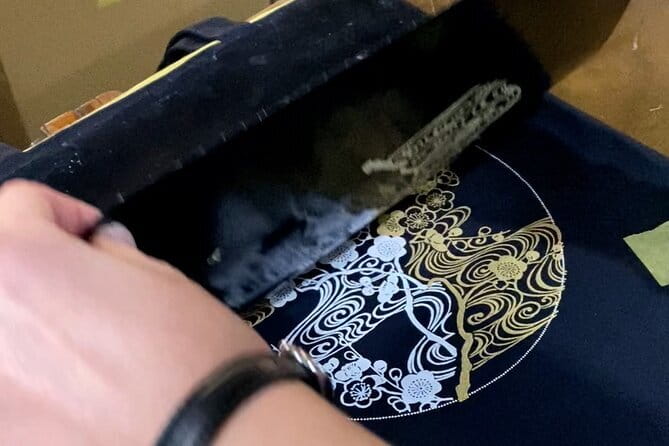
Then you create your art panel under guidance. The techniques are described as simple, and you’ll get hands-on support as you work. This is where the class clicks: the process feels intuitive once you start, and you build momentum until you can clearly see the panel taking shape.
Finally, you take home your finished keepsake. Several people mention using it as wall decor or gifting it to family. If you like souvenirs you can actually live with, this one hits the mark.
Picking your fabric: Bingata, Oshima Tsumugi, Kaga Yuzen, and Kyo Yuzen
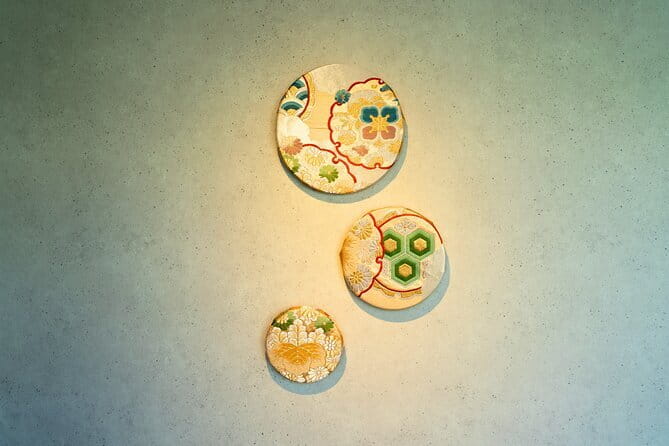
The fabric choices are a big part of the appeal here, because they let you connect your souvenir to a real regional identity.
You’ll be able to choose from styles described like these:
- Bingata (Okinawa): Known for vibrant color and bold patterning.
- Oshima Tsumugi (Amami): More earthy in feel, with a craft background tied to Amami traditions.
- Kaga Yuzen (Kanazawa): Elegant and polished, with a refined pattern look.
- Kyo Yuzen (Kyoto): Often associated with Kyoto’s careful, refined aesthetics.
Even if you don’t memorize all the details, the lesson helps you see what makes each style distinct. And that matters because kimono patterns are not random decoration. They carry visual meaning and regional character.
My practical tip: choose fabric based on what you can picture hanging on your wall. It’s easy to get distracted by what looks impressive under bright lighting. Pick the textile that still looks balanced and beautiful once it becomes a panel shape.
Sustainable souvenir, without the performance
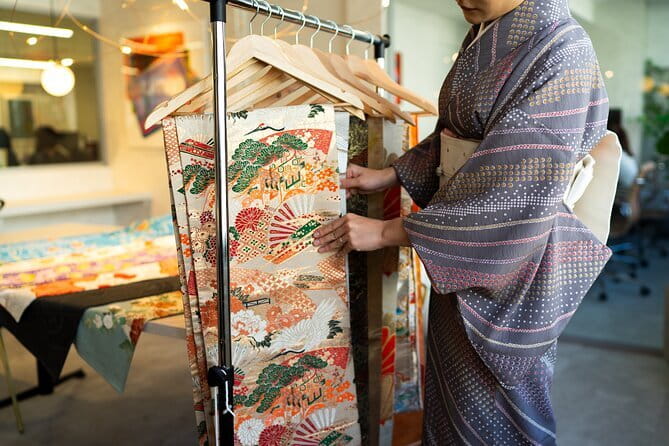
This workshop is eco-friendly in a very specific way: it repurposes authentic vintage kimono fabrics into new art. You’re not buying new material to create something temporary. Instead, you’re giving older textiles a second life.
That’s a quieter form of sustainability than the usual tote-bag messaging. It’s built into the process. The result also feels more meaningful. Several people directly mention the satisfaction of reusing fabrics that were no longer serving their original purpose.
If you care about buying fewer mass-produced souvenirs, this is the kind of activity that changes what you bring back. You’re returning to your hotel with an art object instead of another package that quickly becomes clutter.
Yuki-san and Kasumi: clear teaching that keeps beginners on track
In small workshops like this, the instructor matters. Here, you’re in good hands.
The name that shows up again and again in the feedback is Yuki (often referred to as Yuki-san). People highlight that she’s friendly, helpful, and able to speak English well. Another instructor named Kasumi is also mentioned with appreciation, especially for the care and effort involved in guiding the group.
You’ll likely feel the teaching style as a mix of storytelling and practical direction. The cultural talk gives context, and the making part stays grounded in clear steps. Even one comment about comfortable seating points to the fact that this isn’t a cramped, hurry-up-and-go situation.
Also: with a cap of 6 travelers, you’re not stuck waiting for your turn while everyone else moves on. You can ask questions when you hit a snag, and you’ll get real help rather than generic instructions.






Price and logistics: is $58.79 a good deal?
At $58.79 per person for about 1 hour 30 minutes, the price is pretty reasonable for what you get: instruction from a kimono expert plus all materials needed for a finished keepsake.
It’s not just a lecture. You’re leaving with a physical panel made from vintage fabric, so you’re paying for both the expertise and the craft setup. That’s the difference between a cultural talk and a workshop with output.
A couple practical notes so you don’t waste time:
- The workshop has a meeting point in Hatchobori (Chuo City), and it ends back there.
- There’s no hotel pickup, so you’ll want to plan your transit like a local.
- A mobile ticket is used, and the site is described as near public transportation.
One more timing thought: the activity is often booked about 47 days in advance on average. That doesn’t mean it’s impossible to find space last-minute, but it does suggest you should grab a spot earlier if your Tokyo dates are fixed.
Who this workshop suits best (and who might skip it)
This is a great fit if you want a souvenir with meaning. You like culture lessons, but you’d rather learn through making than sitting quietly taking notes.
It’s also a strong choice if you’ve been doing a lot of walking and want something calmer. Several comments describe it as relaxing, with clear guidance and a satisfying outcome.
You might consider skipping it if you’re looking for a big, sight-heavy day with Tokyo landmarks. This is a focused workshop experience. You’ll learn kimono culture and create your panel, but you won’t be doing a sightseeing circuit.
Also, if you hate the idea of being indoors for 90 minutes, adjust expectations. It’s a hands-on class, not an outdoor tour.
Should you book this Kimono Art Workshop?
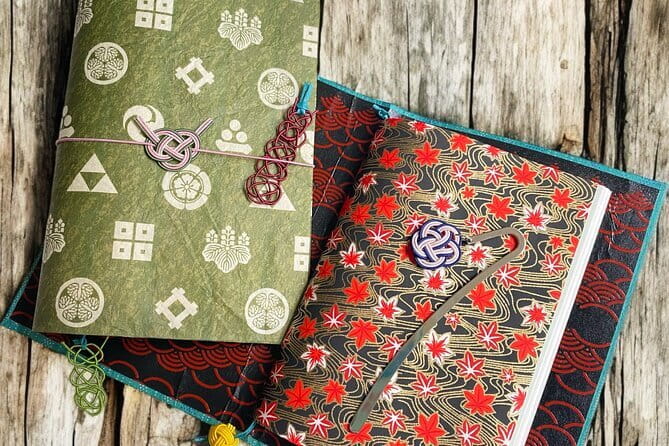
If you want a Tokyo memory you can actually hang on your wall, I’d book it. The value comes from three things: vintage fabric you repurpose, a small-group setting with real instruction, and a cultural lesson you can connect to what you choose.
This is also a smart pick when you want a break from big-city hustle. You’ll get calm focus, friendly teaching, and a keepsake that won’t feel like clutter a month later.
If you’re still deciding, choose this only if the idea of learning kimono regional styles and crafting a panel in about 90 minutes appeals to you. If it doesn’t, Tokyo has plenty of other experiences. But if it does, this one is a solid use of time.
FAQ
How long is the kimono art workshop?
It lasts about 1 hour 30 minutes.
Where does the workshop meet, and where does it end?
The start is at Hatchobori Third3-chōme-14-4 Hatchōbori, Chuo City, Tokyo 104-0032, Japan. The activity ends back at the meeting point.
Is hotel pickup or drop-off included?
No. Hotel pickup and drop-off are not included.
What’s included in the price?
The workshop fee includes participation, instruction by a kimono expert, and all materials needed to create your art panel.
Do I need to arrange anything for tickets?
You’ll use a mobile ticket, and you’ll receive confirmation at the time of booking.
How large is the group?
The workshop has a maximum of 6 travelers.
Can I cancel if my plans change?
Yes. You can cancel for a full refund up to 24 hours before the experience start time. Free cancellation applies with the same 24-hour cutoff.