REVIEW · TOKYO
Exciting Hakone – One Day Tour from Tokyo
Book on Viator →Operated by Fulfilling Inc. · Bookable on Viator
Hakone in one day feels like a Japanese movie. You get hotel pickup plus a guide, and the day strings together the big-ticket sights: Owakudani volcanic views, ropeways, and a classic Lake Ashi ride. I also like that the pacing is built around efficient transport so you’re not stuck planning connections or ticket windows.
One catch: your Mt. Fuji photos are weather-dependent, and ropeways or the boat can pause with strong winds or hazards. In other words, you’re paying for convenience and guidance, but you’re still playing the seasonal sky odds.
In This Review
- Key highlights to know before you go
- Price and logistics: what $208.49 really buys
- A tight 10-hour timeline that avoids the Tokyo headache
- From Odawara to Gora: the mountain train and a seasonal hydrangea bonus
- Gora to Owakudani by ropeway: volcanic views and the black egg moment
- Lake Ashi cruise and Hakone Shrine: the calmer side of Hakone
- The guide makes or breaks it (and here the names matter)
- Weather reality: Fuji photos and what to do with a cloudy day
- Who this one-day Hakone tour suits best
- Should you book this Hakone one-day tour?
- FAQ
- FAQ
- How long is the Hakone day tour?
- What time does the tour start?
- Is hotel pickup and drop-off included?
- Is this a private tour?
- How big is the group?
- What transportation costs are not included?
- Is lunch included?
- Will I be able to see Mount Fuji?
- What happens if the ropeway or Lake Ashi cruise can’t operate?
- Can I cancel and get a full refund?
Key highlights to know before you go
- Hotel pickup and drop-off from Tokyo’s 23 wards means less hassle and a smoother start.
- A real guide on every step helps keep timing tight and adds local context at the key stops.
- Owakudani volcanic zone and the black egg tradition let you see Hakone’s geothermal side up close.
- A multi-ride route: Shinkansen to Odawara, mountain train to Gora, ropeway to Owakudani, and a Lake Ashi cruise.
- Hydrangeas on the Hakone mountain train can be a bonus from mid-June to mid-July.
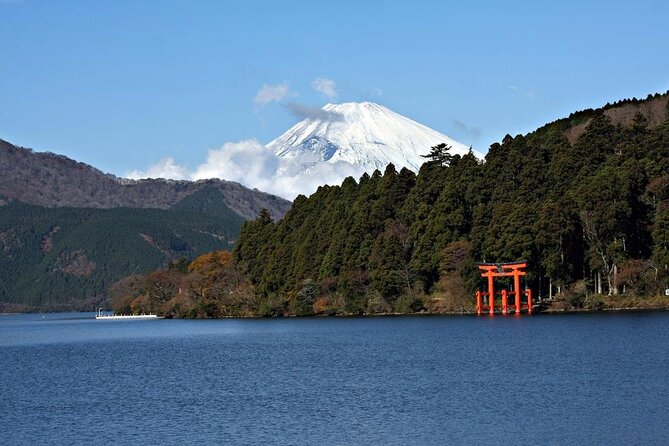
- Fuji viewing odds vary by season (about 80% in winter vs. less than 30% in summer) and conditions can still change.
Price and logistics: what $208.49 really buys
This tour price is best thought of as paying for the structure: a professional guide, a private setup for your group, and the Tokyo hotel pickup/drop-off service. The ride itself is part of the day, but you still have extra transit costs you’ll pay separately.
Here’s the important math:
- Shinkansen 2-way discount ticket: 6,560 JPY per person
- Hakone Free Pass: 6,000 JPY per person
- Admissions and lunch: not included
So yes, the base price is attractive because it bundles the “guided day” convenience, but your real total depends on those add-ons. If you were planning this solo, you’d spend time figuring out routes, ticket types, and platform timing. On this tour, you buy fewer decisions and you get a guide handling the flow.
Also note the group size: maximum 5 people, and it’s described as a private tour/activity. That small group size is a big deal in Hakone, where weather can disrupt plans and you don’t want a big crowd slowing the schedule.
Finally, you’ll walk a moderate amount. Not a marathon, but comfortable shoes matter—especially around Owakudani and during shrine time at Lake Ashi.
You can also read our reviews of more tours and experiences in Tokyo



A tight 10-hour timeline that avoids the Tokyo headache
The day runs about 10 hours, starting at 8:30 am. You meet in the hotel lobby (Tokyo 23 wards), then you’re transported to the rail start point. One nice detail: you’re not asked to assemble a bunch of local transfers before you even reach the sightseeing.
The main routing looks like this:
- Train to Tokyo or Shinagawa
- Shinkansen to Odawara (not the very fastest service, but around 260 km/hr)
- Train to Hakone Yumoto
- Mountain train to Gora
- Cable car/ropeway from Gora to Owakudani
- Stroll Owakudani (about 1 hour)
- Ropeway down to Lake Ashi
- Cruise on Lake Ashi (about 30 minutes), plus time at Hakone Shrine
- Bus back to Odawara, then Shinkansen to Tokyo/Shinagawa and onward to your hotel
Why I like this pacing: you hit the “effort stops” early (the mountain train and ropeways), then you enjoy lake and shrine time later without rushing every moment. It’s also built for a day trip, not a slow vacation day—so you get the highlights without losing the whole day to transit.
From Odawara to Gora: the mountain train and a seasonal hydrangea bonus
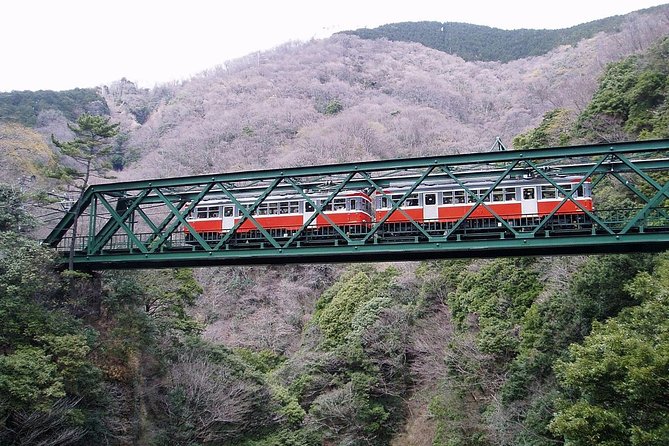
After the Shinkansen reaches Odawara (around 10:13 in the plan), you continue to Hakone Yumoto, then board the mountain train to Gora for about 40 minutes.
Two things make this segment worth it:
- It’s not just getting there. The route runs through valleys, and the scenery changes as the train climbs.
- If you travel between mid-June and mid-July, you can catch hydrangeas along the line. It’s a very Hakone-specific seasonal treat, and it turns the train ride into something you’ll remember, not something you tolerate.
If you hate “waiting for the next connection,” this is where a guided plan helps. The schedule is set up so you’re not hunting for the next platform or trying to decode station signage while also watching the scenery.
Gora to Owakudani by ropeway: volcanic views and the black egg moment
From Gora, you take a cable car/ropeway up to Owakudani (about 20 minutes). On a sunny day, you may also catch Mt. Fuji views from the ropeway. That’s the kind of photo opportunity you can’t always plan well on your own, because timing and weather both matter.
Then you’re given about 1 hour to stroll Owakudani. This is the star stop for most people, and for good reason:
- You can see real volcanic activity
- The famous local snack is the black egg, boiled in the hot springs near the bubbling pools
Even if you don’t plan to eat the egg, I think the value is in how it reframes Hakone. Most first-timers arrive thinking of hot springs and scenery. Owakudani reminds you this place is still geothermally alive, and the visuals are hard to replicate anywhere else.
One practical point: Owakudani is a place where you’ll want good outer layers if it’s chilly, because the air around the valley and geothermal area can feel different than the town below.
Lake Ashi cruise and Hakone Shrine: the calmer side of Hakone
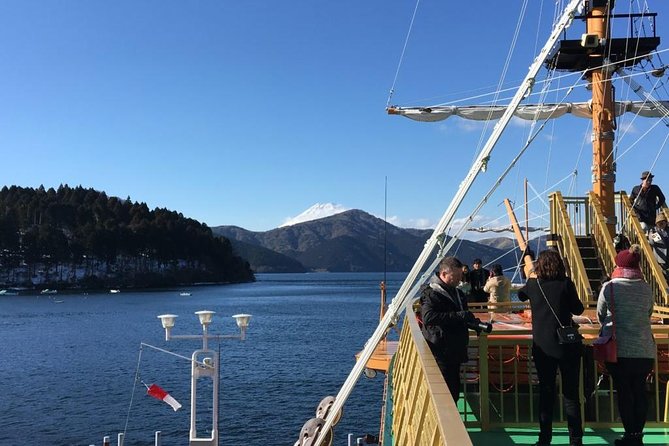
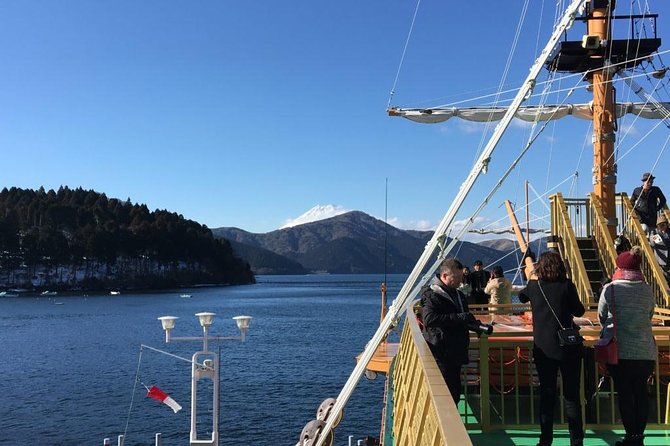
Next comes the ride down: ropeway from Owakudani to Lake Ashi (about 20 minutes), then cruising Lake Ashi for about 30 minutes. This is where the day cools off into slower sightseeing.
The cruise is also where Mt. Fuji attempts get real. Your chance depends on conditions, not just the season. The tour notes visibility is best in winter (about 80%) and drops sharply in summer (less than 30%). So if you’re going in peak summer, keep expectations flexible.
After the boat ride, you’ll have time for a stroll around Hakone Shrine. That part is quieter than Owakudani and feels more like a traditional stop—an easy walk that breaks up the long transport blocks.
Also worth knowing: the tour explicitly warns that the ropeway and cruise can be suspended due to natural hazards like snow or strong winds. On one guide-led version of this trip, the plan gets rearranged when cable car and boat don’t run. Translation: if weather disrupts the schedule, a good guide tries to protect your day rather than just cancel it.



The guide makes or breaks it (and here the names matter)
This is one of those tours where the guide is not decorative. They help you:
- manage timing across multiple transport modes
- understand what you’re seeing (volcanic activity, the Hakone geography, and shrine context)
- stay calm when a connection or vehicle shifts
In past runs of this experience, guides including Akira and Yumiko (Yumiko Sano) were praised for being attentive and respectful, and for helping with the practical stuff like how to purchase Shinkansen tickets. Another guide, Hideiki/Hideaki, stood out for making the day feel easy to follow and for giving helpful info exactly when it made sense.
Most importantly for a one-day plan: some guides actively rearranged activities when the cable car and boat were affected by weather. If you’re the type who hates uncertainty, that flexibility is a real value. It turns Hakone from a fixed checklist into a guided problem-solving day.
Weather reality: Fuji photos and what to do with a cloudy day
Let’s be honest: your Mt. Fuji shots are the big “maybe.” The tour provides a useful guide:
- Around 80% chance in winter
- Less than 30% in summer
But even in a high-odds season, clouds roll in, and the itinerary can shift. Ropeways and the Lake Ashi cruise can be suspended due to forecast hazards like strong winds or snow.
Here’s how I’d plan emotionally:
- Treat Fuji as a bonus, not the main goal.
- Decide what you’ll enjoy even if Fuji is hidden: Owakudani geothermal views and the multi-mode transport experience are still the core wins of this day.
Also, pack for temperature swings. Hakone’s elevation and valley conditions can surprise you, even when Tokyo feels mild.
Who this one-day Hakone tour suits best
This experience is a strong fit if you want:
- a high-effort day with low planning
- a small private group (up to 5)
- a guide-driven route across rail, train, ropeways, and boat
- top Hakone sights like Owakudani and Lake Ashi without taking over your own schedule
It’s also a good option if you’re traveling with someone who finds route planning stressful. The day is designed so you get on the right vehicle at the right time, with someone else handling the choreography.
It may be less ideal if:
- you want the absolute lowest cost and don’t mind DIY ticket planning
- you’re going specifically for guaranteed Fuji viewpoints (season helps, but it’s not a promise)
- you dislike walking segments (there is a moderate amount)
If you’re balancing a Tokyo visit with a genuine countryside break, this tour gives you that without turning the trip into an all-day transit project.
Should you book this Hakone one-day tour?
If you’re choosing between DIY Hakone and a guided day, I’d lean guided for one simple reason: it compresses a lot of moving parts into one plan. Hotel pickup, a guide, and a small-group schedule make Hakone feel doable, especially when weather can interfere.
Book it if:
- you want the full set of classic experiences in one go
- you appreciate getting explanations while you travel
- you’d rather spend your energy sightseeing than figuring out stations and tickets
Consider skipping (or going DIY) if:
- you’re extremely price-sensitive and comfortable handling tickets and connections yourself
- you want zero weather uncertainty
- you’d rather control the pace and linger longer in fewer places
FAQ
FAQ
How long is the Hakone day tour?
It runs about 10 hours.
What time does the tour start?
Start time is 8:30 am.
Is hotel pickup and drop-off included?
Yes. Hotel pickup and drop-off are offered, and meeting is in the hotel lobby (Tokyo 23 wards).
Is this a private tour?
Yes. It’s described as a private tour/activity, and only your group participates.
How big is the group?
Maximum group size is 5 people.
What transportation costs are not included?
You pay the Shinkansen 2-way discount ticket (6,560 JPY per person) and the Hakone Free Pass (6,000 JPY per person). Admission fees and lunch are also not included.
Is lunch included?
No. Lunch is not included.
Will I be able to see Mount Fuji?
It depends on the season and weather. The tour notes visibility odds are about 80% in winter and less than 30% in summer.
What happens if the ropeway or Lake Ashi cruise can’t operate?
The tour states the ropeway and cruising at Lake Ashi may be suspended or unable to operate as scheduled due to natural hazards like snow or strong winds, and the day can be adjusted when that happens.
Can I cancel and get a full refund?
Yes. Free cancellation is allowed up to 24 hours in advance for a full refund.