REVIEW · TOKYO
Tokyo: Taishu Engeki Show with Kimono and Sword Lesson
Book on GetYourGuide →Operated by 有限会社篠原演劇企画 · Bookable on GetYourGuide
Taishu Engeki hits fast and up close. In Asakusa at the Mokubakan theater, you get a live popular-theater show, then you step onto the tatami for hands-on kimono and samurai sword training in a small group. It’s one of those rare cultural programs where you’re not just watching from the sidelines.
I love the format: professional taishu engeki performances first, followed by a workshop that’s designed for real beginners. You’ll also like that the choreography stays fun and learnable, with clear instruction from a local professional dancer.
One thing to consider: the theater show uses flashing lights and loud sounds, and the workshop is physically active, so it’s not a great fit if you’re sensitive to noise or struggle with movement. Also, the experience isn’t suitable for pregnant women.
In This Review
- Key things to know
- Why Taishu Engeki Feels So Accessible in Asakusa
- Mokubakan Theater: Where This Popular Art Lives
- Your Tour Flow: Show First or Workshop First
- The Welcome: Meeting Your Program Leader
- Watching Taishu Engeki Live: Drama, Swordplay, Dance
- The Ohana Custom: How the Program Handles Performer Appreciation
- Kimono Dressing: Instant Costume Immersion
- The Workshop on Tatami: Fan Dance and Chanbara Swordplay
- What You Really Take Home From the Sword and Fan Lesson
- Commemorative Photos in Kimono: More Than a Snapshot
- Price and Value: What $12 Buys in Real Terms
- Who Should Book This and Who Should Skip It
- Booking Tips to Make It Go Smoothly
- Should You Book Taishu Engeki With Kimono and Sword Lesson?
Key things to know
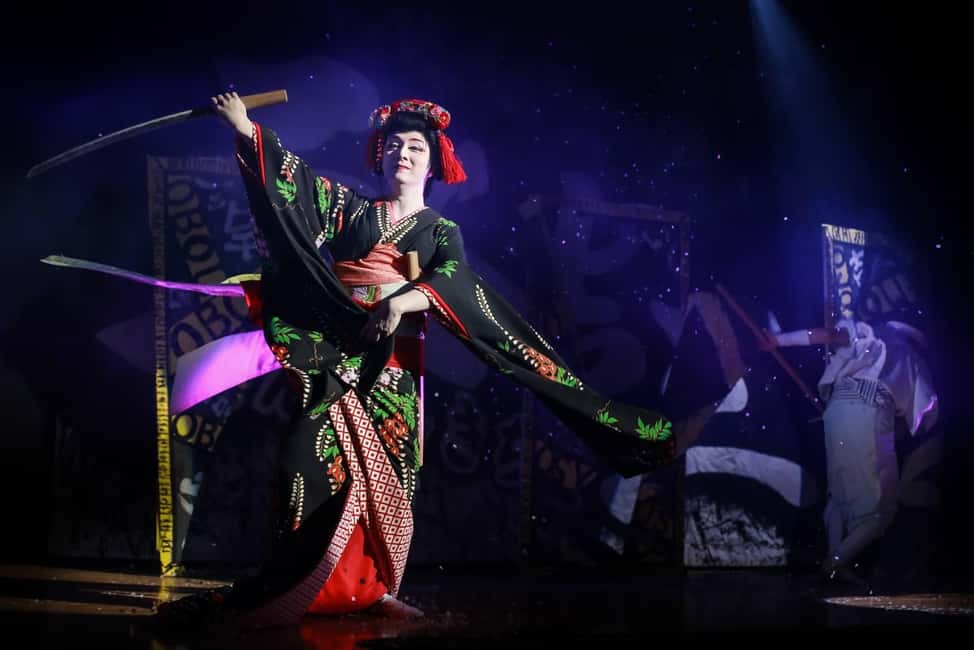
- Taishu Engeki at Mokubakan: a theater dedicated exclusively to this popular performing style since 1977
- Small group (up to 6) means you actually get guidance during the fan and sword workshop
- Two-slot schedule: afternoon is show first, evening is workshop first (meeting times differ)
- Flashy theater effects are show-only: the workshop portion avoids strobe lights and loud sounds
- Commemorative kimono photo time at the end, so you leave with more than memories in your head
Why Taishu Engeki Feels So Accessible in Asakusa
If you’ve seen the more famous Japanese theater styles like kabuki or noh, you already know how theatrical they can be. Taishu Engeki is different. It’s built to be easy to follow even when you don’t speak Japanese, because the storytelling leans hard on visuals, music, and expressive body language.
That matters for you because it lowers the mental load. You can focus on what’s happening right in front of you: the movement, the rhythm, and the showmanship. The result is a performance you can enjoy immediately, without needing background homework first.
You’ll also get a mix of styles in one evening: drama, swordplay, music, and dance. And there’s a special tradition called onnagata, where male performers portray female roles with refined elegance. Even if you only catch bits of the story, you’ll still understand the mood through performance and movement.
You can also read our reviews of more tours and experiences in Tokyo

Mokubakan Theater: Where This Popular Art Lives
This program takes place at the Mokubakan theater in Asakusa. It’s not a one-night pop-up. The venue has been dedicated exclusively to taishu engeki since 1977, which is a big deal if you care about seeing something practiced locally rather than staged for tourists.
The atmosphere is part of the value. Taishu engeki is meant for a close connection with the audience. In a theater setting like this, that closeness makes the action feel immediate, especially during the sword-and-dance portions of the show.
One practical detail that helps you plan your evening: the show is performed in a professional theater portion where flashing lights and loud sounds may be used. If you’re sensitive to strobe effects or high volume audio, contact the organizers beforehand so they can help you manage expectations. You can still fully participate in the workshop segments, where those effects are not used.
Your Tour Flow: Show First or Workshop First
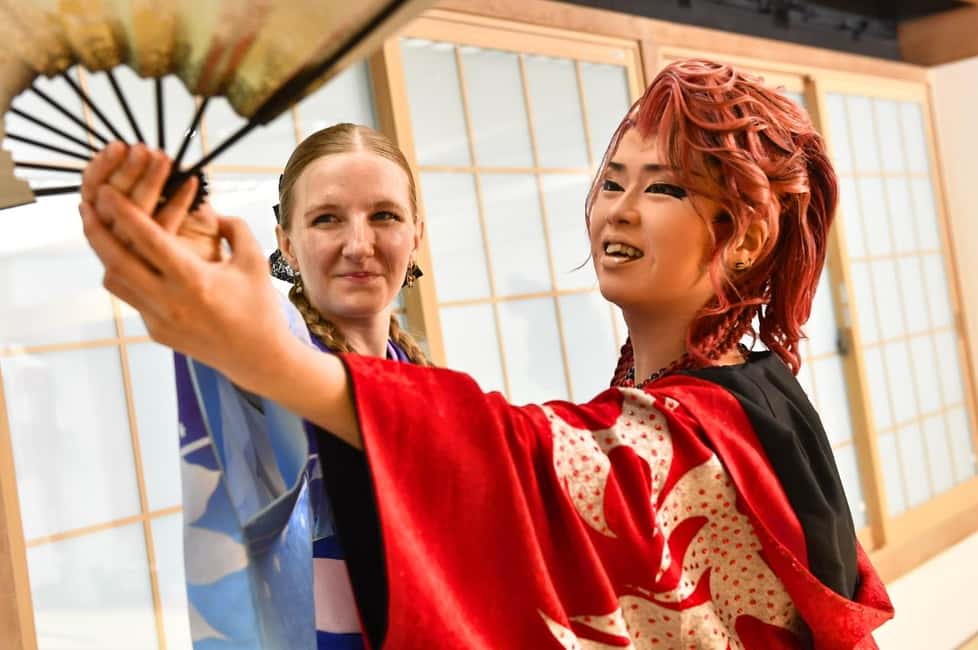
Your total time is about 3 hours, and there are two options depending on your start time. If you choose the afternoon slot, you meet at 2:20pm, then the flow is show → short walk → kimono dressing → workshop → commemorative photos. If you choose the evening slot, you meet at 5:40pm, and the order is reversed: workshop first, then the show.
Either way, you’re getting the same core ingredients. The schedule just changes how your energy and attention are spent. In the afternoon, it can feel great to watch the professionals first, then copy the movements while everything is still fresh in your mind. In the evening, the kimono and workshop right away can put you in the right headspace before the show begins.
Also note the timing between parts: there’s a short 5–7 minute walk to a separate cultural venue for the hands-on workshop. That’s convenient because you won’t lose half your time in transit.
The Welcome: Meeting Your Program Leader
You’ll meet your international program leader in front of the Asakusa Mokubanan Theater with the Meeting Point sign. The coordinates are 35.7143669128418, 139.79486083984375.
From there, you get a briefing about the Mokubakan theater and what makes taishu engeki special. This is useful because it gives you a simple mental map for what you’ll see next. You’re not left guessing what matters most during the performance.
If you’re going with someone, this part is also where you can ask quick questions before the pace speeds up. And because the workshop is active and hands-on, that early orientation helps you show up relaxed instead of rushed.
Watching Taishu Engeki Live: Drama, Swordplay, Dance
The show portion is where taishu engeki earns its name. Expect a professional performance with story, music, and dance, plus the highly visual excitement of swordplay and choreographed action. Since it’s popular theater, it leans into emotion and big physical storytelling.
Two things make this especially watchable for non-Japanese speakers:
1) The show relies on expressive movement and strong visual cues.
2) The music and rhythm guide you, even when dialogue is out of reach.
And because you’re at a dedicated taishu engeki venue, you’re seeing it as locals know it, not as a watered-down version. The close seating also helps. You can actually track the timing of the action rather than just spotting costumes from far away.
One more practical point: this show portion uses flashing lights and loud sounds. Those effects are used only during the professional performance portion. The workshop portion avoids strobe lights and loud sounds, which means you get a safer, calmer hands-on segment after the energy spike of the theater.
You can also read our reviews of more tours and experiences in Tokyo



The Ohana Custom: How the Program Handles Performer Appreciation
After the performance segment, the program includes guidance about a local custom: offering small gifts or a flower to performers, written as お花を贈る (ohana o okuru).
This is one of those cultural moments that’s easy to miss if you don’t know what’s happening. With a local guide present, you’ll have a clear cue for what to do and when. Even if you’re unsure what to offer, the program frames it as appreciation rather than a transaction.
You also get a small token of appreciation included in the program fee, which helps take the stress out of deciding what to bring. This matters because good cultural etiquette is less about spending and more about participating the right way.
Kimono Dressing: Instant Costume Immersion
After the show (afternoon slot) or before the show (evening slot), you’ll change into a kimono. This is hands-on cultural time, not just a quick costume photo op.
Kimono dressing can be a bit of a process, so treat this part like a mini appointment. You’ll want to stay patient, follow instructions, and keep your phone handy for the photos later. The point isn’t speed. The point is getting into the look and feel so the workshop makes sense.
This also changes how you participate. Once you’re in a kimono, your body naturally shifts. That helps you learn the fan and sword movements because you’re practicing in the same outfit style you’ll see in the performance world.
The Workshop on Tatami: Fan Dance and Chanbara Swordplay
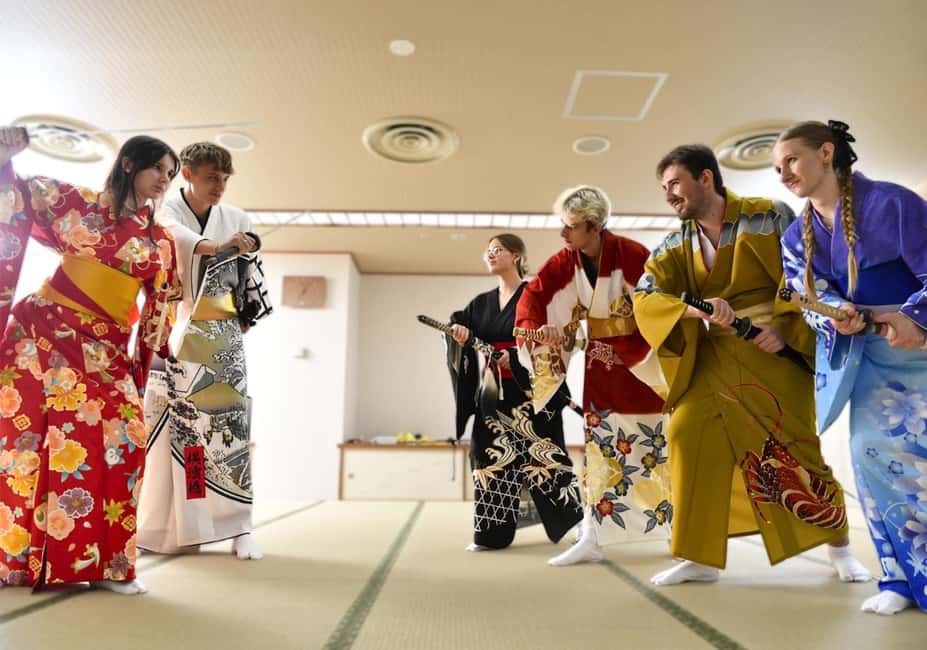
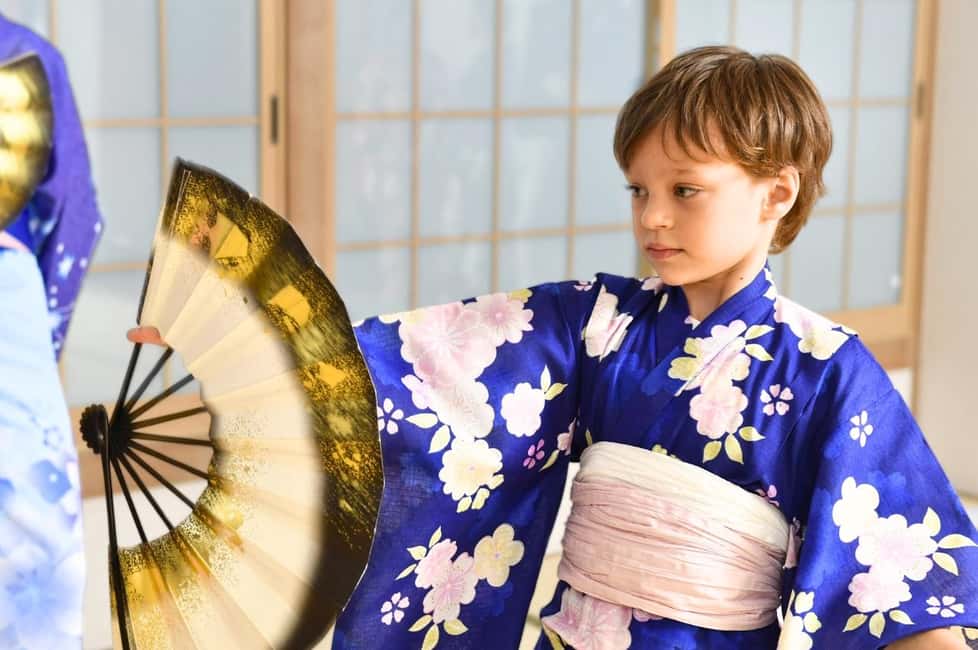
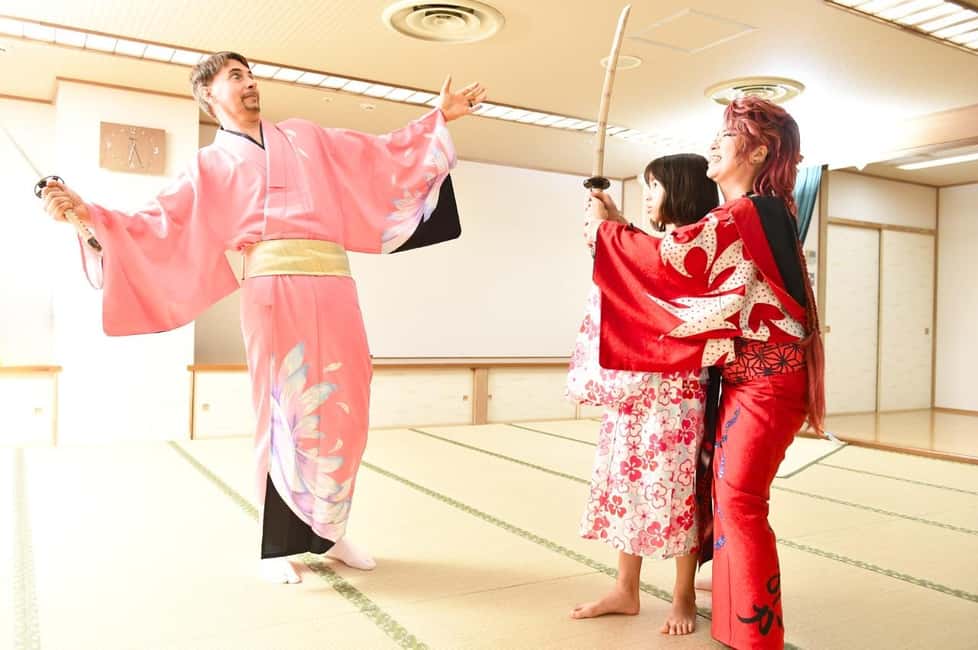
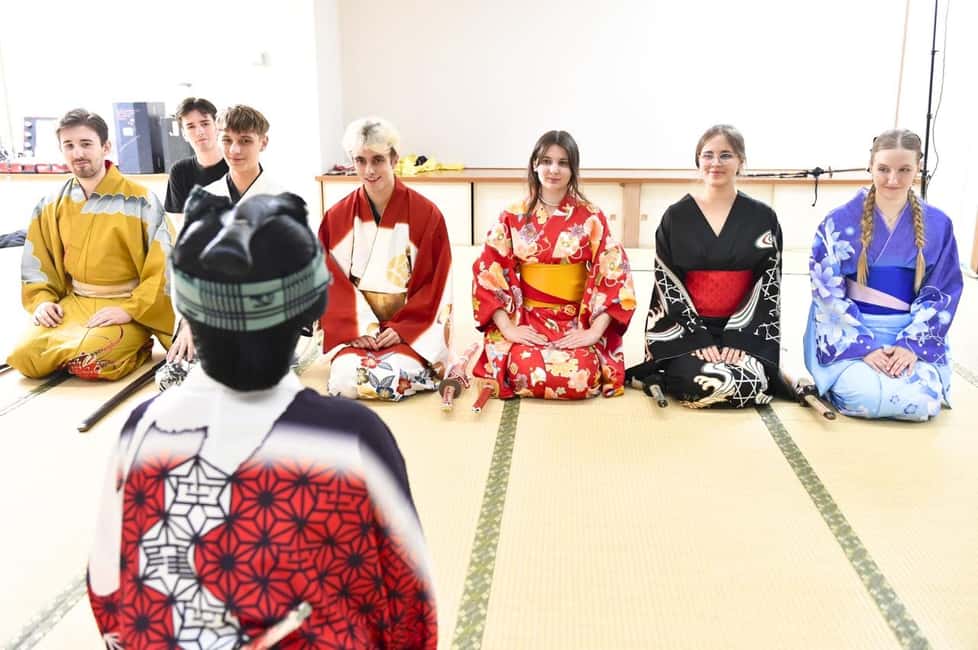
Once you’re dressed, you enter a traditional tatami room. Instruction comes from a local professional dancer, and the workshop focuses on being fun and doable rather than on strict technical perfection.
You’ll learn two main routines:
- Fan dance using a folding fan (sensu)
- Swordplay dance called chanbara, a choreographed combat style
What makes this good value is that it’s not pretend. You’re practicing movements tied to the performance tradition you just watched. And because the program is limited to 6 participants, the instructor can give real corrections instead of just demonstrating from the front.
Also, the reviews consistently highlight that the workshop is beginner-friendly and without pressure. That matches the program’s stated goal: enjoyment first, choreography second.
You’ll likely feel a little like an anime protagonist for an hour or two. Not because the program claims that, but because fan gestures and sword choreography feel theatrical even when you’re not a performer. You’re learning how performers express story through movement.
A safety note: the workshop is physically active. If you feel dizzy or unwell, notify staff right away for assistance. And alcohol and drugs are not allowed, which helps keep the space focused and safe.
What You Really Take Home From the Sword and Fan Lesson
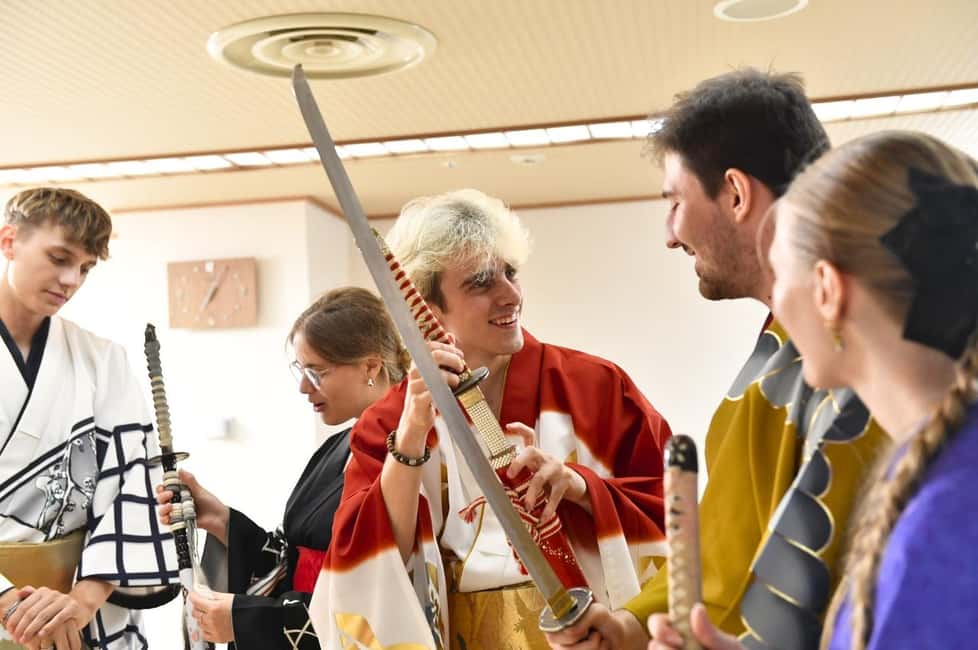
Here’s the part I think you should pay attention to: this isn’t about becoming skilled with a katana in one afternoon. It’s about learning the “language” of the performance.
Fan movements (sensu) are controlled and expressive. They teach timing, posture, and how to make gestures readable. Chanbara swordplay is about dynamic motion—sharp direction changes, choreographed strikes, and stance transitions. Even if you only master a small piece, you’ll understand why taishu engeki looks so dramatic on stage.
This is also why the workshop works so well as a travel experience. You’re not only consuming culture. You’re doing it. And because you’re in a small group, you’re not watching everyone else practice while you wait your turn.
Commemorative Photos in Kimono: More Than a Snapshot
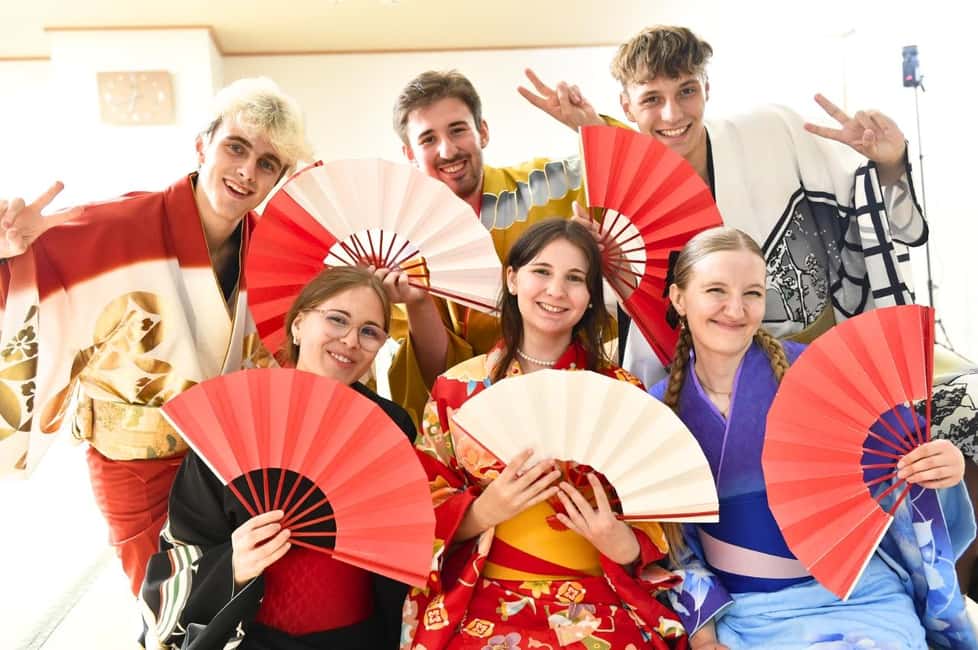
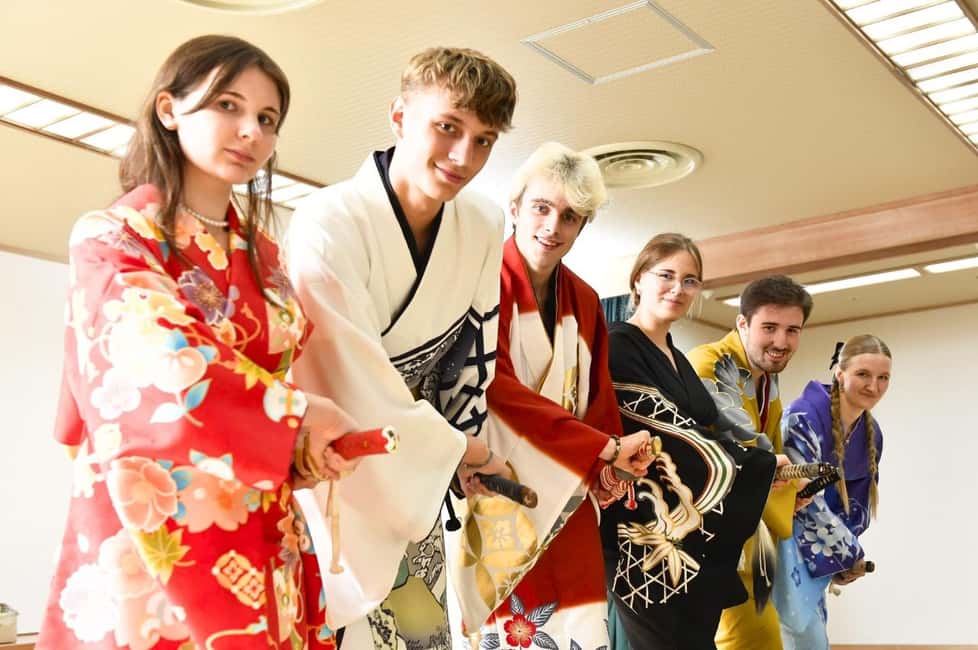
The program ends with a commemorative photo moment in your kimono. This is built into the schedule, so you’re not scrambling to find someone to take pictures for you.
A helpful way to maximize this: treat it like a mini photo session with intention. Smile naturally, pose only when staff cue you, and use the kimono silhouette to your advantage. If you want to look less stiff in the photos, practice the fan hand shape for a few seconds before the shutter.
The photo part is often what makes people feel like the experience was “worth it” beyond the show. Not because photos are everything, but because you’ll remember the physical feeling of the day when you see yourself dressed for it.
Price and Value: What $12 Buys in Real Terms
At $12 per person, this is one of the more approachable cultural programs in Tokyo if your goal is hands-on theater, not another museum lecture. The fee covers a lot of pieces that usually cost extra on their own: a professional taishu engeki performance, kimono dressing, a workshop with instruction from a local professional dancer, and the commemorative photo portion.
The small group size (up to 6) is a major value multiplier. It means you’re not just paying for access to a venue. You’re paying for time with an instructor who can help you correct the basics.
Add in that you can often reserve with a pay-later style option and cancel up to 24 hours in advance for a full refund, and this becomes a low-risk plan if you’re building an itinerary. That matters in a city like Tokyo, where schedules can shift quickly.
Who Should Book This and Who Should Skip It
I think this program is ideal if you:
- want a hands-on theater experience, not just a show ticket
- love Japanese performance styles with clear visual storytelling
- enjoy trying something beginner-friendly where instructors guide you step-by-step
- want a memorable Asakusa activity that feels local and not overly staged
You should think twice if:
- you’re sensitive to flashing lights or loud sounds, since those are used during the professional performance portion
- you need something low-activity, because the workshop includes movement
- you are pregnant, since the program states it’s not suitable
Also keep in mind the program can discontinue participation if someone causes discomfort to others, engages in harassment, or intentionally damages property. That’s standard for group cultural activities, and it’s a good reminder to keep your vibe respectful and calm.
Booking Tips to Make It Go Smoothly
A few practical moves will make the day feel easy:
- Arrive on time at the meeting point so you don’t miss the briefing and start-of-program flow.
- Plan for a short 5–7 minute walk between the theater and the workshop venue.
- Wear comfortable clothes under layers if you can, because kimono dressing is part of the schedule.
- If you’re not comfortable with strobe or loud audio, contact the organizers before you go so they can advise you.
And if you’re traveling with friends, this is a great format. Small groups feel lively, and everyone gets involved during the fan and sword lesson.
Should You Book Taishu Engeki With Kimono and Sword Lesson?
Book it if you want the fastest path to feeling what taishu engeki is like—watch it live, then learn the movements yourself. For the price, the mix of kimono dressing + fan dance + chanbara swordplay + a close-up theater show is strong value, especially with a small group and beginner-friendly instruction.
Skip it if flashing lights and loud sounds would be a problem for you, or if you prefer a quieter, fully seated activity. This is an active cultural program, and it’s best when you’re ready to move, follow cues, and laugh at your own first attempts with the fan and sword choreography.